Rosalina Oil Questions: What It Is, How to Use It
Rosalina is one of the lesser-known Melaleucas, so new customers tend to arrive with the same handful of questions. Here are the ones that come up most, answered the way we would across the counter: what the oil is, what it smells like, how to dilute it and how to look after it.
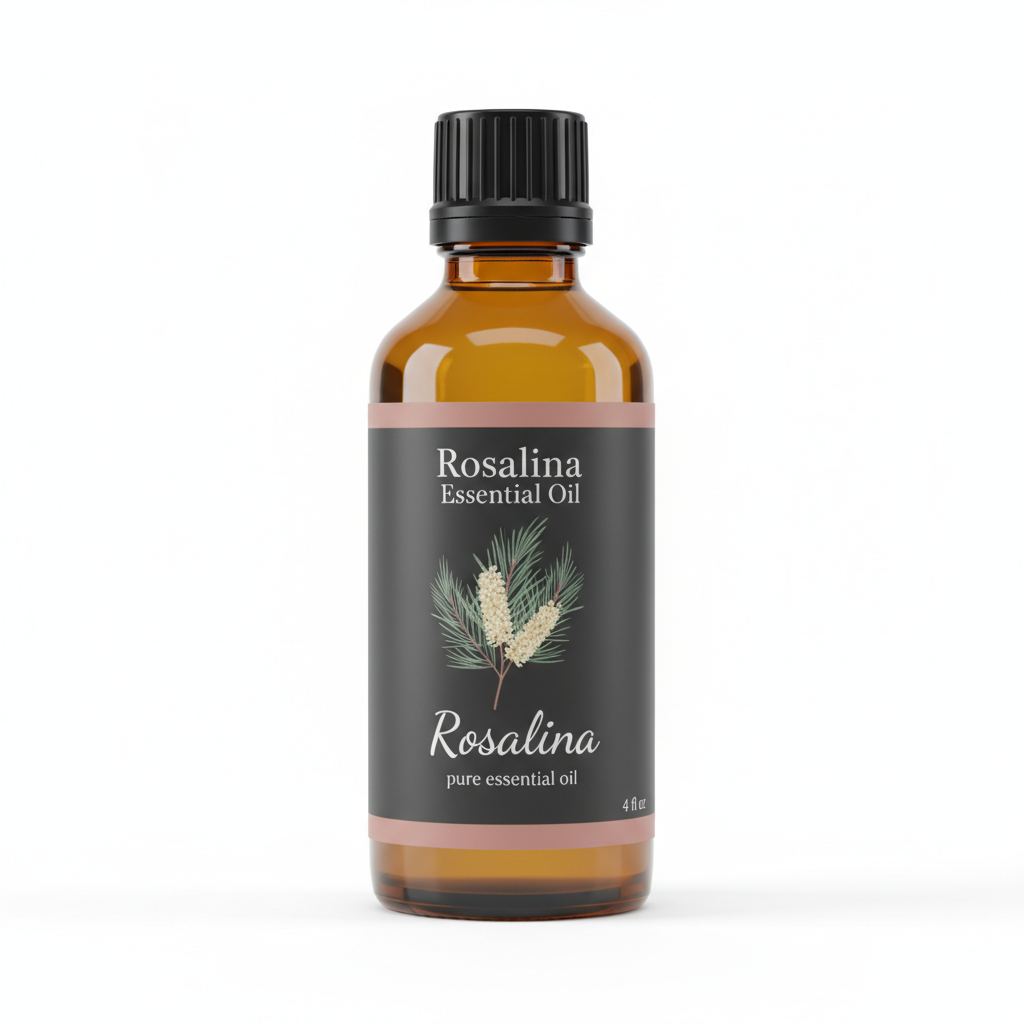
Rosalina Essential Oil
Our own Rosalina Essential Oil, in sizes from 0.5 oz to bulk.
From $16.99
Shop Now →What is rosalina oil?
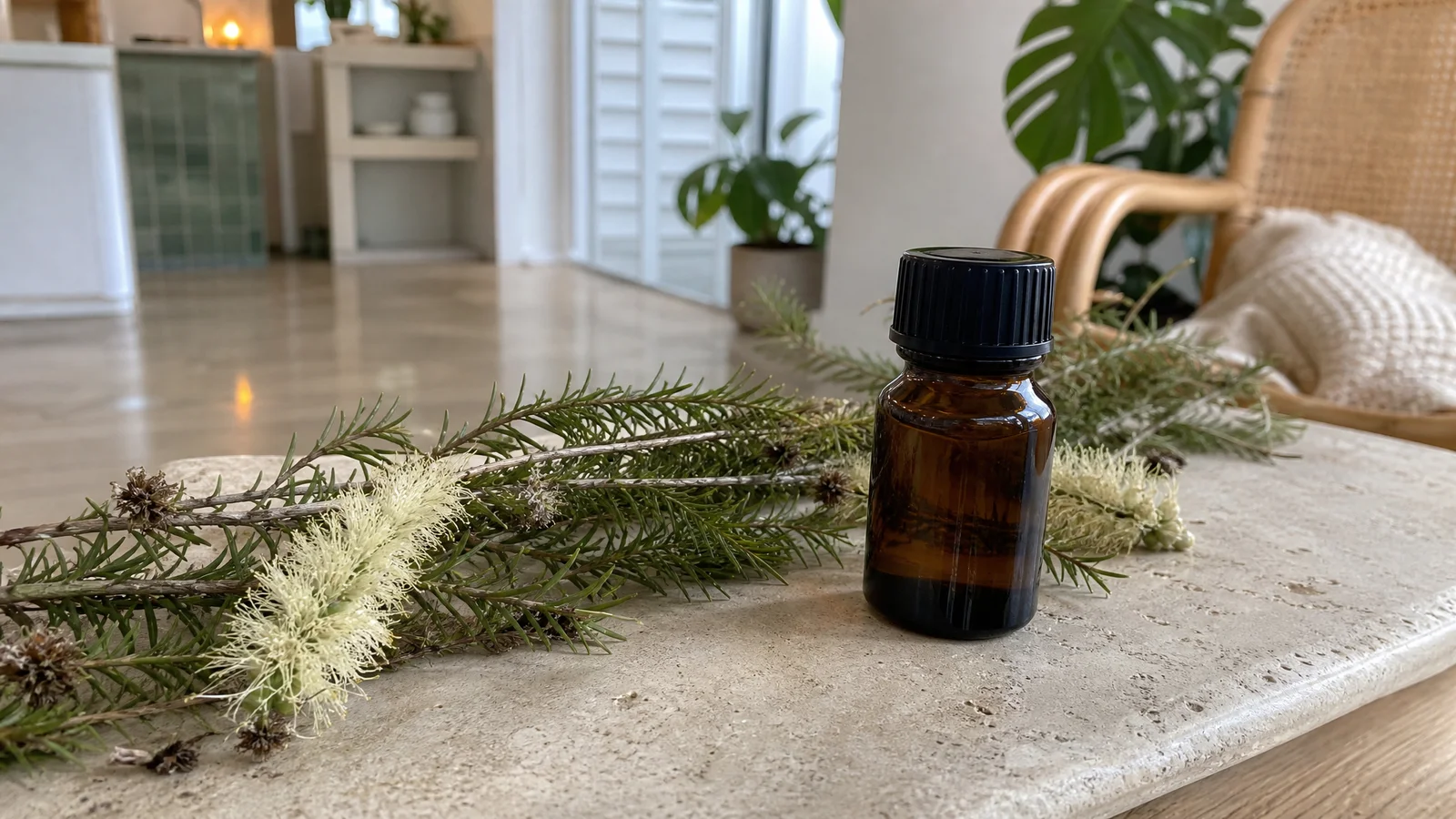
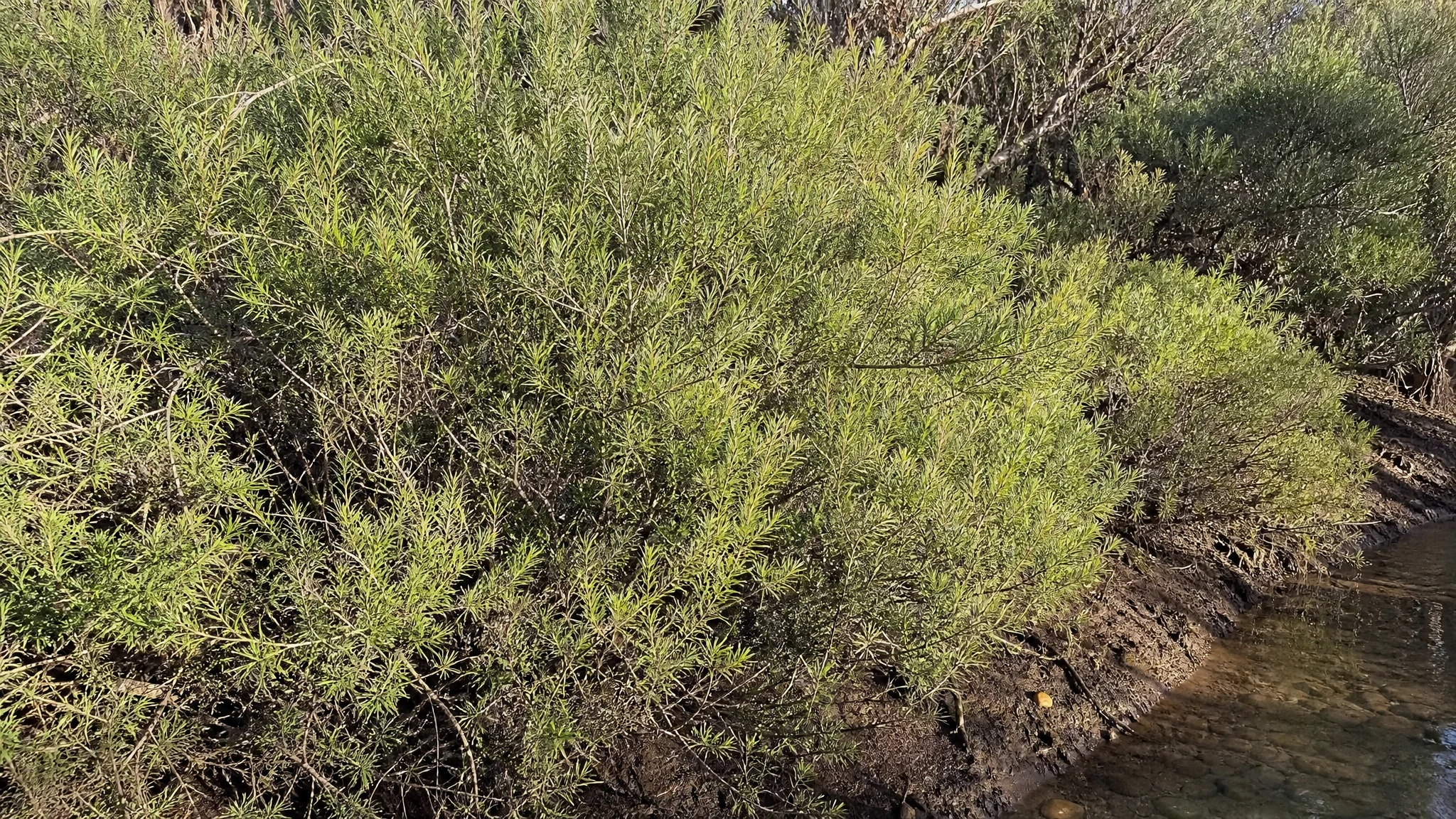
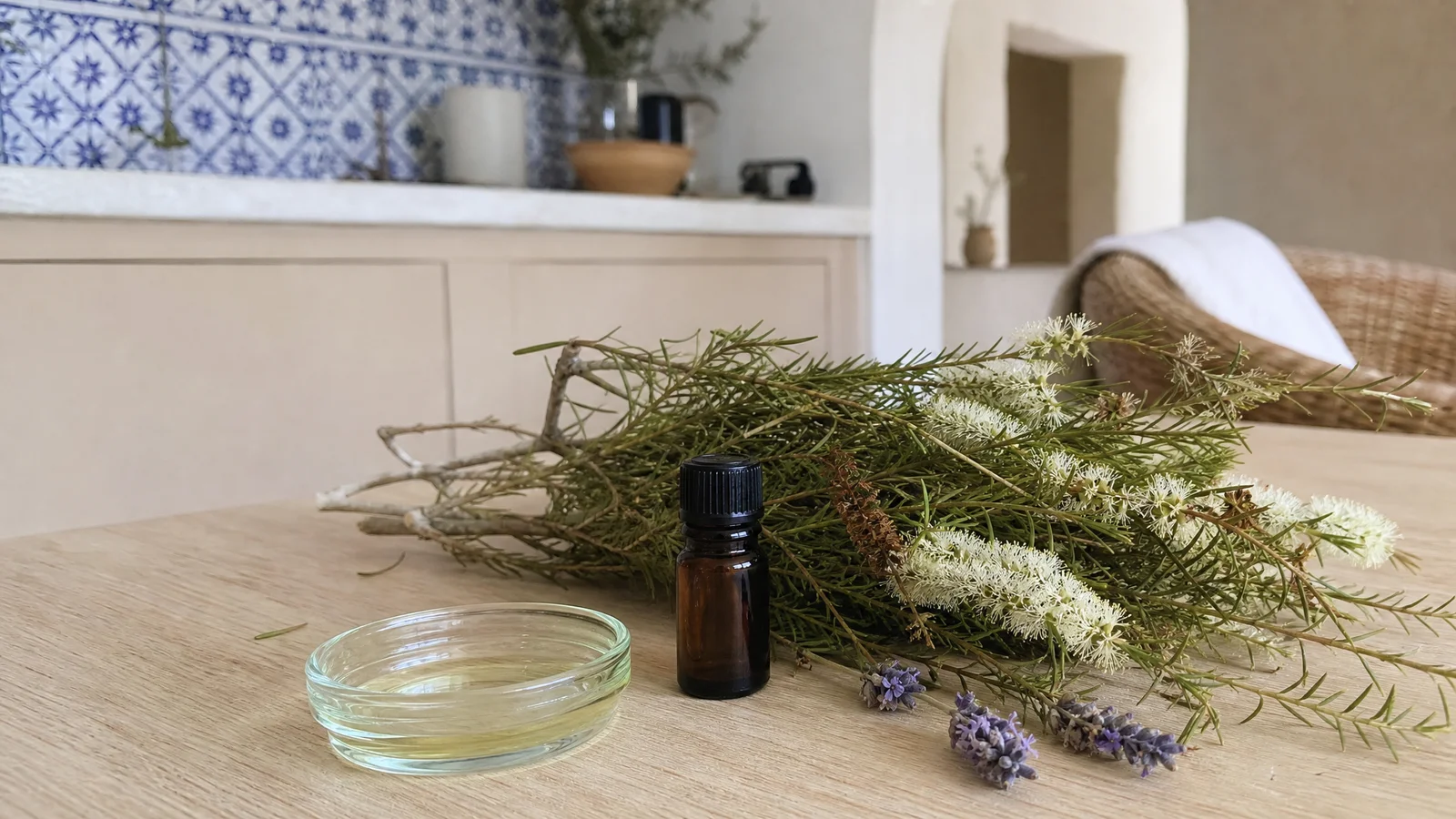
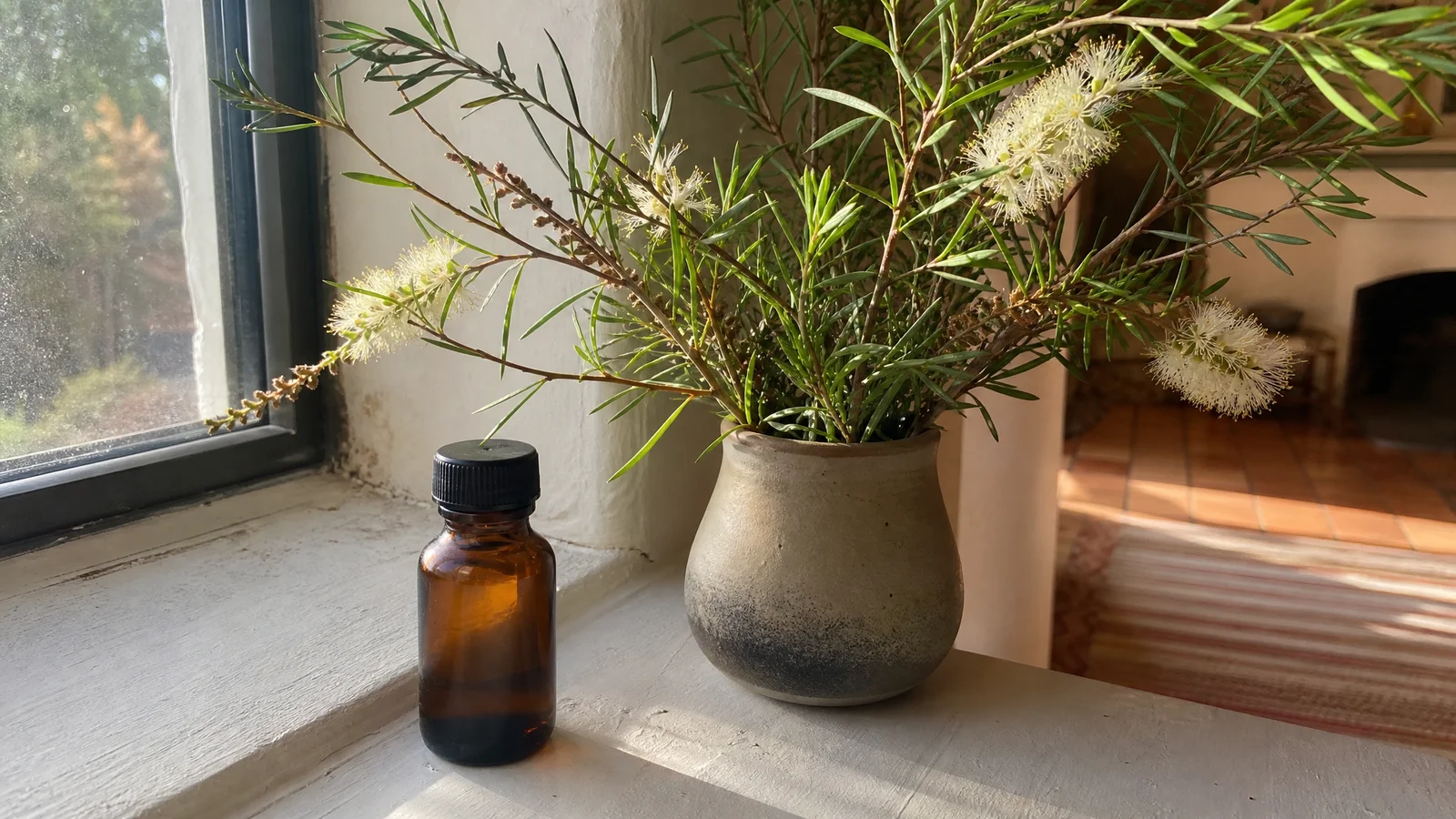
It is the oil of Melaleuca ericifolia, a shrub or small tree known in Australia as Swamp Paperbark. It grows up to about 8 m tall, with short narrow leaves, in heath, stream banks and low coastal swamps in New South Wales, Victoria and Tasmania (PlantNET). We sell one rosalina essential oil, steam distilled from the leaves and sold neat, so everything below is about that single bottle.
What does it smell like?
We describe it as soft, fresh and lavender-like, with a green opening and a floral sweetness. It sits as a middle note with a fresh top edge. Scent is personal, and rosalina oils differ in character depending on where the plant grew, so if you are new to it, starting with a small size is a sensible way to find out whether it suits you. It blends nicely with lavender, chamomile, mandarin, eucalyptus, geranium and clary sage, all of which you would find at an aromatherapy supplier, since we sell only rosalina.
Is it the same as tea tree oil?
No. They share a genus, Melaleuca, but they are different plants with their own oils. Tea tree is the famous one; rosalina is the quieter relative. Our comparison of rosalina and tea tree goes through the differences.
How much linalool does it contain?
That depends on the oil. Researchers who sampled the species across south-eastern Australia found the makeup shifts gradually with location: northern populations leaned toward linalool (one tree reached 60%), while southern ones averaged only about 3% linalool and 34.5% 1,8-cineole (Brophy and Doran, 2004). A cultivated sample from Ecuador was mostly 1,8-cineole (Valarezo et al., 2026). The Certificate of Analysis we provide for one batch lists appearance, smell, relative density (0.890) and refractive index (1.465) at 20 C. If you need a gas chromatography report with constituent percentages, ask us in writing through the contact page before you order.
What if I do not like the scent?
That is a fair question, and the honest answer is that scent is personal. Smelling from a strip before using it anywhere else is the cheapest way to find out. If it is not for you, nothing is lost, and it is better to know early.
How do I dilute it for skin?
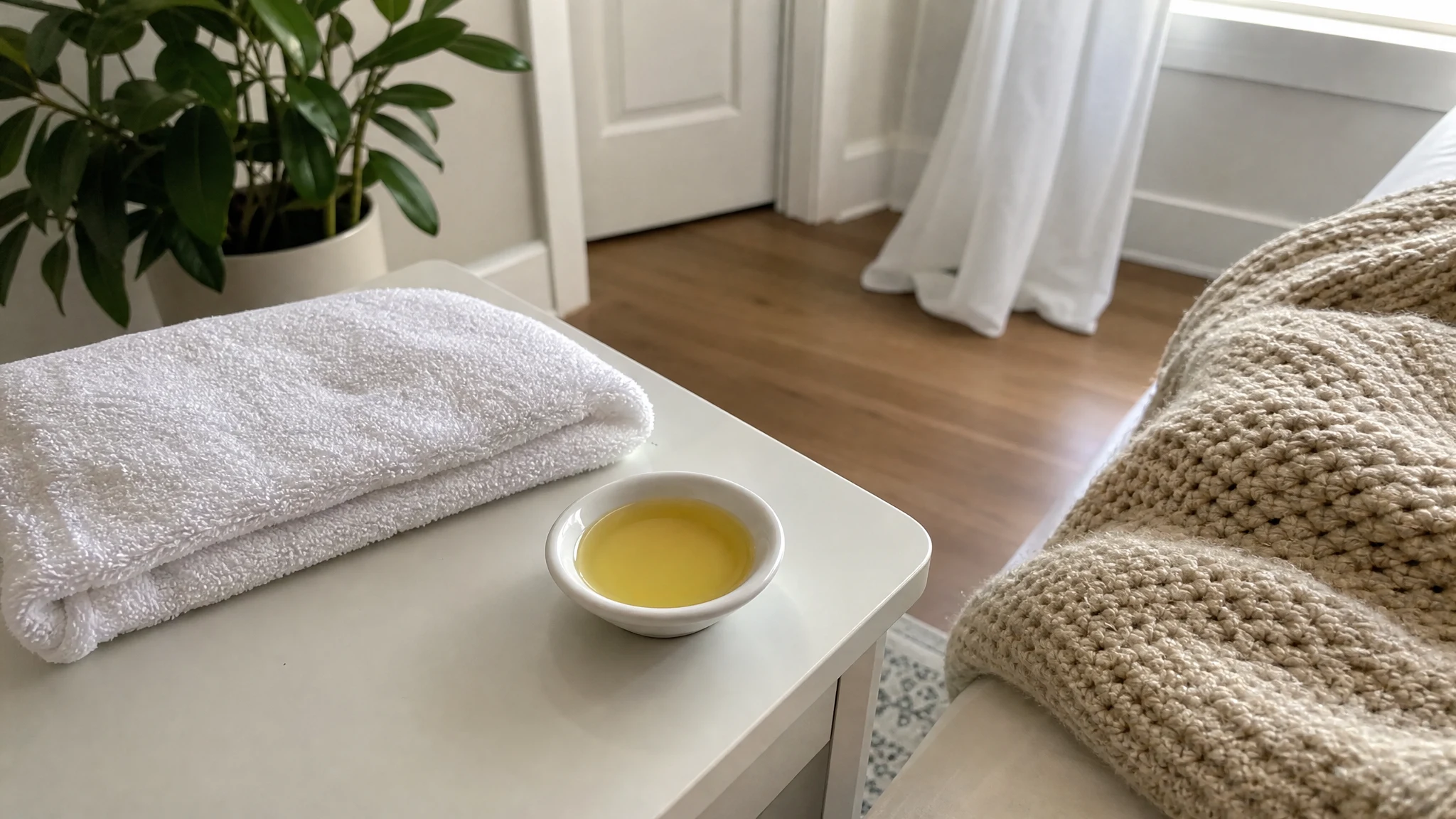
We recommend 0.5% to 2% in a carrier oil such as jojoba or sweet almond, which works out to roughly 3 to 12 drops per ounce of carrier, and we suggest staying near the low end for the face. The arithmetic is simple: an ounce is about 29.57 ml, and at roughly 20 drops per ml, 0.5% is around 3 drops and 2% around 12. Droppers vary, so weighing is more accurate than counting. Start at the lower figure and move up only if your skin is comfortable. Our dilution guide has worked examples.
Do I need a patch test?
We recommend one, on a small area with your diluted blend, before wider use. It is a useful first screen, though not a guarantee, and our article on what a patch test can and cannot tell you explains why. If you have a history of fragrance allergy, a dermatologist is the right person to ask.
How should I store it?
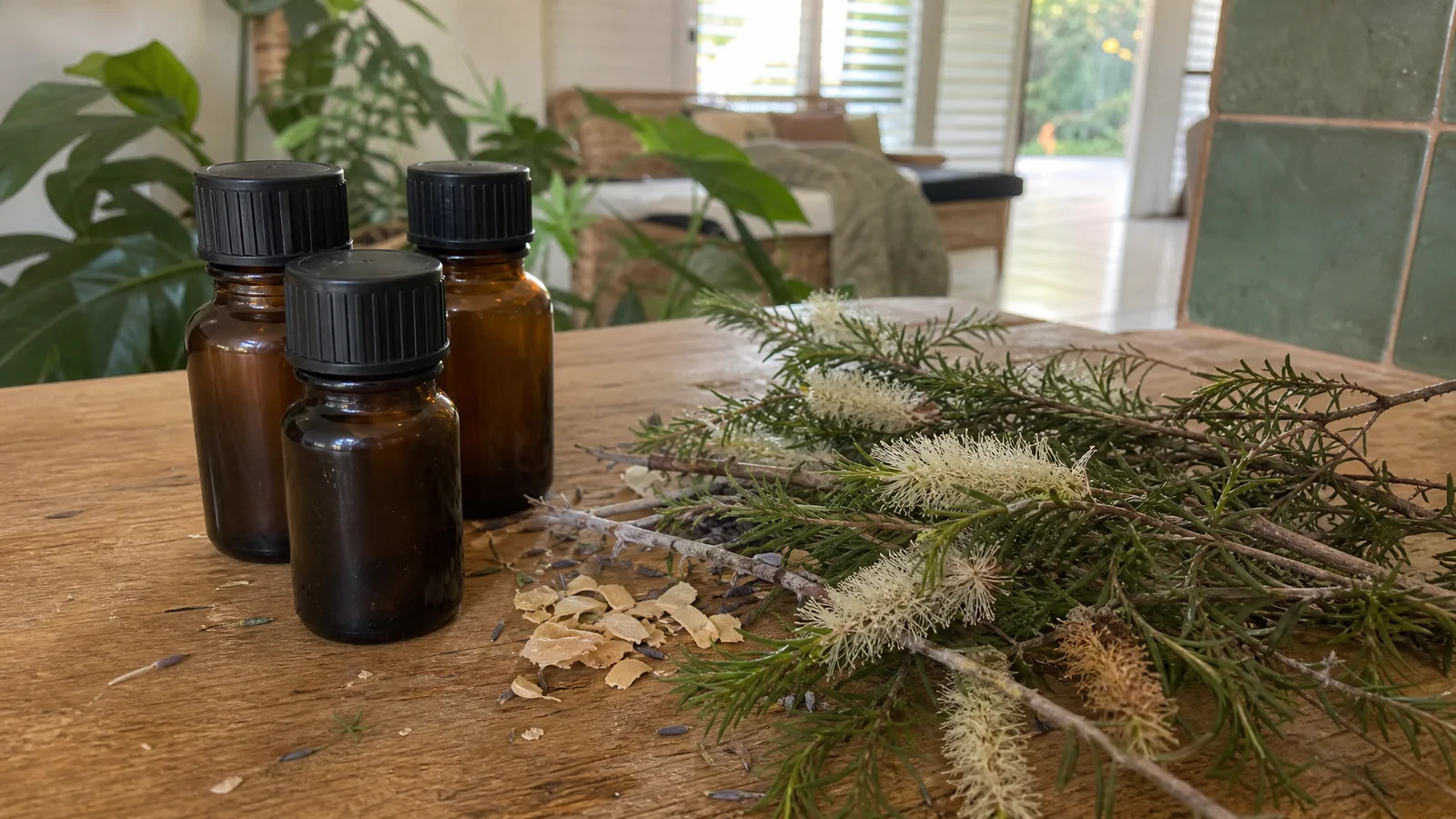
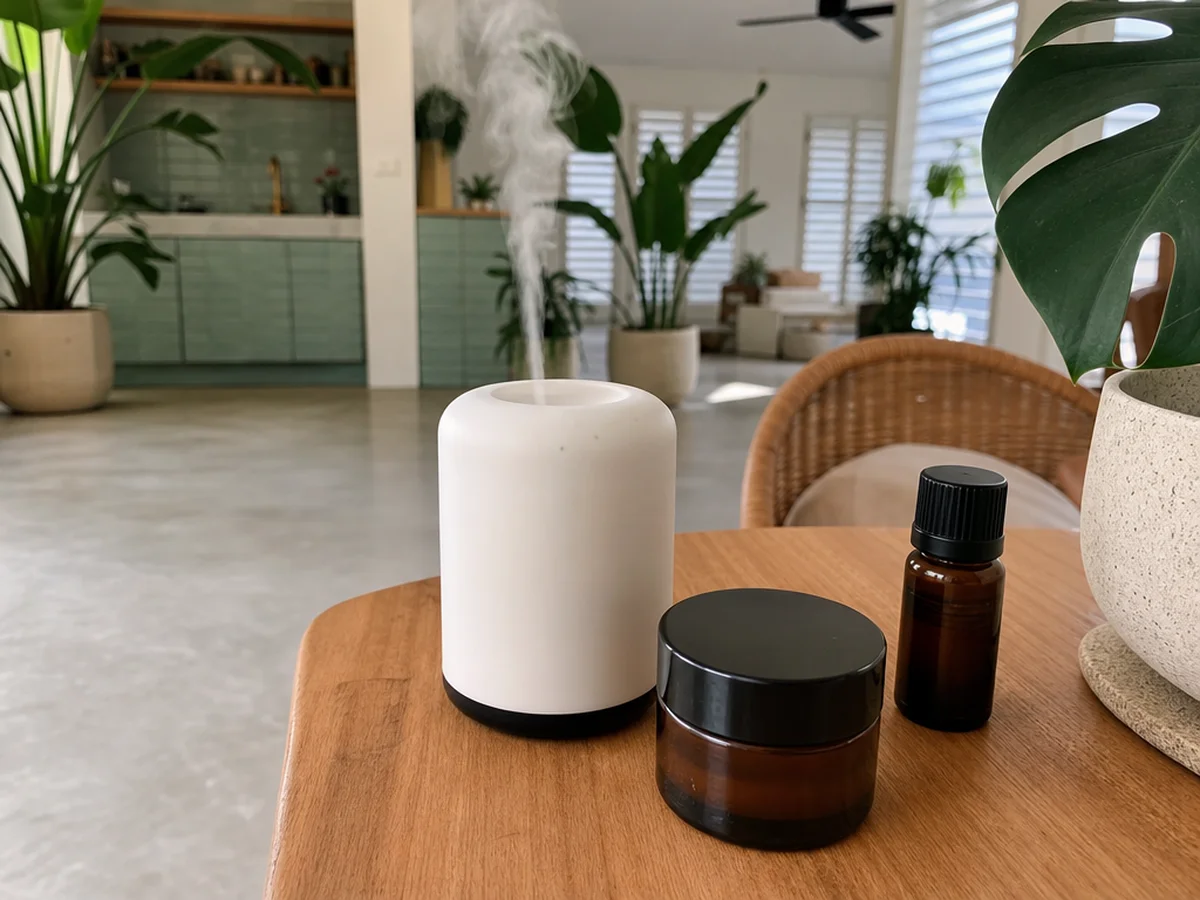
Keep the cap tight, the bottle cool and out of the light, and reseal it after each use. Our bottles are amber glass. We say typically two to three years for shelf life, but the date and the scent of your own bottle are the best guides. More detail is in our storage guide.
How many drops go in a diffuser?
That depends on your machine, so follow its manual and begin with a small number, then adjust to taste. Our diffuser drops guide shows how to work it out from the water capacity.
Is it right for children, pets or pregnancy?
We keep rosalina away from children and pets, and we do not offer it as a product for pregnancy or babies. Each of those deserves a professional answer: a pediatrician, a veterinarian, or your midwife or obstetrician. We have gathered the research and the cautions in separate articles on young children, dogs and cats and pregnancy.
How should I smell it first?
Put a drop on a paper strip and hold it a hand's width from your nose. Smell it at the start, again after ten minutes, and again after an hour. Scent is personal, and the gap between your first and last impression is often the most interesting part.
Which carrier oil should I use?
We sell only rosalina, so carrier oils come from a pharmacy, grocery or craft supplier. Jojoba and sweet almond are the two we mention most, and our carrier oils guide compares them.
Can I swallow it?
No. Rosalina oil is an external, aromatic material and is not for internal use. If anyone swallows an essential oil, Poison Control recommends using its online tool or calling 1-800-222-1222 in the United States (Poison Control). More in our piece on swallowing essential oils.
Something we have not covered? Send us your question through the contact page and we will do our best to answer it.
Rosalina Essential Oil
Rosalina Essential Oil from our own shop, in sizes from 0.5 oz to bulk.
From $16.99
Shop Now →Sources & Further Reading
- Royal Botanic Garden Sydney. PlantNET - FloraOnline, Melaleuca ericifolia. plantnet.rbgsyd.nsw.gov.au
- Brophy and Doran, 2004. Geographic variation in oil characteristics in Melaleuca ericifolia. J Essent Oil Res. Europe PMC
- Valarezo et al., 2026. Essential Oil of Melaleuca ericifolia Sm.: Chemical Composition, Enantiomeric Distribution, and Antimicrobial, Antioxidant, and Anticholinesterase Activities. Molecules. Europe PMC
- Poison Control. Essential oils: Poisonous when misused. poison.org