Rosalina Oil and Pets: Living With Dogs and Cats
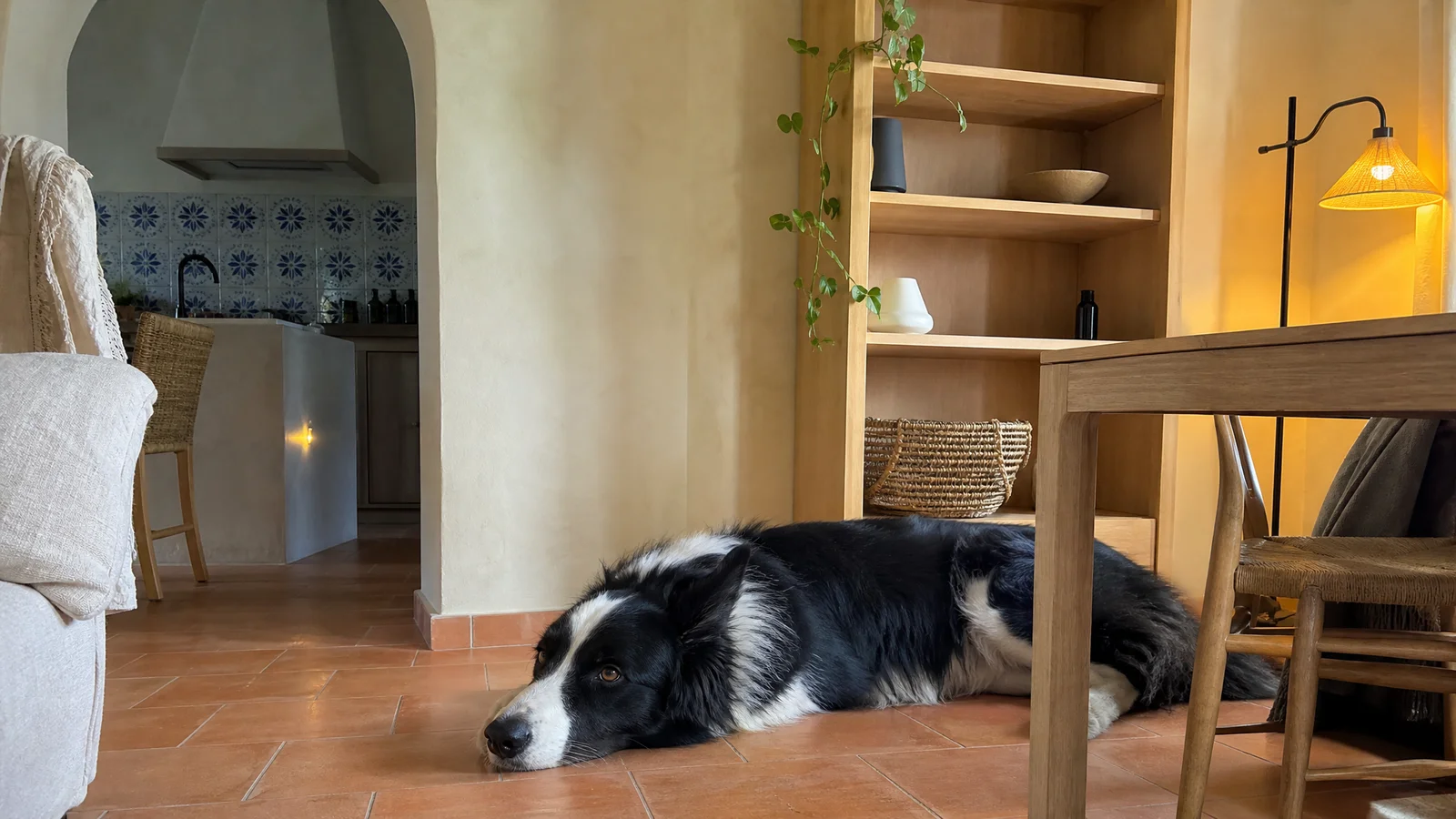
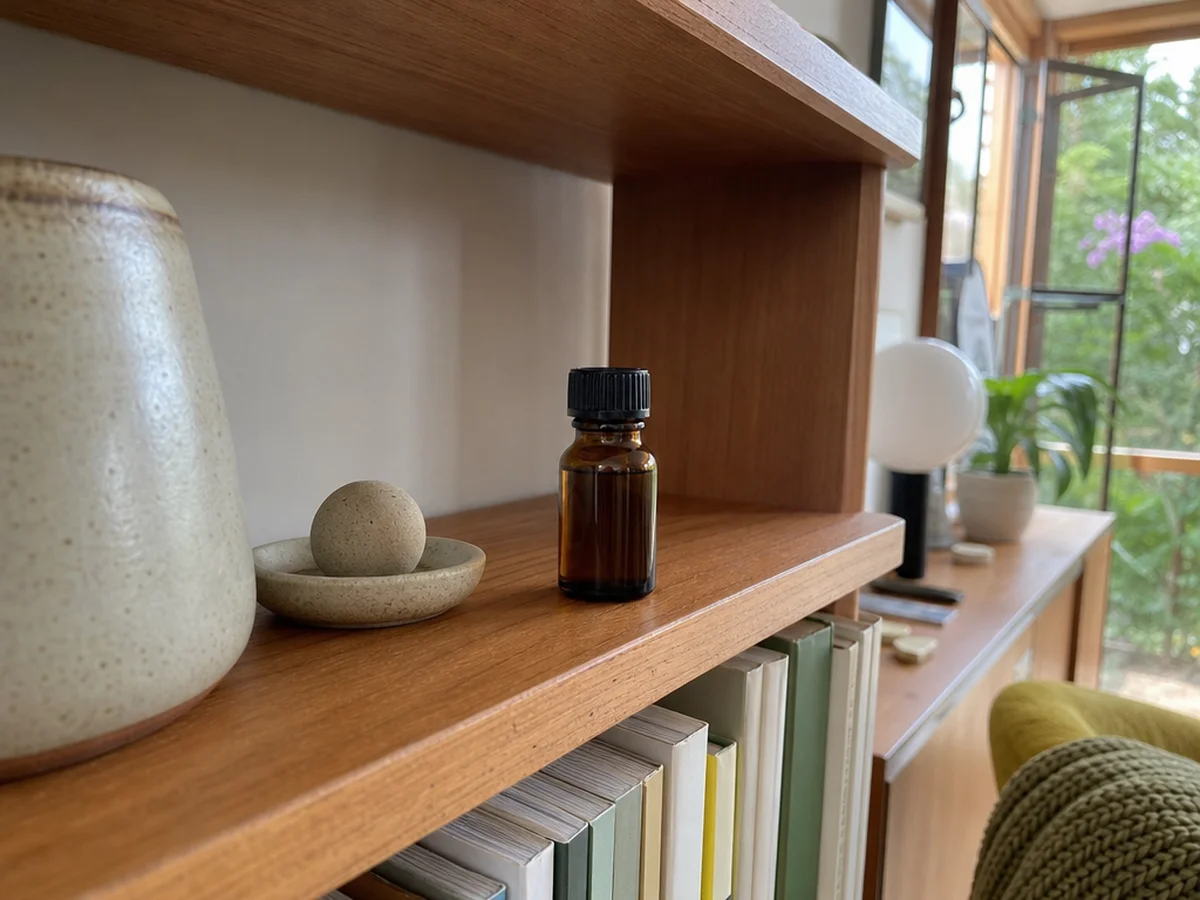
Dogs and cats live closer to the floor, groom with their tongues and cannot tell us when something smells too strong. That is why the question is never only "is this oil nice?" but "where is it, and who can reach it?" Our answer for a house with animals is simple: keep the bottle shut and out of reach, and ask your veterinarian before the oil goes anywhere near a pet.
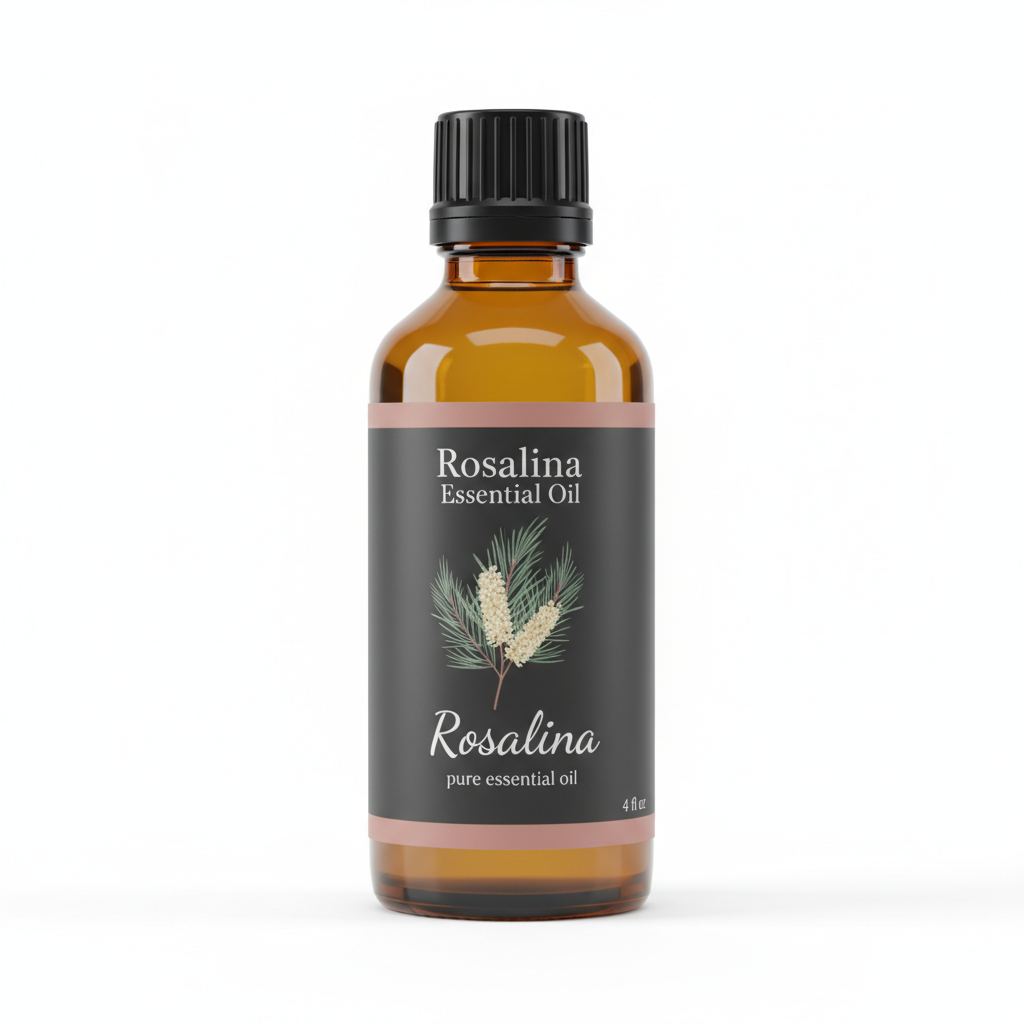
Rosalina Essential Oil
Our own Rosalina Essential Oil, in sizes from 0.5 oz to bulk.
From $16.99
Shop Now →What we know, and what we do not
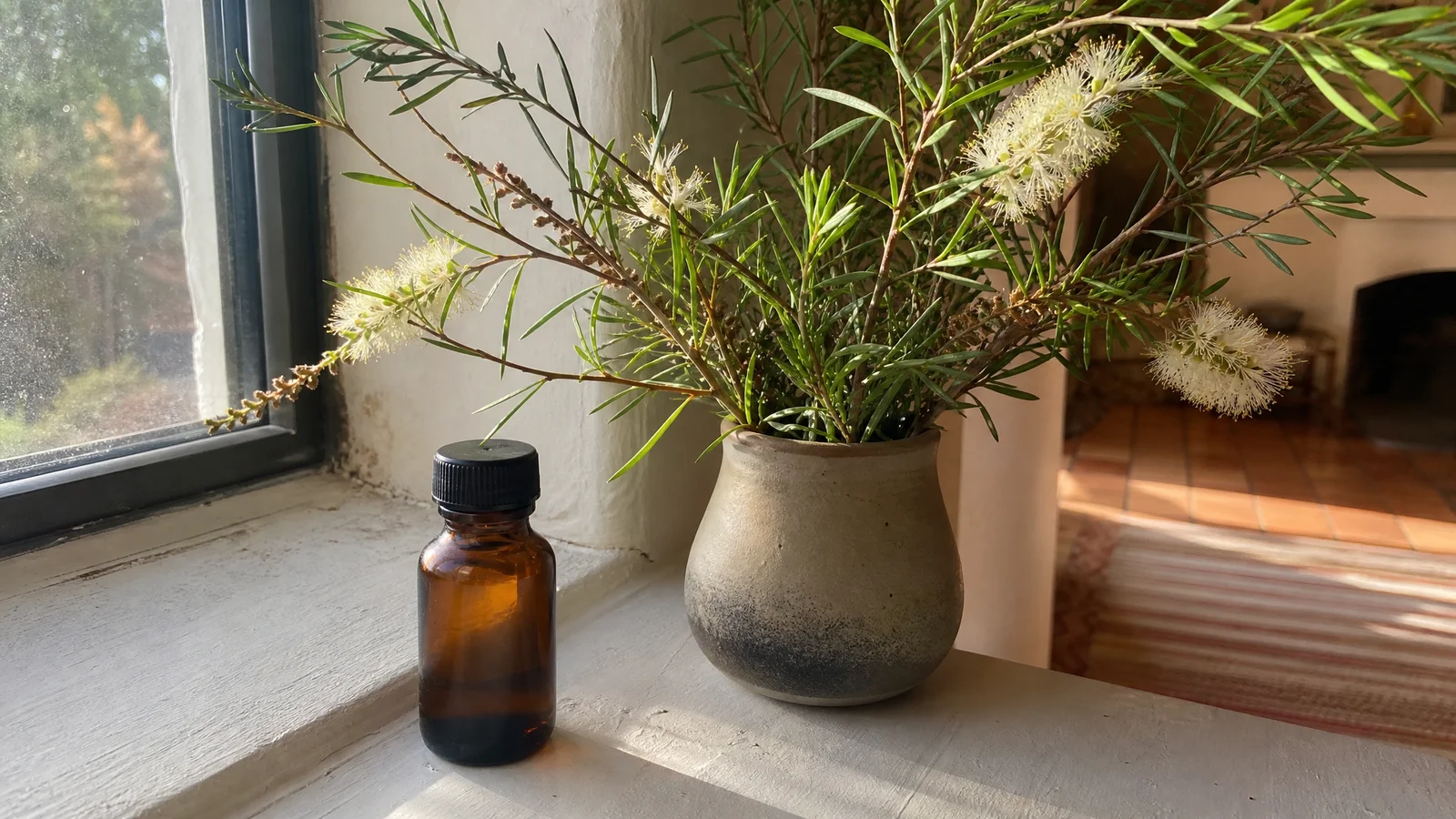
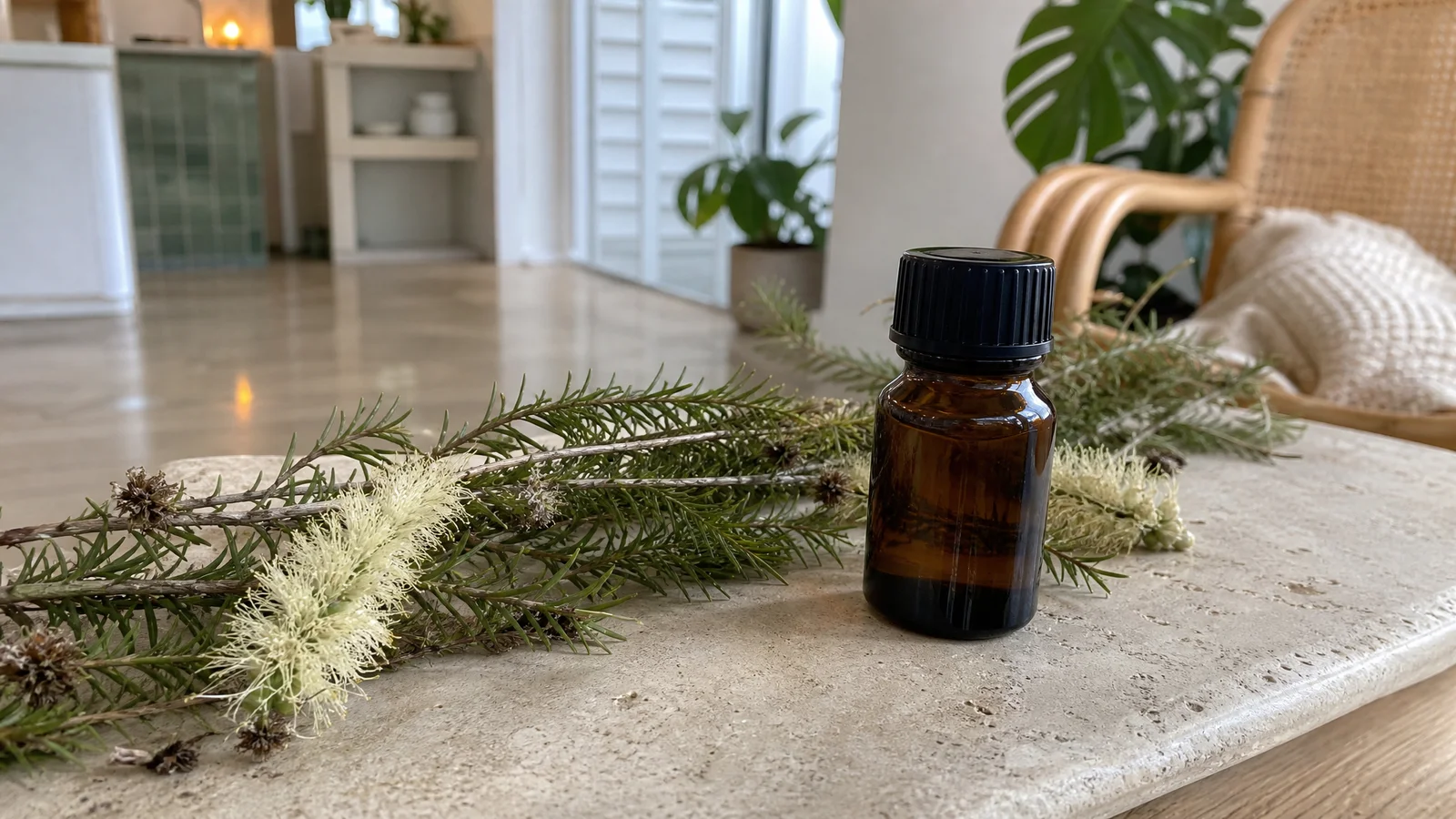
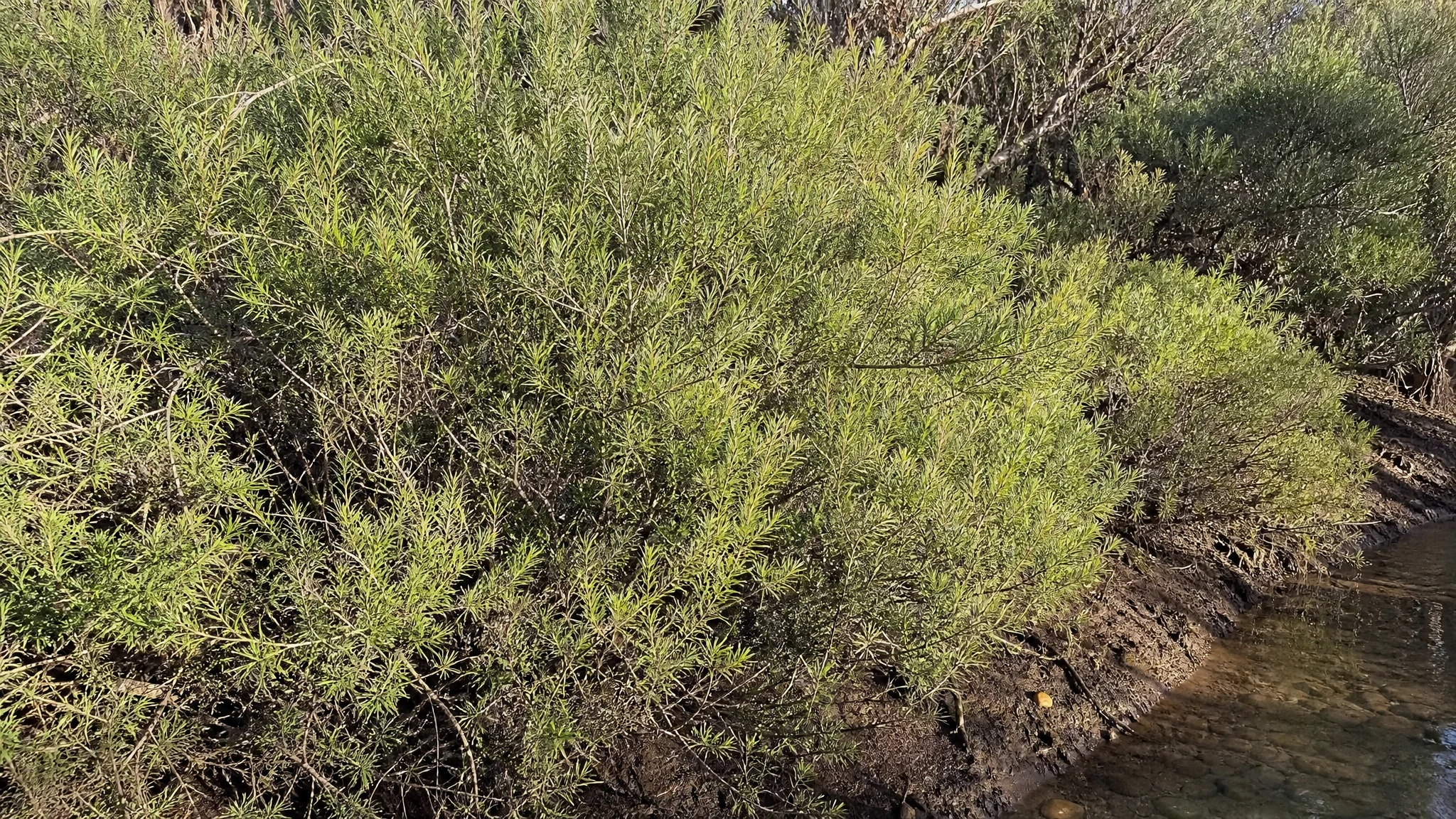
Rosalina oil comes from Melaleuca ericifolia, a close cousin of the tea tree. Nobody has published a study of this particular oil in dogs or cats, so we do not claim it is fine and we do not claim it is harmful. What exists is a body of veterinary reports on tea tree oil, and because the two plants share a genus, we take those reports seriously. Reasoning from a relative is an inference, not a finding, but when the subject is a pet's wellbeing we would rather lean cautious.
What the tea tree reports describe
The largest is a review of 443 dog and cat exposures to full-strength tea tree oil reported to the ASPCA Animal Poison Control Center over ten years. Most were deliberate applications to the skin, often by owners trying to treat a pet themselves. Signs usually started within 2 to 12 hours and could last up to three days: drooling, lethargy, weakness, wobbly walking and tremors. Younger and lighter cats were more likely to become seriously ill (Khan et al., 2014). An older report of melaleuca oil applied to dogs and cats describes much the same picture, with animals recovering in two to three days with supportive care (Villar et al., 1994).
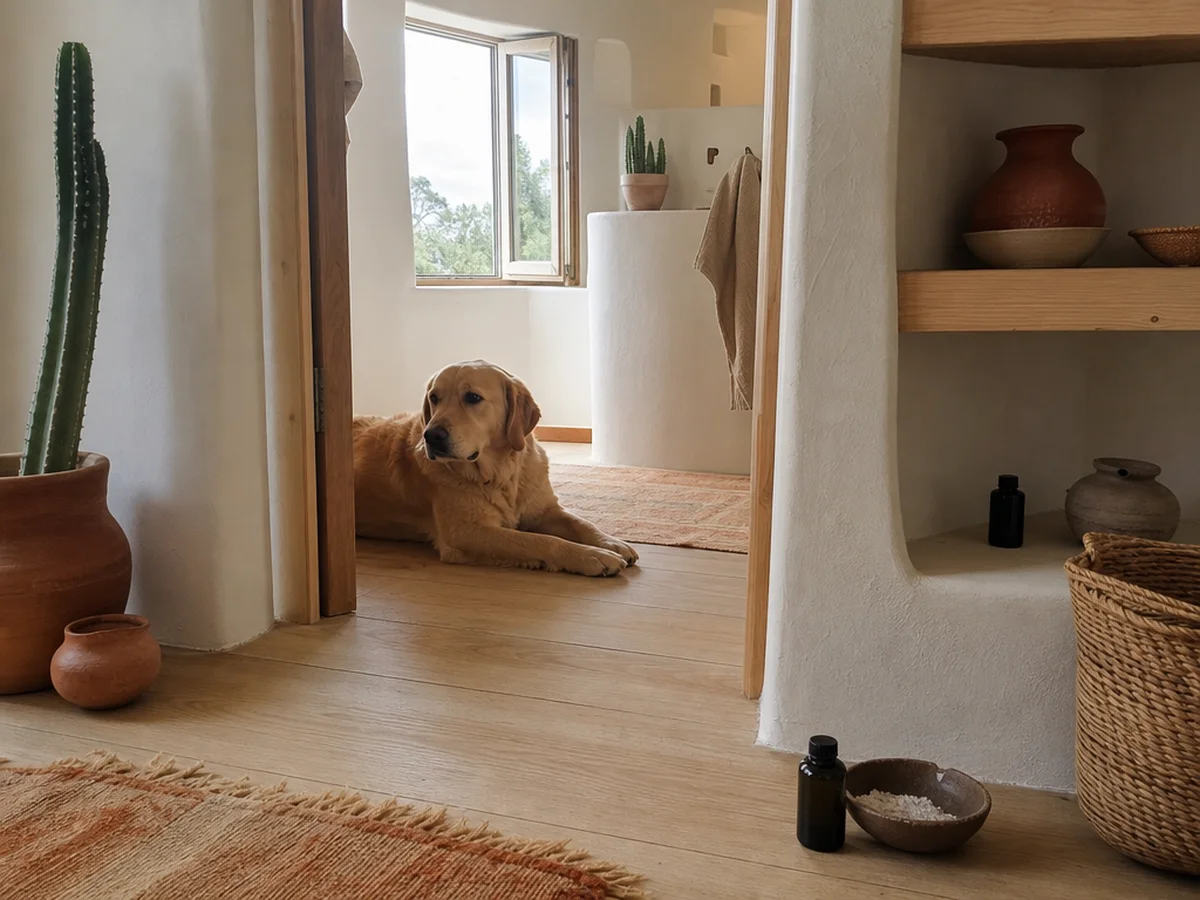
These are poison-center and clinic reports, so they cannot tell us how often a given exposure causes trouble. They also describe concentrated oil put directly on an animal, which is a different thing from a closed bottle on a high shelf. What they do give us is a clear picture of what to avoid.
Why we do not assume rosalina is milder
It is tempting to think a "softer" Melaleuca must be gentler on animals too. The research does not let us say that. Rosalina oils from different parts of Australia and from other countries vary a lot in what they contain: one survey of the species found populations averaging about 3% linalool with around 34.5% 1,8-cineole in the south, and a single northern tree at 60% linalool (Brophy and Doran, 2004). A cultivated sample from Ecuador was mostly 1,8-cineole (Valarezo et al., 2026). With that range, and no animal data for any of it, "milder" would be a guess.
Practical habits for a home with animals
- Skin and coat: we do not use or suggest rosalina oil on pets, including as a flea or itch remedy. A veterinarian can recommend a product dosed for your animal's species and weight.
- Diffusing: the ASPCA says plainly that it would not recommend using any essential oils in areas where pets have access, and notes that cats are especially sensitive (ASPCA). If you diffuse, choose a room the animals cannot enter and keep the door closed. Birds and small animals deserve their own conversation with a vet.
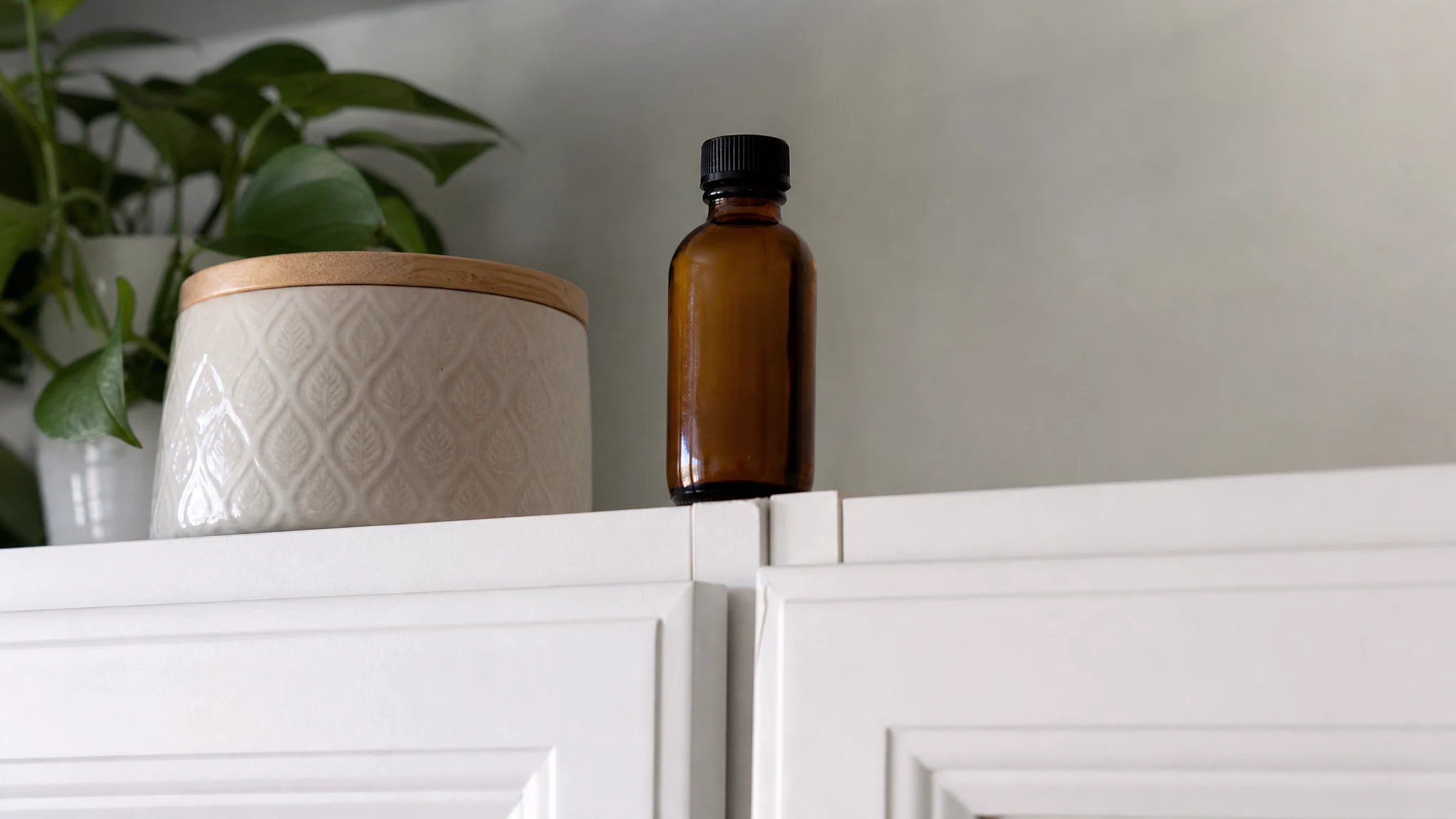
- Storage: poison control advises locking essential oils away from children and pets (Poison Control), and that is the habit we recommend. Recap after every use and wipe up spills, since a drip on the floor is easy for a curious paw or tongue to find. Our storage guide covers the bottle itself.
Spills, floors and paws
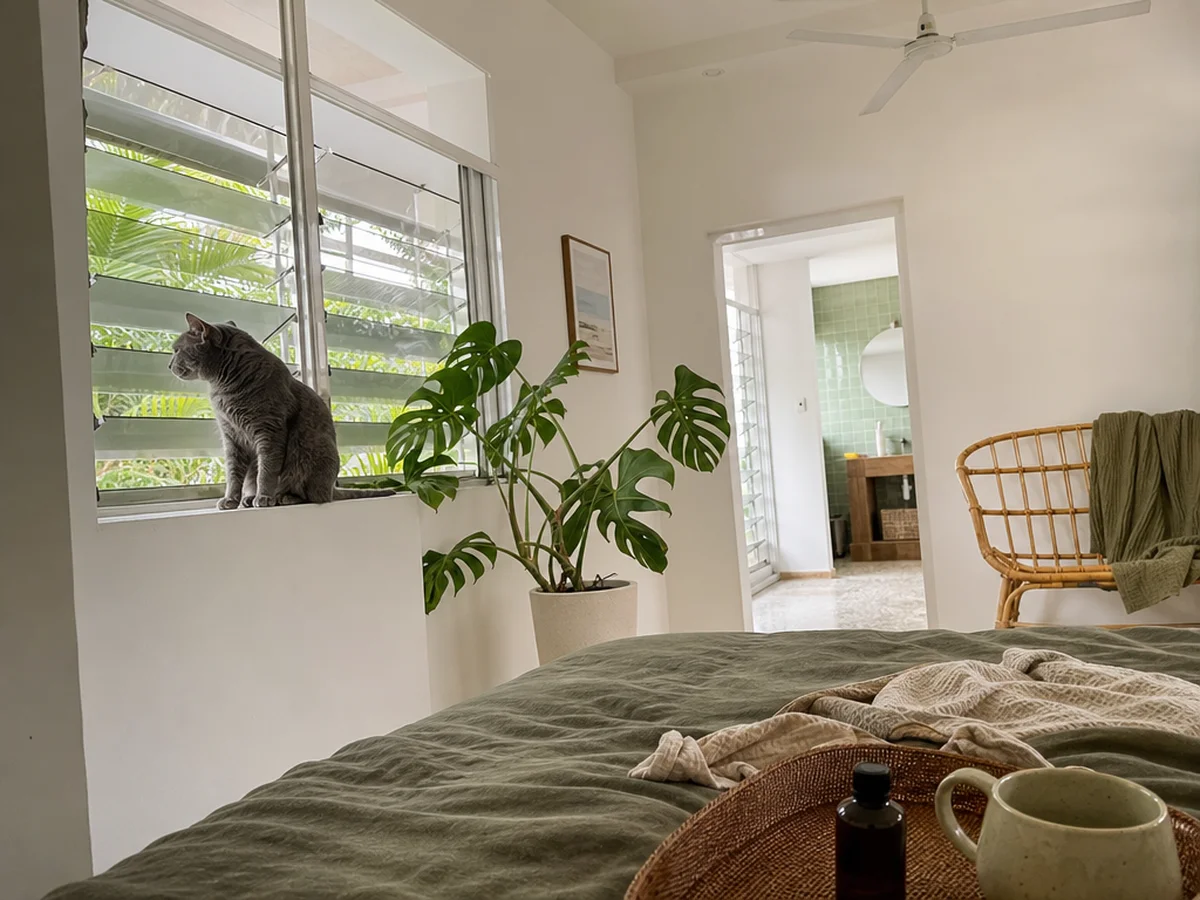
Wipe up any drip at once with a paper towel, and put the towel in a bin the animals cannot open. Do your blending at a table with the door shut, so a curious nose cannot join in, and recap the bottle before you step away, even for a moment.
If a pet gets into it
Do not wait for signs. Call your veterinarian or the ASPCA Animal Poison Control Center at (888) 426-4435 right away, and keep the bottle to hand so you can say which oil, how much, how long ago, and your animal's species and weight. The human poison line, 1-800-222-1222, is for people. Signs in the tea tree reports could take hours to appear, which is exactly why a quick call beats a watchful evening.
Keep the numbers handy
Put your veterinarian's number and the ASPCA Animal Poison Control Center line on the fridge before you need them. In a worrying moment, nobody wants to hunt for a phone number. It takes a minute now and could save a very anxious one later.
A note on shared households
If you have children as well as animals, the same locked-away habit covers both, and we talk about the child side in our piece on rosalina around young children. If you are weighing whether to diffuse at all, the arithmetic of how much goes into a machine is in our diffuser drops guide, and for the insect question that often sits behind a pet question, see what the studies actually tested in essential oils as bug repellent.
We sell rosalina oil as an aromatic material for people, and we love it for its soft, fresh scent. For animals, your veterinarian has the last word, and a bottle on a high, closed shelf keeps everyone comfortable.
Rosalina Essential Oil
Rosalina Essential Oil from our own shop, in sizes from 0.5 oz to bulk.
From $16.99
Shop Now →Sources & Further Reading
- Khan, McLean and Slater, 2014. Concentrated tea tree oil toxicosis in dogs and cats: 443 cases (2002-2012). J Am Vet Med Assoc. Europe PMC
- Villar et al., 1994. Toxicity of melaleuca oil and related essential oils applied topically on dogs and cats. Vet Hum Toxicol. Europe PMC
- Brophy and Doran, 2004. Geographic variation in oil characteristics in Melaleuca ericifolia. J Essent Oil Res. Europe PMC
- Valarezo et al., 2026. Essential Oil of Melaleuca ericifolia Sm.: Chemical Composition, Enantiomeric Distribution, and Antimicrobial, Antioxidant, and Anticholinesterase Activities. Molecules. Europe PMC
- ASPCA. Pet Poisons: Be Mindful of these Household Products and Cleaning Agents. aspca.org
- Poison Control. Essential oils: Poisonous when misused. poison.org