Buying Rosalina Oil: 5 Questions to Ask Any Seller
Here is something that surprises people about rosalina oil: the name on the bottle does not tell you what is inside. Published analyses of oil from this one species range from linalool-rich to 1,8-cineole-rich to methyl eugenol-rich, and nothing on a front label says which. That is not a reason to be nervous. It is a reason to know five questions worth asking any seller, ourselves included.
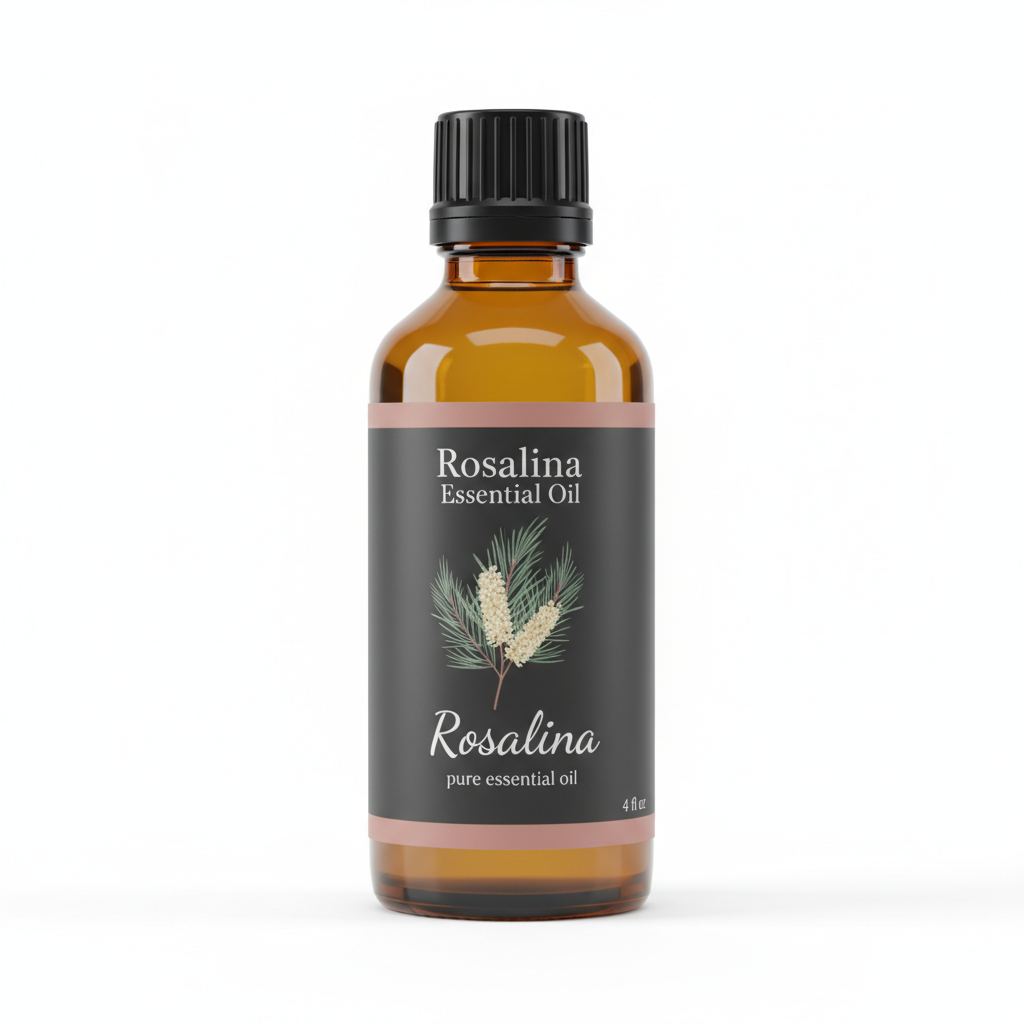
Rosalina Essential Oil
Our own Rosalina Essential Oil, in sizes from 0.5 oz to bulk.
From $16.99
Shop Now →Which species, and how is it written?
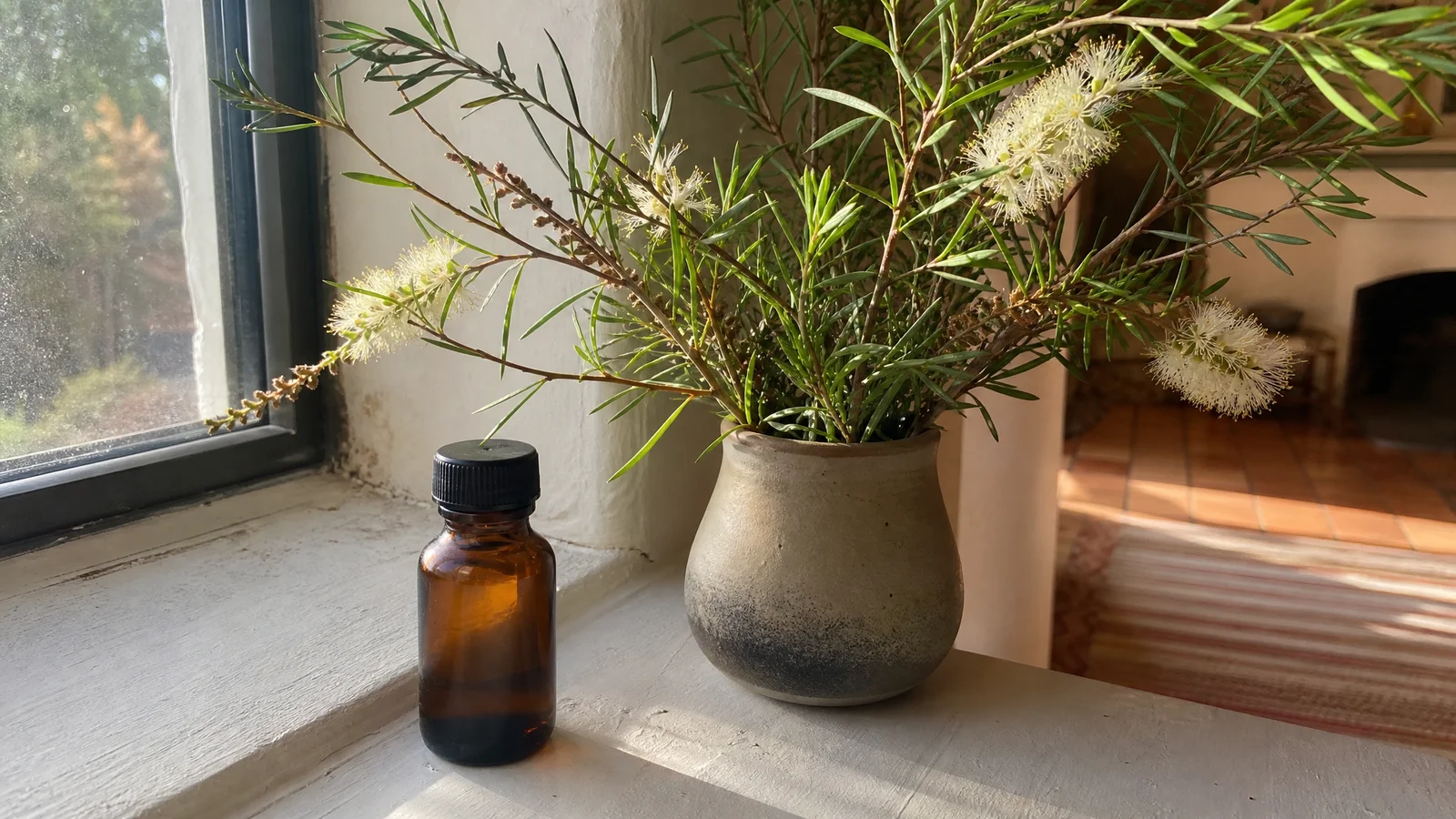
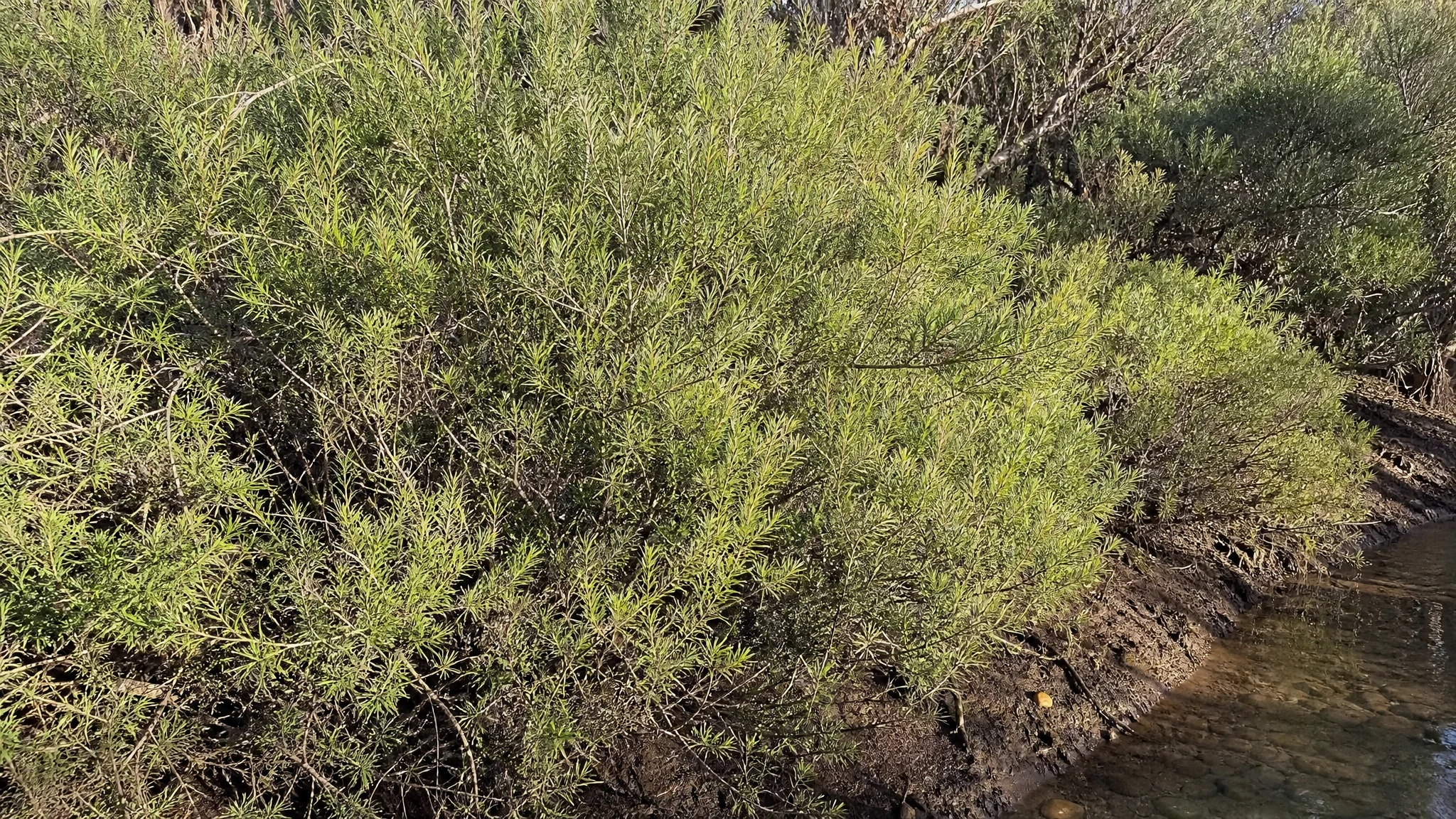
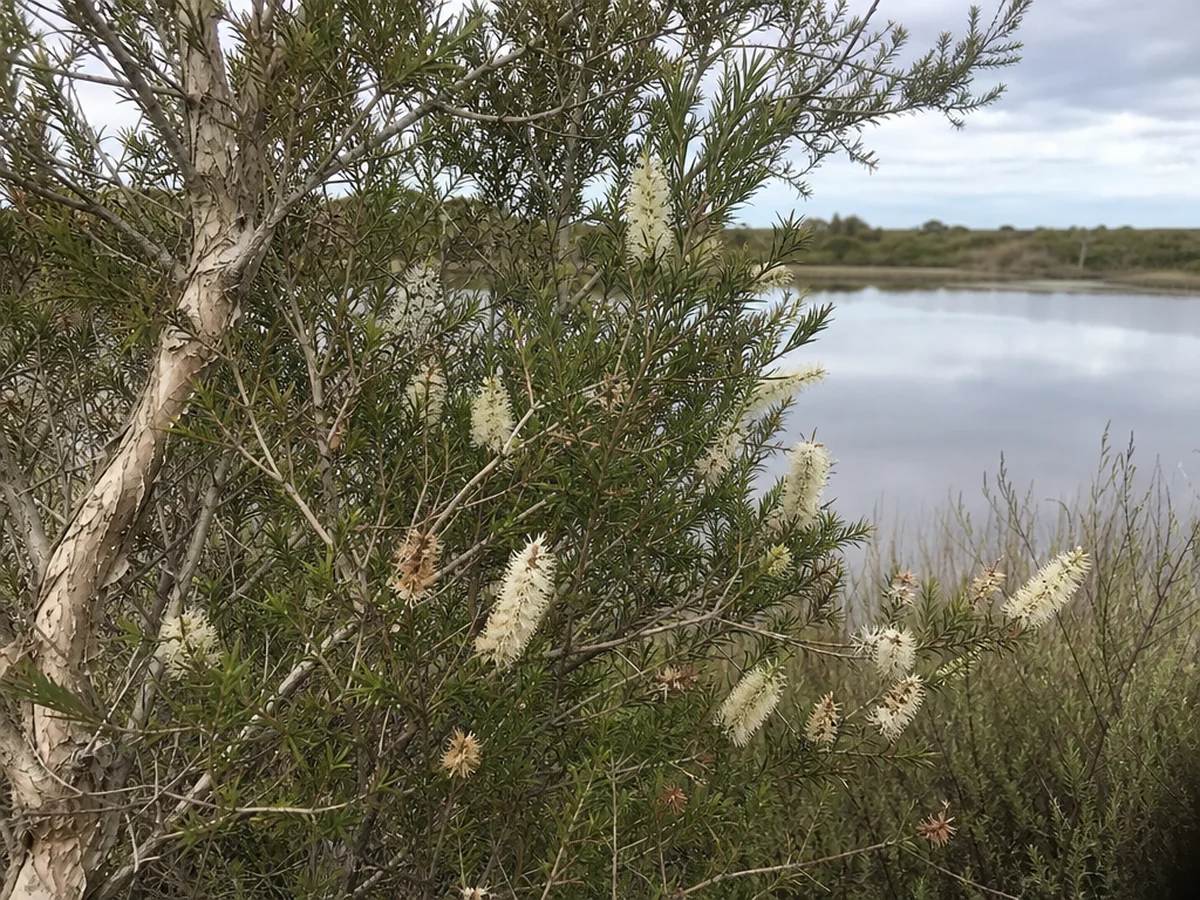
Ask for the Latin name, the plant part and the method. For rosalina the expected answer is Melaleuca ericifolia, leaves, steam distillation. "Rosalina" and "lavender tea tree" are trade names; the New South Wales flora entry at the Royal Botanic Garden Sydney lists the plant as Swamp Paperbark and mentions neither. A seller who gives you the binomial has told you something you can check. Our label-reading article explains why that matters on any oil, and our introduction to rosalina covers the plant.
Is there a gas chromatography report, and for which batch?
This is the question that does the real work, because composition is where rosalina varies. Brophy and Doran sampled the species across south-eastern Australia and found that linalool was highest in northern New South Wales and fell steadily southward while 1,8-cineole rose. In the southern populations 1,8-cineole averaged around a third of the oil and linalool only about 3%, while the best tree at one New South Wales site reached 60% linalool. A 2026 paper on a cultivated Ecuadorian oil found it was 61.85% 1,8-cineole, and its authors note that earlier reports describe at least three distinct chemical profiles.
A useful report names the batch, the date, the laboratory and the method, and lists constituents as percentages. If linalool is what you are after, the report should print a linalool figure.
What can a report not tell you?
Even a good report has limits. A 2021 study of adulteration in lavender, lemon and tea tree oils found that adding synthetic linalool shows up in chiral analysis, but that diluting with vegetable oil leaves the percentages of the remaining constituents unchanged, so a profile on its own cannot reveal it. Absolute quantitation can. That work did not look at rosalina, but the habit it teaches is worth borrowing: ask whether a report is a profile only or a quantified one. A density or refractive index is a physical constant you can compare with a published range, and it is a helpful sanity check, though it is not an identity test.
Why ask about methyl eugenol?
Because it explains why profile matters beyond scent. European safety advisers concluded in 2000 that methyleugenol should not be intentionally added to cosmetics, and proposed ceilings where it occurs naturally in an essential oil: 0.01% in fine fragrance and 0.0002% in other leave-on products. Those are historical advisory figures, so check current rules if you are formulating to sell. As arithmetic, an oil that were almost entirely methyl eugenol, as one Egyptian oil is reported to be, would put a leave-on product made with just 1% of it thousands of times over that old advisory number. That is the extreme case. The point is that a report with no figure for it leaves the question open, and a skin product is where the answer counts.
How old is it, and how has it been kept?
Ask for the batch date and the best-by date, and ask about the container. We recommend a tightly capped bottle kept cool and dark, resealed after each use, and our storage article goes into the details.
Smell it, then write it down
When a bottle arrives, open it and take a slow sniff before you do anything else. Notice where the aroma starts and where it settles: we describe ours as soft and fresh, with a green opening and a floral, lavender-like sweetness underneath. Write a sentence or two about what you notice next to the batch code. It sounds fussy, but a note like that is the quickest way to spot a difference when you reorder, from us or from anyone else.
Keep the cap tight between uses and wipe the neck of the bottle so it does not get tacky. Small habits like these are the difference between a bottle you enjoy to the last drop and one that ends up forgotten in a drawer.
How our paperwork answers
We sell one product, Rosalina Essential Oil, sold neat and steam-distilled from the leaves of Melaleuca ericifolia. The Certificate of Analysis we publish is for batch RSLAIUMEAUC004A, with a best-by date of 04/14/2027. It records appearance and smell as "Complies," a relative density of 0.890 and a refractive index of 1.465 at 20 C, both inside the printed standards. It describes one batch, and it does not list constituent percentages. If your use depends on linalool, 1,8-cineole or methyl eugenol, ask us in writing through the contact page before you order a larger size, and keep the answer in writing.
For anyone planning volume, our wholesale page offers a sample bottle before you commit. A sample lets you smell the oil and check how the container and label read, though a smell check is not a composition check, so the written report comes first. Keep the report, a photo of the label and the batch code together so a later reorder can be compared against the first. The buying article and the sizes article pick up from here.
Rosalina is worth the questions, because a well-documented bottle is a pleasure to use. Dilute before it touches skin (we suggest 0.5% to 2% in a carrier oil, with a patch test first), keep it from eyes, children and pets, and never swallow it. The Tisserand Institute notes that dilution and risk are directly related, so starting low is a sound habit.
Rosalina Essential Oil
Rosalina Essential Oil from our own shop, in sizes from 0.5 oz to bulk.
From $16.99
Shop Now →Sources & Further Reading
- Royal Botanic Garden Sydney, PlantNET - FloraOnline (Melaleuca ericifolia entry)
- Brophy JJ, Doran JC, 2004. Geographic variation in oil characteristics in Melaleuca ericifolia. J Essent Oil Res 16(1):4-8.
- Valarezo E et al., 2026. Essential Oil of Melaleuca ericifolia Sm.: Chemical Composition, Enantiomeric Distribution, and Antimicrobial, Antioxidant, and Anticholinesterase Activities. Molecules.
- Capetti F et al., 2021. Adulteration of Essential Oils: A Multitask Issue for Quality Control. Three Case Studies: Lavandula angustifolia Mill., Citrus limon (L.) Osbeck and Melaleuca alternifolia (Maiden & Betche) Cheel. Molecules 26(18):5610.
- SCCNFP, Opinion concerning Methyleugenol adopted by the SCCNFP during the 14th plenary meeting of 24 October 2000
- Tisserand Institute, Irritation and allergic reactions