Cleaning With Essential Oils: What Scent Can and Cannot Do
A few drops of essential oil can make a spray bottle smell wonderful. What they cannot do is change what the bottle is. Scent is the finishing touch on a cleaner, and once you see it that way, most of the decisions about how much to add and where to use it become easy.
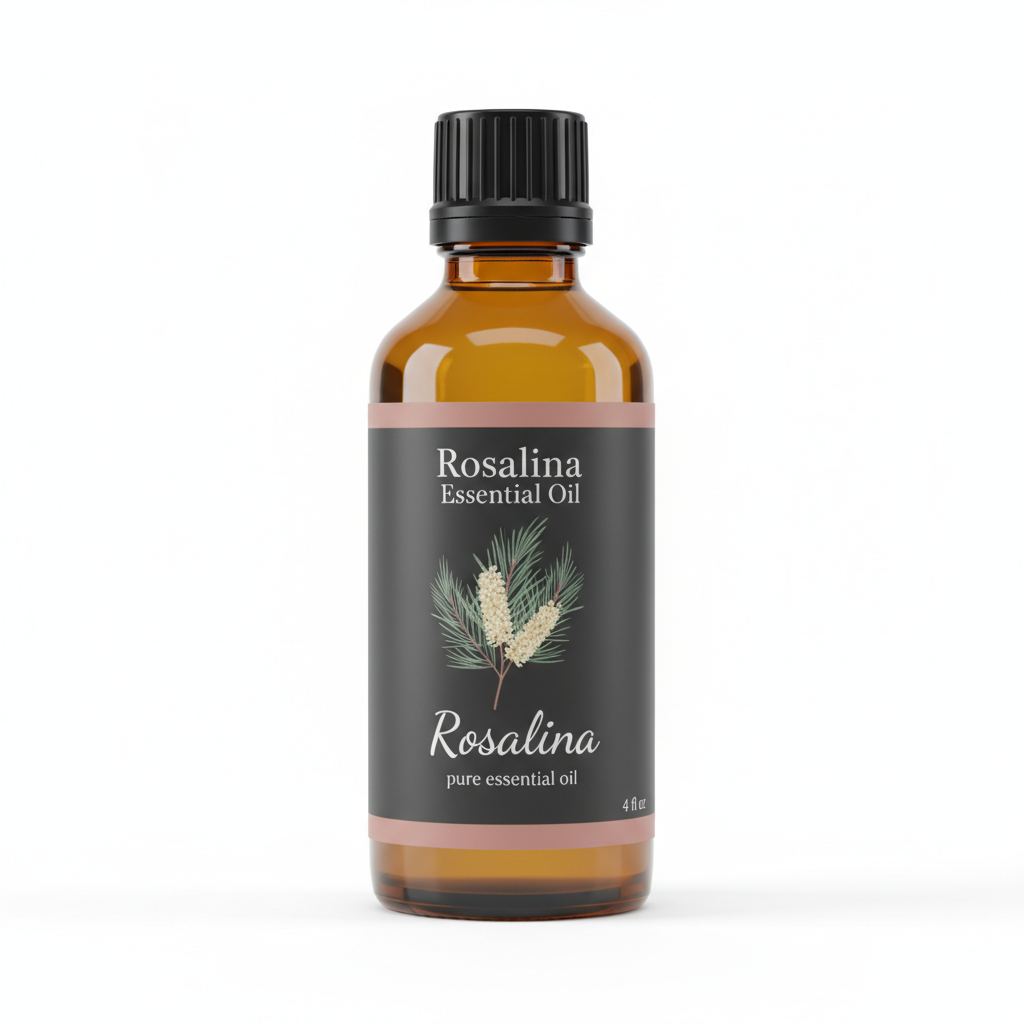
Rosalina Essential Oil
Our own Rosalina Essential Oil, in sizes from 0.5 oz to bulk.
From $16.99
Shop Now →Soap does the cleaning, and the label does the disinfecting
The EPA draws a clear line between three jobs. Cleaning, in its words, "removes dirt and organic matter from surfaces using soap or detergents," and the agency regulates cleaning products only if they sanitize or disinfect. Sanitizing and disinfecting are separate jobs done with registered chemicals, and the directions and contact time live on that registered label. A bottle of water, soap and scent has no registration number because it makes no such claim.
So we think of rosalina oil as a fragrance for a cleaner you already trust. We do not sell a cleaner or a disinfectant, and the oil is not one. If you have raw meat juices on a counter or someone sick at home, reach for a registered product and follow its label. For everyday dirt, soap, water and a cloth are the whole story, and scent is the part you choose for pleasure.
What scent does to the air in the room
Terpenes, the volatile molecules that give most essential oils their smell, can react with ozone indoors. Researchers at Lawrence Berkeley National Laboratory measured cleaning products and air fresheners in a 50 cubic metre test room and found that full-strength pine-oil cleaner produced high terpene concentrations, while diluted products released a much smaller share of what was dispensed. They also noted that terpenes can react with ozone to form secondary pollutants, formaldehyde and ultrafine particles among them. That study looked at pine-oil and limonene products, not rosalina oil, but the lesson carries over in plain terms: use a little, open a window, and skip stacking a spray, a candle and a diffuser in one closed room.
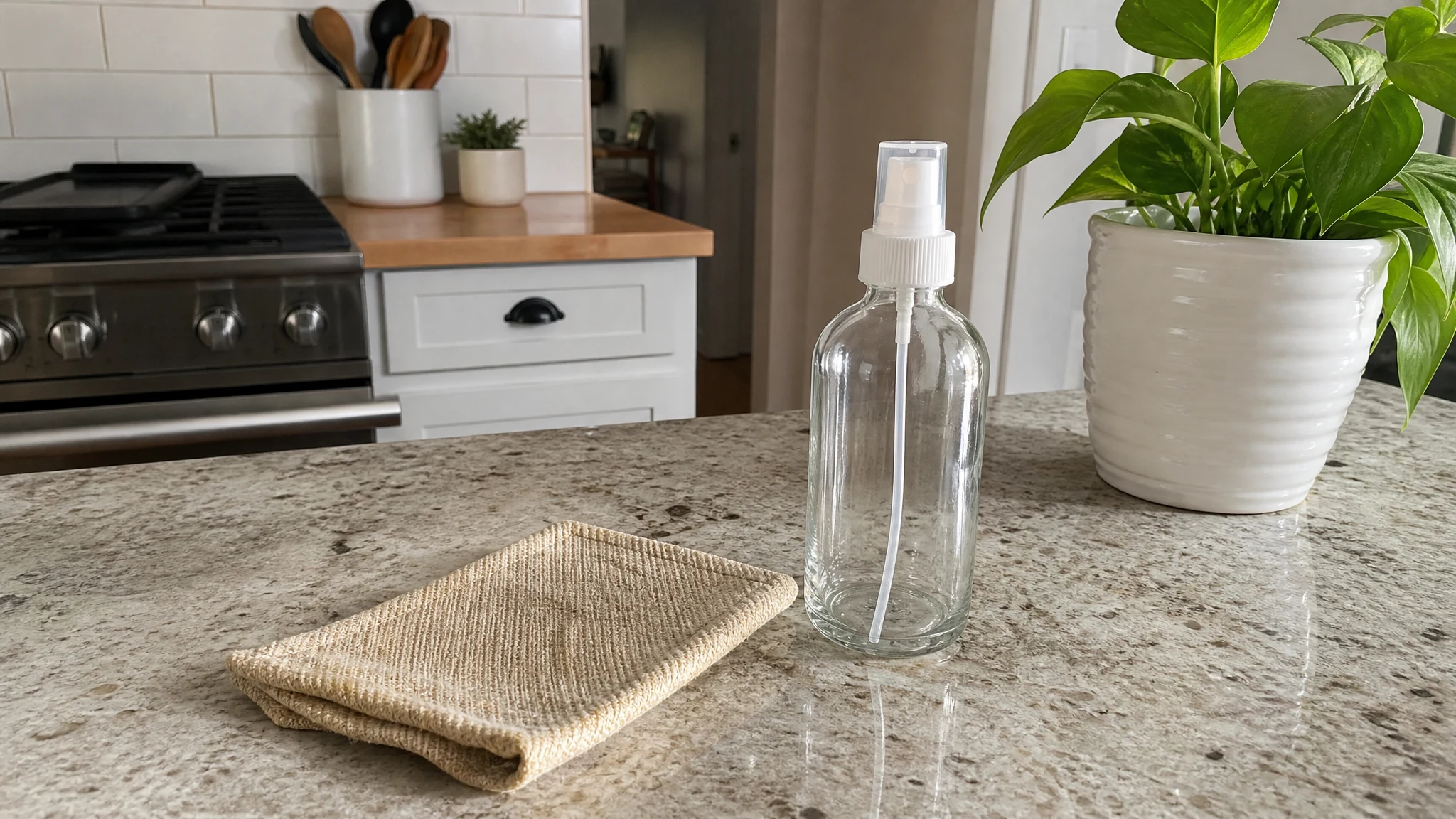
Our suggestion for a scented spray follows from that. Take a 500 ml bottle. At 0.2%, that is 1 ml of oil, roughly 20 drops (arithmetic on the usual 20-drops-per-ml convention; droppers vary). Half that is a lovely place to start, and it is a starting suggestion of ours, not a regulatory limit. Our all-purpose cleaner formula lays out the full arithmetic.
Why the oil floats, and why that matters on stone
The batch on the Certificate of Analysis we publish measured a relative density of 0.890 at 20 C, lighter than water. That is why neat oil beads and rides on top of a spray bottle instead of blending in, and why the first few sprays can be the strongest. On a finished surface, concentrated droplets are exactly what you do not want. Cosmetic formulators solve this with a solubilizer, a surfactant that holds oil droplets in suspension. We do not sell one, so you will find it at a craft or cosmetic-supply shop, along with a data sheet that gives the ratio.
Stone deserves its own thought, and here the oil is rarely the culprit. The Natural Stone Institute says that products containing lemon, vinegar or other acids may dull or etch calcareous stones such as marble, limestone and travertine, and recommends mild, non-acidic cleaners. Granite and other silicate stones are more forgiving, though the Institute still advises against acidic cleaners. If your counters are marble, keep the vinegar and citrus out of the bottle and use a neutral soap base.
For finished wood, painted or sealed surfaces and plastics, the sensible habit is the ordinary one: read the maker's care instructions, try a hidden spot, wait, and look for a ring or softening. Keep liquid off electronics and appliance controls by spraying a cloth, not the surface. Keep oil out of floor mop water, because residue makes a slick floor.
Choosing the moment to scent
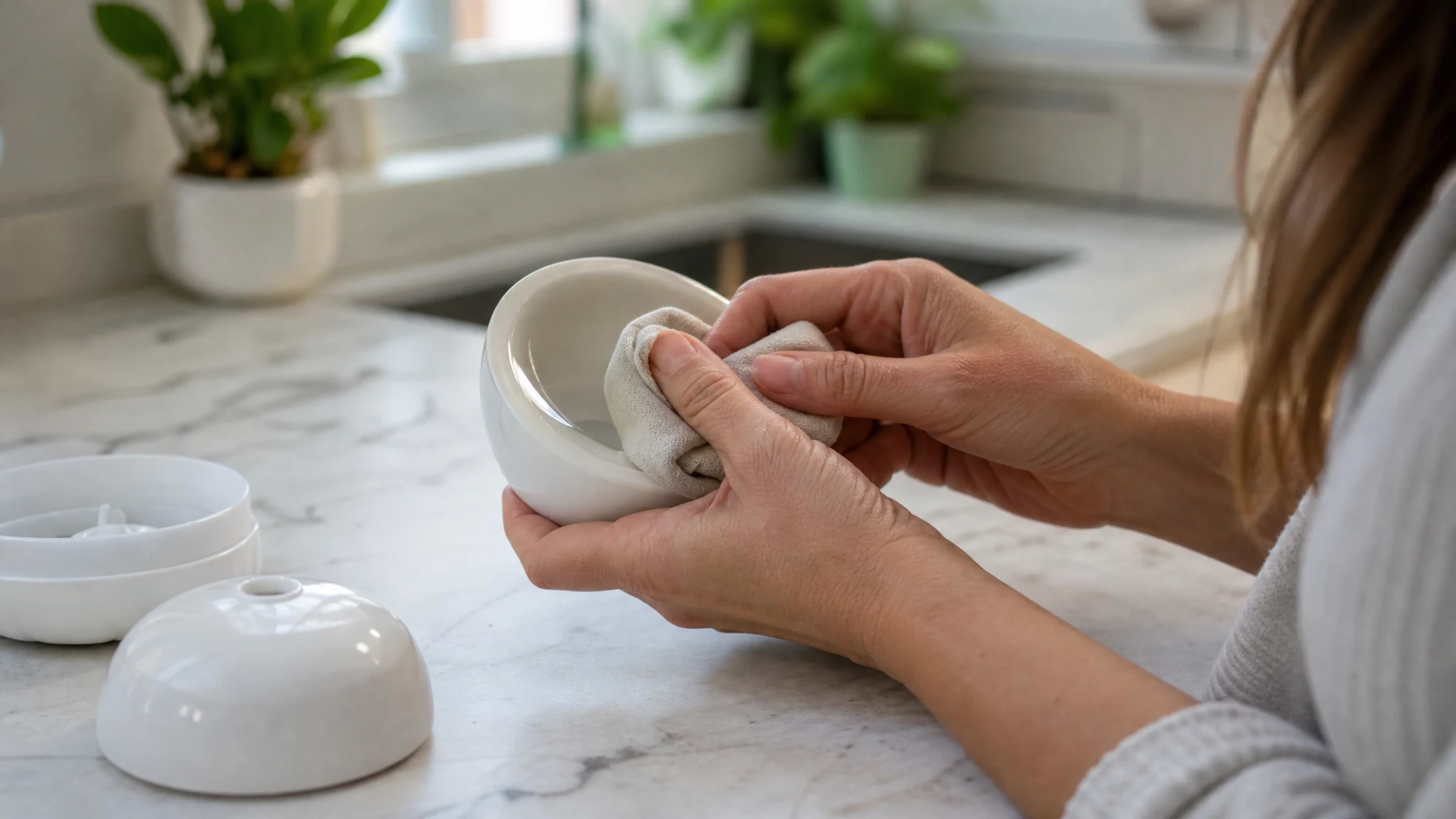
Add the scent to a spray at the end, once the soap and water are mixed, and label the bottle with the date. Spray onto a cloth and wipe, then give the room a minute with the window open. If the smell is still strong the next morning, that bottle has too much oil in it, and the next one should have less.
A short list before you scent anything
- Dirt or germs? Dirt is soap, water and friction. Germs that matter call for a registered disinfectant, used by its label.
- Acid-sensitive surface? If it might be marble or limestone, leave out vinegar and citrus.
- Who breathes this room? Pets, small children, anyone with asthma or a history of reacting to fragrance. Their doctor, pediatrician or veterinarian is the right person to ask.
- How little will do? Start small and add scent last.
- Is a window open? Fresh air is the cheapest improvement there is.
Pets and children
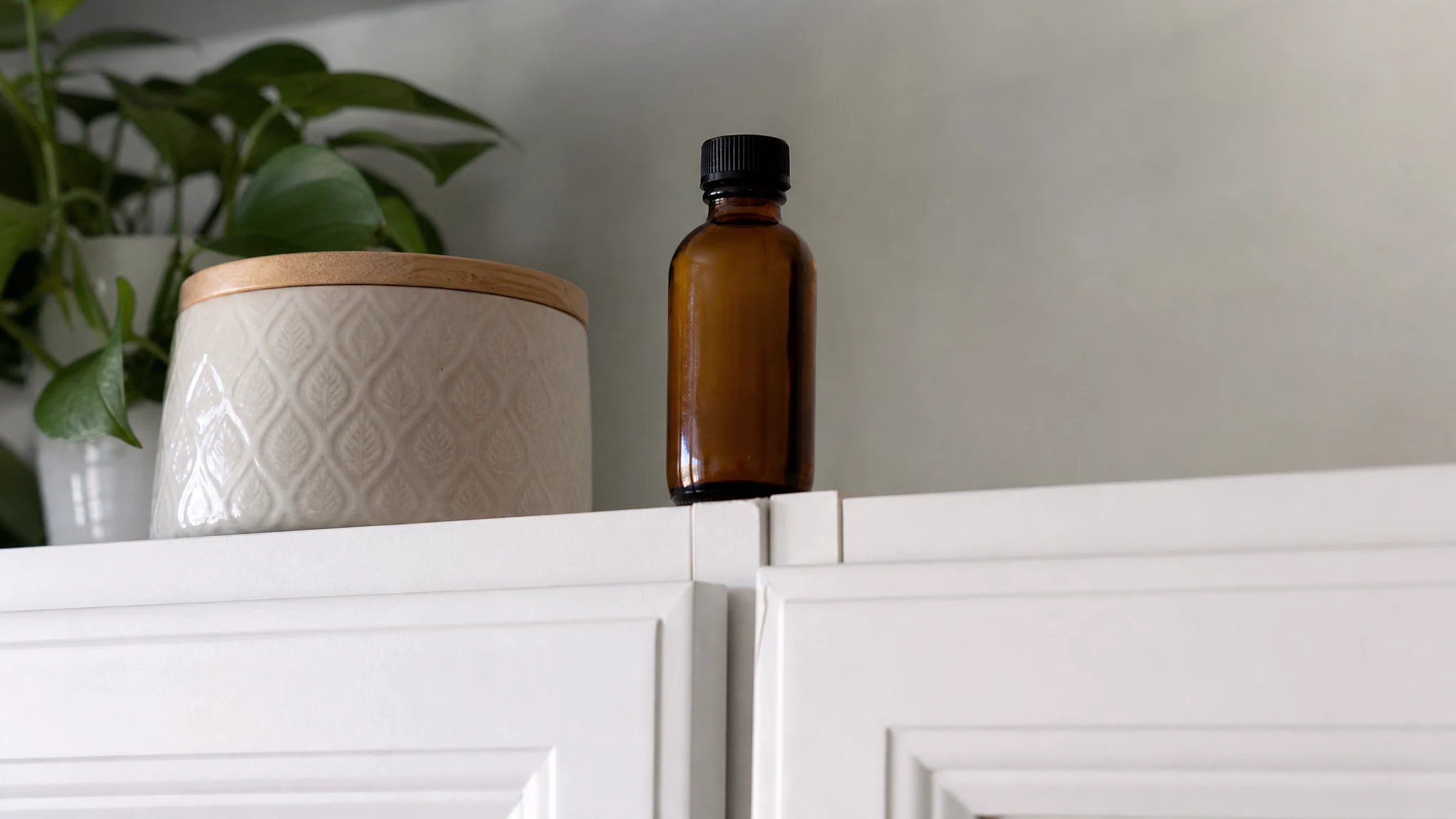
The ASPCA's Animal Poison Control Center says cats are especially sensitive to essential oils, that inhaling them could lead to aspiration pneumonia, and that it would not recommend using essential oils in areas where pets have access unless the pets are supervised or a veterinarian approves. It also suggests letting freshly cleaned counters and carpets dry before animals return. Poison Control adds that children may be more susceptible to harm from aspirating an oil, so store bottles where small hands cannot reach, and call 1-800-222-1222 for any swallowing or eye splash. Our own guidance is the same: keep the oil away from eyes, children and pets, and never take it internally.
Our laundry article covers a different hazard that catches people out, and the odor control article looks at removing a smell versus covering it.
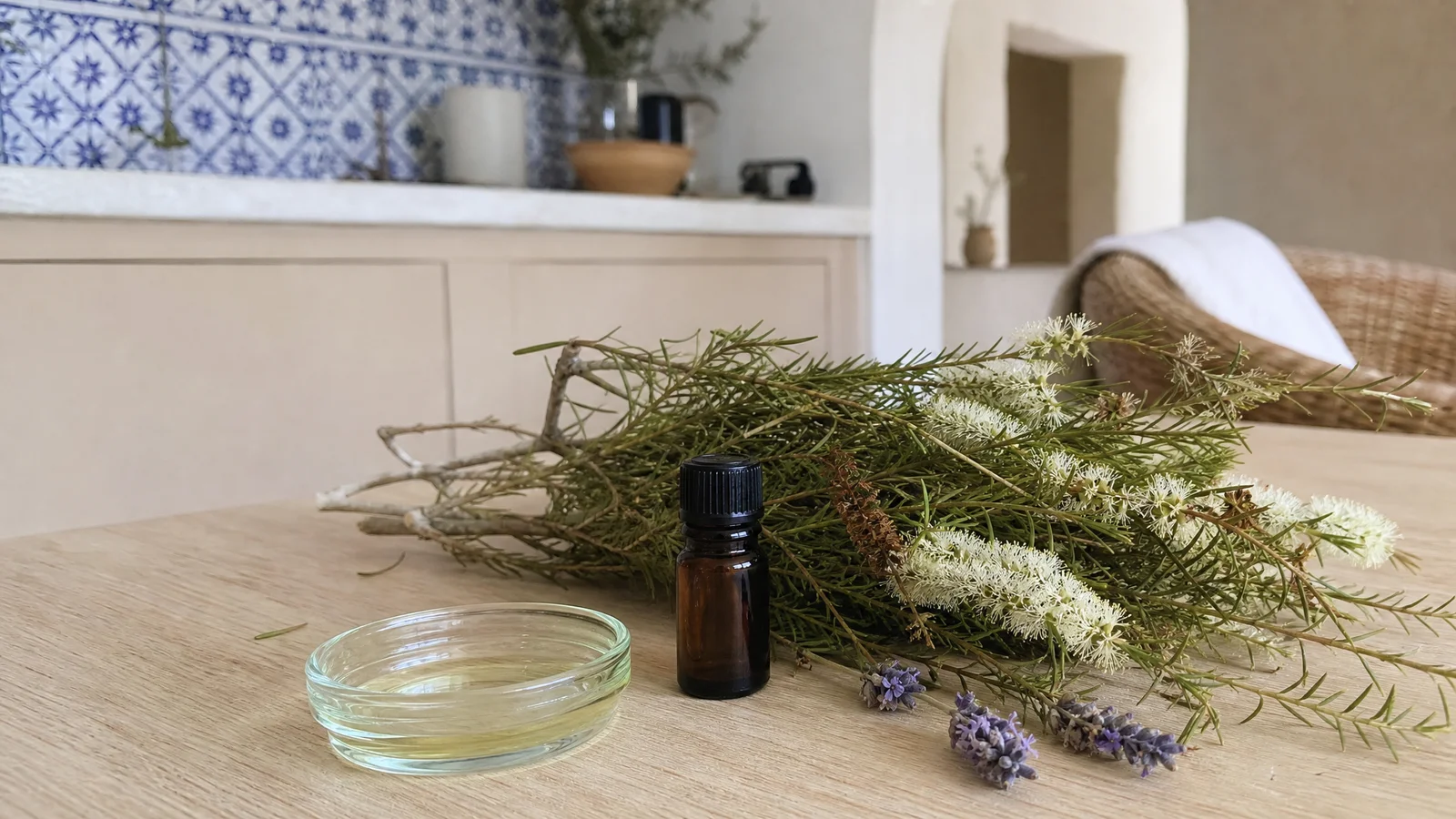
Rosalina oil has a soft, fresh, lavender-like aroma with a green opening and a floral sweetness, which suits a light touch in a cleaner. If you have a question about the oil itself, the contact page is the place to ask. Add the scent last, keep it small, and let the soap do its job.
Rosalina Essential Oil
Rosalina Essential Oil from our own shop, in sizes from 0.5 oz to bulk.
From $16.99
Shop Now →Sources & Further Reading
- US EPA, What's the difference between products that disinfect, sanitize, and clean surfaces?
- Singer BC, Destaillats H, Hodgson AT, Nazaroff WW, 2006. Cleaning products and air fresheners: emissions and resulting concentrations of glycol ethers and terpenoids. Indoor Air 16(3):179-191.
- Natural Stone Institute, Learn About Cleaning Products for Natural Stone
- ASPCA, Pet Poisons: Be Mindful of these Household Products and Cleaning Agents
- Poison Control, Essential oils: Poisonous when misused