Essential Oil Patch Test: What It Can and Cannot Show
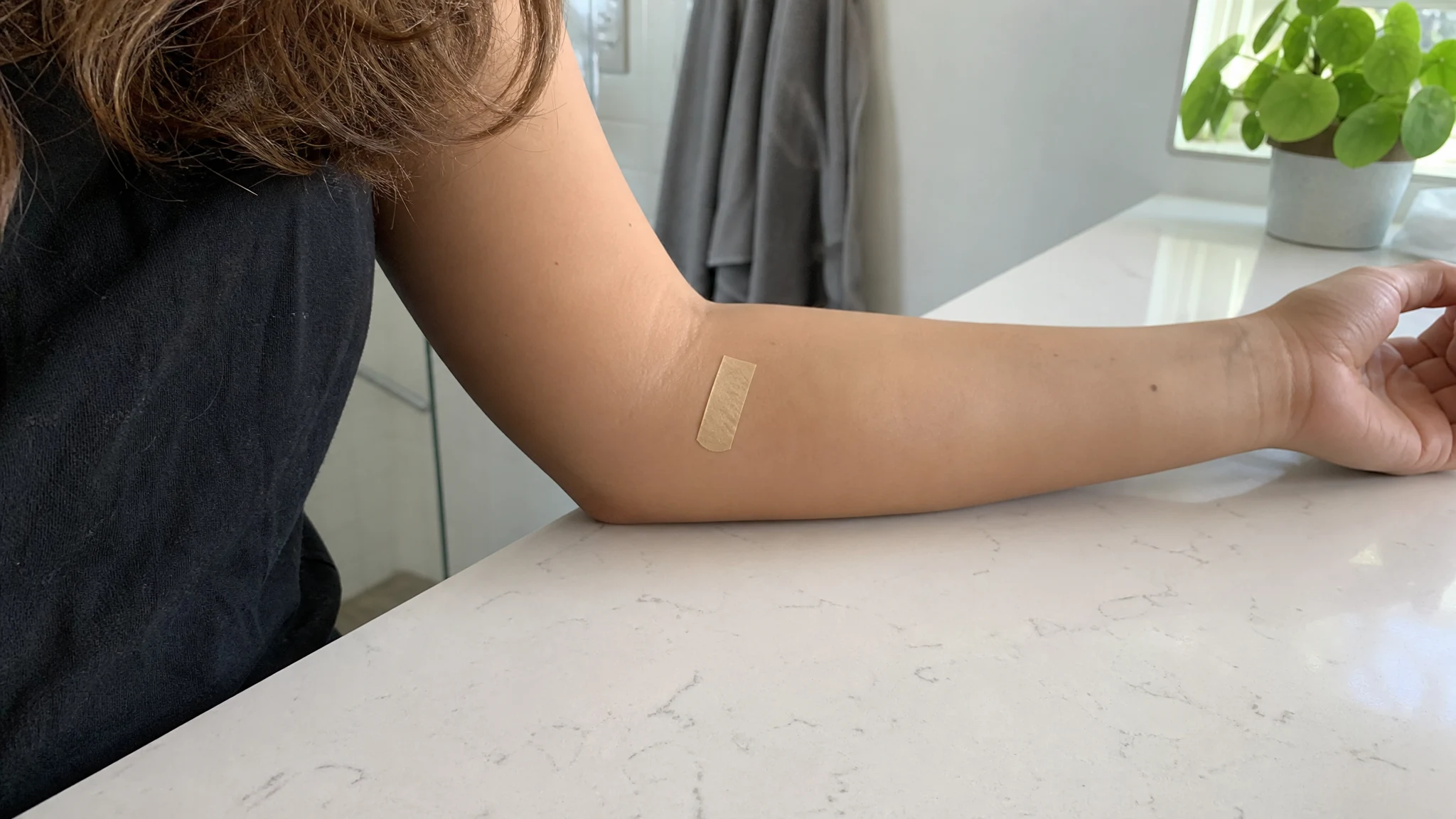
Most of us treat a patch test like a green light: dab a little on the inner arm, see nothing for a day, and carry on. It is a good habit, and we recommend it every time you try a diluted oil. But it is worth knowing what it can actually show you, because an essential oil reaction does not always announce itself on the first day, or on the first bottle.
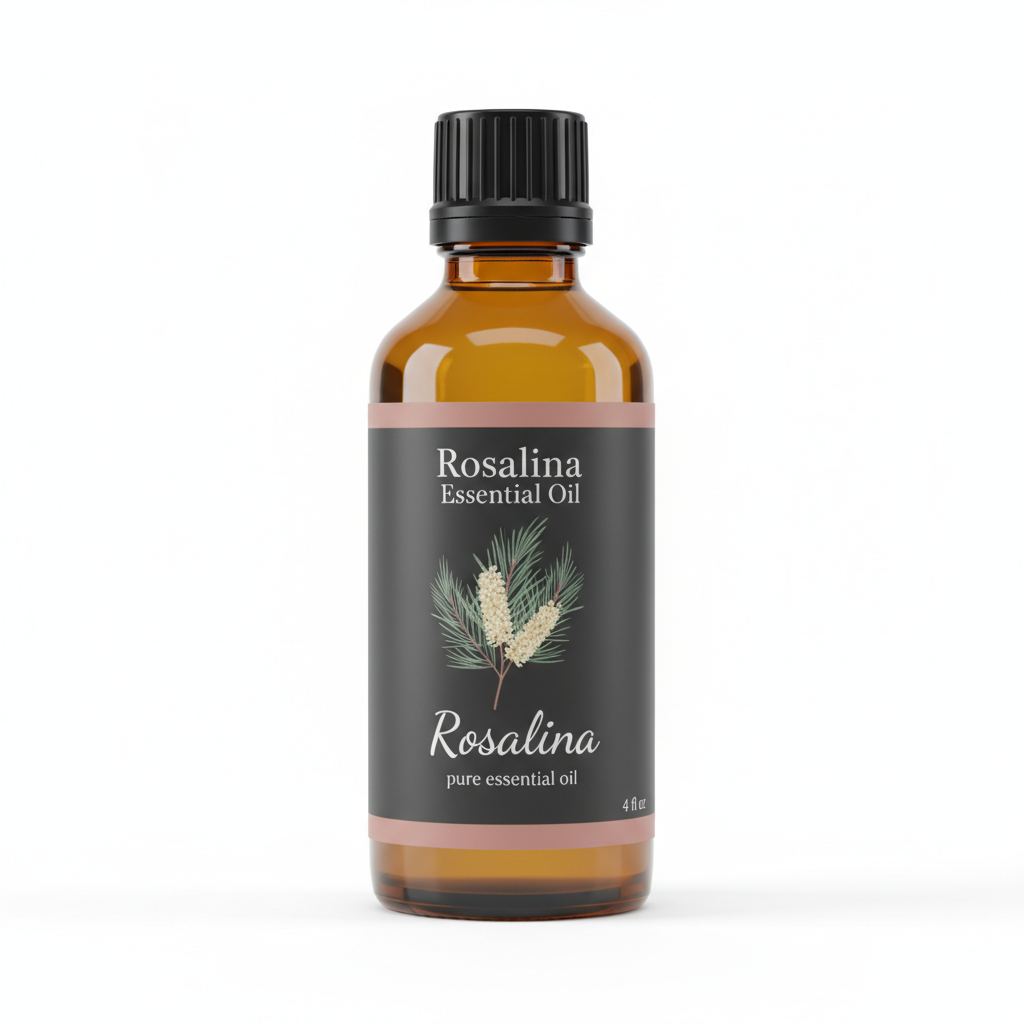
Rosalina Essential Oil
Our own Rosalina Essential Oil, in sizes from 0.5 oz to bulk.
From $16.99
Shop Now →Two kinds of reaction
The NHS describes two routes to contact dermatitis. An irritant damages the skin directly; an allergen sets off an immune response. Cosmetics are among the things that can cause the allergic kind, and symptoms such as itching, redness, blistering or dry, cracked skin usually appear within a few hours or days, most often on the hands and face (NHS). The difference matters for testing. Irritation can show up at the first contact. Allergy usually needs the immune system to be primed first, which is why the Tisserand Institute notes that an allergic reaction often will not happen the first time an essential oil is used (Tisserand Institute). A single short test is better at catching the first kind than the second.
The same page is candid that patch testing is not 100% reliable, with the occasional false positive and false negative. So think of your forearm test as a sensible screen, not a certificate.
Why the age of the bottle counts
Here is the part most home advice skips. Many essential oils contain linalool, a lovely floral molecule. Fresh linalool is a very weak allergen, if one at all, but it reacts with air, and its oxidation products can cause contact allergy. Researchers patch tested air-oxidised linalool on 3,418 people attending a dermatitis clinic and found positive reactions in 0.83% at a 2% test strength, climbing to 7.2% at 11% (Christensson et al., 2010). Those were people already referred for skin problems, so the numbers do not describe the general public, but they show why a bottle left open on a sunny shelf is less ideal than a fresh one.

A more recent study offers some reassurance. In a 28-day, twice-daily application test, 47 volunteers used creams containing linalool hydroperoxides at low strengths; 31 of them were already allergic to the compound, and only one person reacted, at the highest strength (Sukakul et al., 2024). Put the two papers together and the practical message is gentle: oxidation matters, real-life exposure at low dilutions is usually well tolerated, and fresh, well-stored oil is your best friend. Our storage guide covers the fresh part.
A routine we suggest
This is a sequence worked out from the sources above, and it is a screen, not a clearance.
- Dilute first, never test neat oil. We recommend 0.5% to 2% in a carrier for rosalina, and for a first test we suggest the low end. In one ounce (29.57 ml) of carrier, 0.5% is about 0.15 ml, roughly 3 drops at 20 drops per ml.
- Test the exact blend you plan to use: same carrier, same bottle, a small patch of inner forearm.
- Look again after two days, since delayed reactions are the ones a quick test misses.
- Extend slowly. A week of small, twice-daily use before the face is a sensible compromise. The 28-day study above shows how far a research version goes.
- Test again when the bottle is old, the blend is remade or the carrier changes.
Making the test easy to read
A test you cannot interpret is not much use, so set it up for a clear look. Choose a patch of inner forearm about the size of a coin, somewhere your sleeve or bag strap will not rub. Draw a tiny dot beside it with a pen so you can find the spot again, and take a quick photo in daylight. When you check two days later, compare the patch with the skin next to it and with the photo, rather than trusting memory.
Keep the area dry and leave off other products while you wait, so that any change has only one possible suspect. If you are testing a new carrier as well as a new oil, be patient and change one thing at a time. It is a slow routine, and that is the point: a few quiet days now are better than a surprise on your face next week.
When to stop and who to ask
If skin turns red, itchy, swollen or blistered, stop, wash the area with soap and water and keep the bottle. Poison Control also advises treating difficulty breathing after exposure as an emergency (Poison Control). For symptoms that persist, recur or are severe, the NHS suggests seeing a GP, who can refer you to a dermatologist if the cause is unclear. A dermatologist or allergist can patch test the actual materials over several days, so bring the bottle and its label.
If you are new to rosalina, our dilution guide has worked ratios, and our note on phototoxic oils covers the sun question. We also share what to expect from a carrier in the carrier oil comparison.
A patch test will not tell you everything, but with a fresh bottle, a gentle dilution and a little patience, it tells you a good deal.
Rosalina Essential Oil
Rosalina Essential Oil from our own shop, in sizes from 0.5 oz to bulk.
From $16.99
Shop Now →Sources & Further Reading
- NHS. Contact dermatitis. nhs.uk
- Tisserand Institute. Irritation and allergic reactions. tisserandinstitute.org
- Christensson et al., 2010. Linalool - a significant contact sensitizer after air exposure. Contact Dermatitis. Europe PMC
- Sukakul et al., 2024. Allergic Contact Dermatitis to Linalool Hydroperoxides: Pitfalls in the Diagnostic Process-Findings from a Repeated Open Application Test Study. Dermatitis. Europe PMC
- Poison Control. Essential oils: Poisonous when misused. poison.org