Reading a GC-MS Report: A Buyer's Checklist
A gas chromatography report is the closest thing an essential oil has to a fingerprint. It lists what is in the oil and how much of each compound, and for a species as variable as rosalina, that list is the difference between one oil and a very different one. Reading one is easier than it looks, and a published rosalina example makes a good practice sheet.
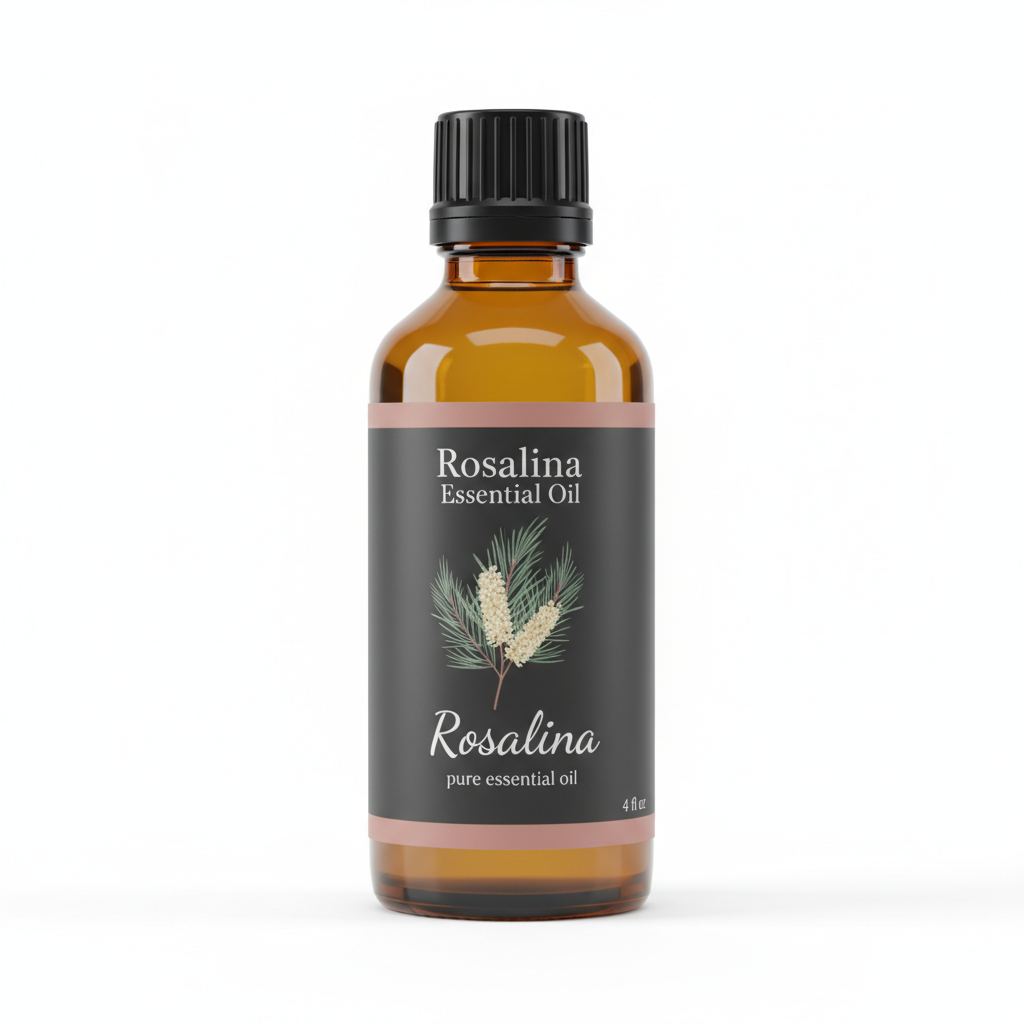
Rosalina Essential Oil
Our own Rosalina Essential Oil, in sizes from 0.5 oz to bulk.
From $16.99
Shop Now →A real report to practise on
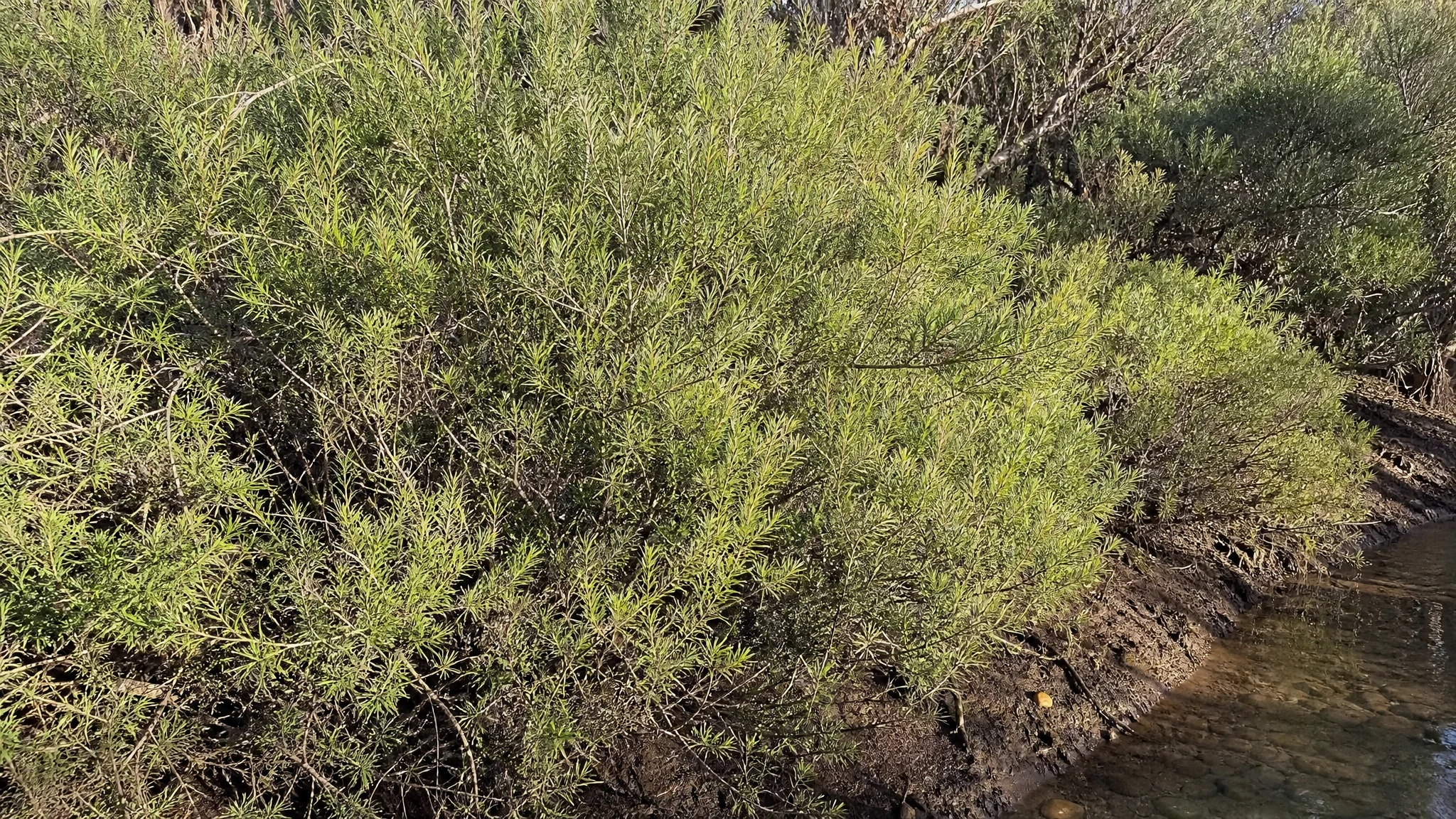
In 2026, Valarezo and colleagues published a full analysis of oil steam-distilled from cultivated Melaleuca ericifolia leaves in Ecuador (Essential Oil of Melaleuca ericifolia Sm.: Chemical Composition, Enantiomeric Distribution, and Antimicrobial, Antioxidant, and Anticholinesterase Activities). Their top compounds were 1,8-cineole at 61.85%, limonene at 11.23%, alpha-terpineol at 7.99% and alpha-pinene at 4.97%, with linalool at just 0.49%. It is one sample from one site, so it is a teaching example and not a portrait of rosalina in general. Here is how to read it the way a buyer would.
1. Find the sample line
Before any number, a report should say which sample it describes: the plant site, the method, the instruments. On a commercial report you want the lot code that matches your bottle, the date, the laboratory's name and the method. Without those, the numbers describe an oil but not necessarily yours.
2. Check how compounds were identified
GC-MS identifies each peak by two things: its mass spectrum, and its retention index, a position on a scale set by a run of reference compounds. The paper lists a calculated index and a literature index for every compound, and they agree within a unit or two. That agreement is what you want to see. A report that prints only names and percentages gives you nothing to check.
3. Understand what the percentage means
These percentages are relative abundances, each compound's share of everything detected. The shares should add up to roughly 100%, which they do here (the table totals 99.72%, a rounding-size gap from the text's 99.74%). A report whose figures total 80% or 120% deserves a question.
A share is not an amount, either. A study of adulteration in lavender, lemon and tea tree oils showed that diluting an oil with vegetable oil leaves its normalised percentages unchanged, and that detecting it takes absolute quantitation against an internal standard. In one lavender sample, the normalised profile looked right while the absolute concentrations pointed to roughly 40% to 50% vegetable oil (Adulteration of Essential Oils: A Multitask Issue for Quality Control. Three Case Studies: Lavandula angustifolia Mill., Citrus limon (L.) Osbeck and Melaleuca alternifolia (Maiden & Betche) Cheel). That study did not look at rosalina, but the lesson carries: a clean-looking table is one piece of evidence.
The same study found that synthetic linalool added to lavender could be detected by chiral analysis: the share of the (S)-(+) form of linalool rose from 6.2% to 33.6% in the spiked sample. A report should say which tests were run, because different tests answer different questions.
4. Know what to expect from the species
This is the part that makes rosalina interesting. Wild populations vary by latitude: linalool dominates in the north of the species' range and 1,8-cineole in the south, with the southern average around 34.5% cineole and 3% linalool, and one northern tree at 60% linalool (Geographic variation in oil characteristics in Melaleuca ericifolia, abstract). The Ecuadorian sample sits at the cineole end. So there is no single rosalina profile to check against, and a seller who says an oil "meets the standard" should name the standard. With a species this variable, the report itself is the evidence.
How our own paperwork reads
The Certificate of Analysis for our published batch gives the batch code RSLAIUMEAUC004A, appearance, smell, and two measured constants at 20 C: relative density 0.890 and refractive index 1.465, both inside the printed standards. Those are useful physical checks, but they are not a constituent list, and they cannot say which compounds produced them. If linalool, 1,8-cineole or any other compound matters for your purchase, ask us in writing through the contact page before ordering, and keep the reply with your records.
Keep the paperwork with the bottle
Make a folder, paper or digital, with one sheet per bottle: the lot code, the report and the date it arrived. When you open a new bottle, compare codes before anything else. It is dull work and it saves arguments later.
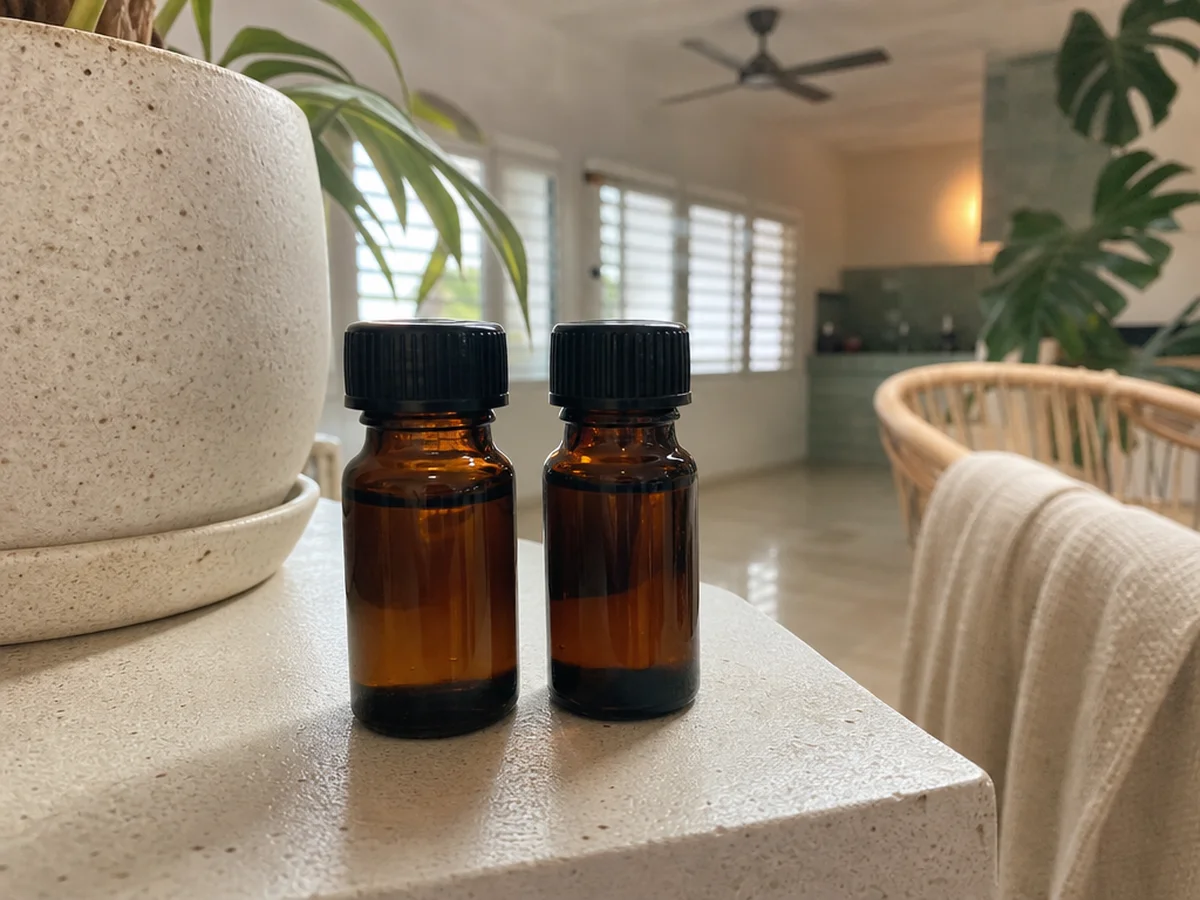
If you make products to share, the report is also a record of what you started with. Months from now you will not remember which batch smelled greener, but the sheet will.
Five checks before you pay
- Does the report carry the lot code on your bottle?
- Does it name the laboratory, the date and the method?
- Does it list the full constituent table, with indices, adding up to roughly 100%?
- Does it say whether the figures are relative or absolute, and whether any chiral analysis was done?
- Is the compound you care about printed with a number?
If any answer is no, ask, and wait for the reply in writing. Our buying guide lists more questions, linalool and cineole explains the two compounds you will see most, and kitchen-table checks are no substitute, as our home purity test article shows.
Once you know where to look, a GC-MS report stops being a wall of numbers and becomes a short conversation about the oil in your hand.
And when a report arrives, smell the oil beside it. A paper strip and a few minutes of attention will not replace the numbers, but they let you match what you read to what you smell.
Rosalina Essential Oil
Rosalina Essential Oil from our own shop, in sizes from 0.5 oz to bulk.
From $16.99
Shop Now →Sources & Further Reading
- Valarezo E et al., 2026. Essential Oil of Melaleuca ericifolia Sm.: Chemical Composition, Enantiomeric Distribution, and Antimicrobial, Antioxidant, and Anticholinesterase Activities. Molecules 31
- Capetti F et al., 2021. Adulteration of Essential Oils: A Multitask Issue for Quality Control. Three Case Studies: Lavandula angustifolia Mill., Citrus limon (L.) Osbeck and Melaleuca alternifolia (Maiden & Betche) Cheel. Molecules 26(18):5610
- Brophy JJ and Doran JC, 2004. Geographic variation in oil characteristics in Melaleuca ericifolia. Journal of Essential Oil Research 16(1):4-8 (abstract)