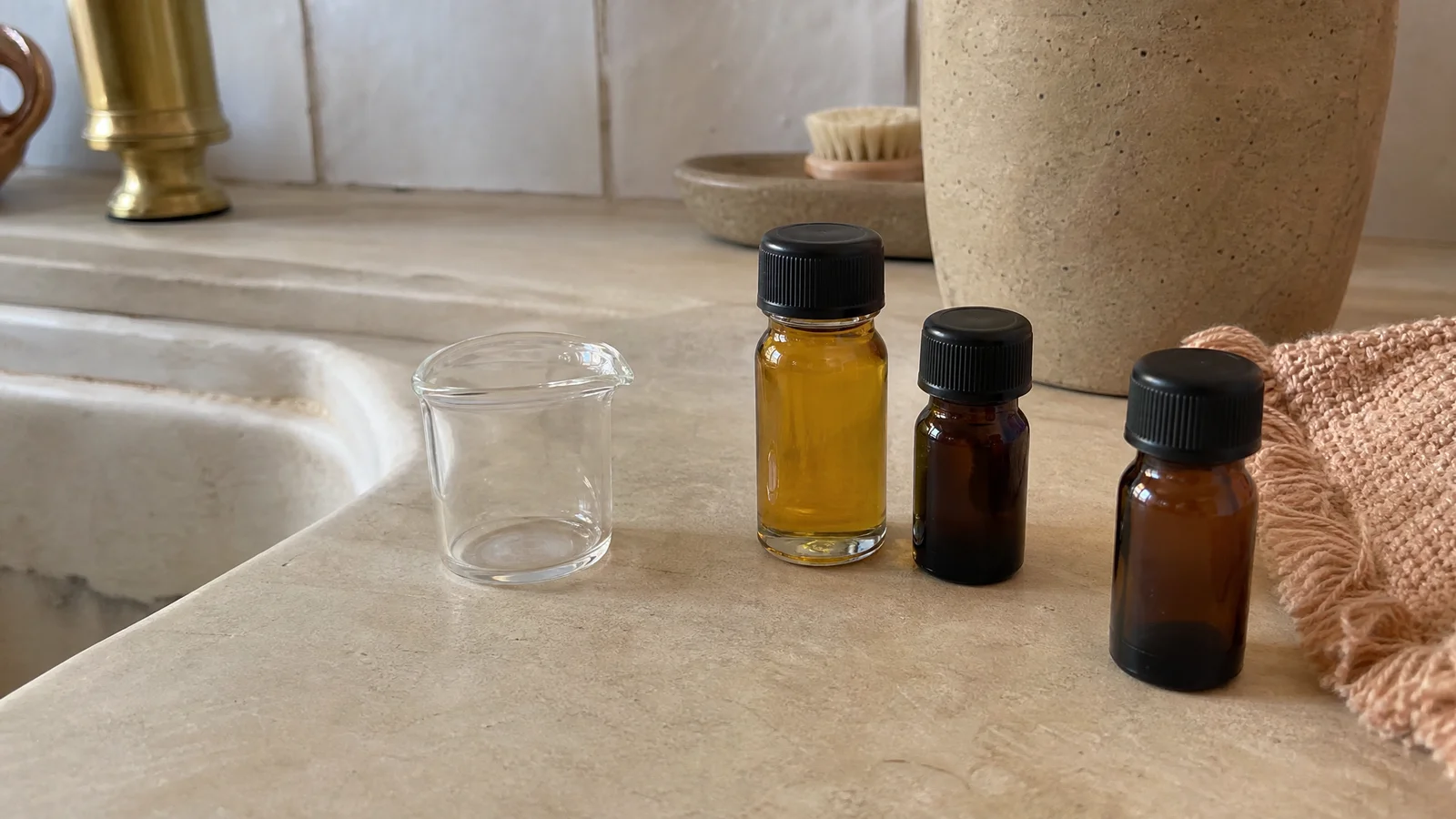
How to Dilute Rosalina Oil: Percentages and Grams
Two people can each add "ten drops" to an ounce of carrier and end up with noticeably different blends, because no two droppers deliver the same drop. Rosalina oil is sold neat and is meant to be diluted before it goes anywhere near skin, so the most useful habit we can pass on is to think in percentages and weigh the oil if you can.
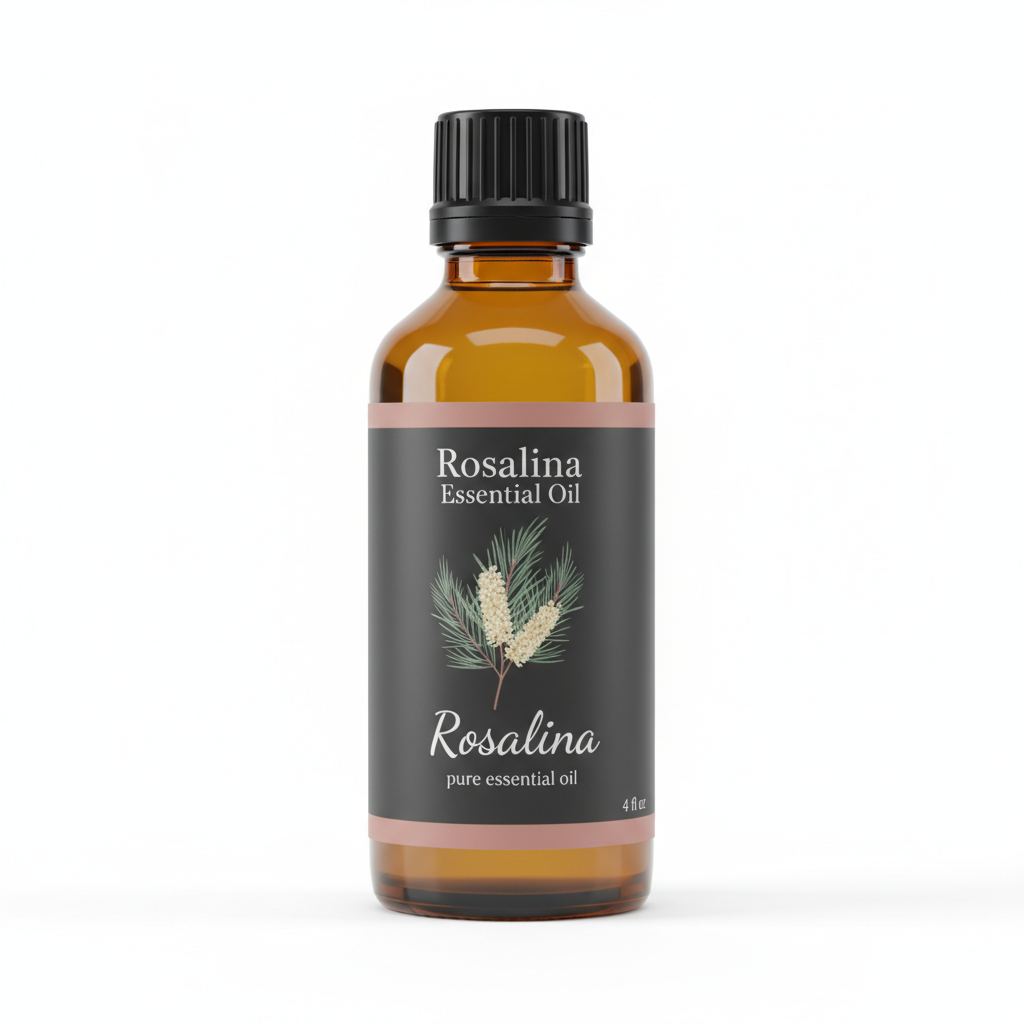
Rosalina Essential Oil
Our own Rosalina Essential Oil, in sizes from 0.5 oz to bulk.
From $16.99
Shop Now →Start with the percentage you actually want
We recommend diluting rosalina oil to 0.5% to 2% in a carrier oil such as jojoba or sweet almond, which works out to roughly 3 to 12 drops per ounce of carrier. That is a range, and where you land in it depends on the job. The Tisserand Institute publishes general ranges by use rather than by oil: 0.2% to 1% for sensitive or impaired skin, 0.5% to 1.2% for facial products and deodorants, and 1% to 3% for body oils and lotions (Dilution for essential oils).
Put those next to our line and a sensible plan appears. For the face, we stay near the bottom of ours, at or under about 1%. For a body oil, 1% is a comfortable place to begin. We would not treat 2% as a target; it is the ceiling of a range, and it sits above the general face guidance. If you have reacted to scented products before, begin lower still.
Why we like grams
A drop is not a unit. Tisserand itself says drop conversions are approximate, and the usual convention of about 20 drops to the millilitre is only that, a convention. A scale that reads to 0.01 g takes the guesswork out, and it makes small batches possible, which matters at low percentages.
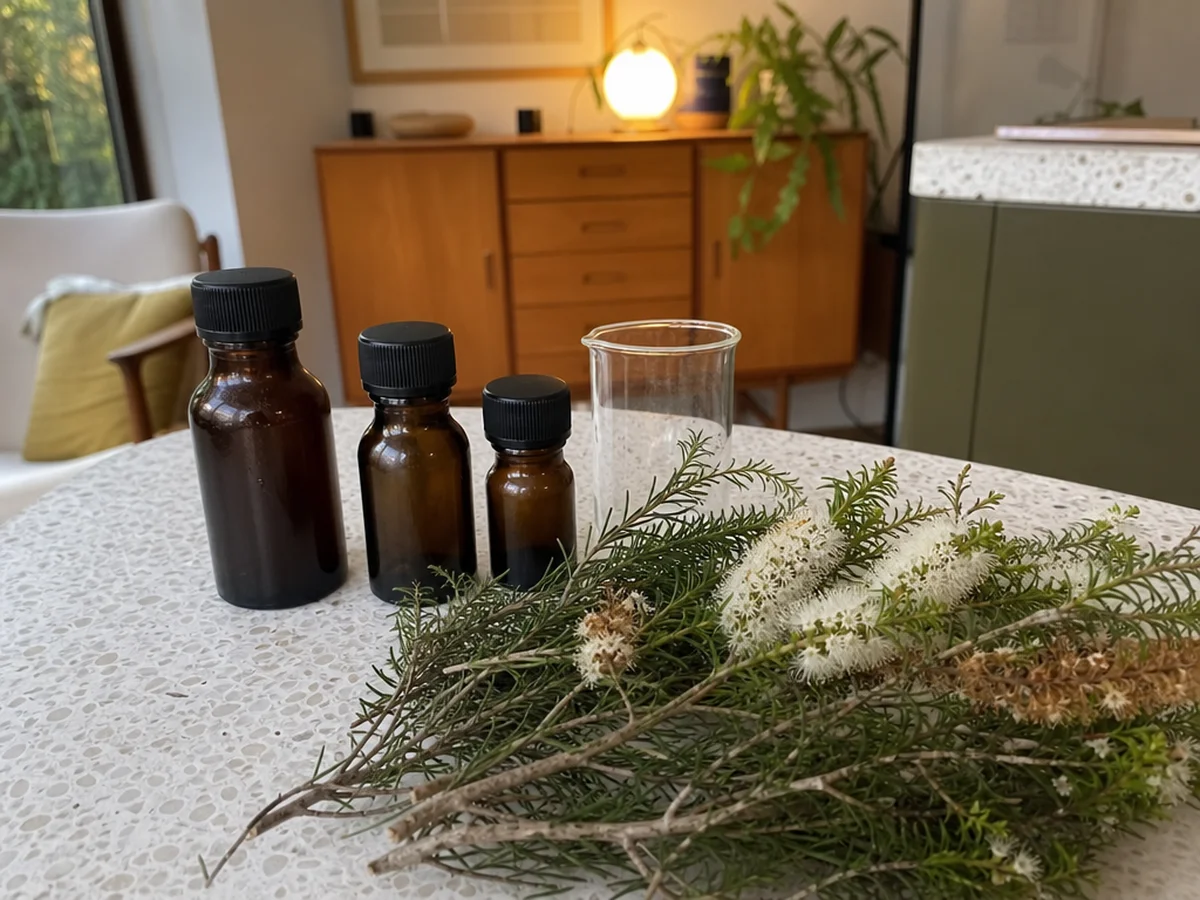
Here is the arithmetic for 30 g of carrier. The oil weights are straight percentages; the drop counts assume 20 drops per ml and the density on the Certificate of Analysis for our published batch, 0.890 g/ml at 20 C. Another lot could differ slightly, so treat the drops as a guide.
| Target | Oil needed for 30 g carrier | Roughly, in drops |
|---|---|---|
| 0.5% | 0.15 g | 3 to 4 |
| 1% | 0.30 g | about 7 |
| 1.5% | 0.45 g | about 10 |
| 2% | 0.60 g | about 13 to 14 |
Notice what happens at the bottom of the table. Half a percent of a small bottle is a couple of drops, and one drop more or less changes the blend by a third. If you want a low percentage, make a bigger batch instead of a tiny one: 100 g of carrier at 0.5% needs 0.5 g of oil, an amount you can actually measure. Then make sure you will use it up, which brings us to the next point.
Make small batches and label them
Essential oils with linalool in them change when they sit in air. Linalool itself is only a weak allergen, but once it has oxidised, the products are a recognised contact sensitiser: in a patch-test series of 3,418 dermatitis patients, air-oxidised linalool produced positive reactions in 0.83% of people at 2% in petrolatum and 7.2% at 11% (Linalool - a significant contact sensitizer after air exposure). That was a clinic population and deliberately oxidised material, so it is not a prediction for your bottle. It is a good reason, though, to mix modest amounts, keep them capped, and write the percentage and the date on the label. Our storage article covers the bottle side.
A worked example
Say you want 50 g of body oil at 1%. One percent of 50 g is 0.5 g of oil, which is about 0.56 ml of our published batch, or around 11 drops. Weigh 50 g of carrier into a clean glass bottle, add the oil, cap it and turn it over a few times. Label it "rosalina 1%" with the date. If you would like a carrier recommendation, our carrier oil guide compares the common choices. We do not sell carrier oils, so you will find them at a craft or supply shop, pharmacy or grocery store.
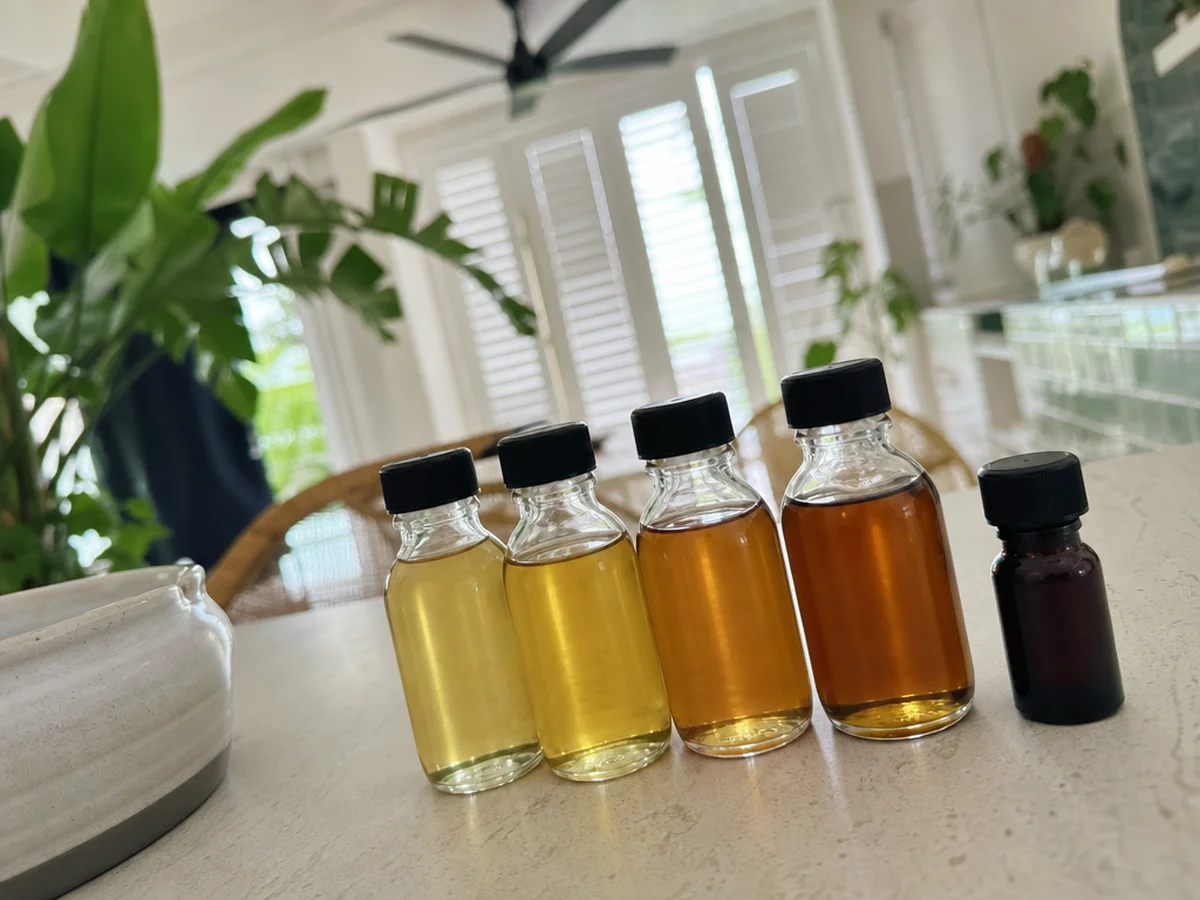
For massage-style blends, the massage oil article uses the same arithmetic.
Keep a little notebook
A small notebook beside your bottle pays for itself. Write down the date, the carrier, the percentage and the grams, plus a line about how the blend smells. When you want to repeat a blend you liked, or change one you did not, the numbers are already there. It also shows you when a batch is getting old, so you can retire it before it has sat for months.
Do the sums before you open anything. Write the target percentage, work out the grams, and only then reach for the bottle. Having the plan on paper keeps a stray extra drop from becoming a surprise.
A patch test is a start, not a verdict
Before using a new blend on a larger area, try a little of the finished dilution, never the neat oil, on a small patch of skin. Our patch test article explains how to do it. It helps to know its limits: the Tisserand Institute says patch testing is not completely reliable, and for people with a history of reactions it suggests gradual dose escalation instead, starting around 1% and rising in half-percent steps (Irritation and allergic reactions). If you have had a positive patch test to fragrance before, a dermatologist is the right person to ask.
Where dilution does not apply
Skip broken or damaged skin; Poison Control advises against putting essential oils on it at all (Essential oils: Poisonous when misused). Keep rosalina oil away from eyes, children and pets, and never swallow it. The blends above are for oils applied to skin. Oil does not mix into bath water on its own, so a bath needs a dispersant, and our bath salts article covers it. For a child's skin or a pet, ask a pediatrician or veterinarian first.
Once you have a percentage you trust, write it down. Next time, you will not have to count anything.
Rosalina Essential Oil
Rosalina Essential Oil from our own shop, in sizes from 0.5 oz to bulk.
From $16.99
Shop Now →Sources & Further Reading
- Dilution for essential oils, Tisserand Institute
- Irritation and allergic reactions, Tisserand Institute
- Christensson JB et al., 2010. Linalool - a significant contact sensitizer after air exposure. Contact Dermatitis
- Essential oils: Poisonous when misused, Poison Control