Rosalina Bath Salts: How to Disperse the Oil Properly
The classic bath salt recipe goes like this: stir some drops of essential oil into a jar of salts, then pour a scoop into the tub. It looks right, smells right in the jar, and does not work the way people expect. The Tisserand Institute puts it bluntly: salt is not a carrier for essential oils. Once the salts dissolve, the oil is simply released as droplets that float on the surface of the water. Here is how to build a rosalina bath salt that handles that properly.
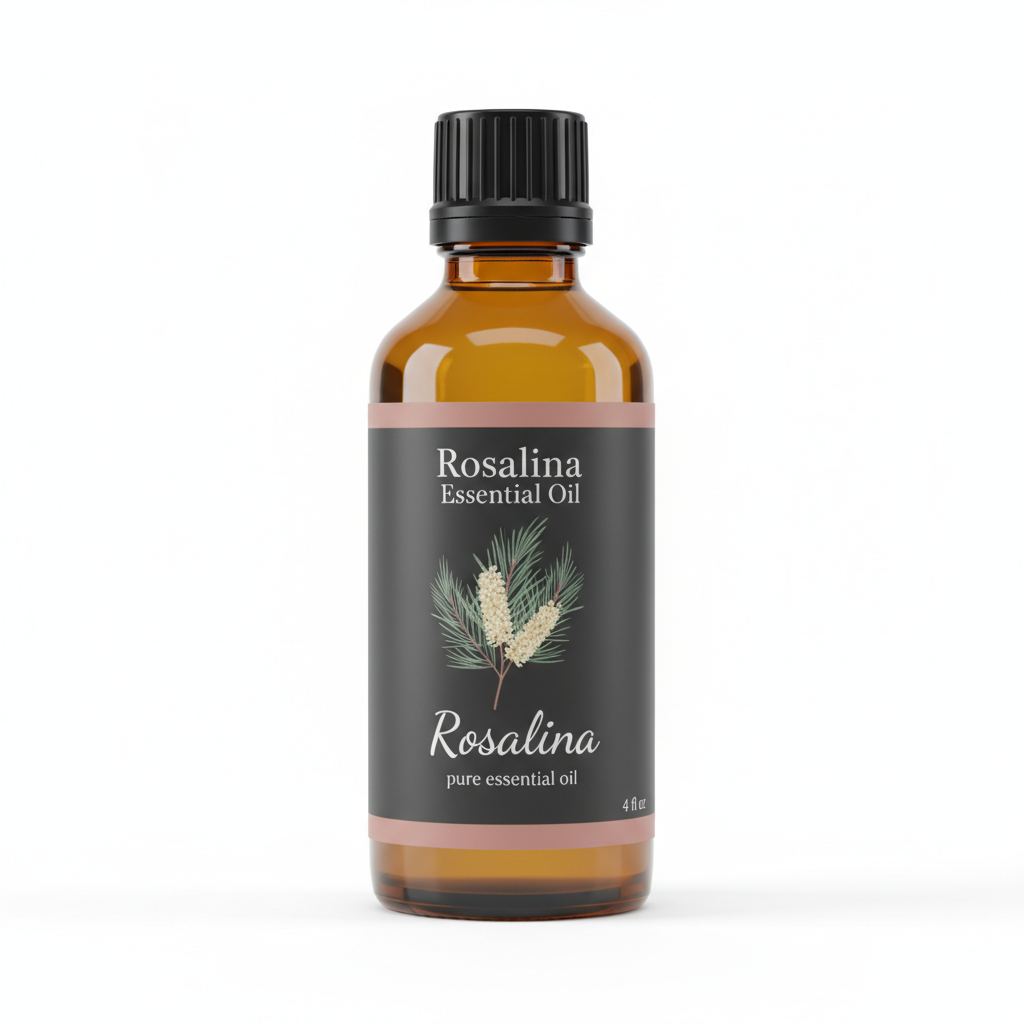
Rosalina Essential Oil
Our own Rosalina Essential Oil, in sizes from 0.5 oz to bulk.
From $16.99
Shop Now →What really happens in the tub
Essential oils are not water soluble, so oil that goes straight into a bath forms a film on top, and warm water that cannot evaporate it makes that film sting when it clings to skin. Tisserand's bath safety guidance is built around one rule, which is to disperse the oil first. It lists the things that only seem to work: full-fat milk and Epsom salts both have a false reputation as dispersants. Vegetable oil does not disperse either. It floats and clings to the tub and your skin, which is why the guidance suggests fractionated coconut oil or jojoba if you want a lighter floating bath oil.
That gives the salts a clear role. They are for texture, appearance and the pleasure of a scoop, and the dispersant is what keeps oil off your skin. If you would rather skip a dispersant, leave the oil out of the bath and enjoy it another way, such as a few drops on a cloth hung near the tub, away from the water.
A salt-and-dispersant formulation
This is built from the Tisserand guidance and the arithmetic below. Make it for one bath at a time.
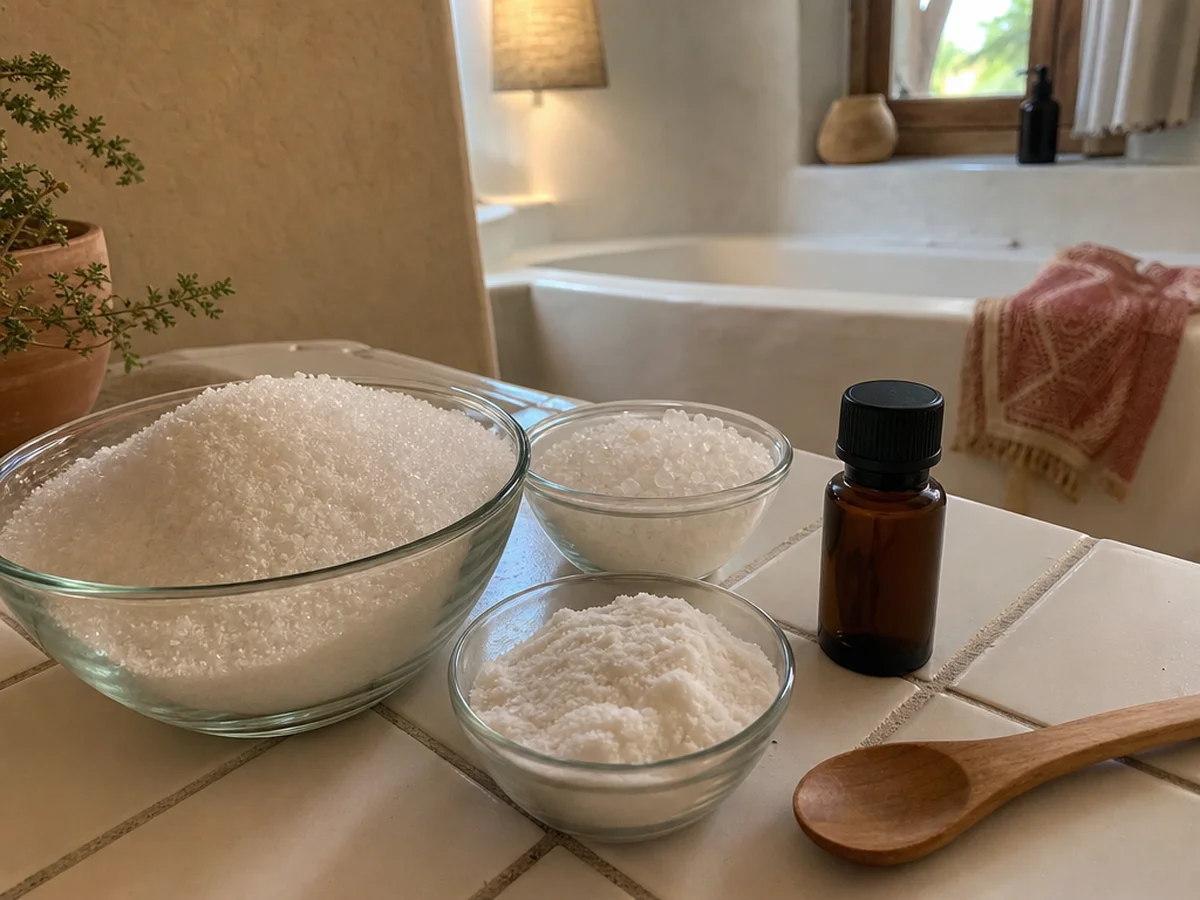
- Salts. About 1 cup (roughly 250 g) of Epsom salts or coarse sea salt from a grocery or pharmacy. That is a common household amount, not a requirement.
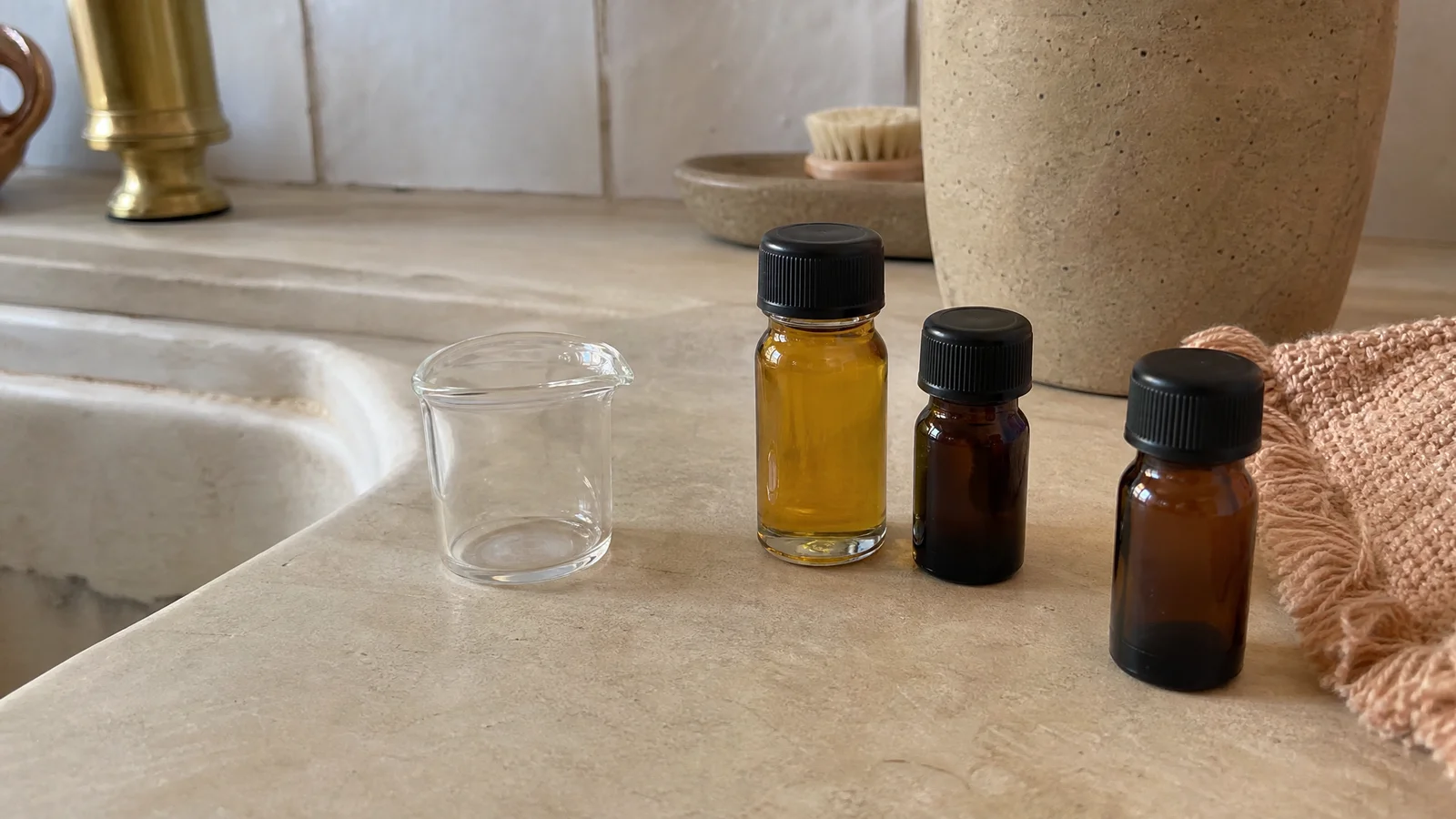
- Oil and dispersant. In a small glass or ceramic cup, mix 5 drops of rosalina oil with 5 drops of polysorbate 20, the dispersant Tisserand describes, starting at a 1:1 ratio. Stir until the mixture is clear and uniform. Polysorbate 20 comes from cosmetic ingredient suppliers, and we do not sell it.
- The bath. Add the oil and dispersant mixture to the running water, not to the dry salt, and stir the water. The salts can go in at the same time or stay on the shelf.
Tisserand's range for this method is 5 to 20 drops of essential oil with an equal amount of polysorbate 20. We use the bottom of it. Rosalina varies a great deal in composition from one source to another, so we begin small. If you have never put the oil on your skin, start at 5 drops or fewer.
The arithmetic
On a working convention of 20 drops per ml, and the 0.890 relative density measured for the batch in the Certificate of Analysis we publish, 5 drops is about 0.25 ml or 0.22 g of oil. In a 100 litre bath (our assumption, since tubs vary) that is about 0.00025% of the water. This is not the same maths as the 0.5% to 2% we suggest for oil in a carrier on skin. That figure is for leave-on products, and it does not translate to a bath, where the oil is meant to be spread through a large volume of water. We do not call any bath amount universally safe. A dispersed oil is very dilute, but a long soak in warm water is its own situation, which is one more reason to keep the amount small.
More oil does not make a stronger soak, it makes a stronger sting. If the bath smells faint, give it a little more time, not more drops.
Setting the scene
Much of the pleasure of a bath is the room around it. Warm a towel, turn down the lights, and run the water with the dispersed mixture stirred in. Step back for a minute before you get in and you may notice how the scent rises in the steam: green and fresh first, then a softer floral sweetness.
Afterwards, rinse the tub well. Oil and dispersant can leave a slick, and a quick rinse keeps the next person from slipping.
A word about magnesium
Epsom salts often come with a promise that magnesium soaks in through your skin. A review by Gröber and colleagues concluded that the promotion of transdermal magnesium lacks scientific support, though it looked at magnesium products in general, not baths specifically. We make no mineral claim for the salts. A bath salt is a scent and a ritual, and that is plenty of reason to make one.
Keeping it fresh
We suggest mixing for each bath rather than keeping a jar of scented salts for weeks. That is reasoning, not a measured shelf life: oils change as they age, and a fresh mix is the simplest habit. Keep the bottle itself tightly capped, cool and dark; our storage article explains why. Rosalina oil is in our shop, and if you scent baths often, larger sizes are on our bulk page.
Who should ask first
Anyone with a skin condition or a history of fragrance reactions should check with a dermatologist first, and our patch test article explains why a home test can miss things. Poison Control advises against essential oils on damaged skin and notes that children have thin skin, so a scented bath for a child is a question for a pediatrician. If you are pregnant or nursing, our pregnancy article reports the published guidance, and your midwife or obstetrician can advise. Pets sharing the bathroom are a question for a veterinarian. A comparison of carriers is in our carrier oils guide, and the general ways to enjoy the oil are in our uses article.
Done this way, a rosalina bath is a small luxury: a soft floral scent in warm steam, with the oil properly mixed in.
Rosalina Essential Oil
Rosalina Essential Oil from our own shop, in sizes from 0.5 oz to bulk.
From $16.99
Shop Now →Sources & Further Reading
- Tisserand Institute, Bath Safety: how to use essential oils safely in the bath
- Tisserand Institute, Bath safety II : Dispersing essential oils
- Gröber U, Werner T, Vormann J, Kisters K, 2017. Myth or Reality-Transdermal Magnesium? Nutrients.
- Poison Control, Essential oils: Poisonous when misused