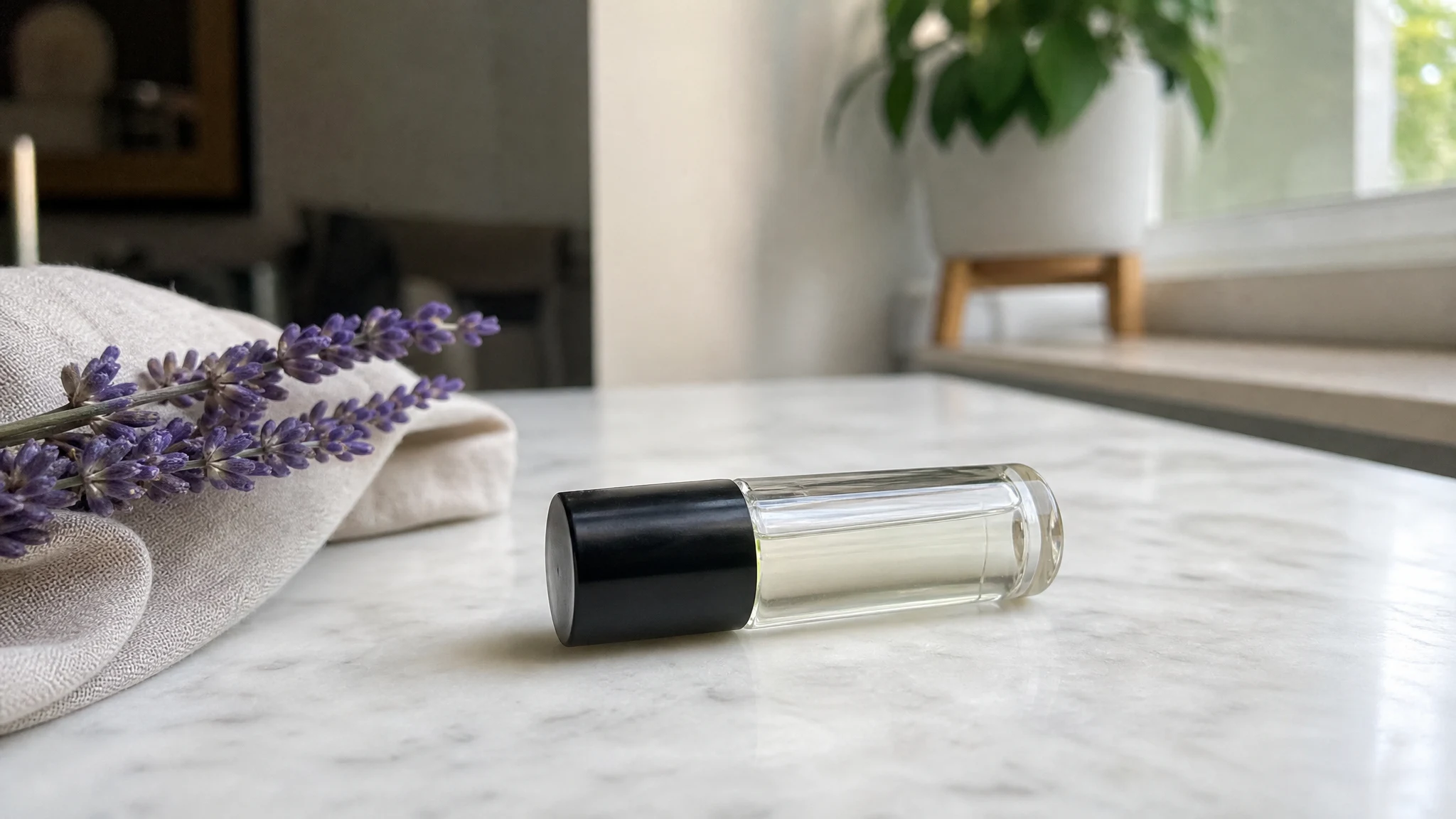
Rosalina Roller Bottles: Getting the Dilution Right
Roller bottles are charming, portable and very easy to get wrong by a single drop. In a 10 ml bottle, one drop of oil is about half a percent, so adding one more than you meant to changes your blend by a third or more. The good news is that a little arithmetic fixes it, and then rosalina in a roller is simple.
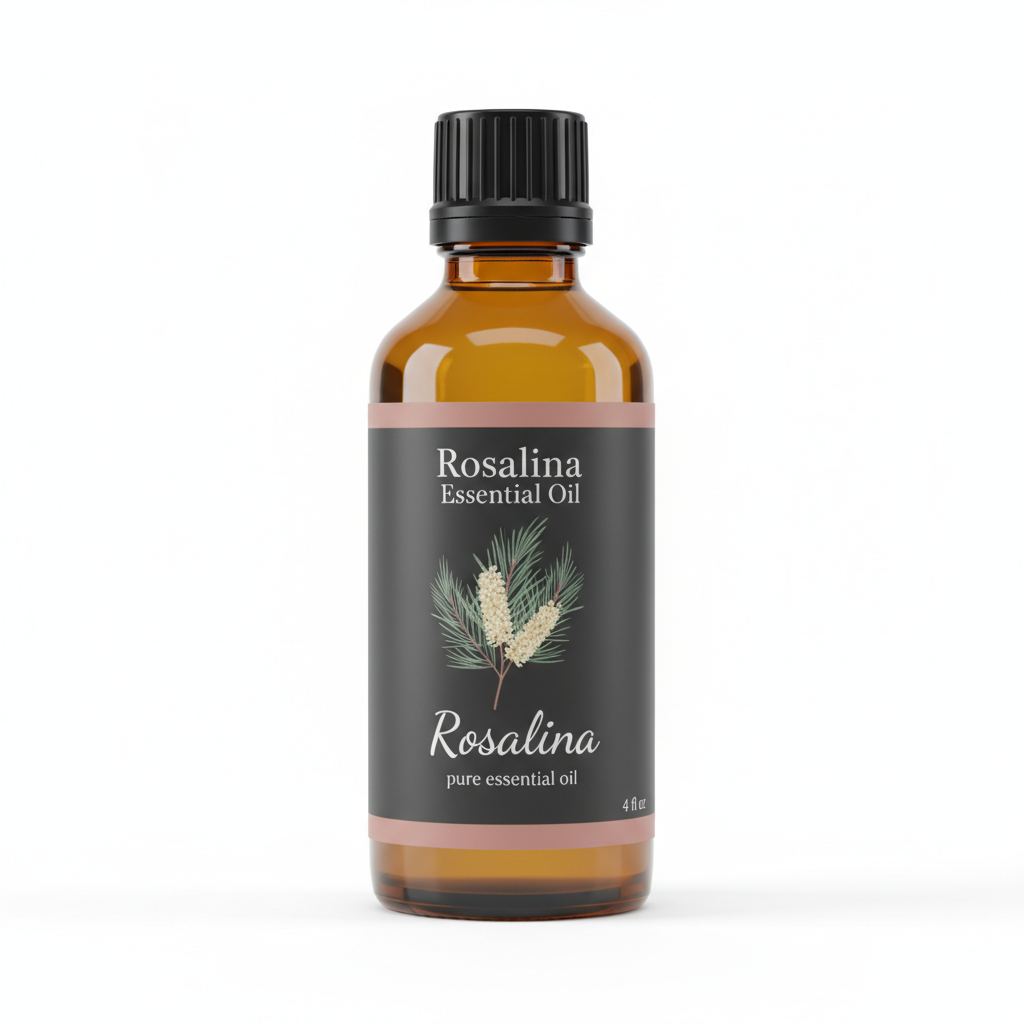
Rosalina Essential Oil
Our own Rosalina Essential Oil, in sizes from 0.5 oz to bulk.
From $16.99
Shop Now →The numbers first
A roller is a leave-on product, so strength matters more than it does for a diffuser. Our dilution guidance for rosalina is 0.5% to 2% in a carrier oil, with a patch test first and the lower end for the face. The Tisserand Institute's general guidelines are lower still for some uses: 0.2% to 1% for sensitive skin, 0.5% to 1.2% for the face and 1% to 3% for the body (Dilution for essential oils). Putting those together, we start at 0.5% for the face and 1% for the body, and we see no reason to reach for 2% in a roller.
Here is the arithmetic for 10 ml of carrier at about 20 drops per ml, so roughly 0.05 ml a drop. Droppers vary, so the last two columns show what happens if yours delivers a smaller or larger drop (0.03 or 0.07 ml, illustrative figures):
| Target | Drops | If a drop is 0.03 ml | If a drop is 0.07 ml |
|---|---|---|---|
| 0.5% | 1 | 0.3% | 0.7% |
| 1% | 2 | 0.6% | 1.4% |
| 2% | 4 | 1.2% | 2.8% |
Two habits close that gap. Weigh your drops: twenty drops on a scale that reads to 0.001 g tells you what your own dropper delivers. For the batch on our Certificate of Analysis, relative density was 0.890 at 20 C, so a 0.05 ml drop weighs about 0.045 g. Or make a bigger batch. 30 ml of carrier at 0.5% needs 0.15 ml, about three drops, so a dropper that runs a little large or small shifts the result far less. Pour the finished blend into three rollers.
One more habit worth having: roll it on, then wait a minute before deciding it is not enough. Your nose is at its keenest in the first few seconds and then settles, so a scent that seems faint at first often turns out to be right. Topping up on the spot is how a 0.5% roller quietly becomes a 2% one.
Three starting formulas
These are formulations worked out from the guidance above, written for 10 ml.
Face and neck, 0.5%
10 ml jojoba oil and 1 drop of rosalina. We like jojoba here because it is light and has little scent of its own, which lets the oil's soft, green-to-floral character come through. At this strength the scent is quiet, which is the point for something near your face. Keep it well away from the eyes.
Body, 1%
10 ml jojoba or sweet almond oil (skip almond if anyone using it has a tree nut allergy) and 2 drops of rosalina. This suits wrists, the back of the neck or upper chest on intact skin. Poison control advises against essential oils on damaged skin (Essential oils: Poisonous when misused).
A stronger scent, 1.5%
10 ml jojoba or fractionated coconut oil and 3 drops. Treat this as the ceiling for a roller, for the body only, and only after the 1% version has sat comfortably on your skin for a week. If you want more scent than that, a diffuser or a room spray gets you there without adding to what stays on your skin.
Choosing the bottle
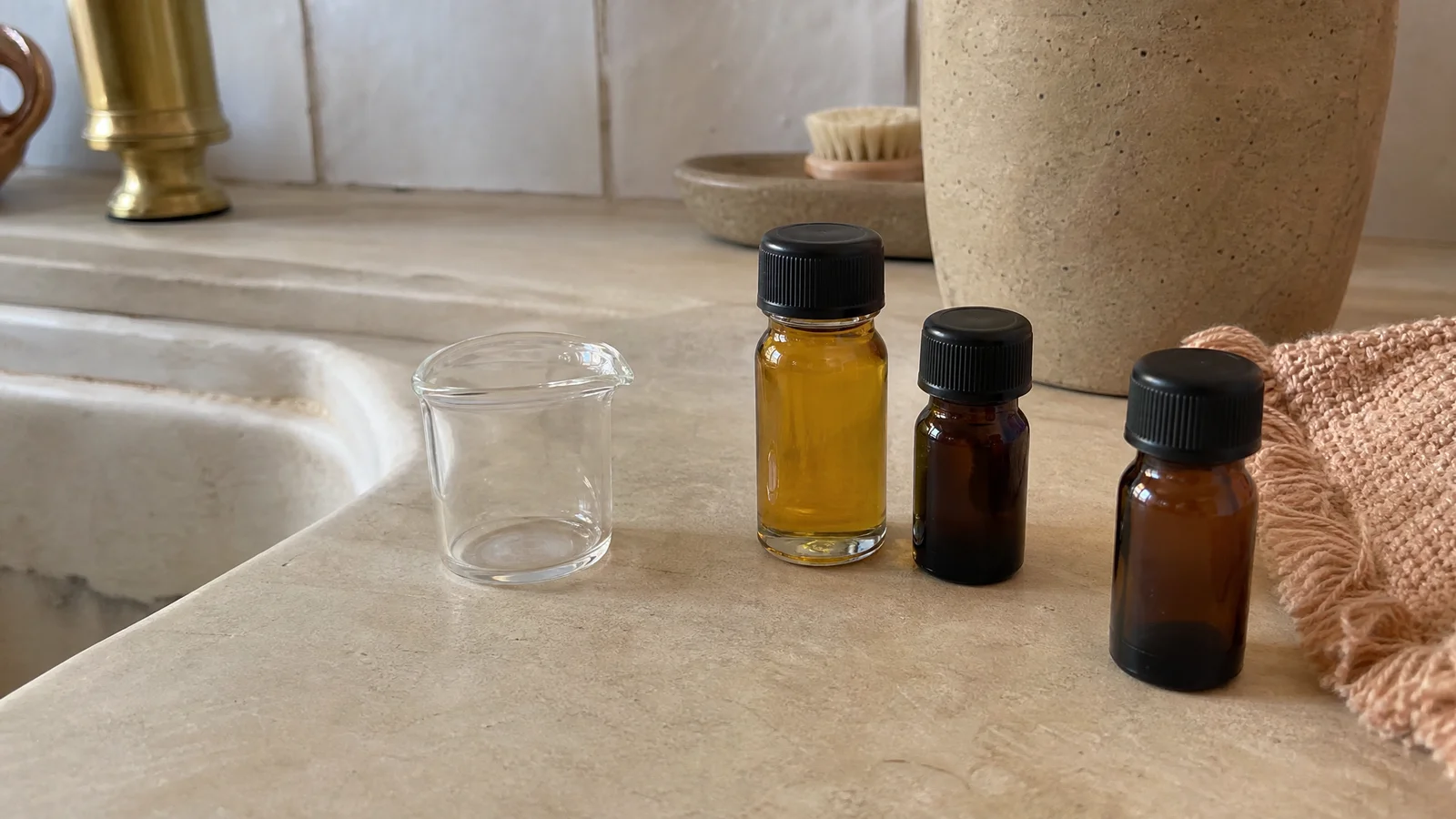
Glass rollers with a smooth ball feel nicer in the hand than most plastic ones, and a dark bottle is a better home for a blend than a clear one. Whatever you pick, keep the opening small enough to roll without leaking and large enough to fill without fuss. A little funnel or a dropper for the carrier makes the whole job cleaner.
Why freshness matters
Linalool, a scent compound common in floral oils, can form allergenic oxidation products as it ages in air. In a patch-test study of 3,418 dermatitis patients, oxidised linalool gave positive reactions in 0.83% at 2% concentration and 7.2% at 11% (Christensson et al., 2010). That is a clinic population, not a roller bottle, but it is a good reason to use a well-capped, cool, dark-stored bottle. And since the Tisserand Institute points out that allergic reactions often do not occur on first use, one clear patch test is a screen, not a clearance (Irritation and allergic reactions). More on that in our patch test article.
Making the bottle
Wash and dry the roller. Add the carrier, leaving a little room because the ball takes up space. Add the oil, cap it, and turn it gently end over end. Label it with the strength and date, and treat the earlier of the oil's and the carrier's best-by dates as your limit. Carriers, rollers and labels come from a craft or cosmetic-ingredient supplier; ask whether the cap liner and ball suit essential oils, since a mostly-carrier blend can be tough on some plastics.
When you want to blend rosalina with other oils, those are separate oils with their own limits, and the total still has to fit inside your chosen strength: a 1% bottle holds 1% in all, shared between oils. If a citrus oil is involved, our phototoxic oils article shows why drop counts alone cannot meet its sun-exposure caps. For ideas on how rosalina sits with other scents, see rosalina in perfumery.
Where not to roll
Skip eyes, broken skin, and skin that has reacted to fragrance before. Keep roller bottles out of reach of children and pets, and ask a midwife before using oils during pregnancy (see our pregnancy article). These are fragrance products; we make no claim that they do anything for the body.
Start with one drop in a small bottle and let the arithmetic do the careful work.
Rosalina Essential Oil
Rosalina Essential Oil from our own shop, in sizes from 0.5 oz to bulk.
From $16.99
Shop Now →Sources & Further Reading
- Tisserand Institute. Dilution for essential oils
- Tisserand Institute. Irritation and allergic reactions
- Christensson et al., 2010, Contact Dermatitis. Linalool - a significant contact sensitizer after air exposure
- Poison Control. Essential oils: Poisonous when misused