Rosalina in Perfumery: Is It a Bridge Note?
Every blender knows the awkward gap between a bright opening and a soft floral heart. A good bridge material sits between them, fresh enough to join the top and round enough to join the middle. Rosalina is a candidate for that job, and the chemistry explains why.
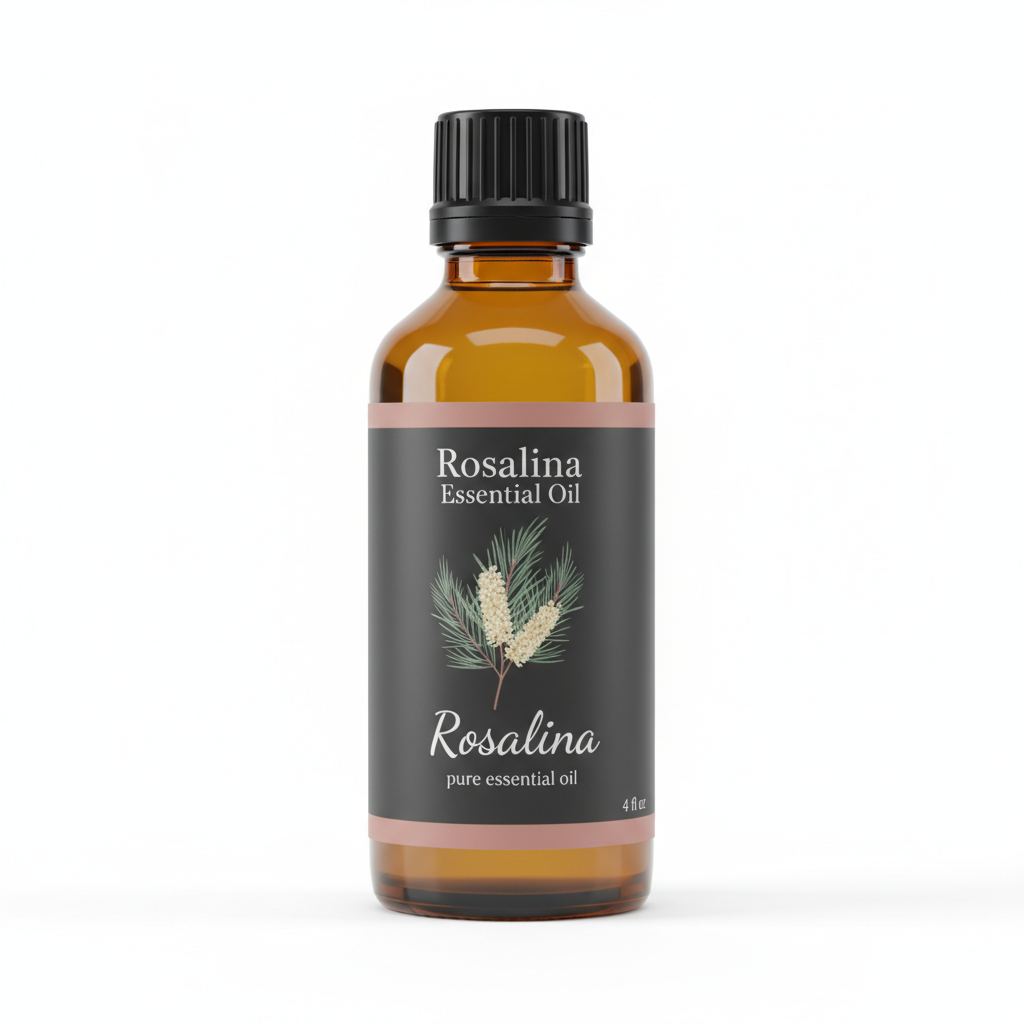
Rosalina Essential Oil
Our own Rosalina Essential Oil, in sizes from 0.5 oz to bulk.
From $16.99
Shop Now →Why a Melaleuca can bridge
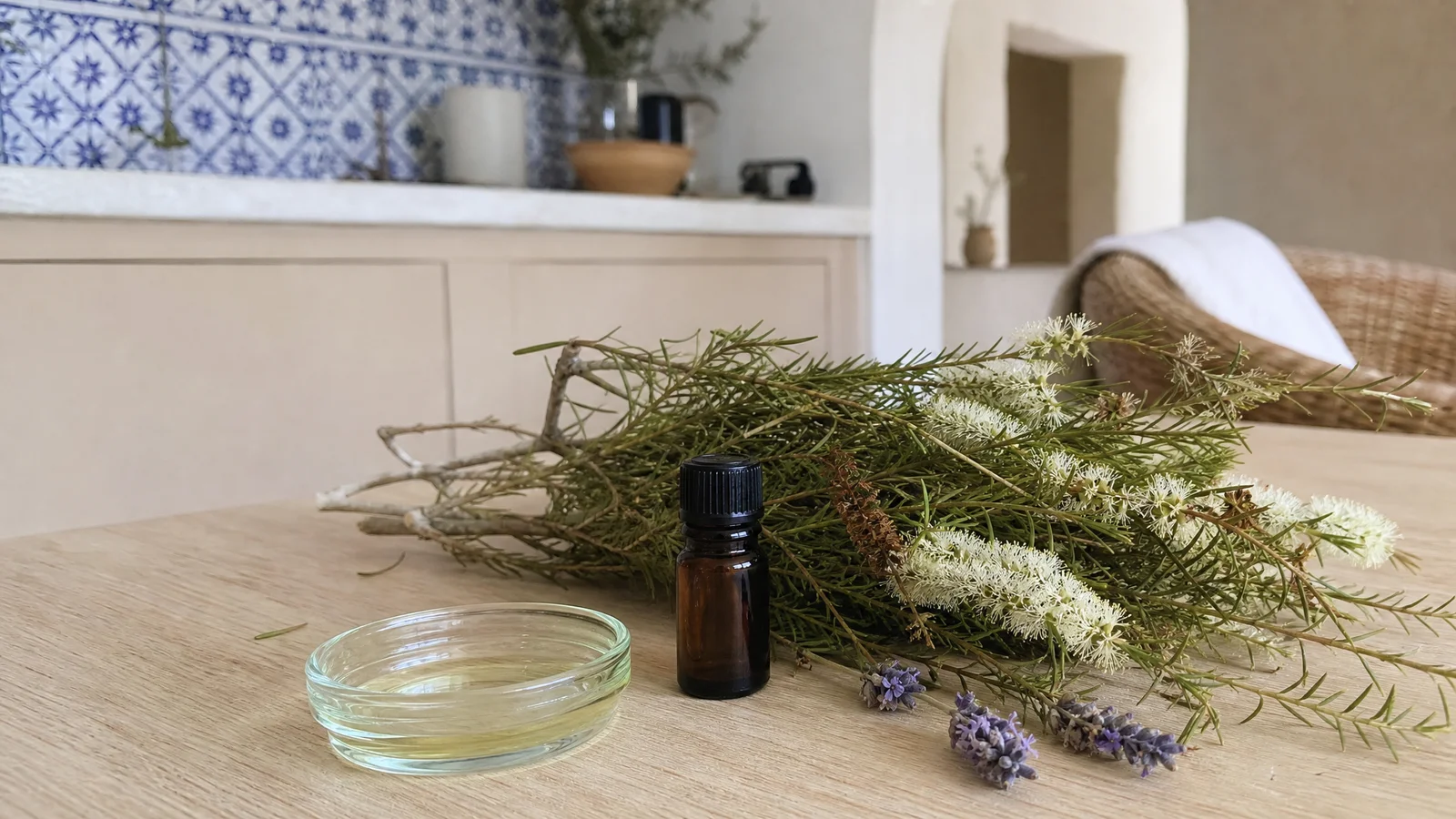
We describe the rosalina we sell as soft and lavender-like, with a green opening, a floral sweetness and a middle-note character with a fresh top edge. The molecules behind that kind of profile have very different speeds. According to the reference records, 1,8-cineole (camphor-like) boils at 176 C with a vapour pressure of 1.90 mm Hg, limonene (lemon-like) at 175 to 176 C, and linalool (floral, likened to bergamot and French lavender) at 198 C with 0.159 mm Hg (PubChem, 1,8-Cineole (compound 2758); PubChem, Limonene (compound 22311); PubChem, Linalool (compound 6549)). Cineole is about twelve times more volatile than linalool, by our arithmetic.
An oil that carries a little of each moves across a smelling strip in stages: fresh first, floral after. That is the essence of a bridge. It is also why note labels are shorthand and a strip, smelled at one minute, fifteen minutes and an hour, is the real test. Our blending article goes deeper on notes and ratios.
Partners worth a strip
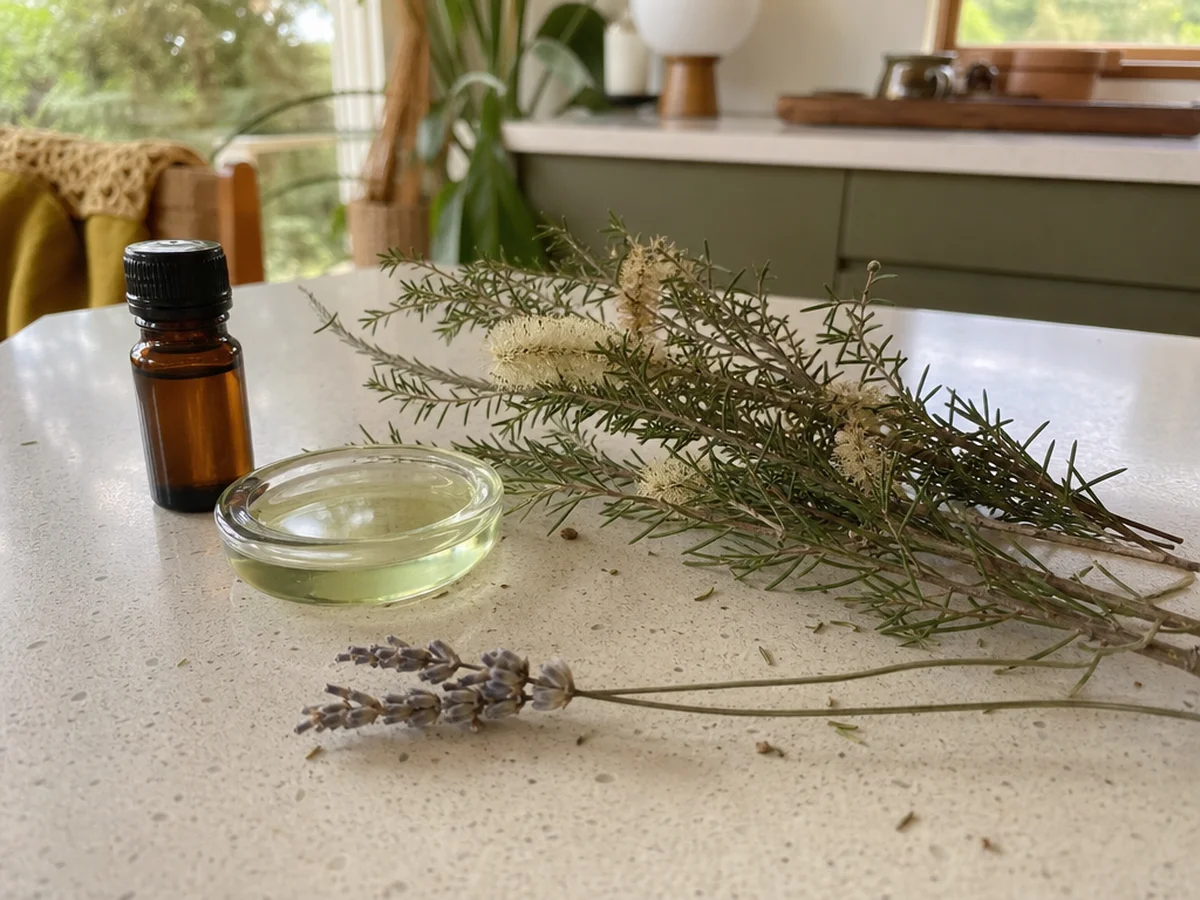
The partners we suggest for rosalina are lavender, chamomile, mandarin, eucalyptus, geranium and clary sage, and bergamot is a natural addition too. We sell none of them, so you will find them at a craft or perfumery supplier. A simple way to think about the choice:
- Something bright on top, such as mandarin or bergamot, gives the blend a lift that rosalina can then carry into the heart.
- Something floral beside it, such as lavender or geranium, deepens the heart. Lavender shares linalool with a floral-leaning rosalina, so it adds depth more than contrast.
- Something woody or herbal underneath gives the finish a place to land.
Pairing for contrast generally gives a more interesting result than pairing like with like. Our rosalina, cedar and lavender worked example turns this into numbers.
Building your first strip
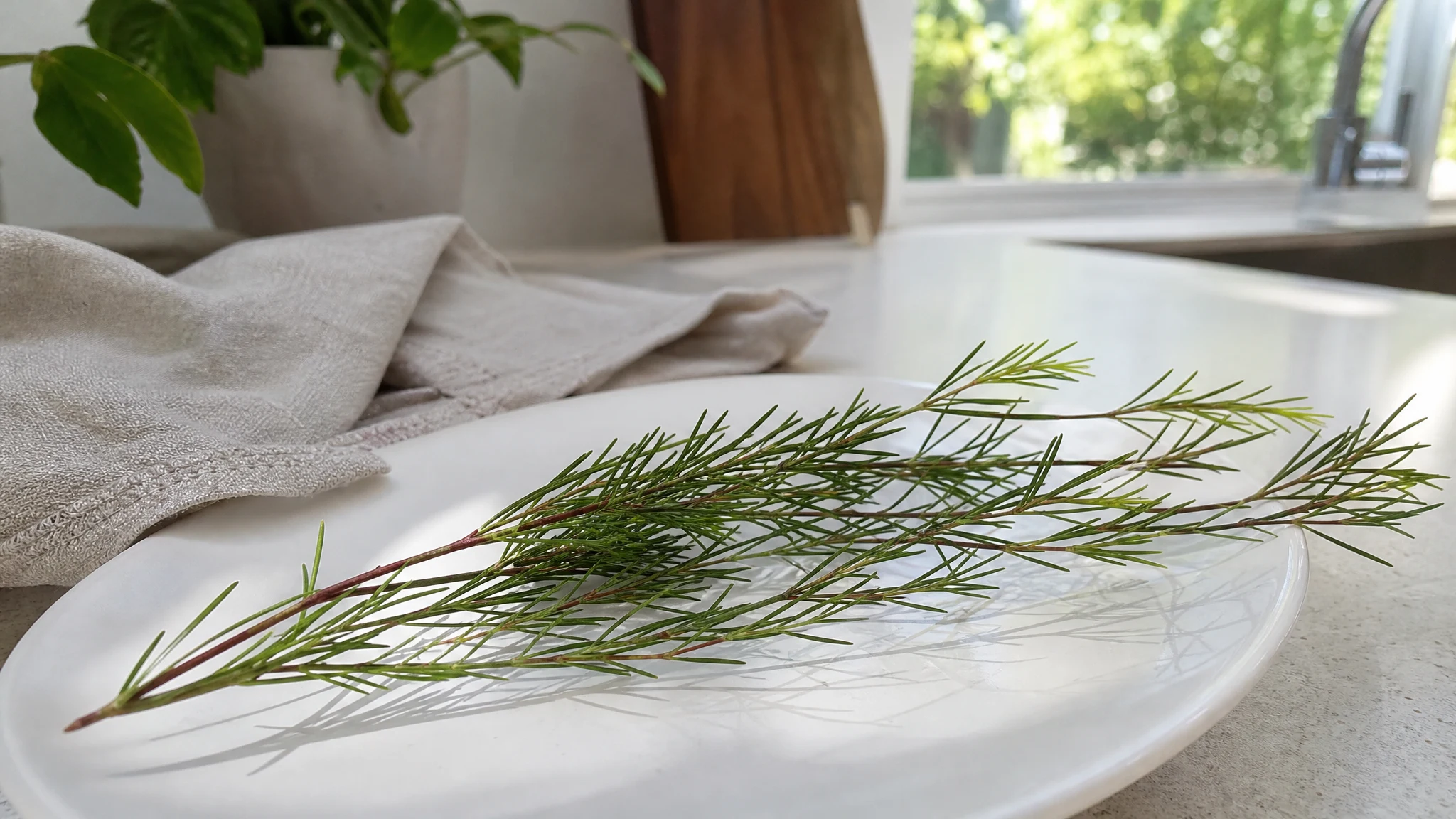
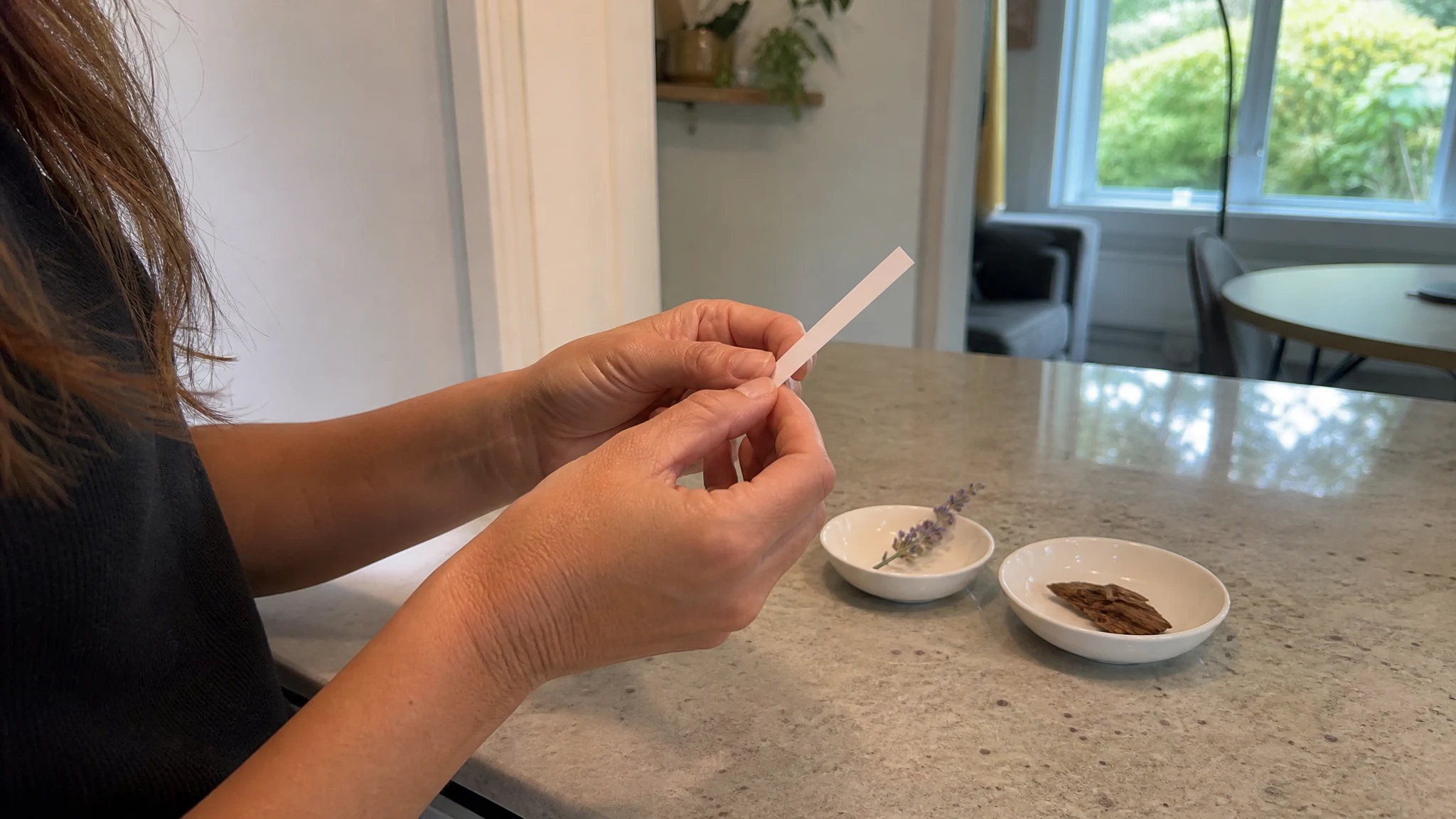
Pick one partner at a time. Dip a paper strip in rosalina and another in the partner oil, then hold them together, fanned like playing cards, and smell. Write down what you notice at the start, after fifteen minutes and again after an hour. Only when a pairing makes you want to keep sniffing is it worth mixing in a bottle. Keep the notes: a page of honest impressions teaches you more than any rule of thumb.
The allergen sum every maker should do
In the EU, a fragrance allergen on the regulated list must be declared in a leave-on cosmetic when it exceeds 0.001% of the product, or 0.01% in a rinse-off product (European Commission, Fragrance allergens labelling). Linalool and limonene are on that list. The sum is the oil's share of the product times the allergen's share of the oil.
Take a 1% fragrance load in a leave-on product. If the oil carried 38% linalool, which is the figure for a commercial oil quoted in the literature, linalool would be about 0.38% of the product, hundreds of times the 0.001% line. Even an oil with under 1% linalool would sit above it. This is illustrative arithmetic, not a measurement of ours, and the lesson is not that any oil is a problem: natural oils with measurable allergen content simply need declaring at perfume-style loads. To run the sum for a real lot you need its numbers, and you can ask us in writing through the contact page for GC-MS data on a lot. Our GC/MS guide shows how to read it.
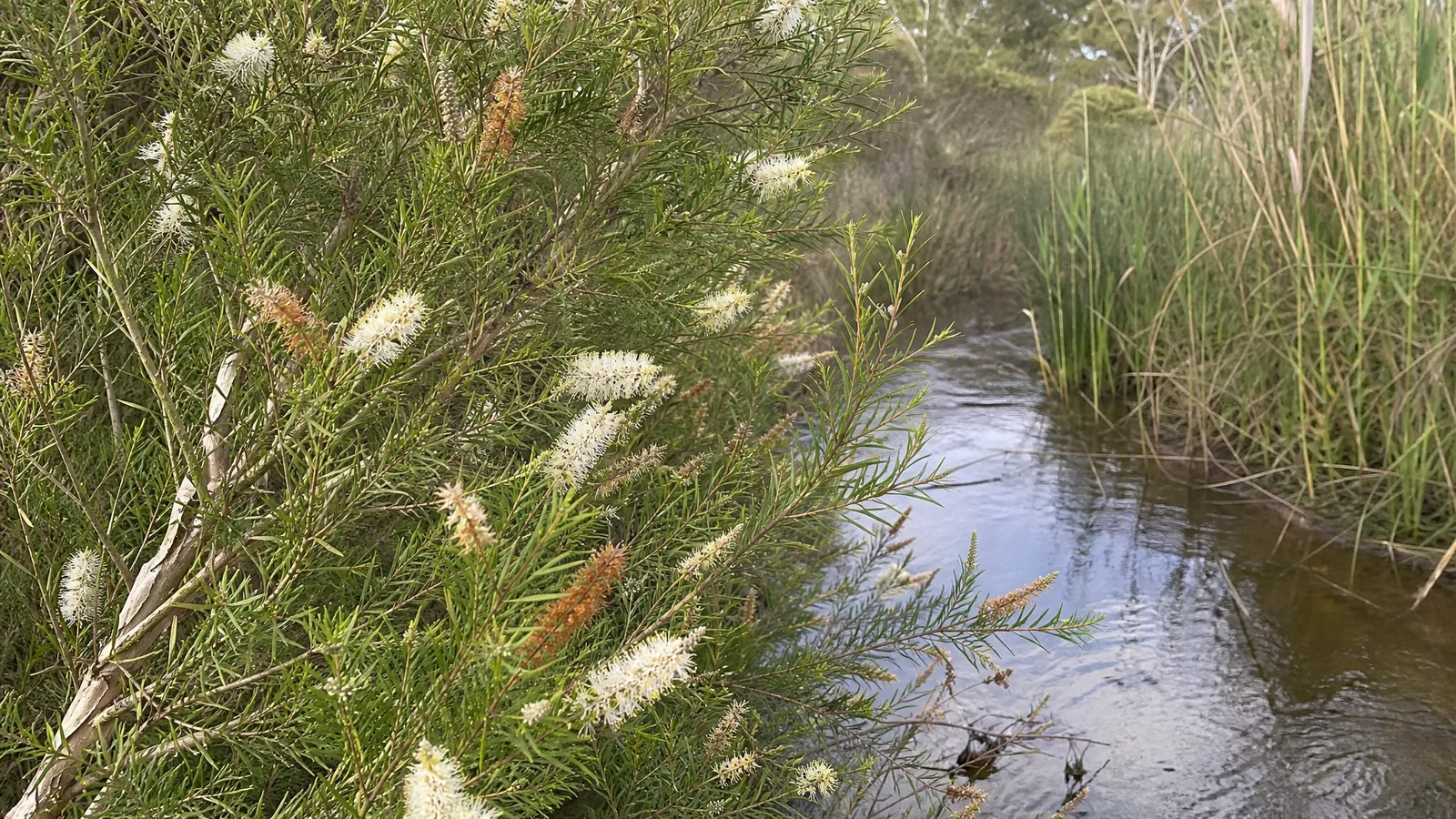
That request is worth making early. A 2026 paper notes that the literature on Melaleuca ericifolia includes profiles led by methyl eugenol, which carries far tighter limits in the EU than linalool (Valarezo et al., 2026), so a product you plan to sell should be built on the composition of the lot, not on the species name.
We love bridge materials because they are modest. Nobody says "what a lovely bridge" when they walk into a room, yet a blend without one often feels like a staircase with a step missing. Part of the fun of rosalina is learning to notice when it is doing that quiet job.
Keep a small notebook next to the strips. Note the date, the oils, how many drops of each, and one honest sentence about how it smells at the start and an hour later. Blends are easy to love and hard to repeat without notes, and a page of scribbles is what turns a lucky accident into a recipe you can make again.
Skin, scent and the bench
Perfume strength is much higher than skin dilution. Our guidance for skin is 0.5% to 2% in a carrier oil with a patch test first, and a fragrance applied to skin at perfume strength is above that, which is a matter for a cosmetic safety assessor. Room and linen scents stay off the skin, and our pillow mist article covers one way to do that. For the dilution maths, see how to dilute rosalina oil.
Keep your working bottle capped, cool and dark, since linalool-bearing oils change with air, and date your dilutions. Then let your nose do the deciding. A bridge note proves itself on the strip.
Rosalina Essential Oil
Rosalina Essential Oil from our own shop, in sizes from 0.5 oz to bulk.
From $16.99
Shop Now →Sources & Further Reading
- PubChem, Linalool (compound 6549)
- PubChem, 1,8-Cineole (compound 2758)
- PubChem, Limonene (compound 22311)
- European Commission, Fragrance allergens labelling
- Valarezo E. et al., 2026. Essential Oil of Melaleuca ericifolia Sm.: Chemical Composition, Enantiomeric Distribution, and Antimicrobial, Antioxidant, and Anticholinesterase Activities. Molecules. Europe PMC PMC13666404