Essential Oil Extraction Methods: Reading the Label
Turn a bottle around and the extraction method is one of the most revealing lines on the label. "Steam distilled," "cold pressed," "CO2 extract," "absolute": each one names a different way of getting aroma out of a plant, and each gives you a different material. Once you know what the words mean, the label starts to tell you a lot before you ever open the cap.
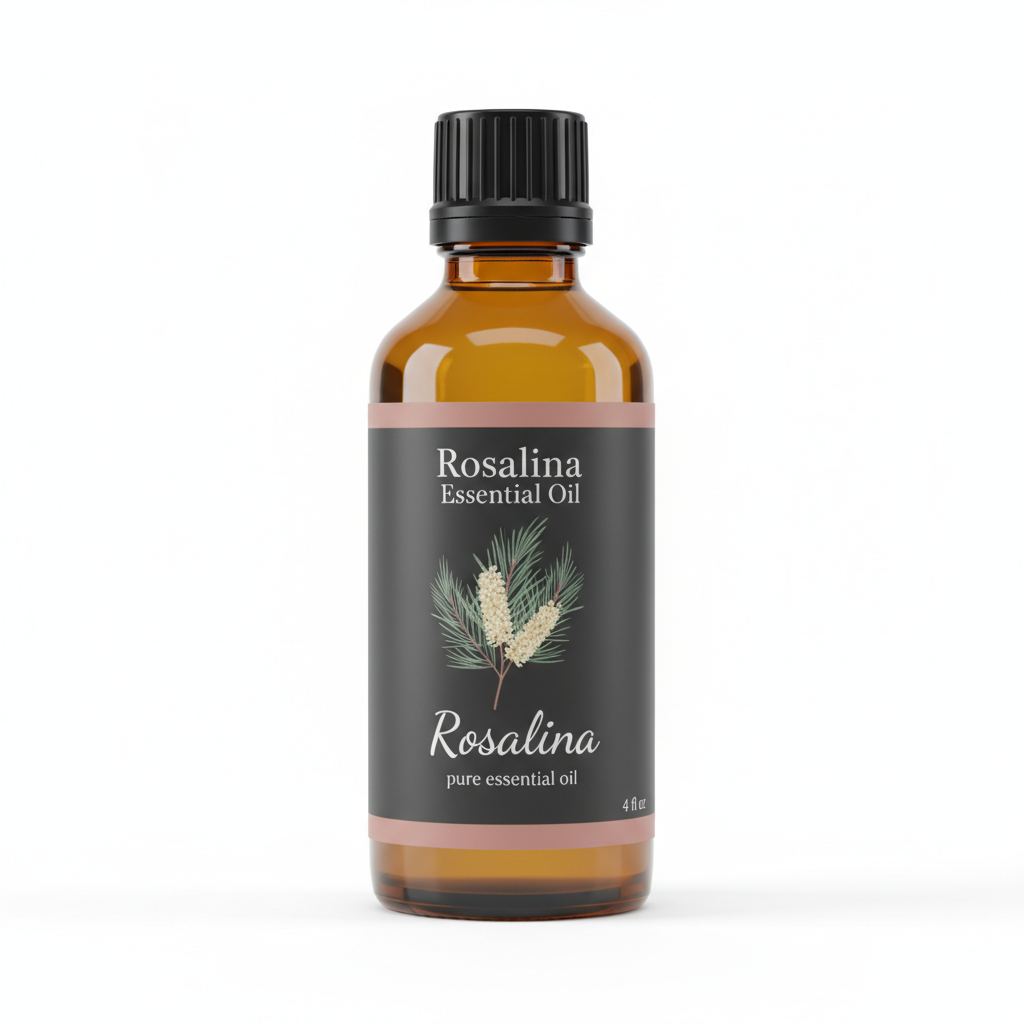
Rosalina Essential Oil
Our own Rosalina Essential Oil, in sizes from 0.5 oz to bulk.
From $16.99
Shop Now →Four words, four different products
The international vocabulary standard for aromatic raw materials (ISO 9235) keeps these terms apart. A cold-pressed essential oil is one obtained mechanically from the peel of a citrus fruit at ambient temperature. A concrete is an extract taken from fresh plant material with one or more solvents, and an absolute is what you get when a concrete is then extracted with ethanol. The water left behind after steam distillation, once the oil is separated off, is a hydrolate, also called an aromatic water. So distillation and citrus pressing make essential oils; concretes and absolutes are their own category, and a supercritical CO2 extract is a third thing again.
That matters because the word on the bottle is how you tell which kind of material you are holding, and each one calls for different expectations about aroma and use.
Same plant, different extraction, different oil
It is easy to assume that the method only changes the price. The chemistry says otherwise. A 2024 study in Scientific Reports took rosemary and extracted it three ways: hydrodistillation, supercritical CO2, and maceration in olive oil. All three were rosemary and all three were led by 1,8-cineole, but the proportions moved. Borneol made up about 8.5% of the distilled oil and about 18.8% of the CO2 extract, more than double. Alpha-pinene went the other way, at about 11.4% in the distilled oil and 2.7% in the CO2 extract.
That is one plant at one set of settings, so we would not turn it into a rule for every plant. The takeaway is simply that a CO2 extract and a steam-distilled oil of the same herb are different products, with different aromas and different behaviour. It is also why a quality range written for a distilled oil should not be used to judge another.
"Steam distilled" still leaves questions
Even within distillation there is room for variation. A 2026 review of ylang-ylang, a flower oil, notes that conventional hydrodistillation of that crop takes around 19 hours, while microwave-assisted methods can bring it to about 40 minutes and retain more of the light, fragrant compounds. Run time and method shape the result. For a customer, "steam distilled" is a good sign of the family the oil belongs to, and a fair prompt to ask a supplier about the run if that detail matters to your project.
A quick way to read a label
- "Essential oil" with steam distilled or cold pressed: consistent with the standard vocabulary above.
- "Absolute," "concrete" or "CO2 extract": a different class of material, so expect a different aroma and ask the supplier how it should be used.
- No method at all: worth a question. It is the cheapest thing to ask and one of the most informative things to learn. Our guide to reading an essential oil label covers the rest of the front panel.
Reading the label like a shopper
The extraction line is easy to skim past, so make it a habit to find it first. Turn the bottle until you see the method, then read the plant part next to it. Leaf, peel, flower, root: together with the method, that pairing tells you what kind of material is in your hand.
Notice, too, whether the wording is plain. A label that says "steam distilled" in clear letters is giving you something to check, while a label that only says "natural" is giving you a mood. If the method is missing, you can ask, and a good seller will answer in a sentence.
Smell before you decide
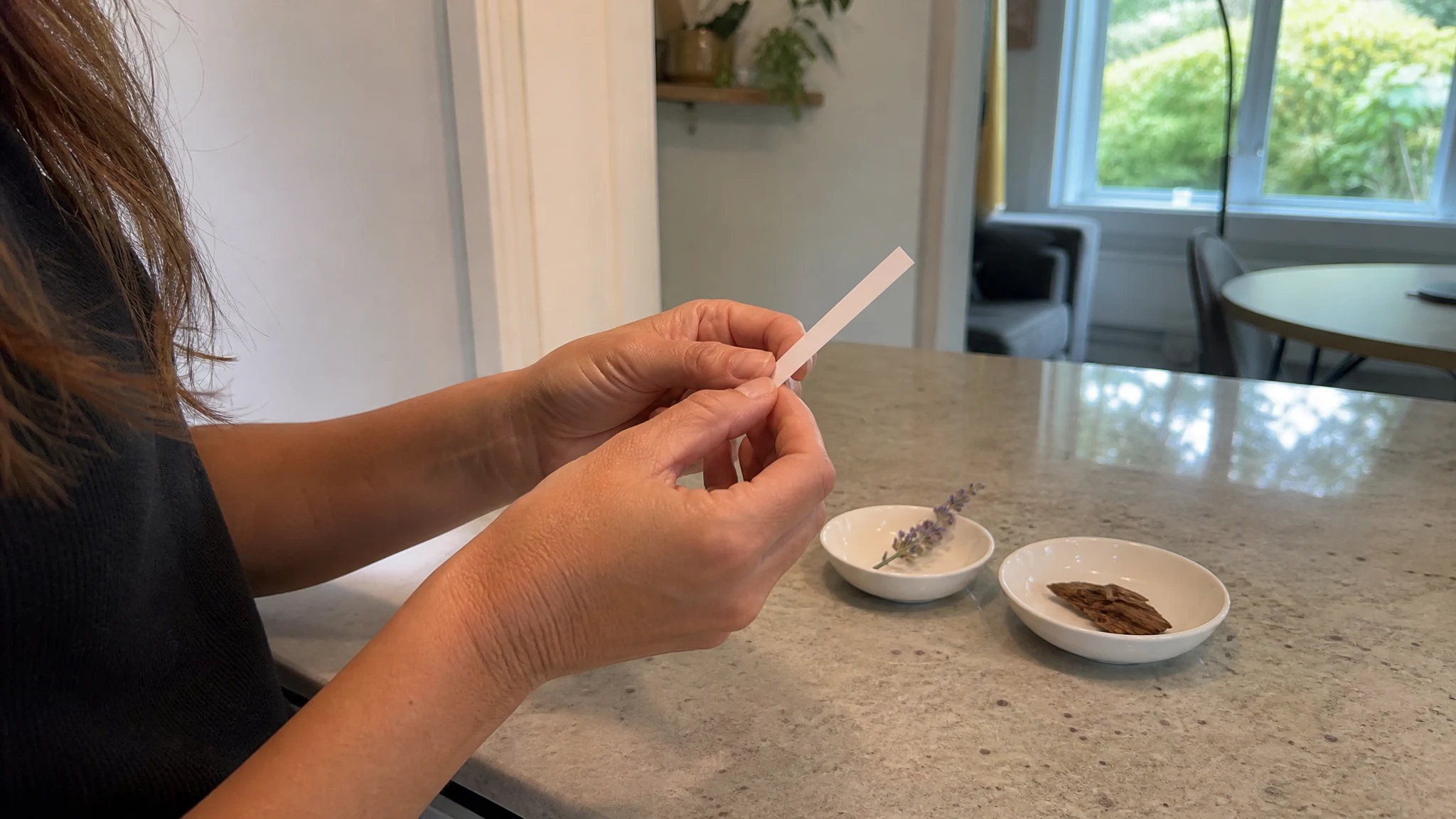
Methods change aroma as well as chemistry, so let your nose be part of the shopping. Put a drop on a paper strip or a tissue, hold it a hand's width away, and breathe in gently. Come back to it after a few minutes and again after an hour. Different materials open differently, some bright and quick, others slow to settle. With rosalina, the opening we describe is green, and it settles into a soft, floral, lavender-like sweetness.
Do not judge an oil in the first second. Give it time on the strip, and write down what you notice so you can compare it with the next bottle.
Where our oil sits
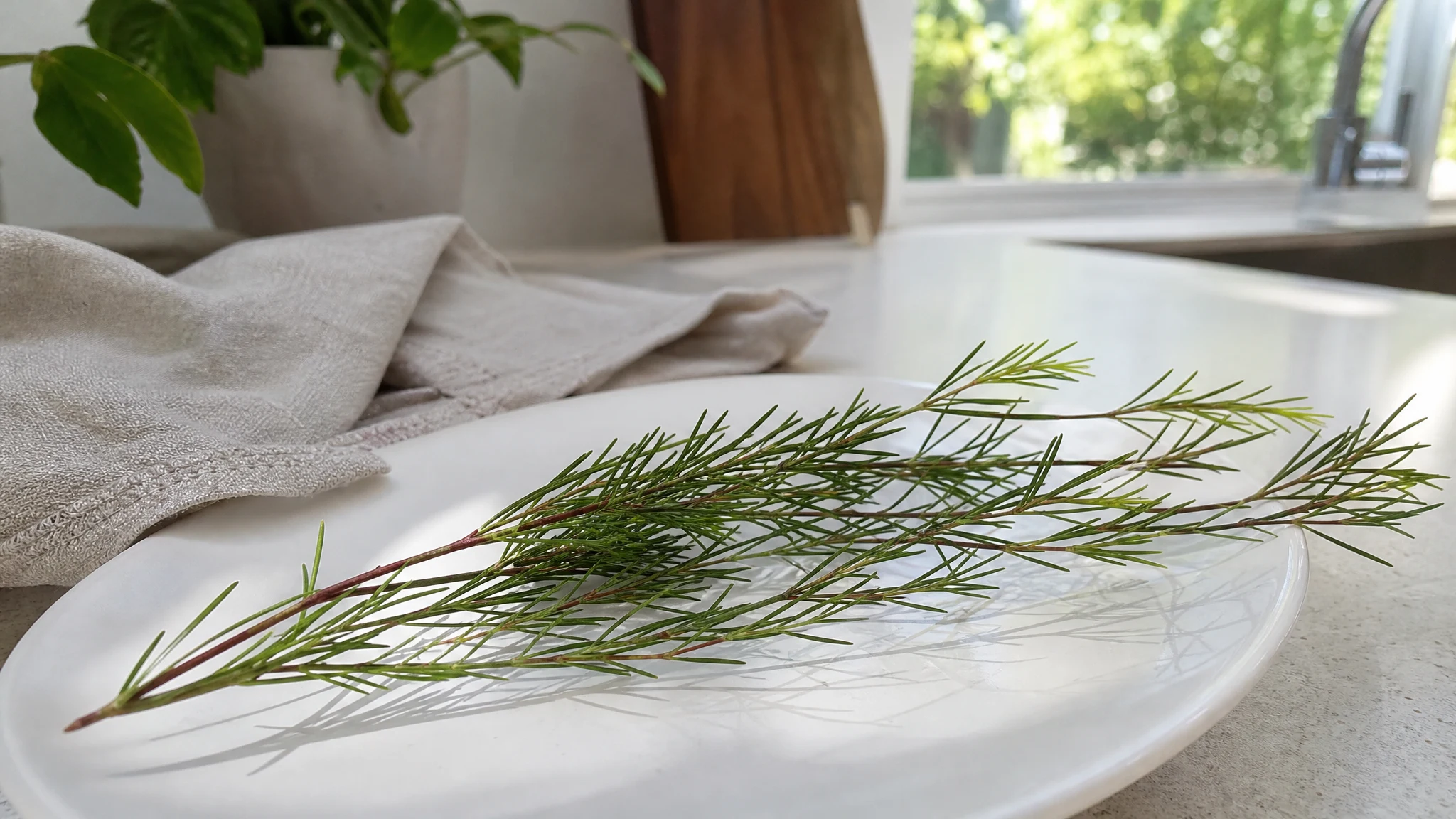
We sell one oil, and it is steam distilled. The Certificate of Analysis we publish for one batch lists "Steam Distilled" as the extraction method and "Leaf" as the part used, and we describe the oil as a steam distillation of the leaves of Melaleuca ericifolia. We do not sell absolutes, CO2 extracts or cold-pressed oils. If you would like to see what a still actually does, our walk-through of how rosalina oil is made covers it, and our piece on linalool and cineole explains why the compounds that travel with steam matter to the scent. Home tests cannot tell you the method either, which is part of why they disappoint, as we explain in why home purity tests fail.
Next time a bottle catches your eye, read the method first. It takes five seconds and tells you what kind of material you are about to buy.
Rosalina Essential Oil
Rosalina Essential Oil from our own shop, in sizes from 0.5 oz to bulk.
From $16.99
Shop Now →Sources & Further Reading
- ISO 9235:2021 - Aromatic Natural Raw Materials Vocabulary Standard, catalogue listing
- In sight on olive oil maceration and supercritical CO2 in extracting rosemary essential oil, Scientific Reports, 2024
- A Review on Ylang-Ylang (Cananga odorata) Essential Oil, Its Applications, and Extraction Methods, Shabanloo et al., Molecules, 2026