Essential Oils for Congestion: Cineole, Menthol, Steam
When a cold blocks your nose, three ideas tend to get stirred into one: that a cineole capsule helps, that menthol "opens" the airways, and that breathing steam clears things out. They are three separate bodies of evidence about three different things, and none of them is a diffuser with a few drops of oil in it. Pulling them apart is the quickest way to understand what an aroma can and cannot do.
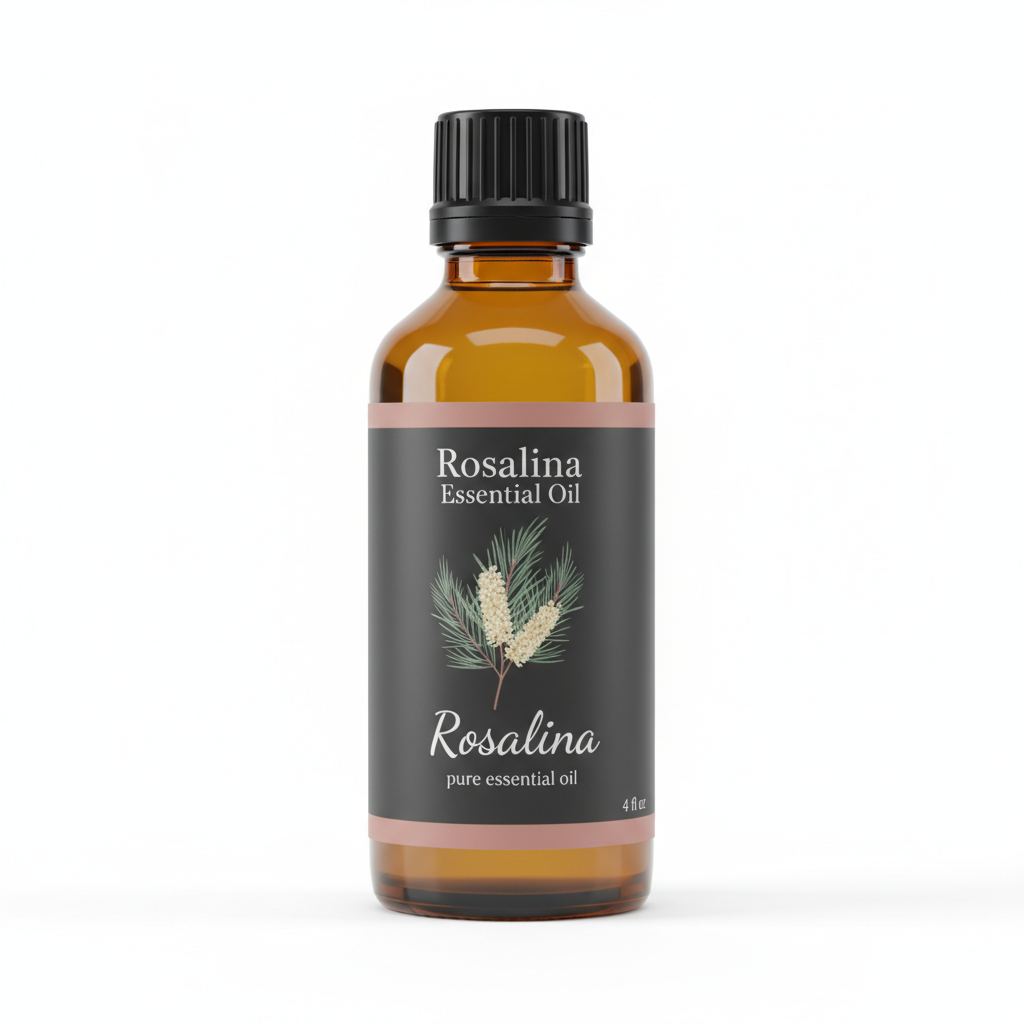
Rosalina Essential Oil
Our own Rosalina Essential Oil, in sizes from 0.5 oz to bulk.
From $16.99
Shop Now →One note first. Our rosalina oil is a fragrance and not a congestion product, and we do not suggest it for that. Keep every essential oil out of young children's reach and away from their faces.
A capsule trial, and why it is not a diffuser
Cineole, also called 1,8-cineole or eucalyptol, is the fresh, camphor-like compound in eucalyptus oils. In 2004 Kehrl and colleagues ran a double-blind, placebo-controlled trial in 152 adults with acute sinus inflammation, 76 in each group. People swallowed capsules containing 100 mg of cineole, two at a time, three times a day for seven days. Symptom scores started at 15.6 in both groups; by day seven they were 3.0 with cineole and 9.2 with placebo. Mild side effects, heartburn and a rash, showed up in two people taking cineole.
It is a useful result, and it is important to see exactly what it is: a measured pharmaceutical dose, swallowed, over a week, by people who had been examined. A cold also eases on its own, which is why the placebo group improved too. None of that translates to scent in a room, and it is a poor reason to swallow an essential oil. Poison Control notes that children have thin skin and immature livers that may make them more susceptible to toxic effects, that essential oils can be poisonous when swallowed, and that if someone swallows one you should call Poison Help at 1-800-222-1222.
Menthol changes how air feels
Menthol is the familiar one: it turns up in lozenges, nasal sprays, rubs and inhalers. Eccles's review of the science explains that menthol acts on a receptor on the sensory nerves that carry the sensation of cool. Our reading of that is a useful one for anyone shopping: the cooling feeling is real, and a cool sensation in the nose can make breathing feel easier, but feeling clearer and being clearer are not the same outcome. It is a pleasant effect and an honest one, so long as nobody claims more for it.
Steam: a Cochrane verdict
Breathing steam is the oldest of the three ideas. A Cochrane review of heated, humidified air for the common cold pooled six trials with 387 participants and judged the evidence low in quality: one analysis suggested relief, another did not, and the authors concluded the evidence showed neither benefit nor harm for the device studied. Some people reported minor nose irritation. Those studies used a device with no essential oil, so they speak only to steam.
The NHS suggests sitting in a bathroom with a hot shower running to ease a blocked nose, and it advises against letting children breathe steam from a bowl of hot water because of the risk of scalding. We agree, and we would add our own reasoning: a bowl of hot water with oil on top puts concentrated vapour right at face height. That is not a setup we suggest.
What this adds up to
Put side by side, the evidence says a defined swallowed substance can matter in a sinus infection, a cooling sensation can change how clear the nose feels, and steam has an uncertain effect. A web page that jumps from one to another is making a leap that none of the three studies makes. If what you want is a fresh-smelling room while you rest, that is a perfectly good reason to enjoy an aroma, and it is a fragrance preference.
Composition is also worth knowing about. A 2026 analysis by Valarezo and colleagues reports that published oils from rosalina's species fall into at least three chemical profiles, so one oil's cineole level says little about another's. The Certificate of Analysis we publish for one batch lists density and refractive index; if a cineole figure matters to you, ask us in writing through the contact page before ordering. Our article on linalool and cineole explains the compounds, and the one on little noses covers households with small children. Pregnancy is its own question, covered in our pregnancy article.
Comfort without the claims
While you wait out a cold, the simple comforts do a lot: a glass of water within reach, an extra pillow, a warm drink, a window opened for a few minutes to change the air. If you like a hint of fresh scent in the room, keep it light and keep it away from the bed of a young child. A clean, uncluttered room with a faint, pleasant aroma is a nice place to rest, and that is all we claim for it.
When a blocked nose needs a person
A pharmacist can recommend a licensed cold product that suits your age and your other medicines. The NHS says to see a GP if cold symptoms do not improve after 10 days or if you are worried about a child's symptoms. If someone swallows an essential oil, call Poison Help right away.
A cold passes, and a pleasant scent in the room can make the waiting a little nicer. That is the honest extent of what an aroma offers here.
Rosalina Essential Oil
Rosalina Essential Oil from our own shop, in sizes from 0.5 oz to bulk.
From $16.99
Shop Now →Sources & Further Reading
- Therapy for acute nonpurulent rhinosinusitis with cineole: results of a double-blind, randomized, placebo-controlled trial, Kehrl, Sonnemann and Dethlefsen, Laryngoscope, 2004
- Menthol: effects on nasal sensation of airflow and the drive to breathe, Eccles, Current Allergy and Asthma Reports, 2003
- Heated, humidified air for the common cold, Singh et al., Cochrane Database of Systematic Reviews, 2017
- Common cold - NHS
- Essential oils: Poisonous when misused | Poison Control
- Essential Oil of Melaleuca ericifolia Sm.: Chemical Composition, Enantiomeric Distribution, and Antimicrobial, Antioxidant, and Anticholinesterase Activities, Valarezo et al., Molecules, 2026