What Does Rosalina Oil Smell Like? Start to Dry-Down
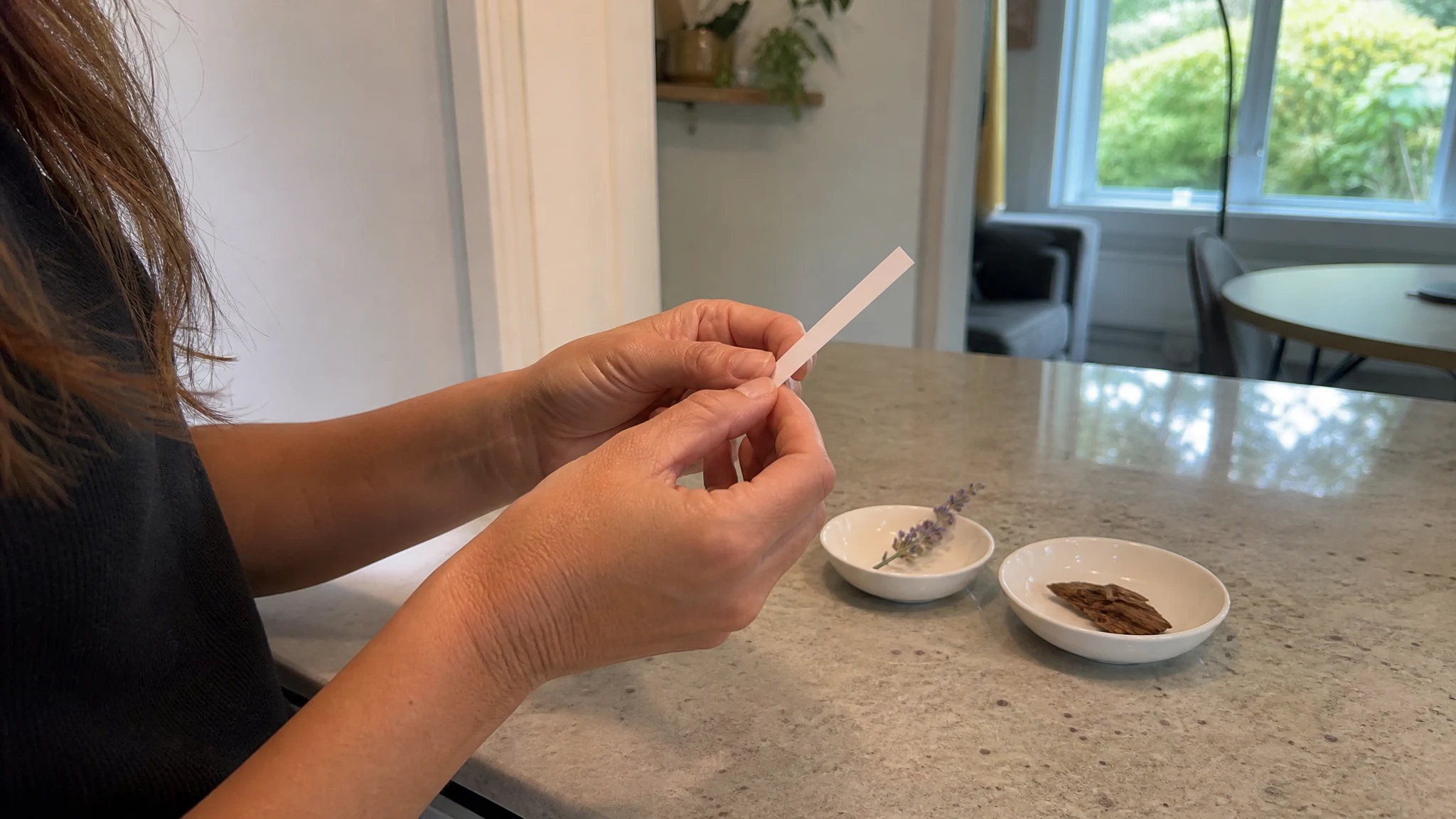
Hold a paper strip dipped in rosalina oil at arm's length and the first thing you meet is green and fresh, like a cut stem. Give it a few minutes and the edges soften into something sweeter and more floral. That slow change is the best way to understand this oil.
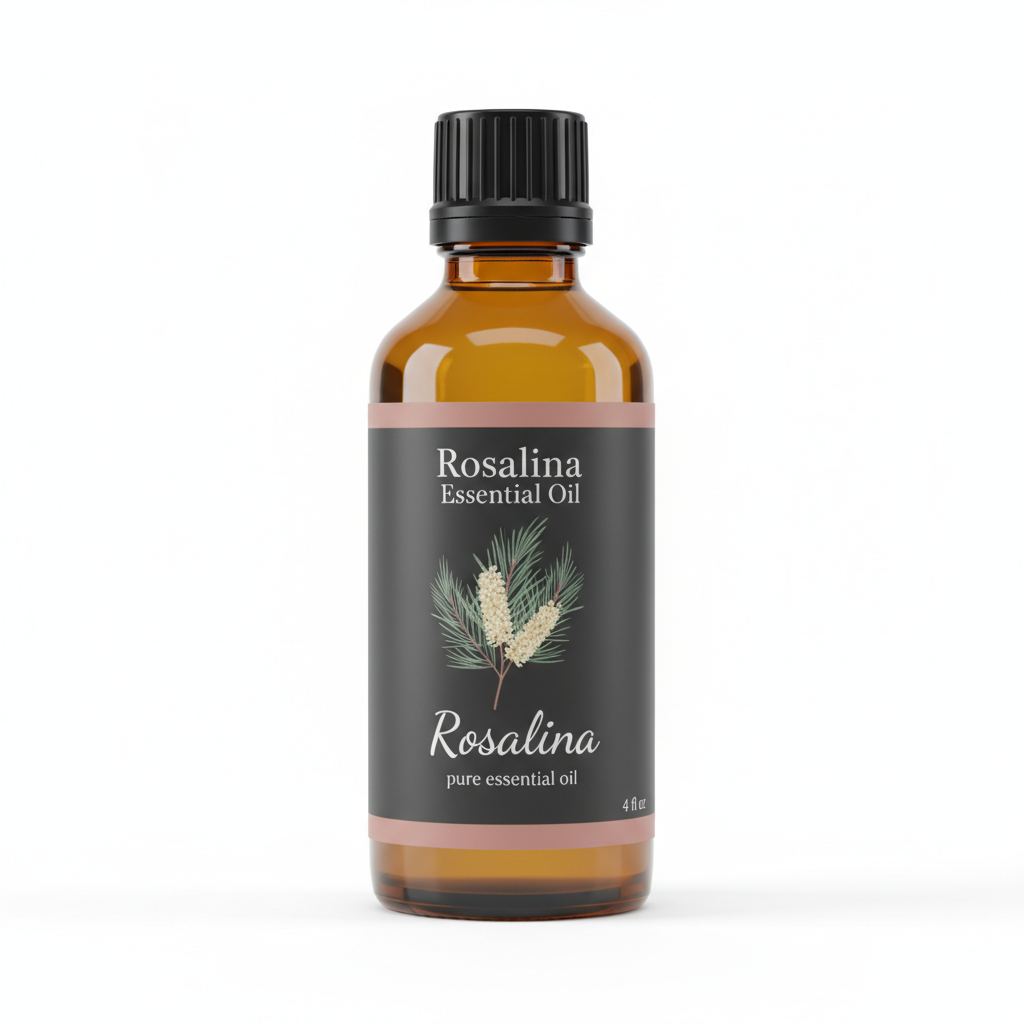
Rosalina Essential Oil
Our own Rosalina Essential Oil, in sizes from 0.5 oz to bulk.
From $16.99
Shop Now →How we describe it
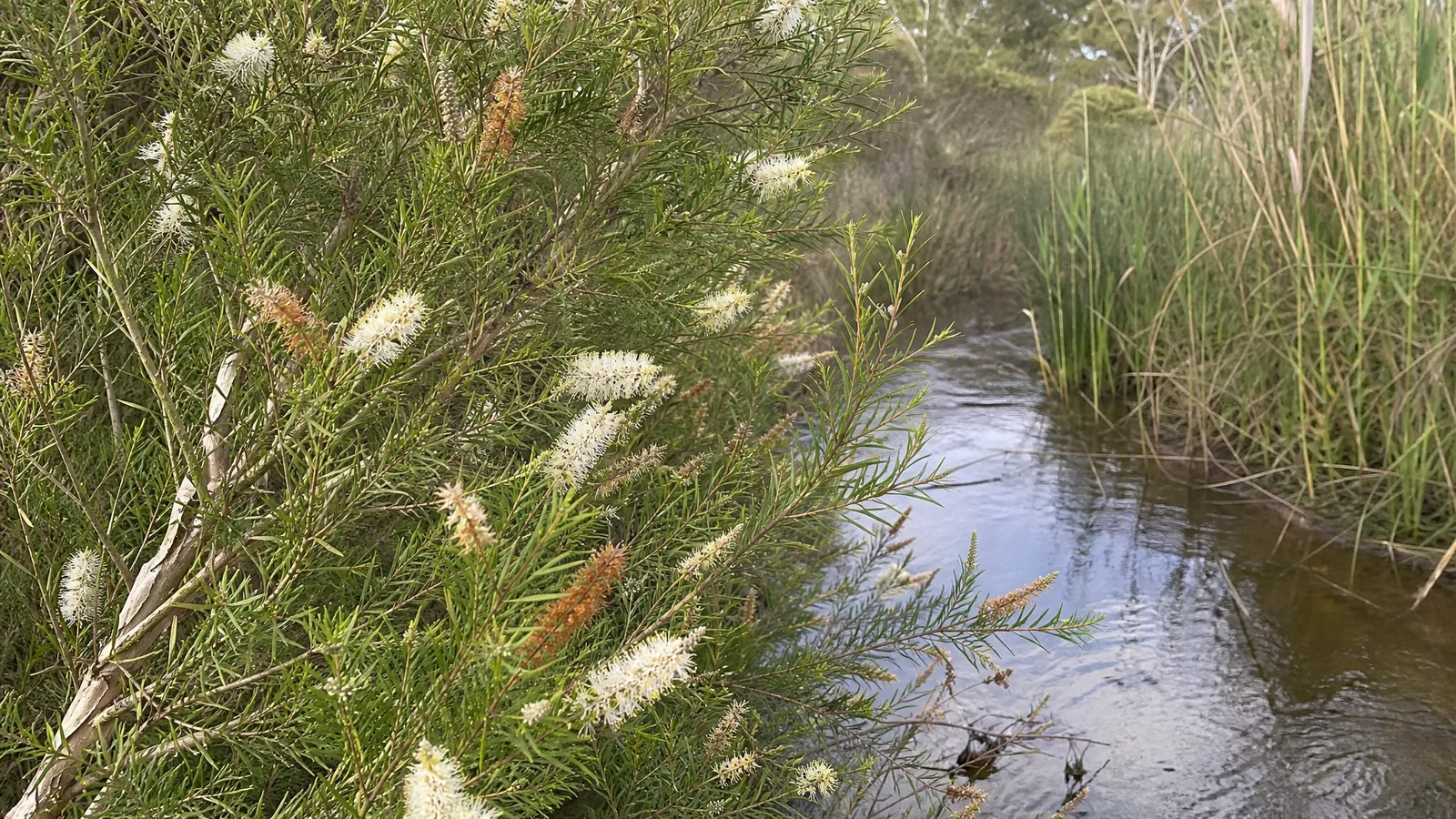
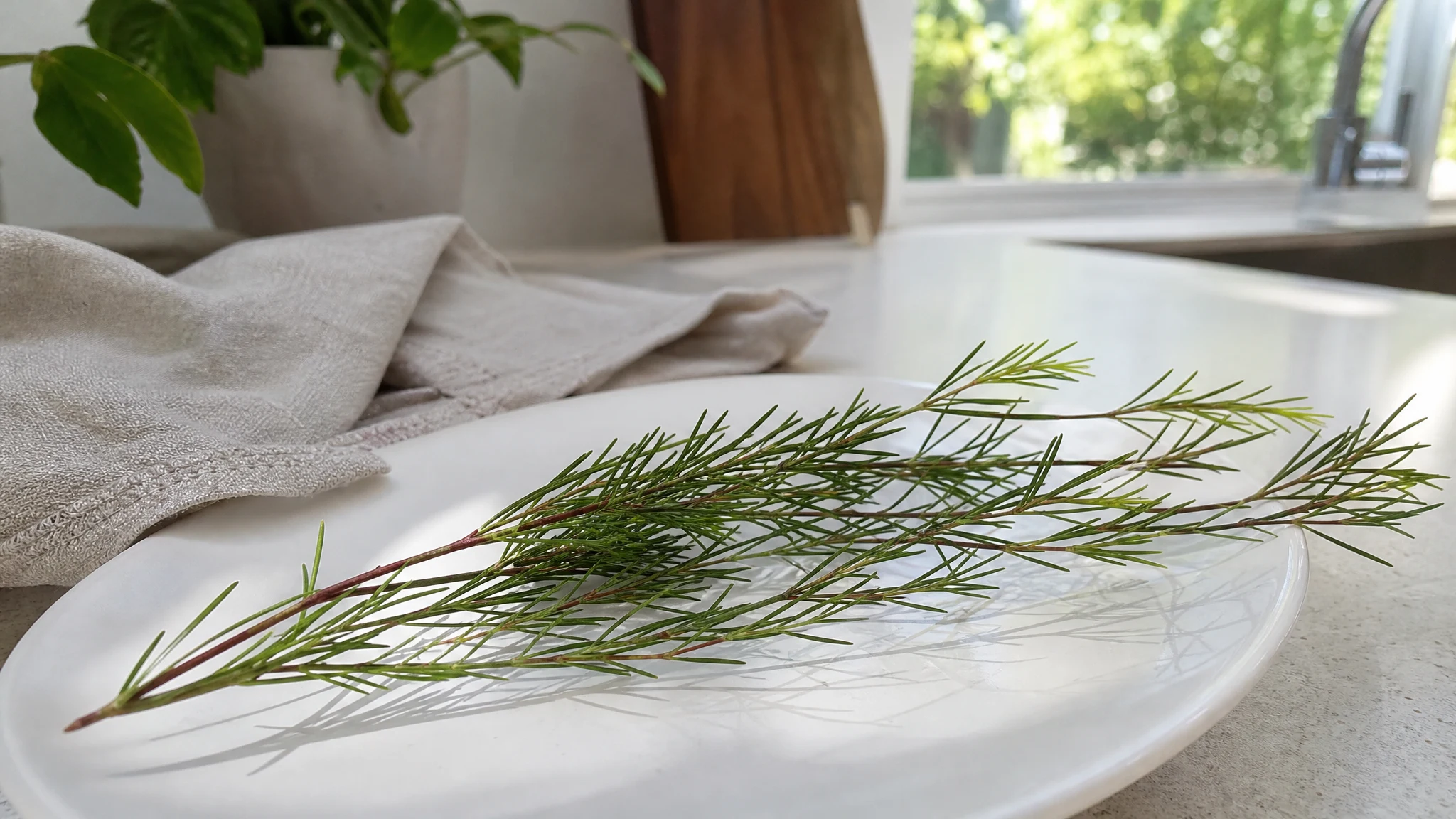
We describe the rosalina we sell as soft, fresh and lavender-like, with a green opening and a floral sweetness. In perfumery terms it is a middle note with a fresh top edge, and it sits happily beside lavender, chamomile, mandarin, eucalyptus, geranium and clary sage. Its botanical name is Melaleuca ericifolia, and it is a close relative of tea tree, but its character is quite different. If you want to compare the two, we wrote about it in rosalina versus tea tree.
Why it opens one way and settles another
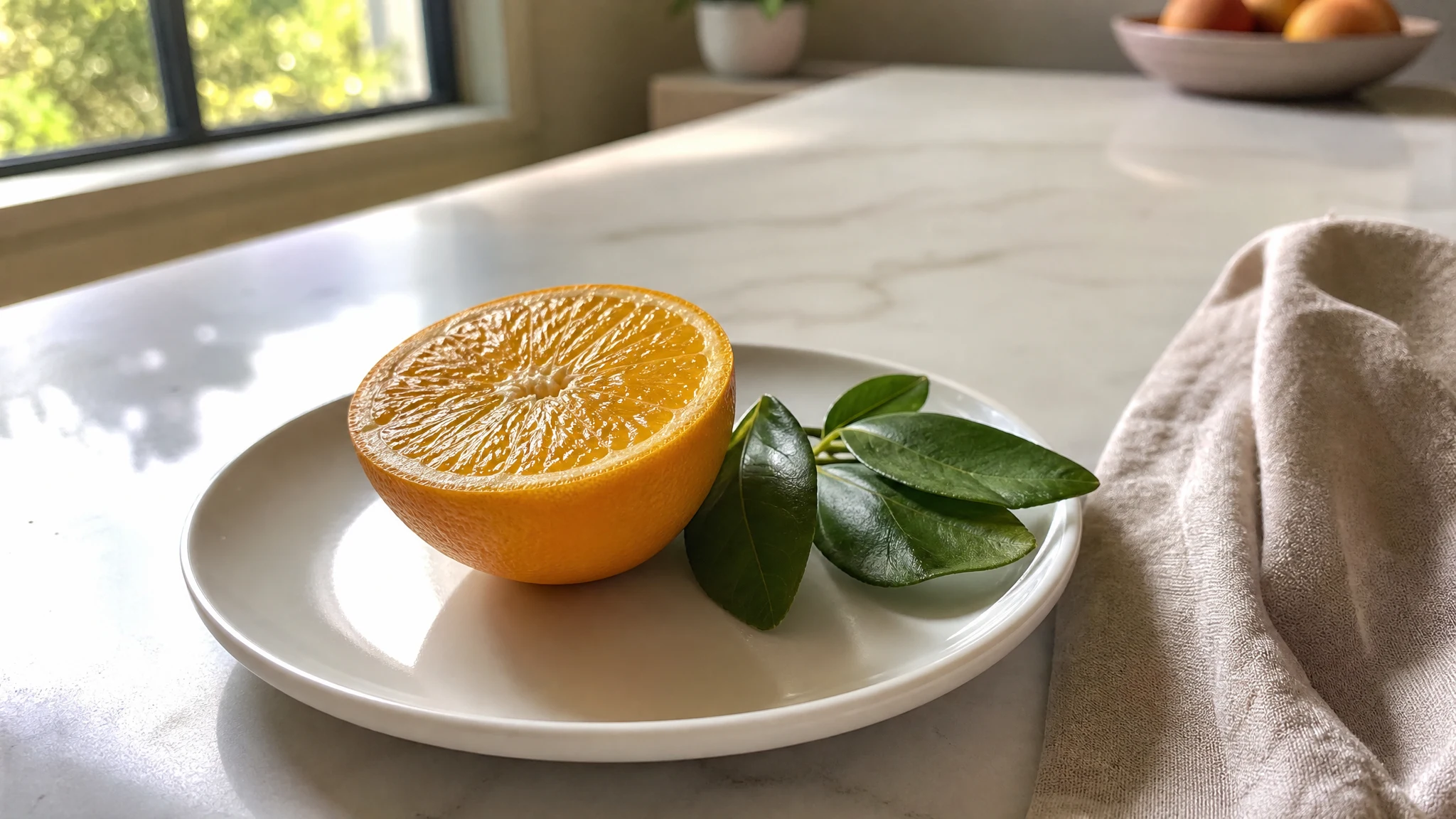
The smell of any essential oil is the sum of its molecules, and the molecules leave a surface at different speeds. In the reference records, linalool smells floral, with comparisons to bergamot oil and French lavender, and boils at 198 C. 1,8-cineole smells camphor-like and boils at 176 C. Limonene smells lemon-like and boils at 175 to 176 C (PubChem, Linalool (compound 6549); PubChem, 1,8-Cineole (compound 2758); PubChem, Limonene (compound 22311)).
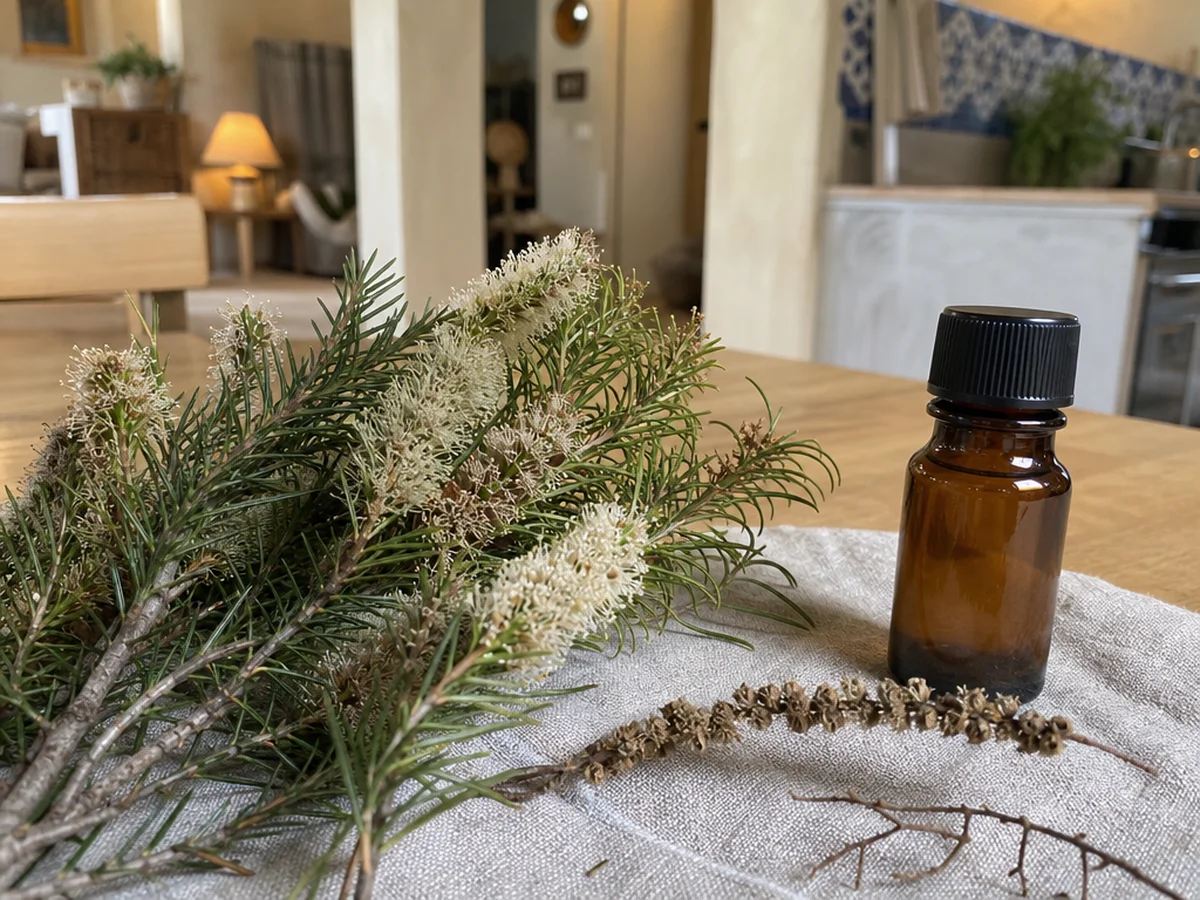
Boiling point is only a rough guide to evaporation in a mixture, so take this as a plausible picture rather than a prediction. The lighter, brighter molecules reach you first, and the heavier floral one lingers. That fits the green opening and floral dry-down people look for in a Melaleuca oil. Our linalool and cineole article goes into the two molecules in more depth.
A plant that is not always the same
Rosalina is a wild-growing species, and published analyses show it can take more than one chemical shape. A 2026 study of a cultivated sample from Ecuador found it dominated by cineole (61.85%), which smells sharper and more camphor-like, and notes that earlier literature describes at least three profiles (Valarezo et al., 2026). That is useful context for any buyer: the name tells you the plant, and the smell tells you the oil.
The Certificate of Analysis we publish for one batch lists appearance, smell, relative density (0.890) and refractive index (1.465) at 20 C. If you need constituent figures for a lot, ask us in writing through the contact page. A GC-MS report is the right tool for that, and our reading guide helps with it.
How to smell it properly
- Use a strip, not skin. A plain paper strip (or a clean piece of card) shows the oil without your own skin chemistry in the way.
- Smell at intervals. Sniff at the start, after ten minutes, after an hour and again the next morning. The change over time is the interesting part.
- Write down your first impression before you read anyone's description. What you notice unprompted is the most honest note you will get.
- Compare with a lavender you already own, from a pharmacy or craft shop. We do not sell lavender. If the two feel related, you are in soft floral territory; if camphor and pine lead, you are closer to the fresh, eucalyptus side.
- Come back in a few weeks. Keep the bottle capped, cool and dark and notice whether anything shifts. Our storage guide explains why.
When you do put it on skin, dilute first. Our guidance is 0.5% to 2% in a carrier oil, with a patch test beforehand and the oil kept away from eyes, children and pets.

Words that help
Smell is hard to describe, so give yourself a few words to start from. Try green, leafy, fresh, floral, sweet, camphor-like, piney, soft. Write down which ones fit and which do not. After a few sessions you will find your own shorthand, and it will be far more useful than anyone else's description, ours included. A small notebook kept next to the bottle is all you need.
It also helps to smell something else between strips, such as the inside of your elbow or a piece of plain fabric. A short break resets your nose and keeps the second impression honest.
Ask someone else to smell it blind, too. If two people use the same words, you have probably found the honest character of the oil. If they disagree, that is fine: scent is personal, and it is one of the reasons we suggest starting with a small bottle.
What a nose can and cannot tell you
A trained nose is wonderful at telling you whether you like an oil, and a little less able to tell you exactly what is in it. Researchers use chiral analysis to spot added synthetic linalool in lavender, something no sniff test can do (Capetti F. et al., 2021. Adulteration of Essential Oils: A Multitask Issue for Quality Control. Three Case Studies: Lavandula angustifolia Mill., Citrus limon (L.) Osbeck and Melaleuca alternifolia (Maiden & Betche) Cheel. Molecules). For everyday enjoyment, your nose is all you need. For formulas you plan to sell, add the lab data.
So give it a day. Dip a strip, put it on the windowsill and come back to it a few times. By the second visit you will know whether rosalina belongs on your shelf.
Rosalina Essential Oil
Rosalina Essential Oil from our own shop, in sizes from 0.5 oz to bulk.
From $16.99
Shop Now →Sources & Further Reading
- PubChem, Linalool (compound 6549)
- PubChem, 1,8-Cineole (compound 2758)
- PubChem, Limonene (compound 22311)
- Valarezo E. et al., 2026. Essential Oil of Melaleuca ericifolia Sm.: Chemical Composition, Enantiomeric Distribution, and Antimicrobial, Antioxidant, and Anticholinesterase Activities. Molecules. Europe PMC PMC13666404
- Capetti F. et al., 2021. Adulteration of Essential Oils: A Multitask Issue for Quality Control. Three Case Studies: Lavandula angustifolia Mill., Citrus limon (L.) Osbeck and Melaleuca alternifolia (Maiden & Betche) Cheel. Molecules. Europe PMC PMC8471154