Rosalina vs Tea Tree Oil: Two Melaleucas Compared
Rosalina and tea tree share a genus, a continent and a habit of being mistaken for each other. After that, they part ways quickly. One is a household name with a long paper trail; the other is a quieter oil with a personality of its own. If you are choosing between them, or wondering whether one can stand in for the other, the differences are the interesting part.
Rosalina Essential Oil
Our own Rosalina Essential Oil, in sizes from 0.5 oz to bulk.
From $16.99
Shop Now →Two plants, two names worth knowing
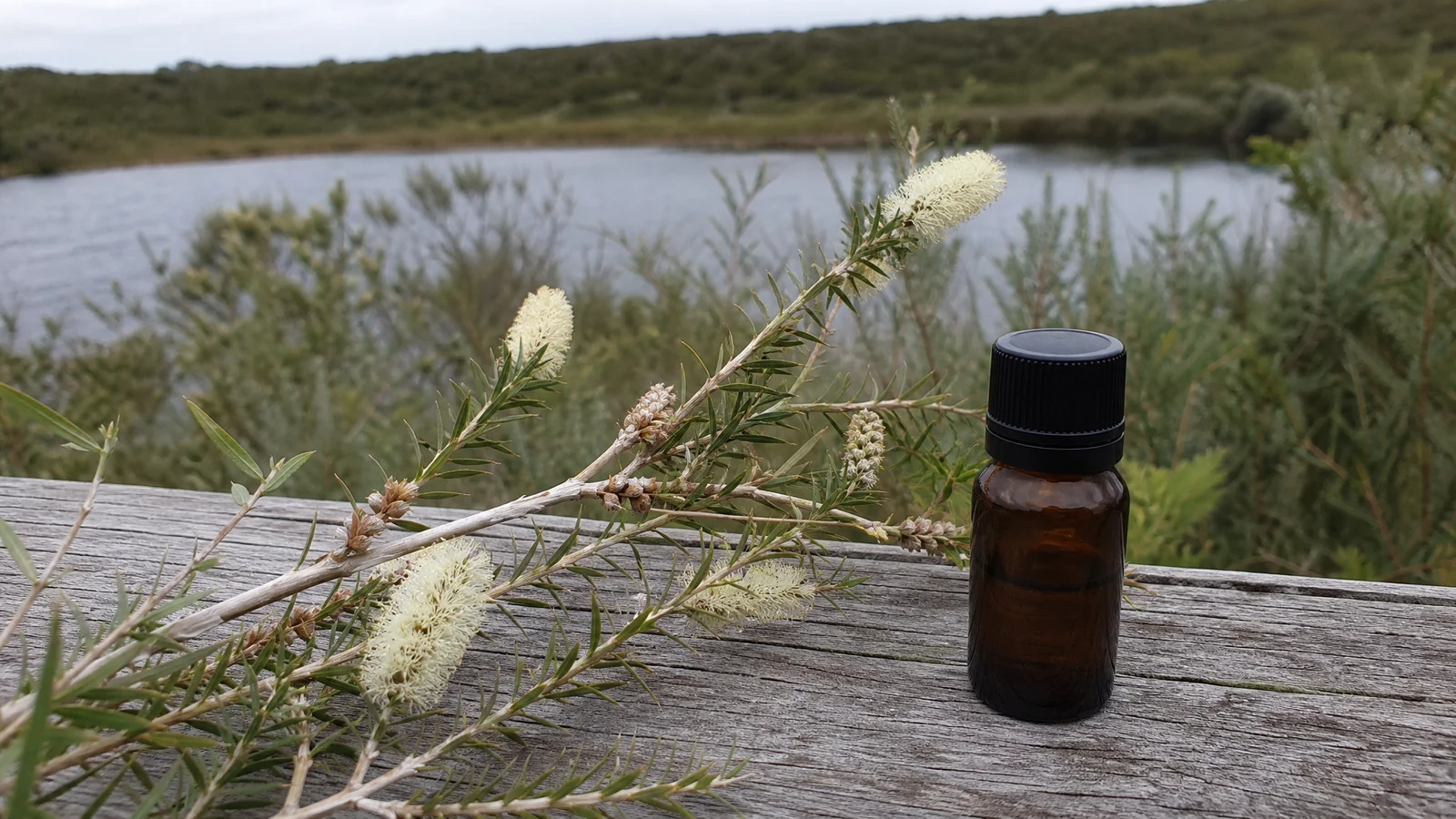
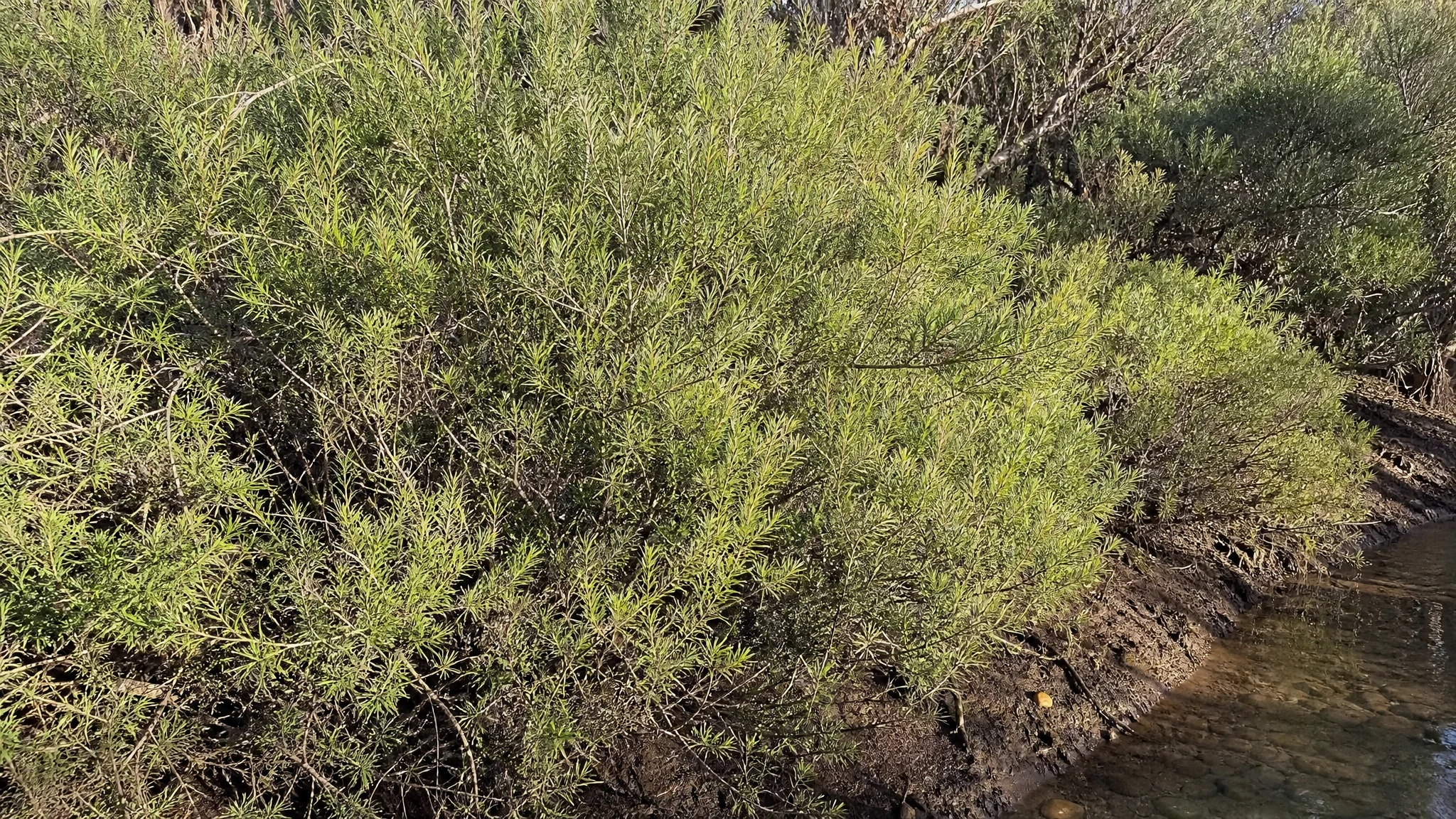
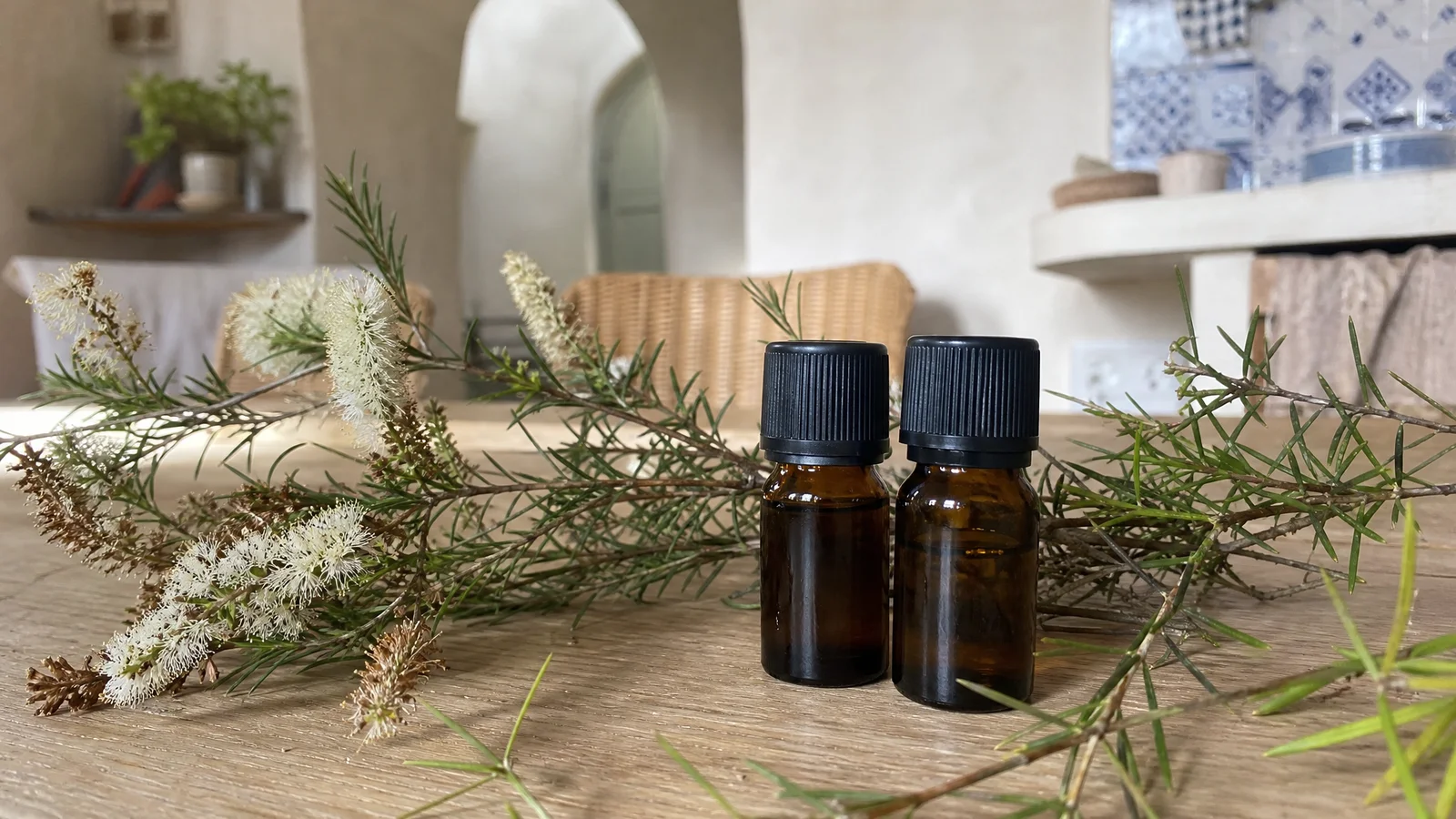
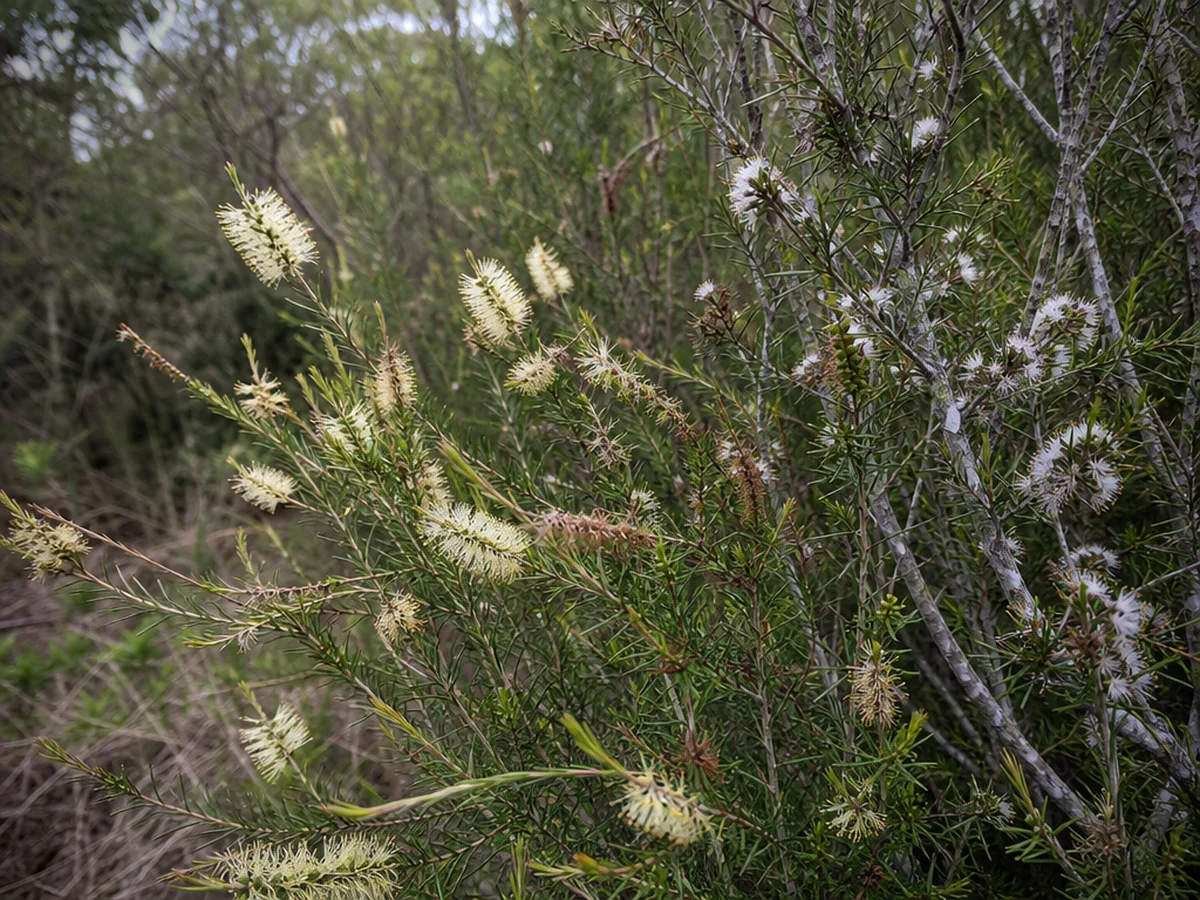
Tea tree oil comes from Melaleuca alternifolia. Rosalina comes from Melaleuca ericifolia, which the Royal Botanic Garden Sydney's PlantNET flora lists under the common name Swamp Paperbark: a shrub or small tree up to about 8 m, with fine leaves 7 to 15 mm long and about 1 mm wide, growing in heath, along stream banks and in low coastal swamps from New South Wales south into Victoria and Tasmania. "Rosalina" and "lavender tea tree" are trade names, so the Latin binomial on a label tells you more than either of them.
What defines each oil
Tea tree oil has a standard. ISO 4730:2025, published in June 2025, covers the terpinen-4-ol type, with terpinen-4-ol at 35.0% to 48.0% and 1,8-cineole held to a trace up to 10%. That is why tea tree is the easier oil to specify: a lot either falls in those ranges or it does not.
Rosalina is more of a spectrum. A 2004 study sampling the species across its natural range found linalool abundant in northern New South Wales oils and declining southward as 1,8-cineole, alpha-terpineol and limonene rose, with the best single tree at 60% linalool and 16% 1,8-cineole. A 2026 paper on an Ecuadorian oil reported 1,8-cineole at 61.85%, and describes at least three profiles in the literature, led by methyl eugenol, 1,8-cineole or linalool. We read that as a reason to look at the Latin name and the numbers behind any bottle, ours included. Our own description is a soft, fresh aroma with a green opening and a floral, lavender-like sweetness, and if the composition matters to you, ask us in writing through the contact page for constituent data before ordering. The GC/MS guide shows how to read what comes back.
The skin records are not equal, and that is the point
Tea tree has been studied for contact allergy extensively. A 2016 review found that it had produced more published allergic reactions than any other essential oil since 1991, that routine patch-test positives ran from 0.1% to 3.5%, that oxidation raises its potency, and that most reactions came from the undiluted oil. That shows how widely tea tree is used and tested. It does not tell us rosalina is milder: a search of Europe PMC for Melaleuca ericifolia on 4 November 2026 returned 90 records, and none of the first 40 we read was a human trial of any kind.
That is why we do not call rosalina a milder tea tree. Where evidence is thin, the sensible default is the cautious one. For our oil that means diluting to 0.5% to 2% in a carrier oil, patch testing first, staying near the low end for the face, and keeping it away from eyes, children and pets. Our dilution guide has the drop arithmetic.
Smell them side by side
If you have both on hand, put each on its own paper strip and compare them over an hour. Most people find tea tree reads sharper and more medicinal, and many notice that rosalina leans greener and sweeter, though noses differ. Ask someone else to sniff both without knowing which is which. Their first word for each strip is often the best description you will get.
In the diffuser
A 2025 pilot study measured emissions from tea tree oil in an ultrasonic and a heat diffuser in a simulated household. Total volatile organic compounds ran one to two orders of magnitude above a typical 200 to 300 ppb background, and the heat diffuser pushed several terpenes above long-term exposure guidelines. It involved one oil and one device of each kind, and it was tea tree, so it is a direction rather than a verdict on rosalina. It does support some sensible habits for any oil: ventilate, run sessions intermittently, and see our diffuser types guide for how the devices differ.
Our habit is to treat the two as neighbours rather than rivals. They share a genus and a continent, but they behave like different characters on a shelf, and we enjoy learning each on its own terms. That is also why we never suggest one as a quick swap for the other in a recipe.
If you are new to both, begin with the one whose scent you actually like. That sounds obvious, but it is the best predictor of whether a bottle gets used. An oil that sits unopened teaches you nothing, while one you reach for each week teaches you its habits quickly.
So which one?
Choose tea tree when you want the oil with the standard and the long record, and choose rosalina when you want its own soft, green-floral character. Do not use one as a swap for the other in a recipe, since the chemistry and the aroma are different. We sell rosalina only, so tea tree is one for your usual supplier. If you are weighing cost, our price comparison shows the per-use arithmetic.
Cousins in the same genus, then, but very much their own oils.
Rosalina Essential Oil
Rosalina Essential Oil from our own shop, in sizes from 0.5 oz to bulk.
From $16.99
Shop Now →Sources & Further Reading
- PlantNET - FloraOnline, Melaleuca ericifolia entry, Royal Botanic Garden Sydney.
- ISO 4730:2025 - Tea Tree Oil Quality and Testing Standard, iTeh Standards catalogue page.
- Geographic variation in oil characteristics in Melaleuca ericifolia, Brophy and Doran, 2004.
- Essential Oil of Melaleuca ericifolia Sm.: Chemical Composition, Enantiomeric Distribution, and Antimicrobial, Antioxidant, and Anticholinesterase Activities, Valarezo et al., Molecules, 2026.
- Tea tree oil: contact allergy and chemical composition, de Groot and Schmidt, Contact Dermatitis, 2016.
- Volatile organic compound and particle emissions from the use of tea tree oil in essential oil diffusers, Zisook et al., Journal of Occupational and Environmental Hygiene, 2025.