Ultrasonic, Nebulizing, Heat or Reed Diffuser: Which One?
Shopping for a diffuser usually starts with output and ends with cleaning. Four common types, ultrasonic, nebulizing, heat and reed, move oil into the air in four quite different ways, and the thing that separates a diffuser you love from one that lives in a cupboard is usually upkeep. So we would choose by the maintenance you will cheerfully do. We sell one oil and no diffusers, which means we have no model to steer you towards, only a way of thinking about it.
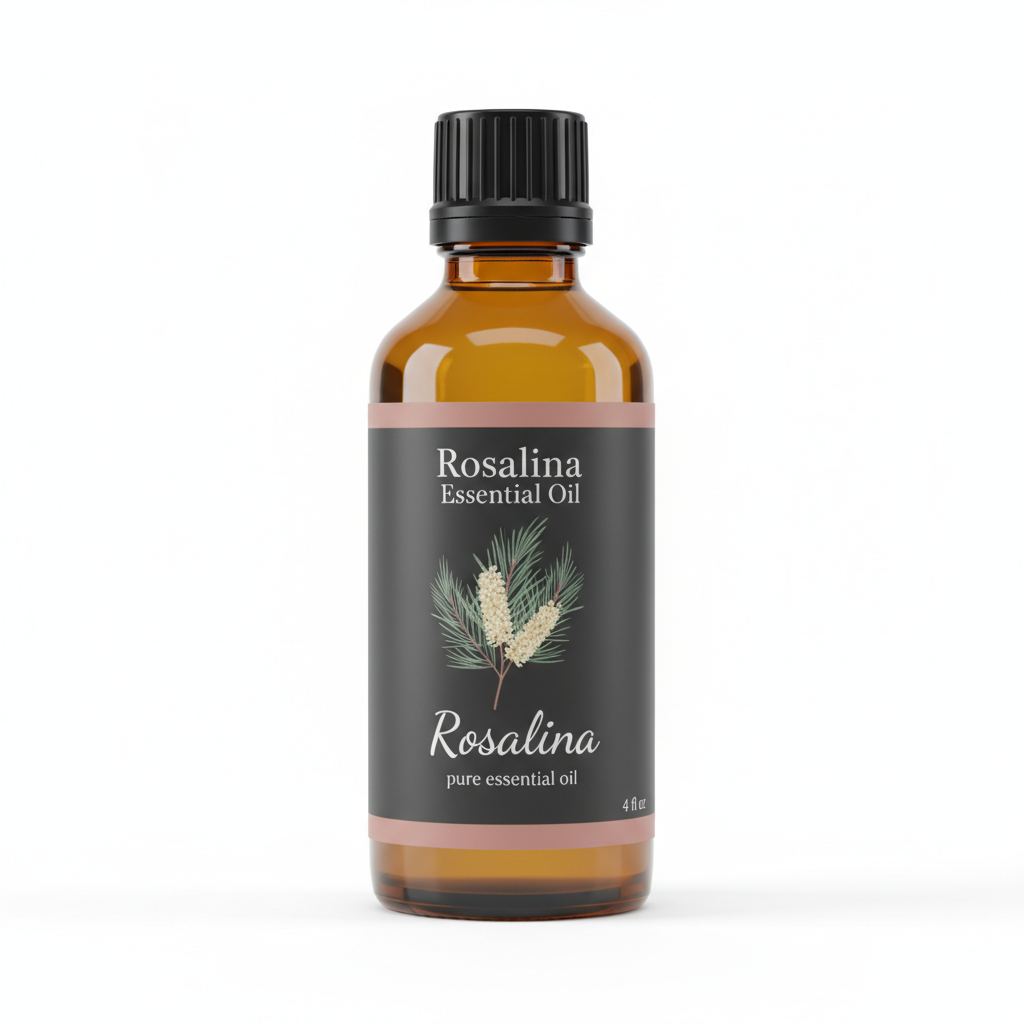
Rosalina Essential Oil
Our own Rosalina Essential Oil, in sizes from 0.5 oz to bulk.
From $16.99
Shop Now →Ultrasonic: oil and water, shaken into mist
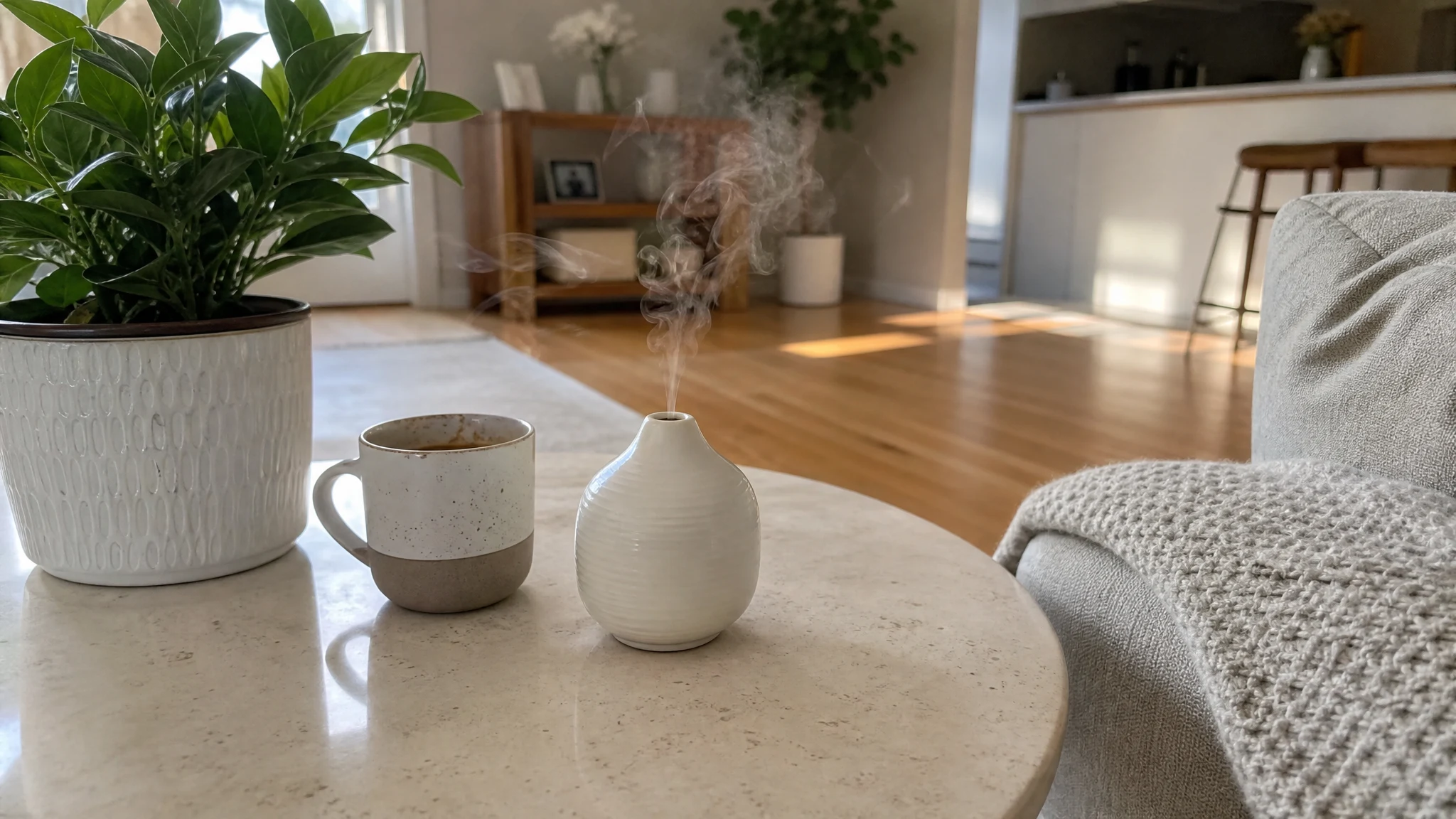
An ultrasonic unit has a reservoir of water, a few drops of oil on top, and a vibrating plate that turns the lot into a fine mist. It is the most familiar type, and it has the most upkeep because it holds standing water. The US EPA notes that ultrasonic and impeller humidifiers can disperse microorganisms and minerals from their tanks into room air, and recommends low-mineral water such as distilled, emptying and refilling daily, and cleaning every third day. A chamber study of one ultrasonic essential oil diffuser echoed the water point: for eucalyptus oil, fine particle emissions were about five times higher with tap water than with deionised water.
So the rule for this type is simple: distilled water, fresh each session, and a regular clean.
Nebulizing: neat oil, no water, no heat
A nebulizer draws undiluted oil up a narrow glass tube and breaks it into a fine mist. One maker describes it as using no water and no heat. The upkeep trade is that the lighter parts of the oil evaporate first and the heavier residue can build up in that narrow tube. The same maker's cleaning method is a small splash of 90 percent or stronger isopropyl alcohol run through the unit for three to five minutes. Because neat oil is what is atomised, it is worth checking the manufacturer's figure for oil used per hour before you buy. Peer-reviewed emission data for this type is thin, so claims that it is stronger or better for the oil are the maker's own.
Heat and evaporative: warmth speeds the oil along
Heat diffusers warm the oil or a pad so it evaporates faster. A 2025 pilot study compared an ultrasonic and a heat diffuser running tea tree oil in a simulated household. Total volatile organic compounds rose one to two orders of magnitude above a background of 200 to 300 ppb, and the terpene levels in the heat survey were generally about ten times those from the ultrasonic one. Several terpenes exceeded long-term exposure guideline levels. It involved one oil and one device of each kind, so it points in a direction rather than judging every heat unit. If you choose this type, short sessions and an airy room are a sensible reading of the result. Fan and pad units follow the same idea of speeding evaporation, and we leave them there.
Reed: no power, no timer, a solvent
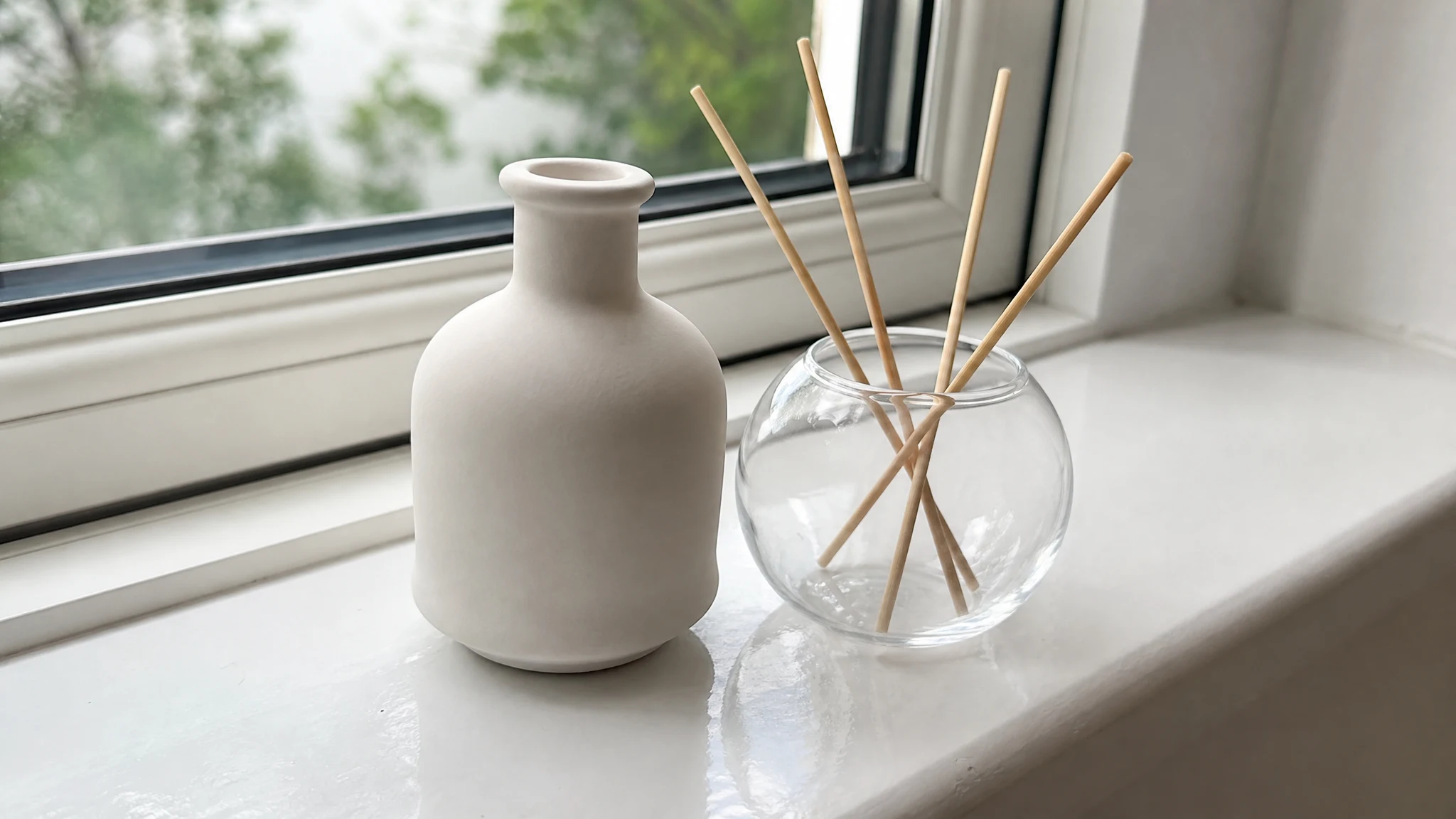
A reed diffuser has no motor: scented liquid climbs the reeds and evaporates from the tips. Poison Control notes that the liquid is essential oil dissolved in isopropyl (rubbing) alcohol and must be kept out of children's reach. This type has the least upkeep, and also the least control, since you cannot set a timer, only cap it or take it away. It suits a hallway more than a bedroom where you want a session to end.
Where you put it matters too
A diffuser is only as good as its spot. Stand any machine on a stable, wipeable surface, away from the edge of a shelf and away from anything that dislikes damp, such as wooden furniture, books and electronics. Ultrasonic units give off a little moisture, and a cloth coaster under the base is a cheap way to protect the table.
Think about the room as well. A reed diffuser in a hallway or bathroom works quietly in the background, while a machine you switch on and off suits a room you spend time in. Keep it out of reach of children and pets, and put it where you can reach the lid to clean it, since a diffuser tucked behind a lamp is a diffuser that does not get cleaned.
Before you commit, picture cleaning day. Where will you rinse it, and where will it dry? If those answers come easily, you have probably picked the right type.
Matching the type to the person
- You want the least fuss. Reed, kept out of reach of children and pets.
- You enjoy a little routine. Ultrasonic, with distilled water and a clean every few days.
- You use oils neat and like a purist set-up. Nebulizing, with alcohol cleaning on the calendar.
- You want quick, strong scenting. A heat unit, with short sessions and fresh air.
Whatever you choose, use small amounts. Our drop arithmetic article and the diffuser setup guide cover quantities and timing, and the cleaning guide covers upkeep in more detail. If you are diffusing our rosalina oil, which we describe as soft and fresh with a floral, lavender-like sweetness, a few drops go a long way, and a smaller bottle is easier to finish while fresh; the size guide shows the numbers. Keep any oil away from children and pets, and ask a veterinarian before diffusing around animals.
The best diffuser is the one you will clean, and the rest is a matter of taste.
Rosalina Essential Oil
Rosalina Essential Oil from our own shop, in sizes from 0.5 oz to bulk.
From $16.99
Shop Now →Sources & Further Reading
- Use and Care of Home Humidifiers, US EPA.
- Volatile organic compound and particulate matter emissions from an ultrasonic essential oil diffuser, Schwartz-Narbonne et al., Indoor Air, 2021.
- Volatile organic compound and particle emissions from the use of tea tree oil in essential oil diffusers, Zisook et al., Journal of Occupational and Environmental Hygiene, 2025.
- How to Clean Your Nebulizing Diffuser - Organic Aromas.
- Essential oils: Poisonous when misused, Poison Control (National Capital Poison Center).