How to Use an Oil Diffuser: Water, Drops and Timing
A diffuser is a simple machine, and most of the difference between a pleasant session and a heavy-handed one comes down to three choices: the water, the number of drops and how long it runs. Your manual comes first, always. What follows is the general practice that sits behind it.
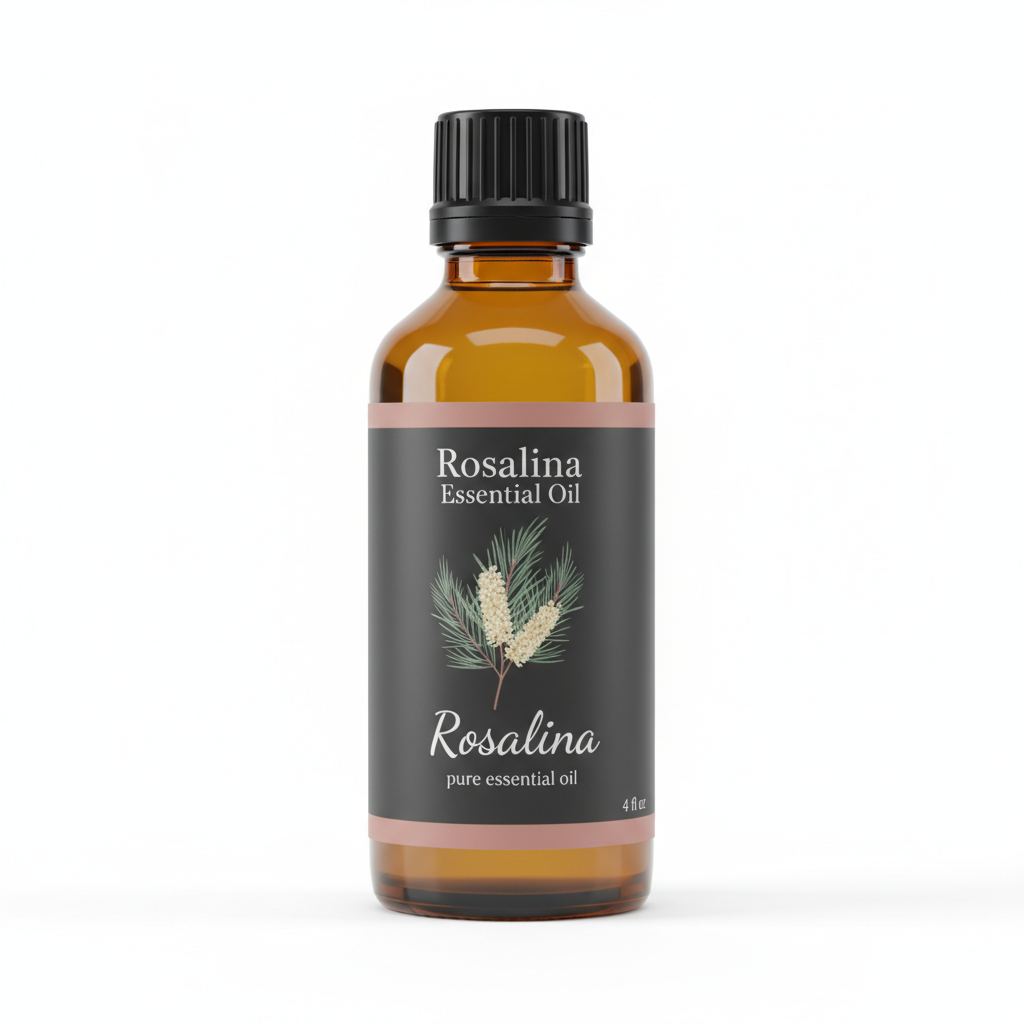
Rosalina Essential Oil
Our own Rosalina Essential Oil, in sizes from 0.5 oz to bulk.
From $16.99
Shop Now →Start with the room
Think about who shares the space before you think about drops. Poison Control notes that children have thin skin and immature livers, which may make them more susceptible to toxic effects than adults, and gives 1-800-222-1222 as the number to call if someone swallows an oil (Essential oils: Poisonous when misused). If a baby, a pet, a pregnant person or someone with asthma lives in the room, a pediatrician, veterinarian, midwife or physician is the right person to ask, since a drop chart cannot answer it. We keep our own guidance simple: keep the oil away from eyes, children and pets, and never take it internally.
Water: use what the machine wants
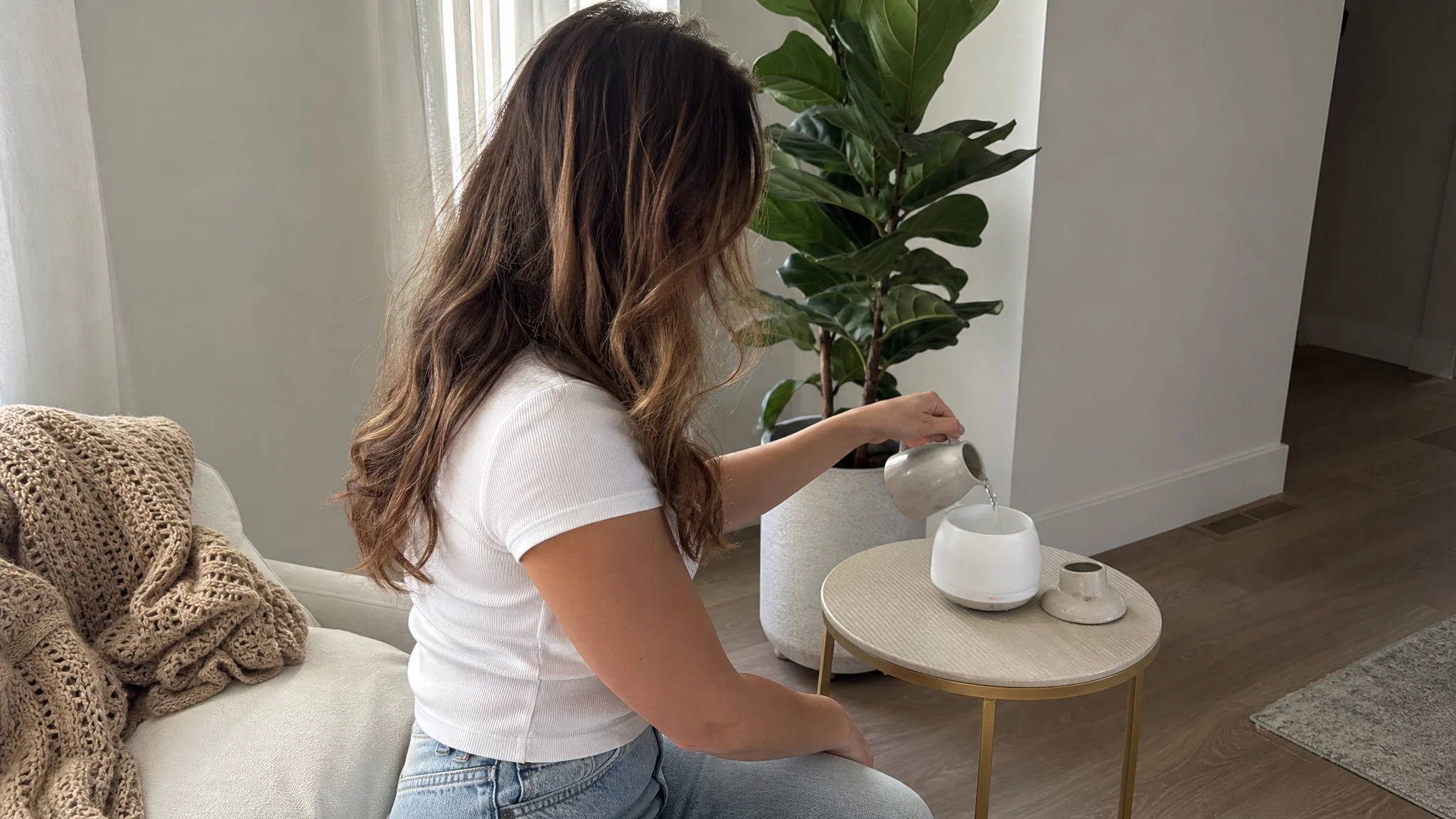
Place the unit on a hard, level, wipeable surface, unplug it, and fill the reservoir to the line and no higher. Then choose the water. An ultrasonic diffuser works much like an ultrasonic humidifier with a little oil added, and the EPA says ultrasonic and impeller humidifiers can disperse minerals and microorganisms into indoor air. It recommends bottled water labelled "distilled" (Use and Care of Home Humidifiers).
A chamber study of one ultrasonic diffuser points the same way. With eucalyptus oil, particle emissions were roughly five times higher when the tank held tap water than when it held deionised water (Volatile organic compound and particulate matter emissions from an ultrasonic essential oil diffuser). One oil, one machine, one chamber, so it shows that water matters rather than by how much in your living room. Our practice is to use distilled water unless the manual says tap is fine.
Drops: begin at the low end
The Tisserand Institute answers a common question with a rule of thumb of about 3 to 5 drops of oil per 100 ml of water, and calls it a guideline, not a standard (Essential Oil Applications | Inhalation, Diffusion and Topical Applications). Your diffuser's manual may give its own count, and if it is lower, follow it. For rosalina we would start at the low end of that guideline, 3 drops per 100 ml, and add only if you cannot notice it. This is our suggestion rather than a published figure for this oil, since no manufacturer or authority gives one. Soft, fresh aroma carries a long way in a small room.
A bit of arithmetic shows how far a bottle goes. At about 20 drops per millilitre, a 0.5 oz bottle (about 14.8 ml) holds roughly 296 drops, so three drops per session is around 98 sessions. Droppers vary, so treat that as an estimate.
Timing: let it cycle
The same Tisserand page says intermittent diffusion is best, and many machines have a mode that does it for you, alternating short bursts with pauses. Use it if yours does. If it only has a continuous setting, a plug-in timer or your own hand on the switch works. Running less means less oil and water leave the tank, so an interval setting does the same job as a lower drop count.
It also helps to know what a diffuser adds to the air. In a 2025 pilot simulation using tea tree oil (a different oil), total volatile organic compounds rose one to two orders of magnitude above a background of about 200 to 300 ppb. Terpene levels from the ultrasonic diffuser stayed under the exposure limits the authors compared them with, while several terpenes from the heat diffuser exceeded long-term derived no-effect levels (Volatile organic compound and particle emissions from the use of tea tree oil in essential oil diffusers). That is one oil in a simulated home, so it gives a direction and not a threshold: ultrasonic over heat, short sessions over all night, and a window opened now and then.
Where to put it
Set the diffuser on a hard, level surface a little away from the edge, from walls and from anything you would not want splashed. Put it at about table height rather than on the floor, and out of reach of children and pets. A spot near a door or a cracked window lets the scent spread gently instead of piling up in one corner. Then step out and come back in to judge how strong it is, because your nose adapts within minutes.
Know the stop signs
If anyone in the room gets dizzy, nauseous or lightheaded, turn the diffuser off and get to fresh air, which is the advice on the Tisserand page. If symptoms persist, or a child or animal is affected, call the poison center or a physician; a cat that is drooling, wheezing or hiding needs a veterinarian, not a wait.
Shutting down
When the session ends, unplug the unit, pour out what is left and wipe the tank dry. The EPA suggests emptying and refilling portable units with fresh water each day and cleaning them every third day; our cleaning guide shows how. Machines differ in upkeep, which the diffuser types comparison lays out. Close the oil bottle right away; the diffuser drops article has more on counting. If you would like a constituent report on our oil before you choose, ask us in writing through the contact page.
Fresh water, a few drops and a pause button: that is a diffuser used well.
Rosalina Essential Oil
Rosalina Essential Oil from our own shop, in sizes from 0.5 oz to bulk.
From $16.99
Shop Now →Sources & Further Reading
- Essential Oil Applications | Inhalation, Diffusion and Topical Applications, Tisserand Institute
- Use and Care of Home Humidifiers, US EPA
- Schwartz-Narbonne H, Du B, Siegel JA, 2021. Volatile organic compound and particulate matter emissions from an ultrasonic essential oil diffuser. Indoor Air
- Zisook RE et al., 2025. Volatile organic compound and particle emissions from the use of tea tree oil in essential oil diffusers. Journal of Occupational and Environmental Hygiene
- Essential oils: Poisonous when misused, Poison Control