Rosalina Oil on Skin: What to Know Before You Start
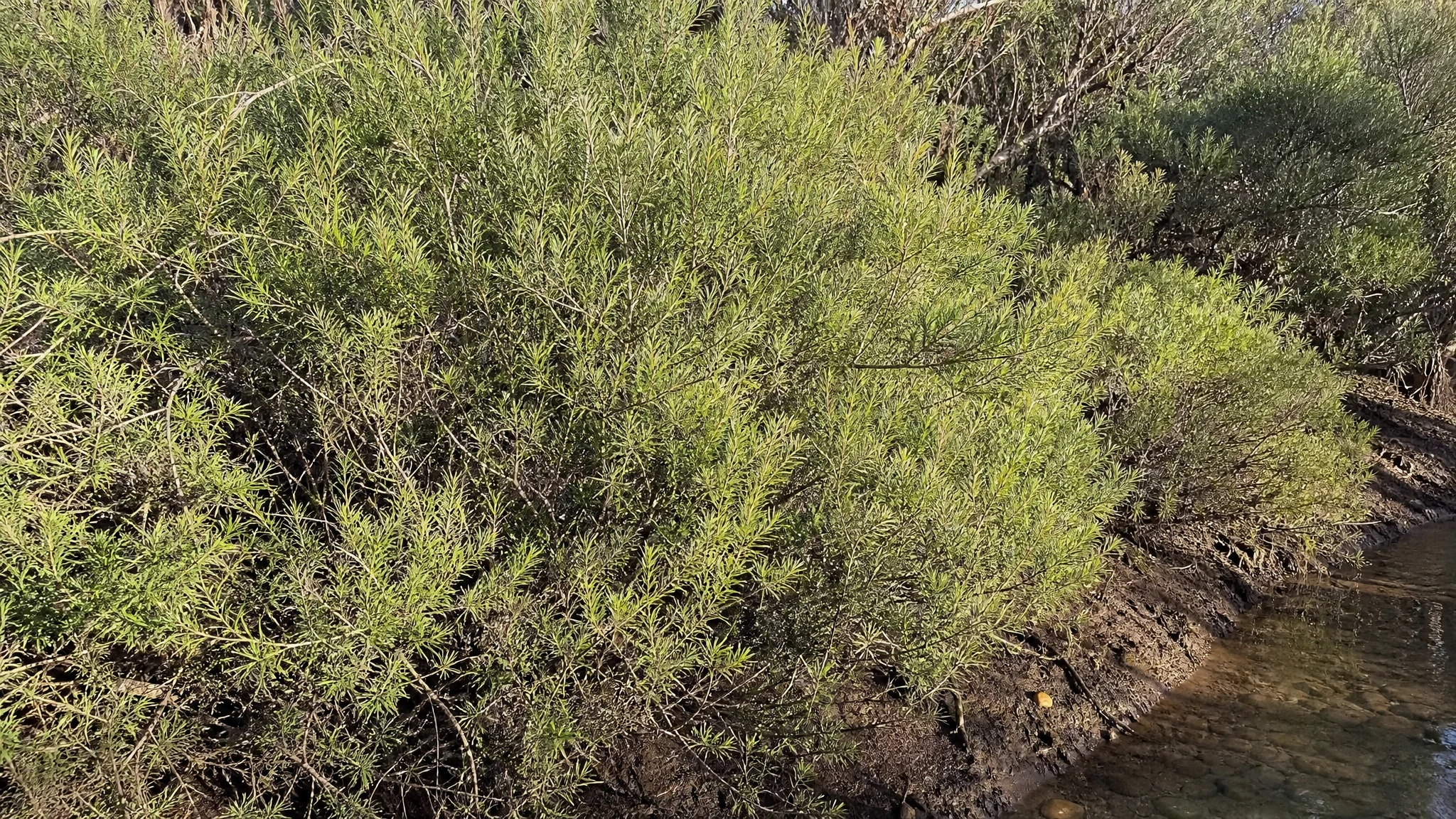
Plenty of people want to enjoy a favorite aroma in a diluted body oil, and rosalina's soft, fresh, lavender-like scent makes that an obvious thought. We sell it neat, as an aromatic oil, so the skin side of things is yours to build carefully. The good news is that the main ideas fit on one page.
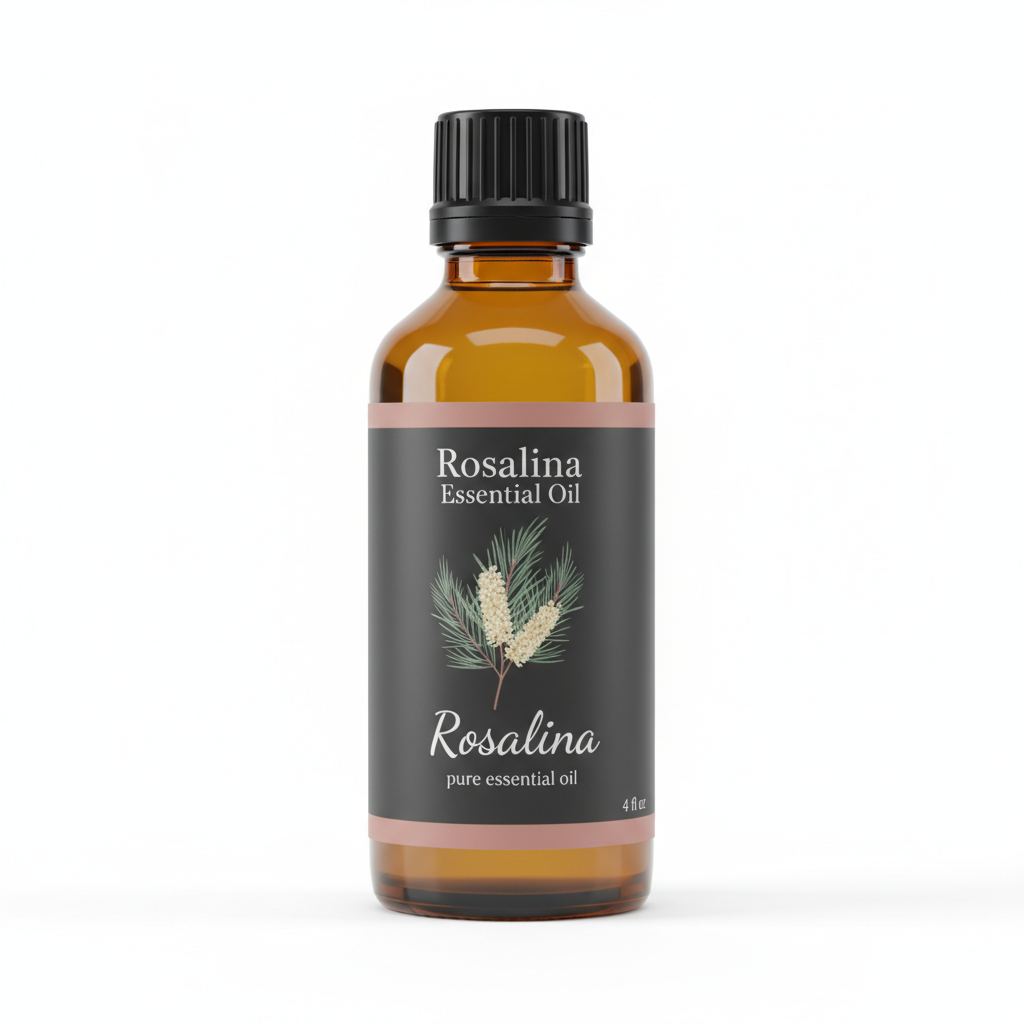
Rosalina Essential Oil
Our own Rosalina Essential Oil, in sizes from 0.5 oz to bulk.
From $16.99
Shop Now →How we approach it
We offer rosalina oil for its aroma, not as a skin treatment, and we do not describe results for any skin concern. Studies of rosalina oil on human skin are thin; what we can rely on is well-documented advice about dilution, freshness and testing that applies to essential oils in general. That is the approach below.
Dilution is the first decision
We recommend 0.5% to 2% in a carrier oil, with a patch test first and the lower end for anything on the face. The Tisserand Institute's general ranges by use are a helpful companion: 0.2% to 1% for sensitive or impaired skin, 0.5% to 1.2% for the face, and 1% to 3% for body oils and lotions (Dilution for essential oils). Reading the two side by side, we would begin around 1% for the body, stay at or below about 1% for the face, and treat 2% as the top of the range rather than a target. Our dilution article shows the arithmetic in grams, and the carrier oil guide helps with choosing one.
Choosing a carrier you like
Most of what you rub in is carrier oil, so pick one you already enjoy the feel of. Jojoba and sweet almond are the two our dilution guidance mentions, and sweet almond is one to skip if anyone using the blend has a tree nut allergy. Carrier oils are easy to find at a craft shop, pharmacy or grocery; we sell the rosalina oil on its own.
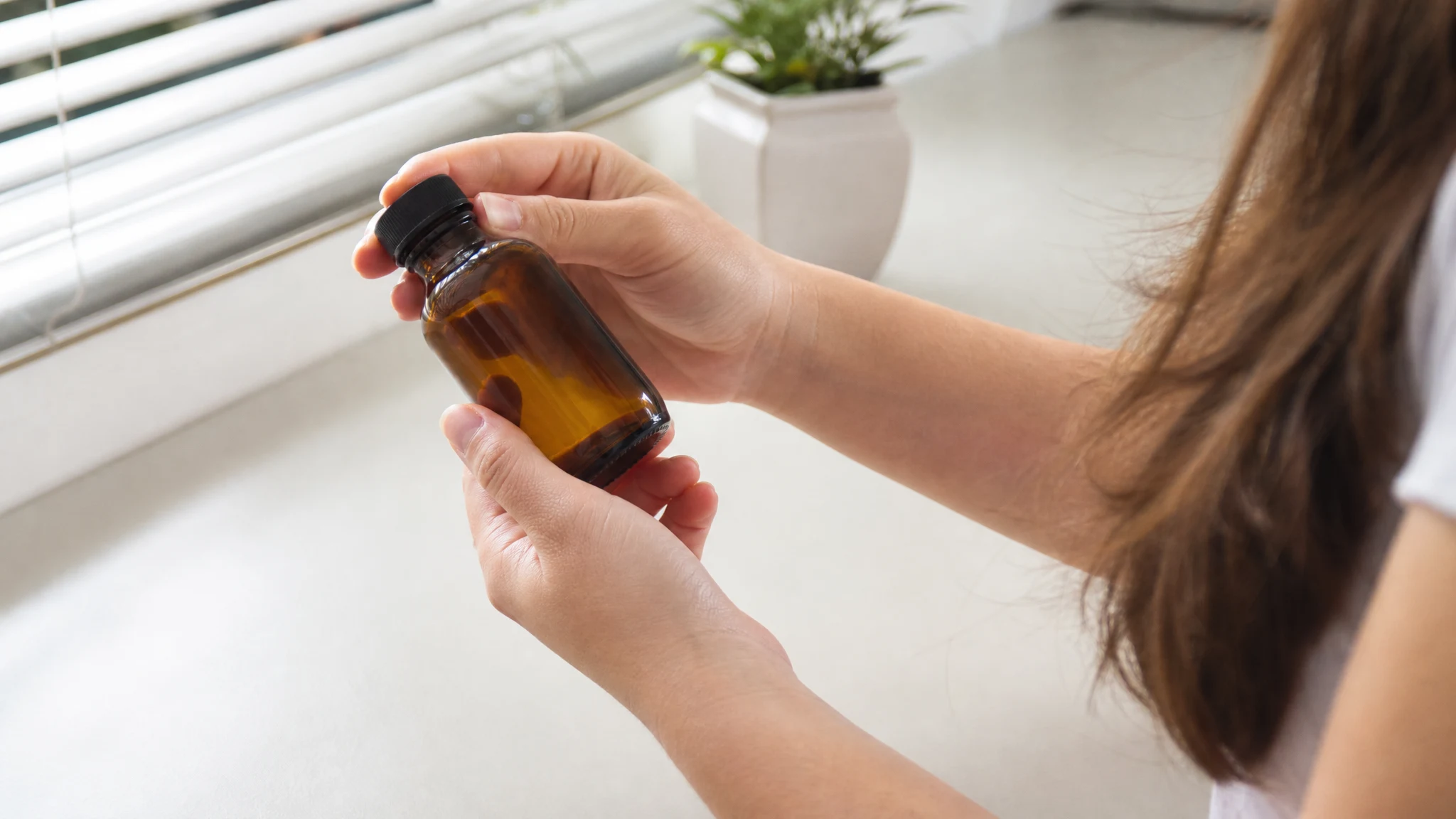
Make small batches while you are getting to know the oil. A 1 oz bottle of carrier is plenty for a few weeks, and it is easy to label. Put the percentage and the date on a strip of tape before you do anything else, because a week from now you will not remember.
Why freshness matters on skin
Linalool is a common aroma compound in essential oils, and it is the compound most studied for what air does to it. In a patch-test series of 3,418 dermatitis patients, oxidised linalool gave positive reactions in 0.83% of people at 2% in petrolatum and 7.2% at 11%, and the authors state that pure linalool is weakly allergenic at most while its oxidation products are the issue (Linalool - a significant contact sensitizer after air exposure). Those were people already referred for skin disease, using material oxidised on purpose.
A calmer finding comes from a repeated open application study of 47 people who applied creams with linalool hydroperoxides at three concentrations, twice daily for 28 days. One participant reacted, at the highest concentration, and the authors concluded that repeated exposure at real-life levels rarely causes an allergic reaction on intact skin over four weeks (Allergic Contact Dermatitis to Linalool Hydroperoxides: Pitfalls in the Diagnostic Process-Findings from a Repeated Open Application Test Study).
Both studies tested isolated oxidation products, not an essential oil, so we read them as pointing in one practical direction: fresh, modest, well-capped batches are a better idea than a large blend that sits around. That is reasoning, not a result for rosalina, and it is why our storage article matters here.
Testing, with realistic expectations
Dab a little of the finished dilution, not the neat oil, on a small patch of skin first. The Tisserand Institute notes that patch testing is not completely reliable, and for people at higher risk it suggests dose escalation, starting around 1% and rising in half-percent steps (Irritation and allergic reactions). Our patch test article describes how to do a home test and what it can miss. If irritation appears, stop.
What you will notice
When you open a blend you made, smell it straight away and again an hour later on your skin. The fresh green opening tends to be the first thing to fade, and what lingers is the softer, floral side. If the scent seems louder than you wanted, that is your cue to lower the percentage next time, not to keep topping up by eye. A quiet scent on the skin is usually the nicer one anyway.
A short checklist
- Intact skin only. Poison Control advises against essential oils on damaged skin (Essential oils: Poisonous when misused).
- Children. Children have thin skin and immature livers, and we keep our oil away from them. A pediatrician is the person to ask.
- Skin conditions or past fragrance reactions. See a dermatologist first. We do not offer rosalina for any skin condition.
- Eyes and mouth. Keep clear, and never swallow it.
A scale to start from
As arithmetic, 50 g of body oil at 1% needs 0.5 g of oil, which is about 11 drops at 20 per millilitre, using the density on the Certificate of Analysis for our published batch. Write the percentage and the date on the bottle and use it up within a reasonable time. If you want a formulation aimed at a particular skin result, a dermatologist or licensed esthetician, who can see your skin, is better placed than we are.
Enjoy the scent, keep the dilution modest and the batch fresh, and let your skin tell you when to stop.
Rosalina Essential Oil
Rosalina Essential Oil from our own shop, in sizes from 0.5 oz to bulk.
From $16.99
Shop Now →Sources & Further Reading
- Dilution for essential oils, Tisserand Institute
- Irritation and allergic reactions, Tisserand Institute
- Christensson JB et al., 2010. Linalool - a significant contact sensitizer after air exposure. Contact Dermatitis
- Sukakul T et al., 2024. Allergic Contact Dermatitis to Linalool Hydroperoxides: Pitfalls in the Diagnostic Process-Findings from a Repeated Open Application Test Study. Dermatitis 35(4):373-379
- Essential oils: Poisonous when misused, Poison Control