How to Blend Essential Oils: Drops, Parts and Percentages
Blending is the fun end of essential oils: a few bottles, a little curiosity and the chance to make a scent that is yours. It is also where simple maths can quietly go wrong. Three oils at 1% each is not a 1% blend, and a "top, middle, base" pyramid does not tell you how many drops to count. Here is how to build a blend so the numbers add up, with rosalina as our example.
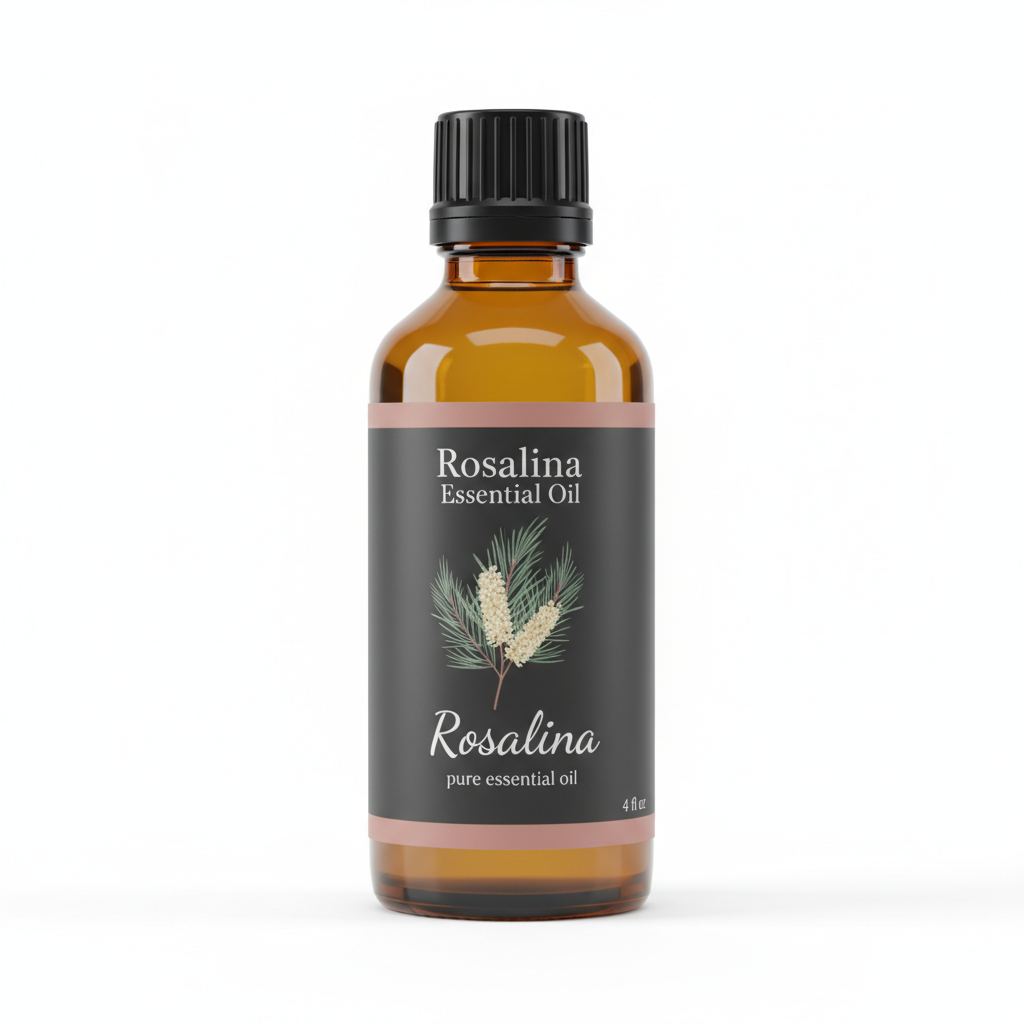
Rosalina Essential Oil
Our own Rosalina Essential Oil, in sizes from 0.5 oz to bulk.
From $16.99
Shop Now →What "notes" really mean
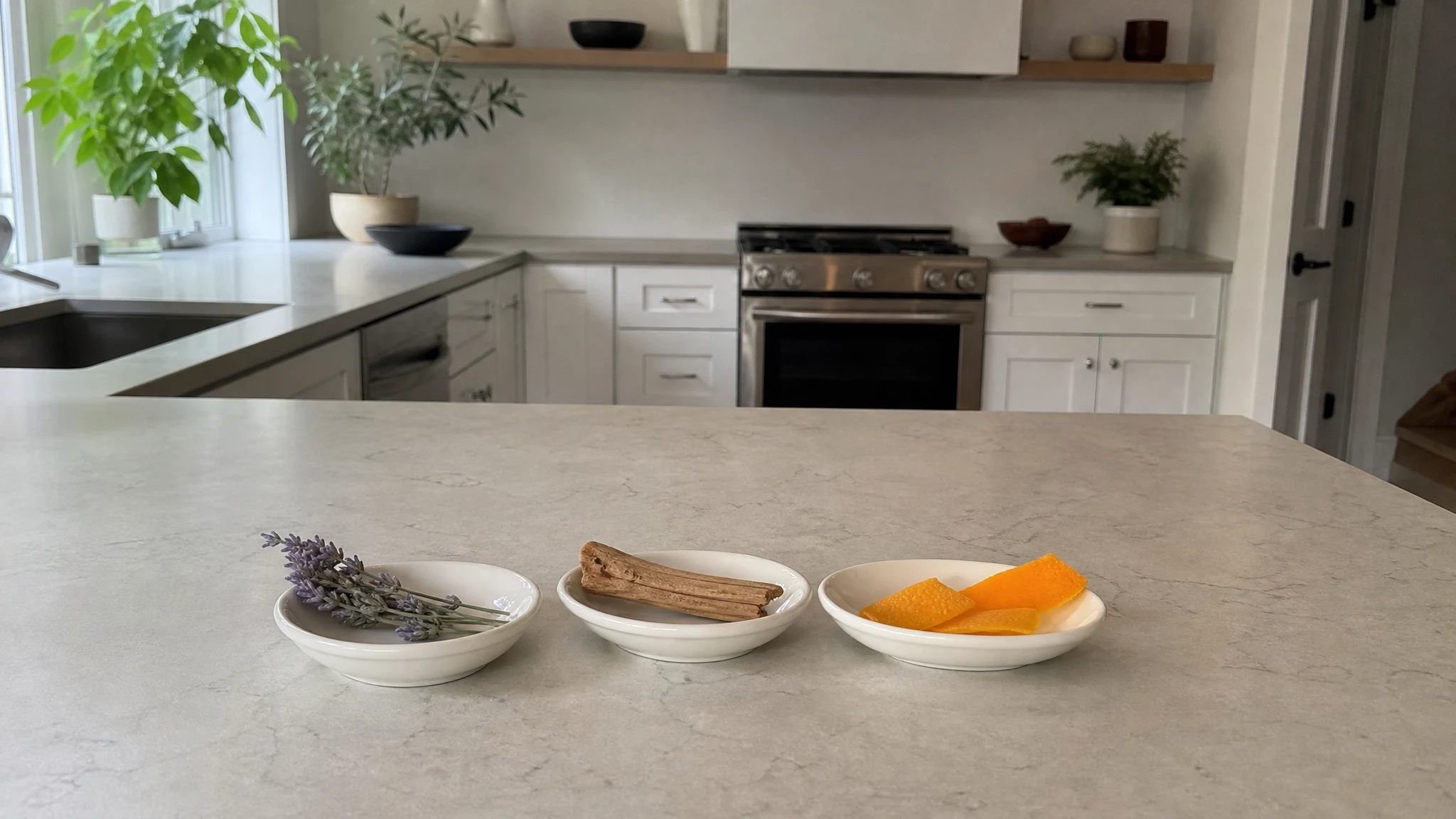
Perfumers talk about top, middle and base notes to describe how a scent unfolds: the bright first impression, the heart, and the lingering finish. It is a useful shorthand for planning a blend, but it is a convention, not a measurement. Whole oils are mixtures of many molecules that evaporate at different speeds, so an oil's "note" is a perfumer's summary of how it behaves overall. We describe rosalina as a middle note with a fresh top edge, with a soft, green, lavender-like sweetness. Treat notes as a way to imagine the shape of a blend, and let your nose make the final call.
Start with what the blend is for
Where the blend will go sets the rules. In a diffuser, your machine's manual decides how many drops to use. On skin, the total percentage in a carrier oil is what counts. In a candle, soap or perfume, the base has its own limits, and the supplier of that base is the best source. We sell one oil, rosalina, so for companions such as lavender, chamomile, mandarin, eucalyptus, geranium or clary sage, which we think pair beautifully with it, you will find them, and carrier oils and bottles, at an aromatherapy or craft supplier.
Write the formula in parts
Parts keep things flexible. As an example arrangement, 3 parts of a bright top-note oil, 5 parts of a middle-note oil (rosalina in this slot) and 2 parts of a base-note oil makes 10 parts in all. Scale it to drops for a stock blend of 20 drops, which is about 1 ml at roughly 20 drops per ml (droppers vary, so weighing is more accurate): 6 drops top, 10 drops middle, 4 drops base. If you prefer grams, a 10 g stock is 3 g, 5 g and 2 g. Mix the stock first, give it a day to settle, and then use it as a single oil.
The percentage applies to the whole blend
This is the step that trips people up. For skin, we recommend 0.5% to 2% in a carrier oil for rosalina, roughly 3 to 12 drops per ounce, and we suggest staying near the low end for the face. That figure refers to all your oils together, not each one. A blend of three oils at 1% each is 3% overall. So decide the total first, then split it by parts. For a 30 ml bottle of carrier (about an ounce), using the 20-drop stock above:
| Total oil | In 30 ml of carrier | Drops of stock |
|---|---|---|
| 0.5% | 0.15 ml | about 3 |
| 1% | 0.30 ml | about 6 |
| 2% | 0.60 ml | about 12 |
At 1%, half of the 6 drops of stock are rosalina, so about 3 drops of it. Count the stock's drops once and you will never double up by accident. Our dilution guide has more worked ratios.
A quick look at allergens
Many fragrant molecules, including linalool and limonene, are on the European list of fragrance allergens that must be declared on cosmetic labels above 0.001% in leave-on products and 0.01% in rinse-off ones (European Commission). If you are making products to share or sell, that is worth knowing. The sum is straightforward: allergen in the product equals the total oil percentage, multiplied by each oil's share of the blend times that oil's allergen share, added up.
As an illustration with invented numbers, not data about any real oil: at 1% total oil, with oil A at half the blend and oil B at 30%, and both assumed to be 30% linalool, the product holds 1% x (0.5 x 0.30 + 0.3 x 0.30) = 0.24% linalool. The real figures depend on each oil, and rosalina oils differ widely; researchers have described at least three chemical profiles, dominated by methyl eugenol, 1,8-cineole or linalool (Valarezo et al., 2026). If you need exact percentages for labelling or for an allergy, ask us in writing through the contact page for a gas chromatography report before you order.
Fresh oil makes a better blend
Linalool is a weak allergen when fresh, but it oxidises with air, and the oxidation products can cause contact allergy. In 3,418 dermatitis patients, oxidised linalool gave positive patch tests in 0.83% at a 2.0% test strength and 5.3% at 6.0% (Christensson et al., 2010). That was a clinic population, not the general public, but the practical takeaway is easy: cap bottles tightly, make small batches, label the date, and retire a blend whose scent has changed. Anyone with a known fragrance allergy or a skin condition should ask a dermatologist or allergist first.
Keep a blending notebook
Write every blend down: the date, the parts, the total percentage, and one line on how it smelled when you first mixed it and again a day later. It sounds fussy until the day you make something you adore and cannot remember what you did.
A notebook also makes you a better blender. After a few pages you start to see your own habits, such as always reaching for one oil too many, and one drop at a time becomes a habit rather than a rule.
Try it small
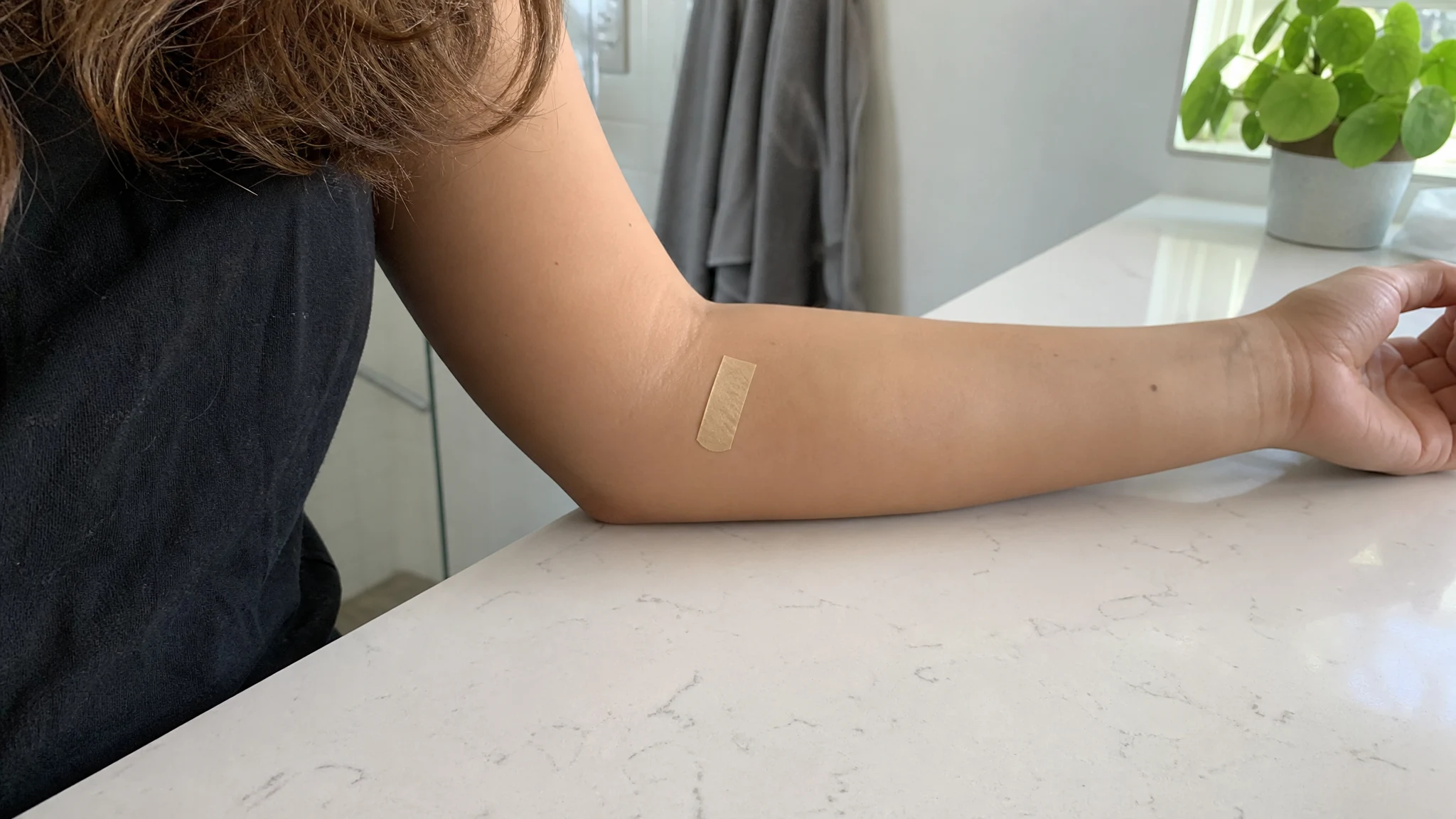
Make a small batch, patch test it on a diluted patch of skin, and keep every bottle away from eyes, children and pets. Rosalina oil is for external use only. For more on how rosalina behaves as a perfumer's ingredient, see rosalina in perfumery, and for diffuser maths, our diffuser drops guide.
Good blends come from a clear plan, a light hand and a willingness to adjust one drop at a time.
Rosalina Essential Oil
Rosalina Essential Oil from our own shop, in sizes from 0.5 oz to bulk.
From $16.99
Shop Now →Sources & Further Reading
- European Commission. Fragrance allergens labelling. single-market-economy.ec.europa.eu
- Valarezo et al., 2026. Essential Oil of Melaleuca ericifolia Sm.: Chemical Composition, Enantiomeric Distribution, and Antimicrobial, Antioxidant, and Anticholinesterase Activities. Molecules. Europe PMC
- Christensson et al., 2010. Linalool - a significant contact sensitizer after air exposure. Contact Dermatitis. Europe PMC