Melaleuca, minus the harshness.

Our Distillation

Rosalina sits between tea tree and lavender, and that is not a marketing line: it is what the linalool does. We distil it ourselves from Australian leaf.

Ericifolia Lavender Tea Tree
Linalool Unusually High Share
Own Still Nothing Bought Made
2 yr Still Date On Label

Why This One Suits People Tea Tree Does Not

Plenty of people want what tea tree offers and cannot get on with how it smells or how it feels on skin.

Rosalina is the answer nobody mentions. It comes from the same Melaleuca genus, but it carries an unusually large share of linalool, the soft aromatic that makes lavender smell like lavender. The result is far gentler in character and much easier to live with in a room.

It stays obscure mostly because it is harder to source and yields less. Our arrangement is straight with Australian organic farms, bought by the bulk load, and the stilling happens here. That is the only reason the price stays sane.

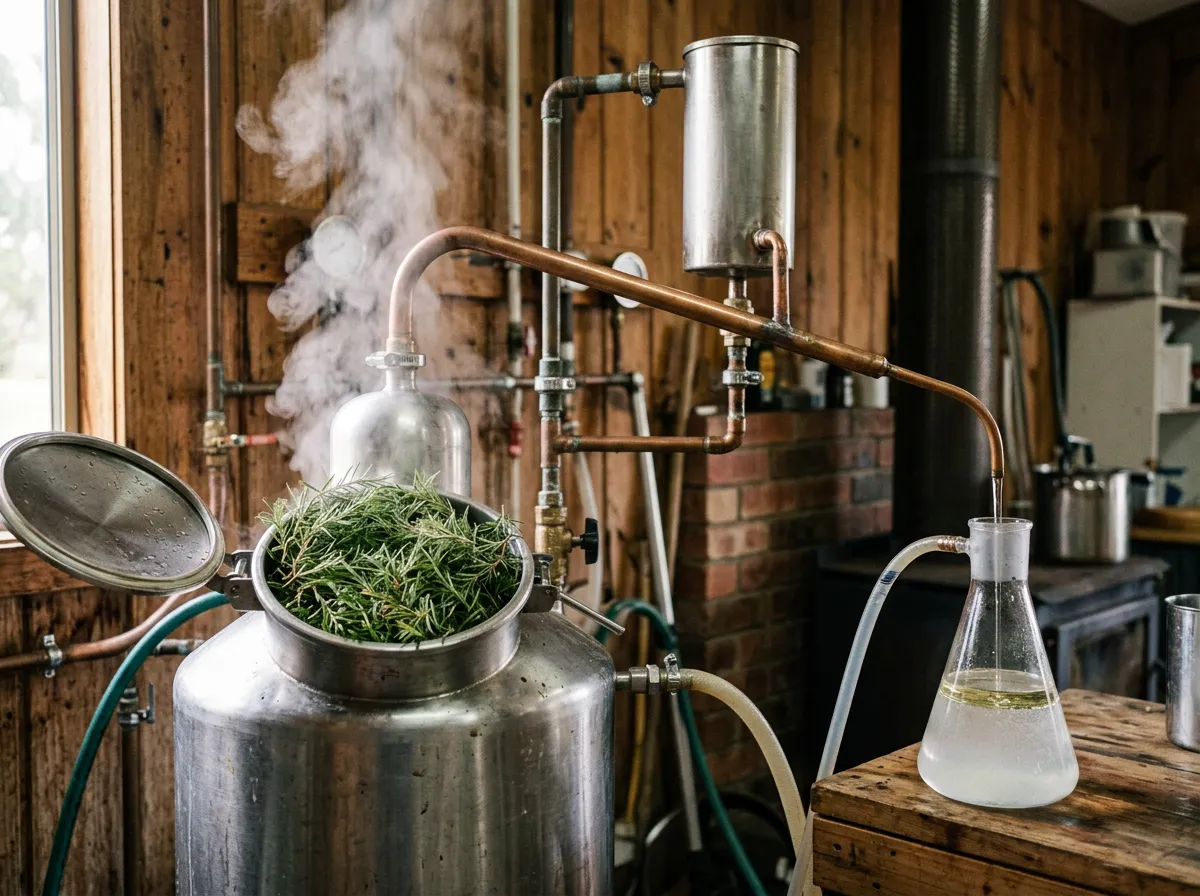
Fresh rosalina foliage packed into a stainless still in a small distillery

Made Here, Not Bought In

Nothing about this oil arrives finished. We take delivery of cut foliage and everything after that point is ours.

Steam moves through the packed leaf and the aromatics separate out as the vapour cools. Rosalina yields less than tea tree, which is a large part of why so few people bottle it.

Each run continues until the leaf gives nothing more. We have no hour figure to advertise because we do not distil against a clock.

Two printed dates, stilling and filling, plus the lot reference that connects them. Amber for every size, since Melaleuca oils turn faster in clear glass. Straight Melaleuca ericifolia at full strength, never cut with tea tree.
Grown Where the Ground Stays Wet

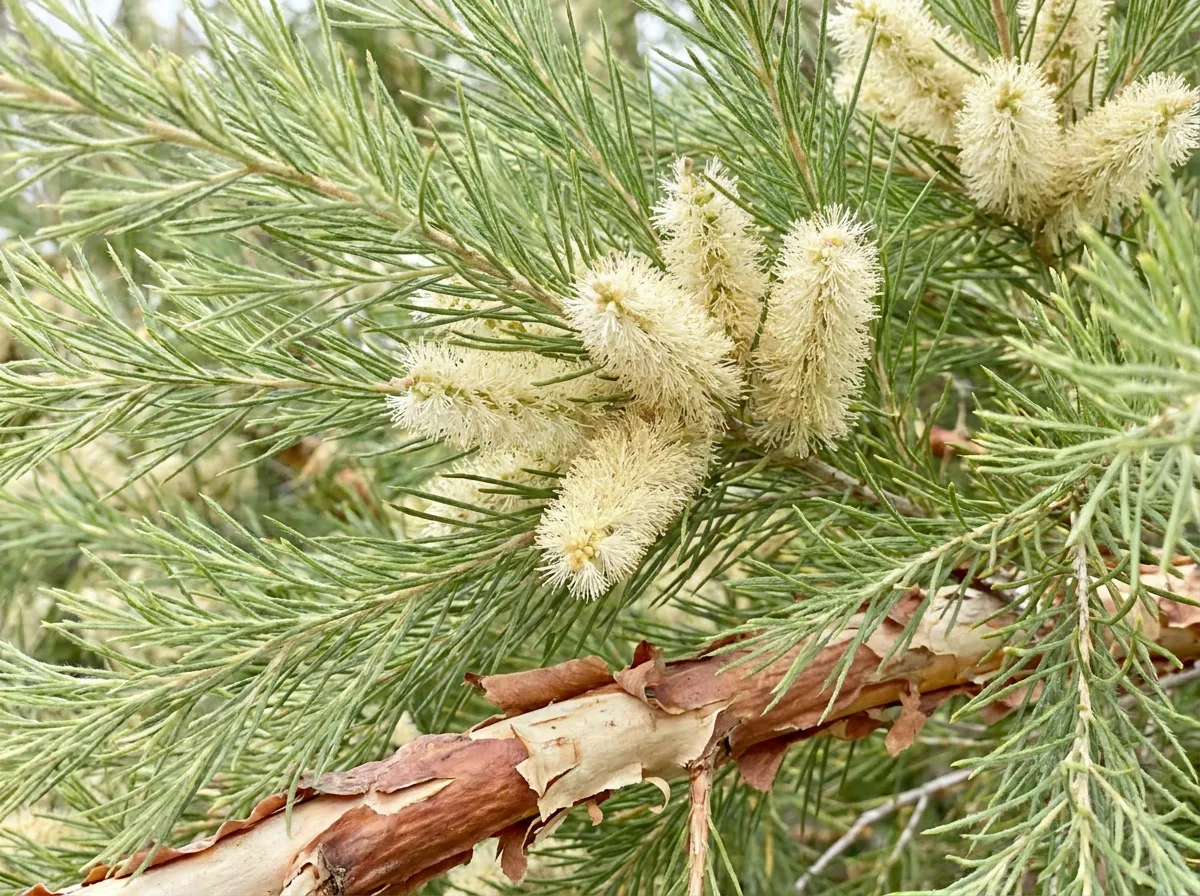
Melaleuca ericifolia grows in the swampy country of New South Wales and Tasmania, a paperbark shrub with fine, almost heath-like foliage.

It is the leaf we distil. Cut fresh, it smells green and Melaleuca-sharp at first and then softens into something floral, which tells you what the oil will do before it reaches the still.

Wet ground suits it, and that preference is why it was never planted as widely as its famous cousin despite being the more approachable oil of the two.

Fine soft foliage of a rosalina paperbark shrub growing in wet ground

The Linalool Share, Confirmed

Every batch is analysed by an outside laboratory that gains nothing from the result.

Linalool

The compound that separates rosalina from every other Melaleuca. Its share is the reason to buy this oil.

1,8-cineole

Kept modest here. A high figure means harsher material has found its way into the batch.

Species check

Confirms ericifolia rather than a cheaper Melaleuca sold under a friendlier name.

Tell us your lot number and its analysis comes back to you. The contact page is fine too.

Gentle Does Not Mean Harmless

We are not claiming anything medicinal here. Rosalina has a reputation for being kind to skin, and reputation is not the same as clinical evidence.

Never use it neat: bring it down in a base oil, and try a little on one spot before more. Its gentleness relative to tea tree is real but it remains a concentrated leaf extract.

Like its relatives it oxidises, so store it cool and dark and read the still date rather than assuming. When a season does not yield oil we can stand behind, we go out of stock.

The Melaleuca Worth Trying Twice

Australian organic ericifolia, stilled on our own premises, its linalool share put on paper by an outside laboratory.

Smell it against tea tree.

Shop Rosalina Oil
These statements have not been evaluated by the FDA. Products are not intended to diagnose, treat, cure, or prevent any disease.