DIY Massage Oil: How Much Rosalina Per Ounce?
A massage oil is almost entirely carrier oil with a little scent in it, so the one number worth thinking about is the scent percentage. For rosalina, our recommendation is 0.5% where the oil might reach the face and 1% for body massage. At 1% that is about 6 drops in an ounce of carrier, and the table below shows how to scale it up or down.
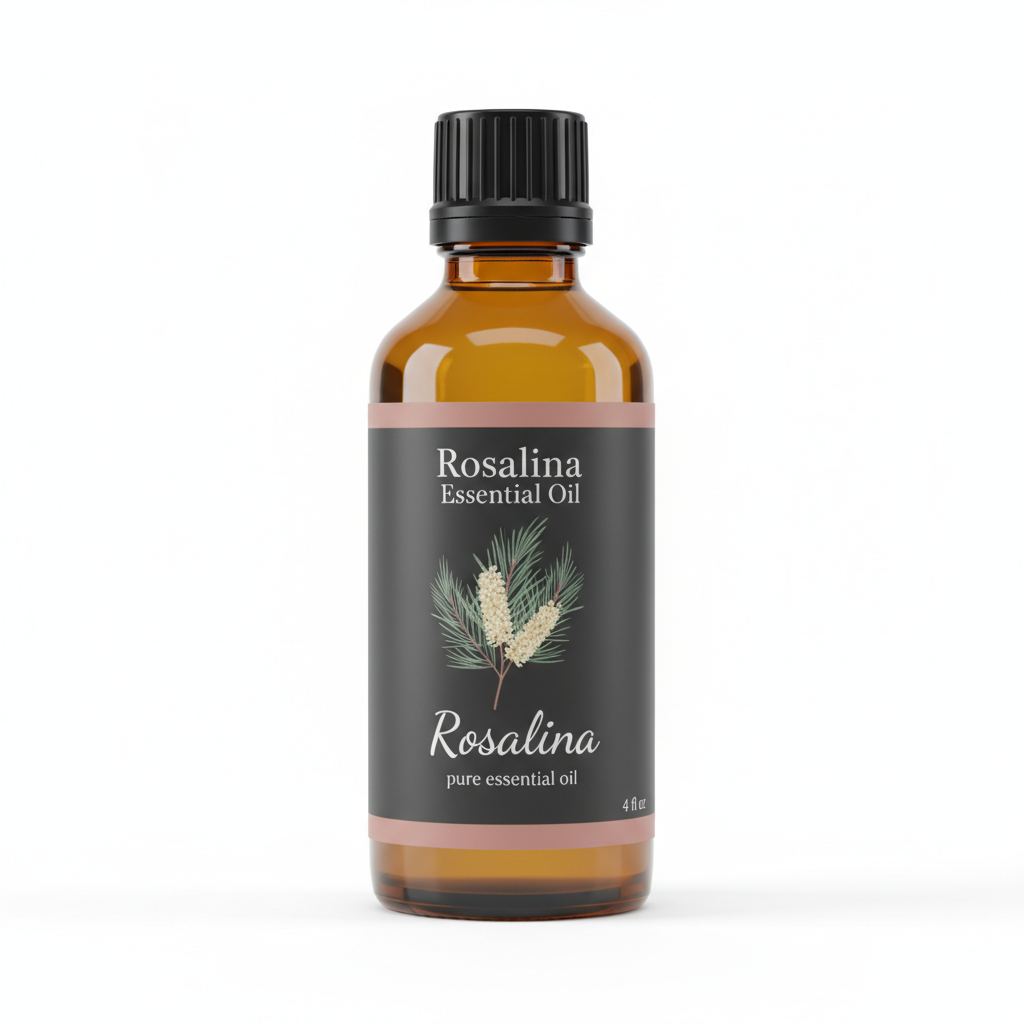
Rosalina Essential Oil
Our own Rosalina Essential Oil, in sizes from 0.5 oz to bulk.
From $16.99
Shop Now →Deciding the percentage
We sell rosalina neat, so the dilution arithmetic is yours to enjoy. Our guidance for skin is 0.5% to 2% in a carrier oil, and the 3 to 12 drops per ounce that goes with it. We suggest the lower half of that range, and the reason is simple. The Tisserand Institute's dilution ranges run from 0.2% to 1% for sensitive or impaired skin, 0.5% to 1.2% for the face, and 1% to 3% for body oils and lotions, and its irritation guidance notes that dilution and risk are directly related. Its advice for anyone who wants to be careful is to start low and increase only if needed, so that is where we begin too.
Here is the arithmetic, using 29.57 ml to the ounce and a working convention of 20 drops per ml. On the batch described in the Certificate of Analysis we publish, 1 ml weighs about 0.89 g, because its relative density measured 0.890. Droppers vary, so weighing is more reliable if you have a small scale.
| Oil share | Per 1 oz (29.57 ml) of carrier | Per 100 ml of carrier |
|---|---|---|
| 0.5% | 0.15 ml, about 3 drops | 0.5 ml, about 10 drops |
| 1% | 0.30 ml, about 6 drops | 1 ml, about 20 drops (about 0.89 g) |
| 2% | 0.59 ml, about 12 drops | 2 ml, about 40 drops |
Treat 2% as the ceiling of our range, not a target. A small area of skin does not make a higher percentage a better idea, so the same percentage applies whether you are doing a shoulder or a whole back.
Choosing the carrier
We sell one oil and no carriers, so the carrier comes from a craft or supply shop, a pharmacy or a grocery. Jojoba and sweet almond are the examples we like to name, and our carrier oils comparison goes through how they differ. The practical advice is to choose one you already know your skin tolerates, from a seller who states the plant and a date, and to keep it in a dark bottle. Sweet almond is a tree nut, so if anyone being massaged has a nut allergy, pick a different carrier and let their allergist weigh in.
A simple formulation
This is a formulation worked out from the arithmetic above, so start with a small amount and a patch test.
- Measure 100 ml of your carrier into a clean, dry bottle, dark glass if you plan to keep it.
- Add 10 drops of rosalina for 0.5%, or 20 drops for 1%. Cap and turn the bottle gently to mix.
- Patch test on the inner forearm and wait. The Tisserand Institute notes that patch testing is not 100% reliable, so a clear patch is encouraging but not a guarantee. People who are more reaction-prone can start around 1% and climb in 0.5% steps, if they climb at all.
- Keep it away from the eyes, never swallow it, and keep the bottle from children and pets.
- Make small batches. We recommend storing the oil tightly capped in a cool, dark place, and the same logic suits a blend you mix yourself, which is a good argument for 30 ml instead of 100 ml.
Setting the scene
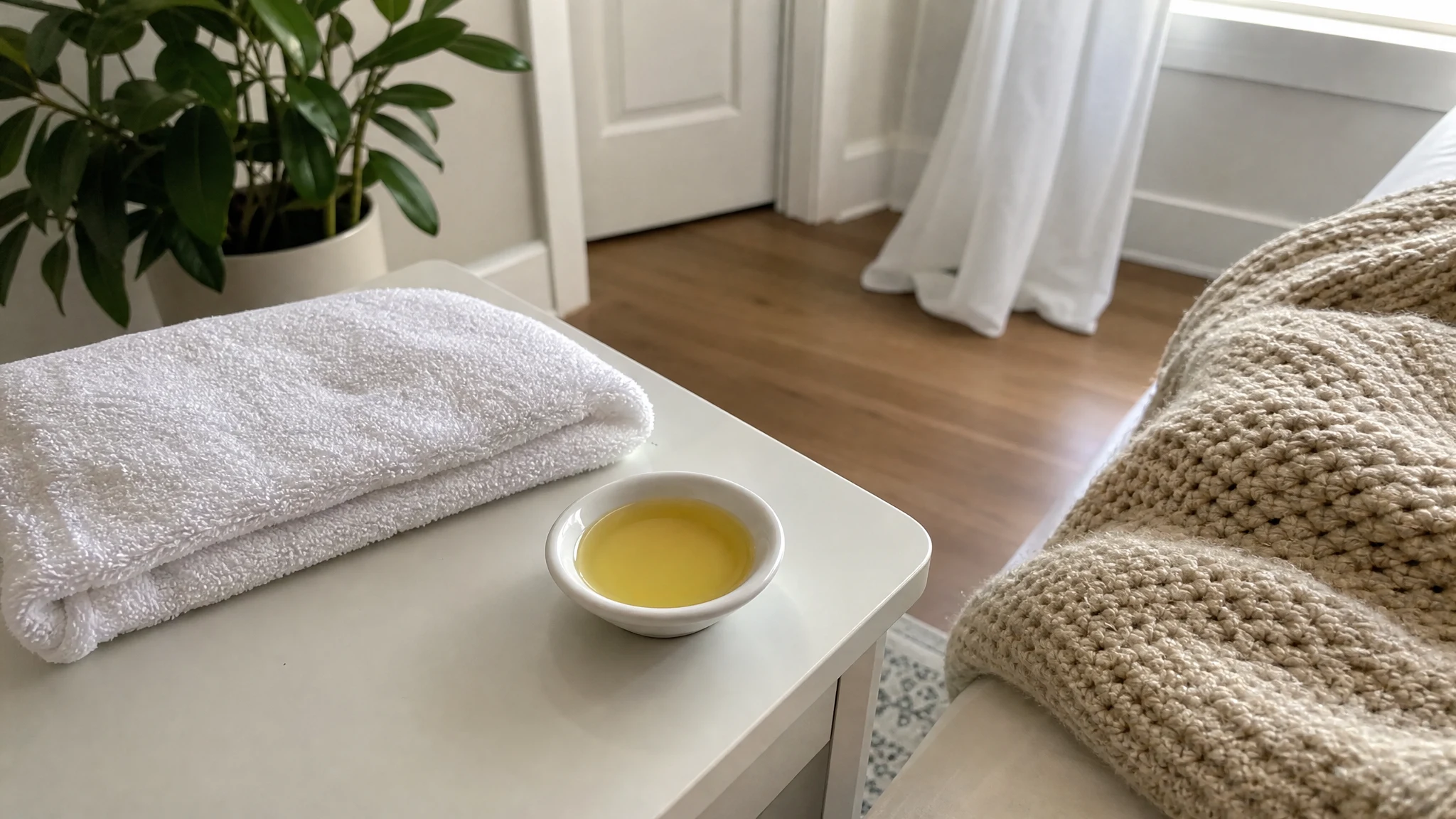
A massage oil is as much about the moment as the formula. Warm the bottle in your hands, or stand it in a bowl of warm tap water for a few minutes before you pour, since cold oil is a shock on bare skin. Pour a small amount into your palm, rub your hands together, and open them under your nose. At 1% you should get a faint, fresh, green-and-floral hint and not a blast. If it seems loud, the blend is stronger than you want for a massage, and you can top it up with more carrier.
Use less than you think. A teaspoon covers a surprising amount of skin, and you can always pour a little more. Keep a towel under the area, and keep the bottle capped and within reach so you are not fumbling with oily hands.
Towels, sheets and the floor
This is the part recipe pages tend to leave out. Any oil spread on cloth can matter in a dryer, and most of a massage blend is carrier oil. Dedicate a towel to the job, let the dryer finish its cool-down, and do not fold or pile cloths while they are still hot. Our laundry article goes into the fire risk. Drips also make a table or floor slick, so wipe them up.
When to ask someone first
If you are pregnant or breastfeeding, ask your midwife or obstetric clinician; our pregnancy article reports what the published guidance says. For eczema, broken or inflamed skin, or a history of reacting to scented products, ask a dermatologist or allergist, since Poison Control advises against essential oils on damaged skin. Babies and children are a question for a pediatrician, and we offer no child dilution. The ASPCA's Animal Poison Control Center says cats are especially sensitive to essential oils, so check with a veterinarian if pets share your space. Our dilution guide and patch test article go deeper on the practicalities.
Good massage oil is mostly about restraint. Keep the percentage low, and let the carrier and the scent each do their own job.
Rosalina Essential Oil
Rosalina Essential Oil from our own shop, in sizes from 0.5 oz to bulk.
From $16.99
Shop Now →Sources & Further Reading
- Tisserand Institute, Dilution for essential oils
- Tisserand Institute, Irritation and allergic reactions
- Poison Control, Essential oils: Poisonous when misused
- ASPCA, Pet Poisons: Be Mindful of these Household Products and Cleaning Agents