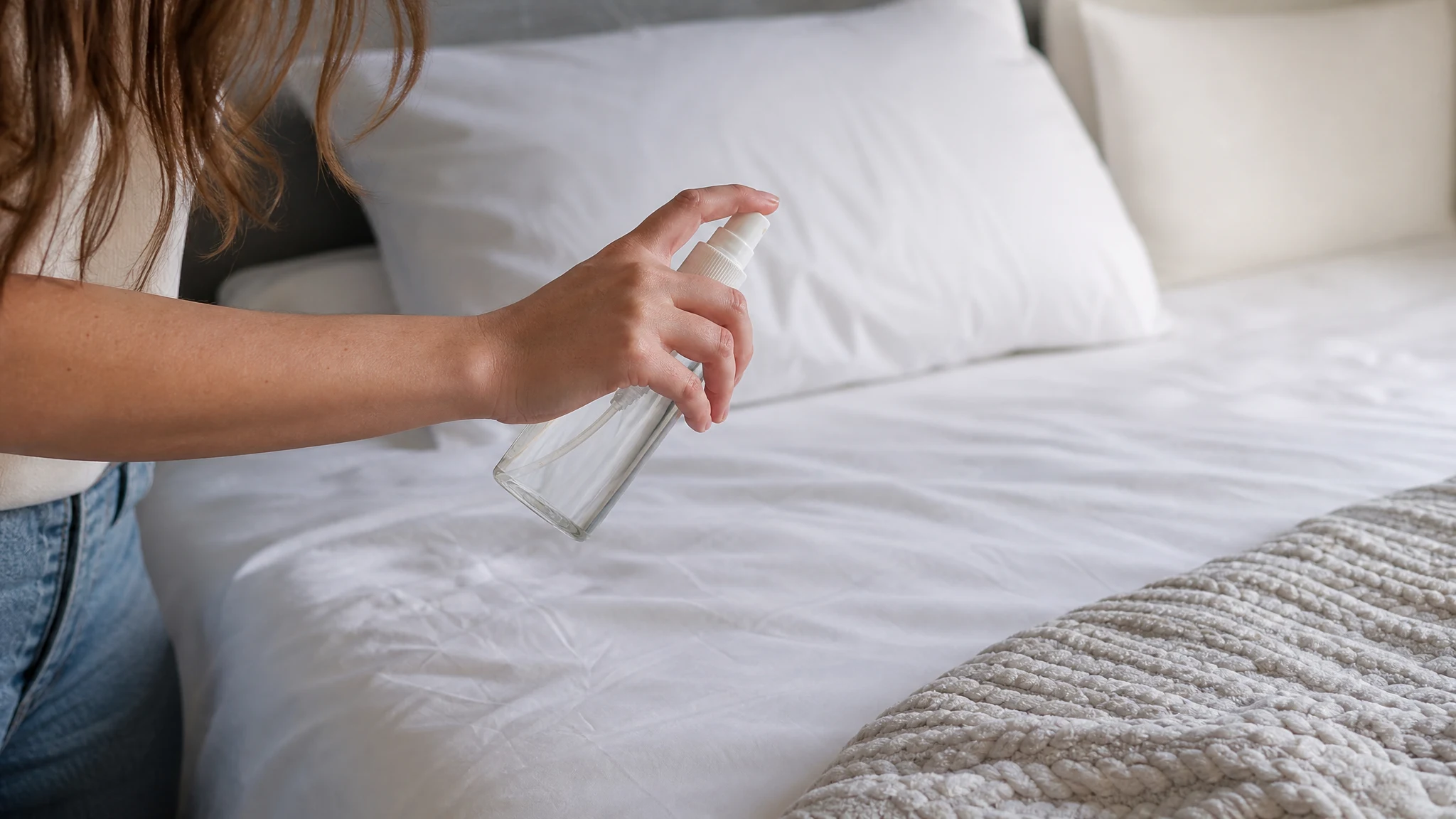
DIY Rosalina Pillow Mist: Keep It Fresh and Clean
A good pillow mist smells like a freshly made bed: soft, green, a little floral. Making one well is mostly a matter of two things the scent never tells you about, which are getting oil to spread through water and keeping that water clean. Get those right and a rosalina linen spray is a lovely small project.
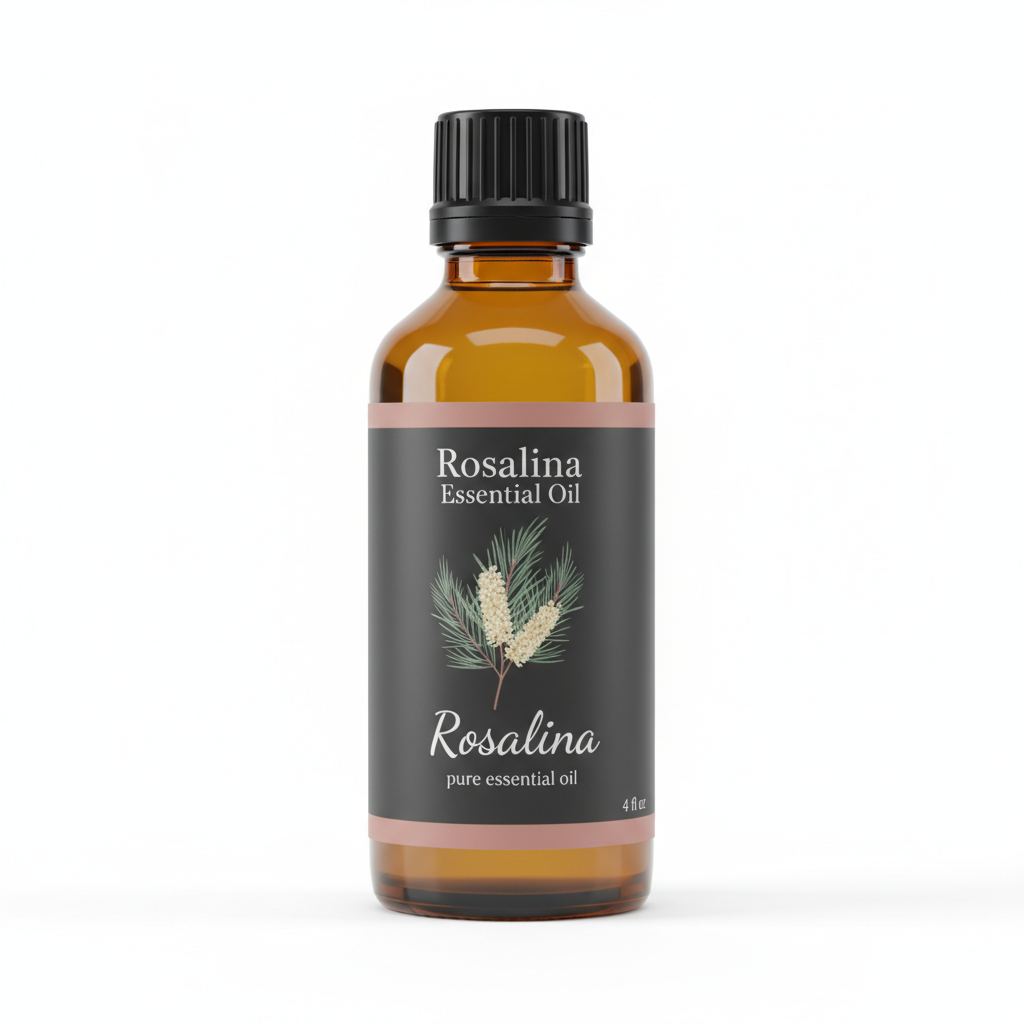
Rosalina Essential Oil
Our own Rosalina Essential Oil, in sizes from 0.5 oz to bulk.
From $16.99
Shop Now →Mist or diffuser?
A diffuser fills a room with scent for a set time and then you switch it off. A mist puts the scent on fabric that sits against your face for hours. For a faint bedroom fragrance, the diffuser is the better-documented route; the Tisserand Institute's rule of thumb is 3 to 5 drops per 100 ml of water, run intermittently, and you can find the arithmetic in our diffuser drops article. Choose the mist when you specifically want the scent in the linen itself. Either way, this is a fragrance project, and we are not suggesting it does anything for sleep or mood.
Start with a gentle strength
Our skin guidance for rosalina is 0.5% to 2% in a carrier oil. A pillowcase is not skin, but it touches your face and neck all night, so for a mist we start at 0.25% to 0.5% and see how it feels. That is our own suggestion for a leave-on fabric spray, not a published limit.
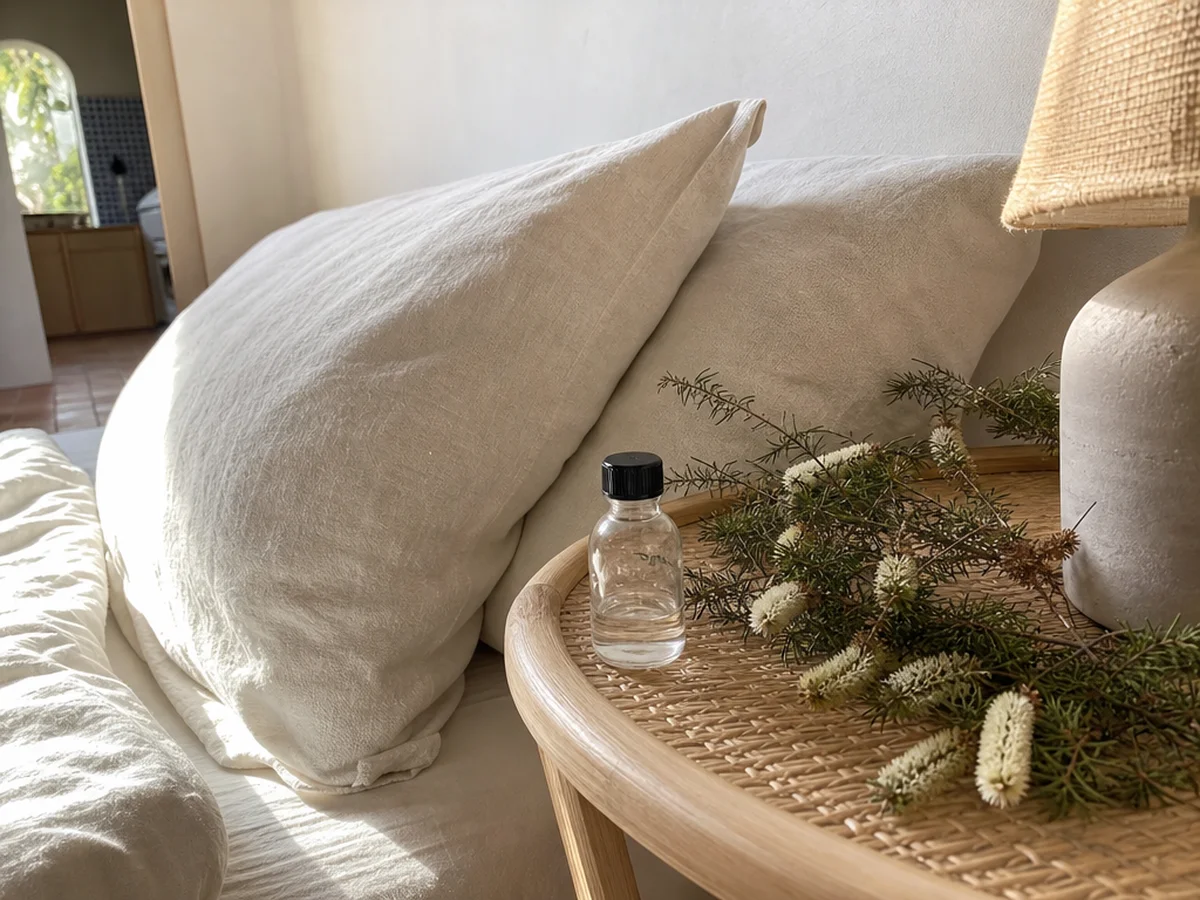
Here is the arithmetic for 100 ml, assuming about 20 drops to the millilitre (droppers vary, so this is an estimate):
| Strength | Oil needed | Roughly |
|---|---|---|
| 0.25% | 0.25 ml | 5 drops |
| 0.5% | 0.5 ml | 10 drops |
If you want accuracy, weigh instead of counting. The batch on our Certificate of Analysis measured a relative density of 0.890 at 20 C, so 0.5 ml of that batch weighs about 0.445 g.
Freshness matters here too. Linalool, a fragrance compound found in many oils, forms allergenic oxidation products when it meets air. In a study of 3,418 dermatitis patients, oxidised linalool gave positive patch tests in 0.83% at a 2% concentration and 7.2% at 11% (Christensson et al., 2010). That was a clinic population under patch-test conditions, so the practical takeaway is simply to use a bottle that has been kept capped, cool and dark. It is also why a comfortable first night does not settle the question: the Tisserand Institute notes that an allergic reaction often does not appear the first time an oil is used (Irritation and allergic reactions). Our piece on patch tests explains what one test can and cannot tell you.
Getting oil to spread through water
Essential oils are not water soluble. Shake a bottle of water with a few drops of oil and you get a brief cloud, then a film on top. In a spray bottle that means the first sprays are nearly plain water and the last ones are nearly neat oil, landing on your pillowcase as droplets.
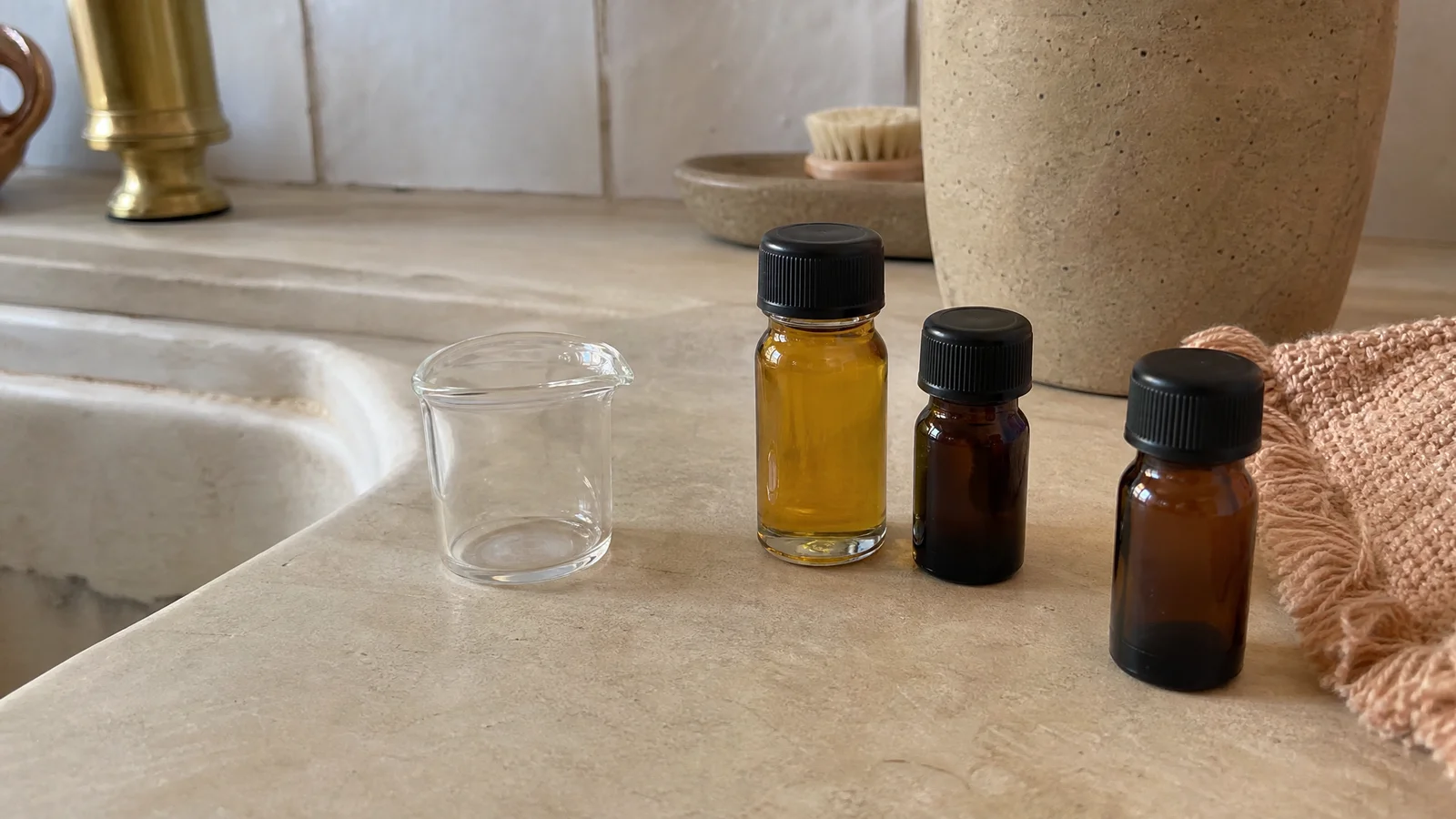
A dispersant solves this. The Tisserand Institute describes polysorbate 20 as a safe way to disperse essential oils in water, and suggests mixing the oil with an equal amount of polysorbate 20 before adding it to the water (Bath Safety: how to use essential oils safely in the bath). For a 0.5% mist in 100 ml, that is 0.5 ml of oil stirred into 0.5 ml of polysorbate 20, then into the water. Salt and milk do not do this job, so leave them out of the spray bottle. Polysorbate 20 and spray bottles come from a craft or cosmetic-ingredient supplier; we sell the oil only.
Keeping the water clean
A water-based mixture left in a bedroom for weeks is a welcoming place for microbes. A 2026 study of 185 abnormal batches of everyday chemical products found Burkholderia and Pseudomonas the most common contaminants, and identified raw materials as a major reservoir (Genetic Characteristics and Preservative Tolerance of Spoilage Microorganisms in Daily Chemical Products). Those were factory products, but the lesson carries over to a kitchen-table spray. We would not count on a few drops of essential oil to protect it.
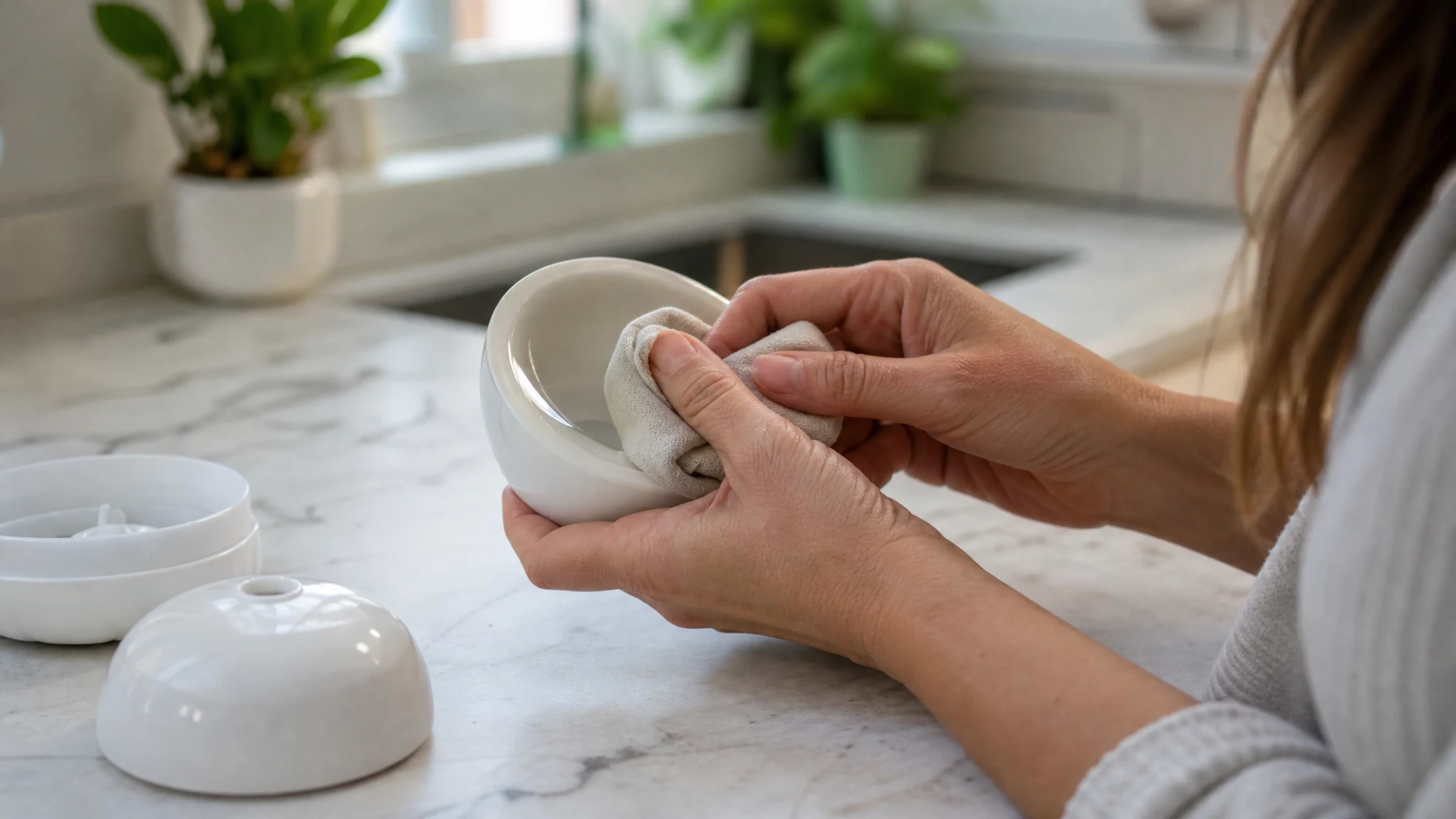
So the sensible routine is simple: wash and dry the bottle, use distilled water, and either add a broad-spectrum cosmetic preservative at the rate its supplier gives or make only 30 ml at a time and use it within a few days.
A formula to start from
- 5 to 10 drops of rosalina oil for 100 ml (or 2 to 3 drops for a 30 ml bottle), checked against your dropper.
- An equal volume of polysorbate 20, mixed with the oil first.
- Distilled water to the final volume, plus preservative if you are making more than a few days' worth.
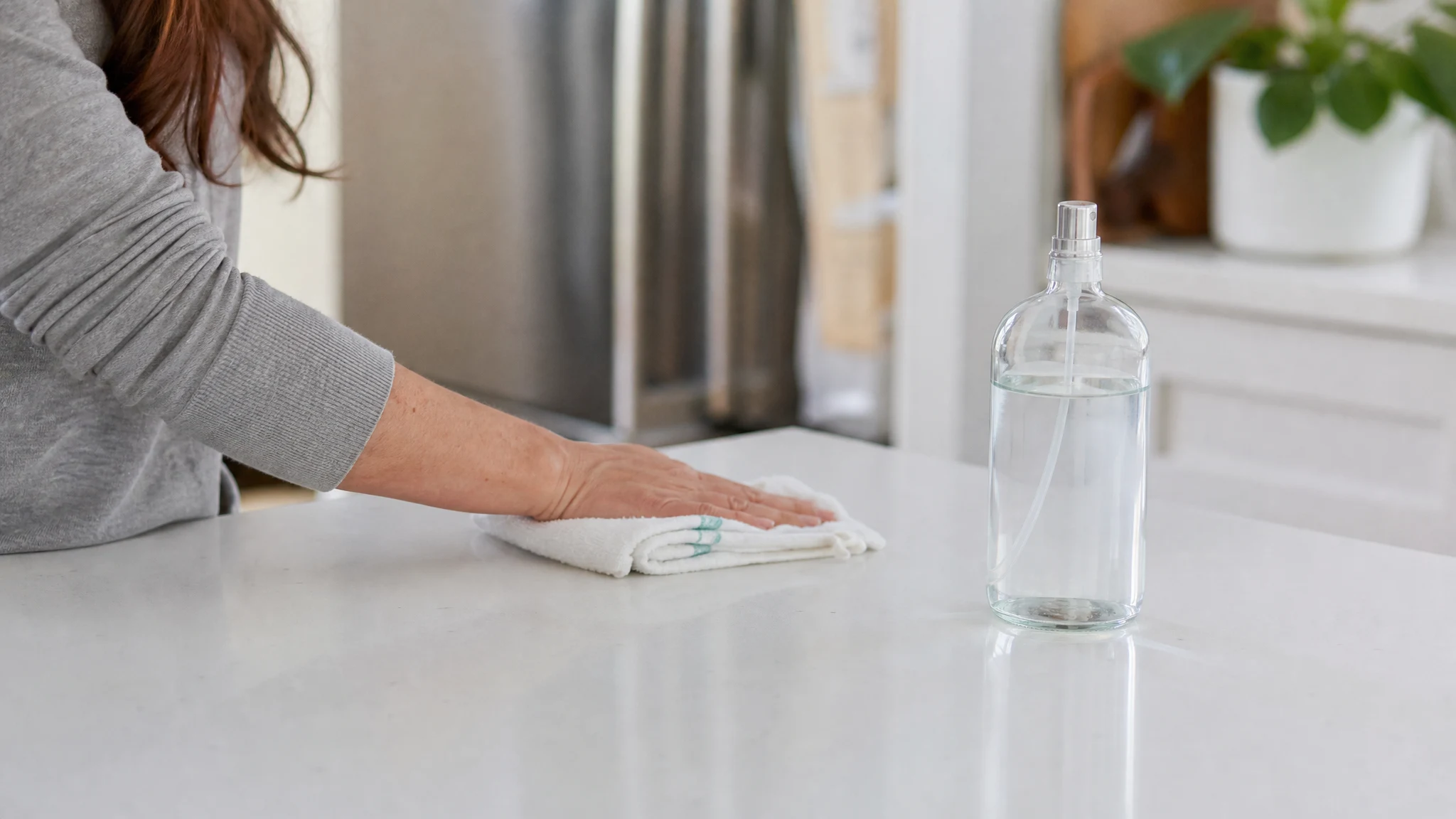
Label the bottle with the date and strength. Spray from 20 to 30 cm away, onto the case rather than the pillow itself, and let it dry before lying down. Try a hidden corner first, since oil can mark some fabrics.

A small bottle with a fine-mist nozzle also gives a softer, more even spray than a big trigger bottle, which tends to leave wet patches. Bottles and nozzles come from a craft or packaging supplier. Notice the scent when the fabric is wet and again once it has dried: the dry fabric usually holds a fainter, greener trace, which is exactly what you want from linen.
When to skip it
Leave the mist out of children's bedding and out of rooms where a cat or dog sleeps; poison control notes that children have thin skin and immature livers (Essential oils: Poisonous when misused), and we keep our oil away from children and pets. Our guides to households with small children, dogs and cats and pregnancy go further. If you have reacted to fragrance before, ask a dermatologist or allergist to test the finished formula.
A small bottle, made fresh and used up, is the whole secret: a faint, green-floral note on clean linen.
Rosalina Essential Oil
Rosalina Essential Oil from our own shop, in sizes from 0.5 oz to bulk.
From $16.99
Shop Now →Sources & Further Reading
- Tisserand Institute. Bath Safety: how to use essential oils safely in the bath
- Tisserand Institute. Irritation and allergic reactions
- Christensson et al., 2010, Contact Dermatitis. Linalool - a significant contact sensitizer after air exposure
- Wen et al., 2026, Microorganisms. Genetic Characteristics and Preservative Tolerance of Spoilage Microorganisms in Daily Chemical Products
- Poison Control. Essential oils: Poisonous when misused