Linalool vs Cineole: What Shapes Rosalina's Scent
Ask a perfumer what a Melaleuca oil smells like and the honest answer starts with chemistry. Two molecules do most of the talking in rosalina: linalool, the soft floral one, and 1,8-cineole, the one that smells of camphor. Once you know what each brings to the bottle, the whole oil makes more sense.
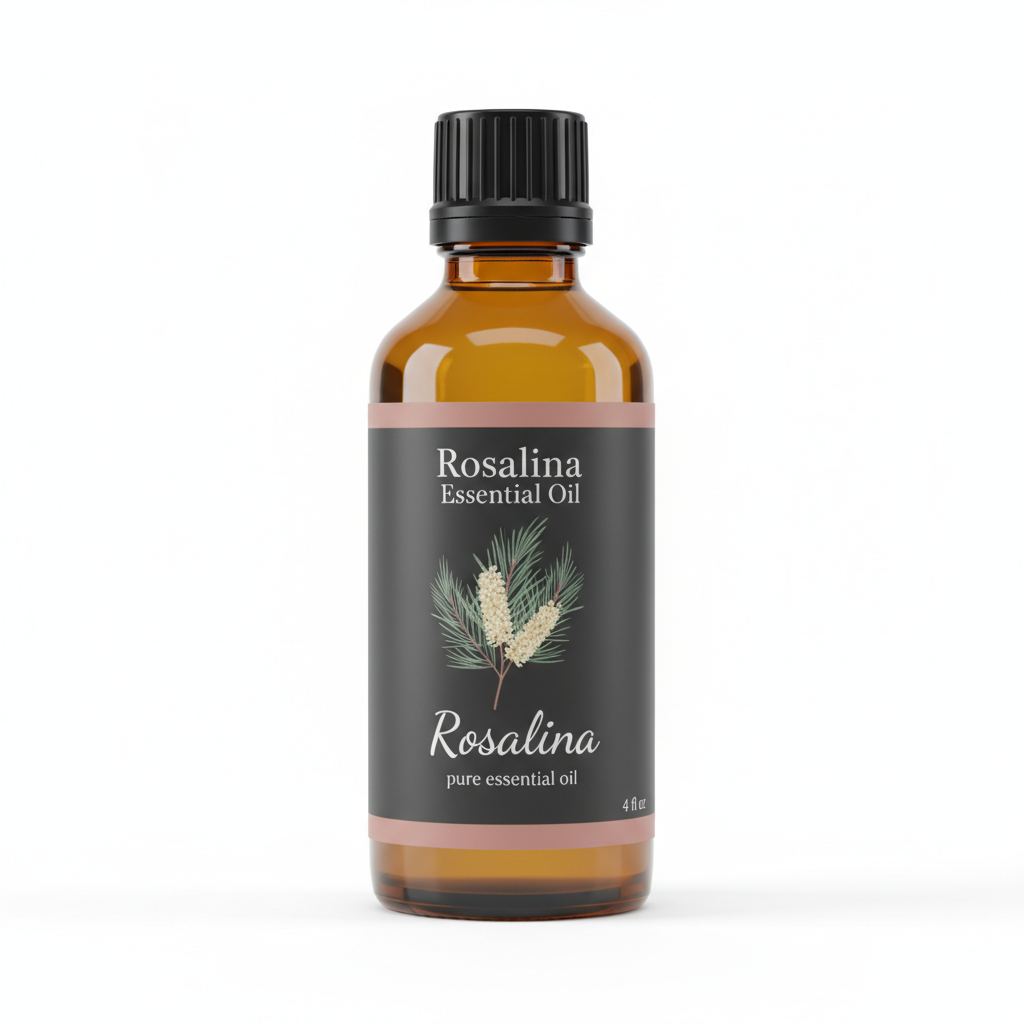
Rosalina Essential Oil
Our own Rosalina Essential Oil, in sizes from 0.5 oz to bulk.
From $16.99
Shop Now →Two personalities in one plant
Linalool is the molecule behind much of the smell of lavender and bergamot. The reference record for it describes a floral odor that resembles bergamot oil and French lavender, free from camphoraceous and terpenic notes (PubChem, Linalool (compound 6549)).
1,8-cineole, also called eucalyptol, is the signature of eucalyptus. Its record lists a camphor-like odor (PubChem, 1,8-Cineole (compound 2758)). Fresh, clean and a little sharp, it is lovely in its place, but it is a different mood from lavender.
That is why we describe the rosalina we sell the way we do: soft, fresh and lavender-like, with a green opening and a floral sweetness. Linalool is the molecule that makes that kind of description possible.
Why we love a layered oil
The pleasure of a Melaleuca oil is that it keeps changing. It does not hand you one note and stop; it opens bright, softens, and settles. If you only ever smell it from the bottle, you miss most of that, so give a strip a little time and come back to it between other tasks. The later impressions are often the ones people like best.
Why one fades faster than the other
The same reference records give boiling points of 176 C for 1,8-cineole and 198 C for linalool, and vapour pressures of 1.90 mm Hg for cineole (at 25 C) and 0.159 mm Hg for linalool (at 23.5 C). The temperatures differ a little, but the sum is simple: 1.90 divided by 0.159 is about 12. Cineole is roughly twelve times more eager to leave a liquid and reach your nose.
This is reasoning from handbook values, not a measurement of our oil, but it explains a pattern many people notice with Melaleuca oils: a fresh, green first impression that gives way to something softer and sweeter. The quick, bright molecules arrive first. The slower, floral one stays. It is also the reason we call a rosalina a middle note with a fresh top edge, and it is the idea behind our perfumery article.
One name, several recipes
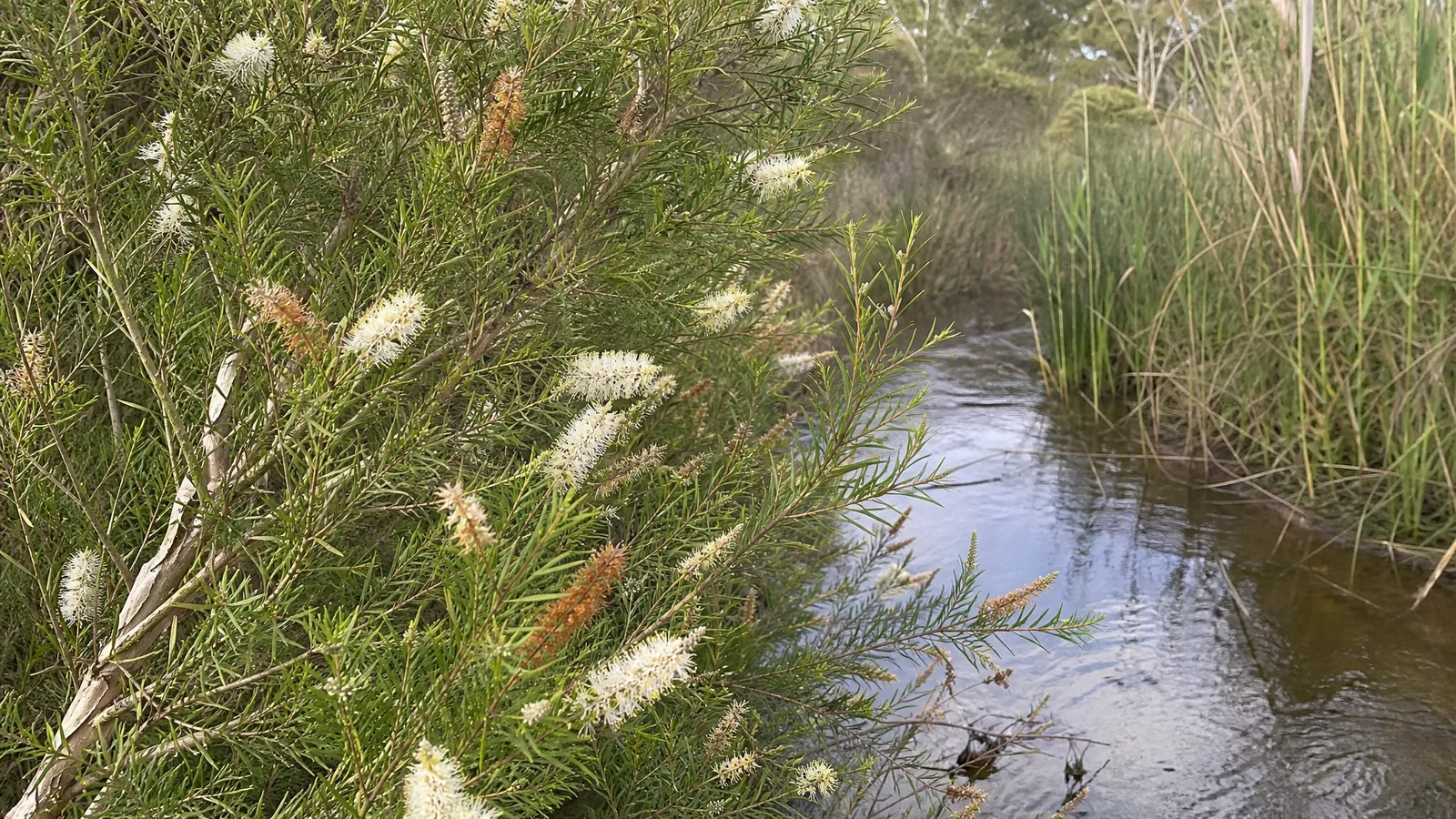
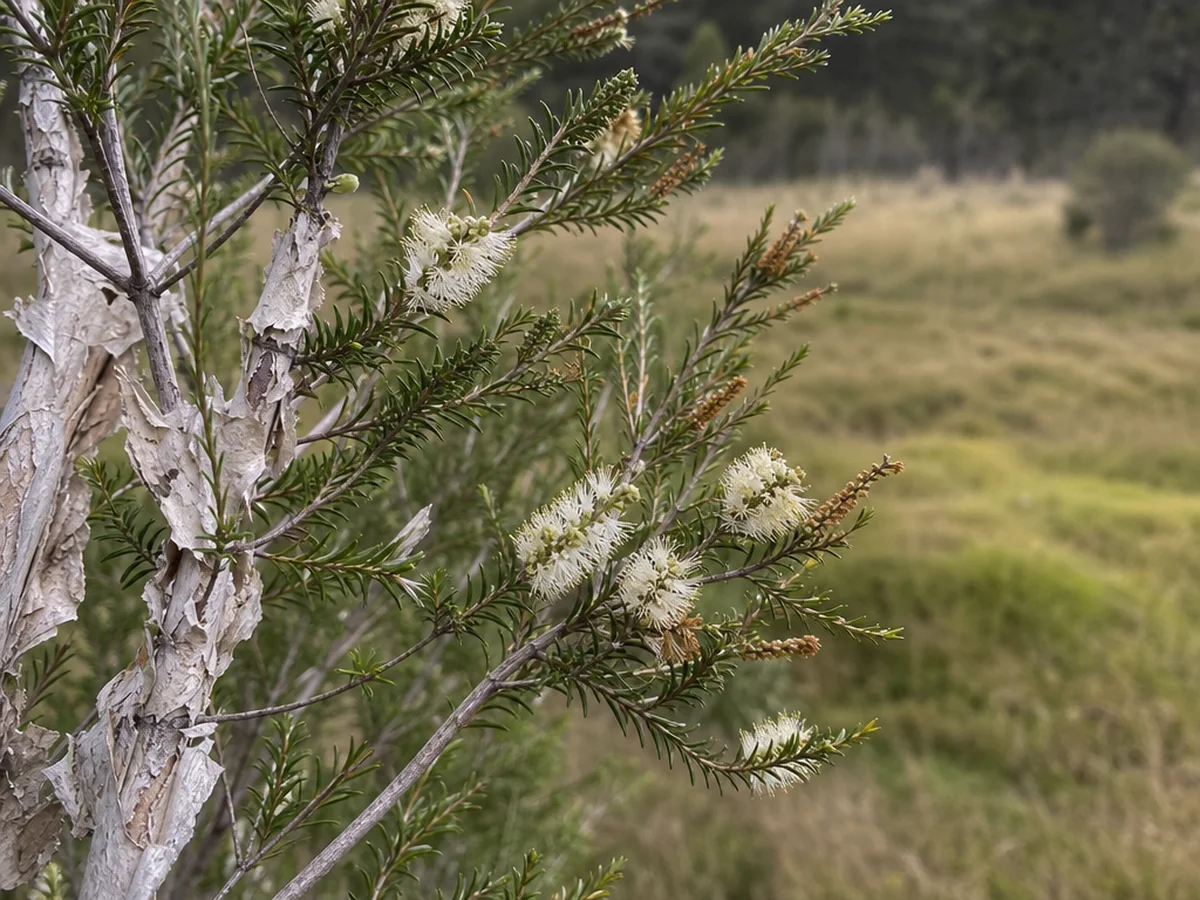
Rosalina is a species, Melaleuca ericifolia, and species are not always uniform. The authors of a 2026 study on a cultivated sample from Ecuador point out that earlier work describes at least three chemical profiles, led by methyl eugenol, 1,8-cineole or linalool (Valarezo et al., 2026). Their own steam-distilled sample was dominated by cineole, at 61.85%, with only 0.49% linalool. A commercial oil they cite from another paper sits at 38.19% linalool.
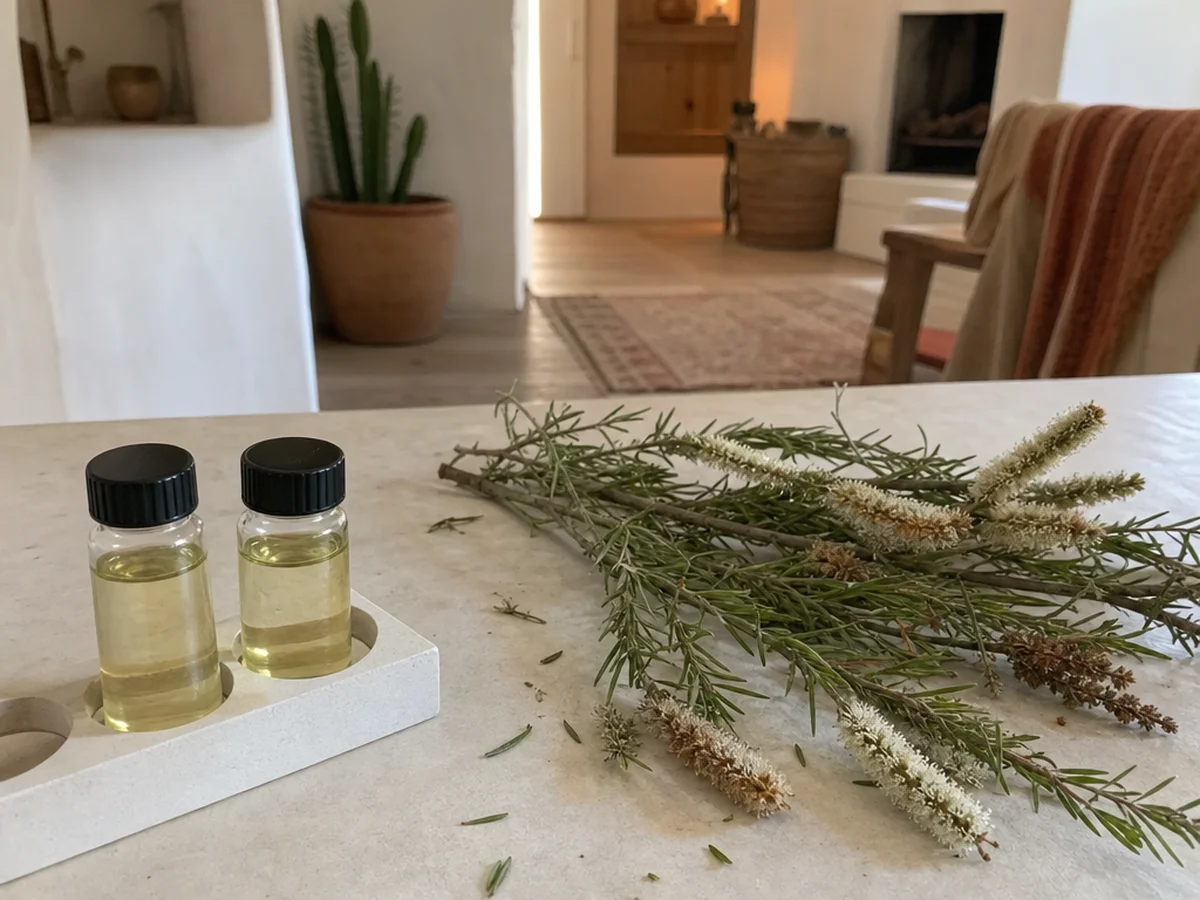
So the name on a bottle does not settle the smell, and that is true for any oil sold under a botanical name. For our oil, the Certificate of Analysis we publish for one batch lists appearance, smell, a relative density of 0.890 and a refractive index of 1.465 at 20 C, each inside its printed standard. If you want the constituent numbers for a lot, such as the linalool and cineole shares, ask us in writing through the contact page before you order, and our guide to reading a GC/MS report will help you read what comes back.
In the meantime, your nose is a fine instrument. A drop on a paper strip, smelled at the start, after ten minutes and after an hour, tells you a great deal. We walk through it in what rosalina smells like.
Train your nose at home
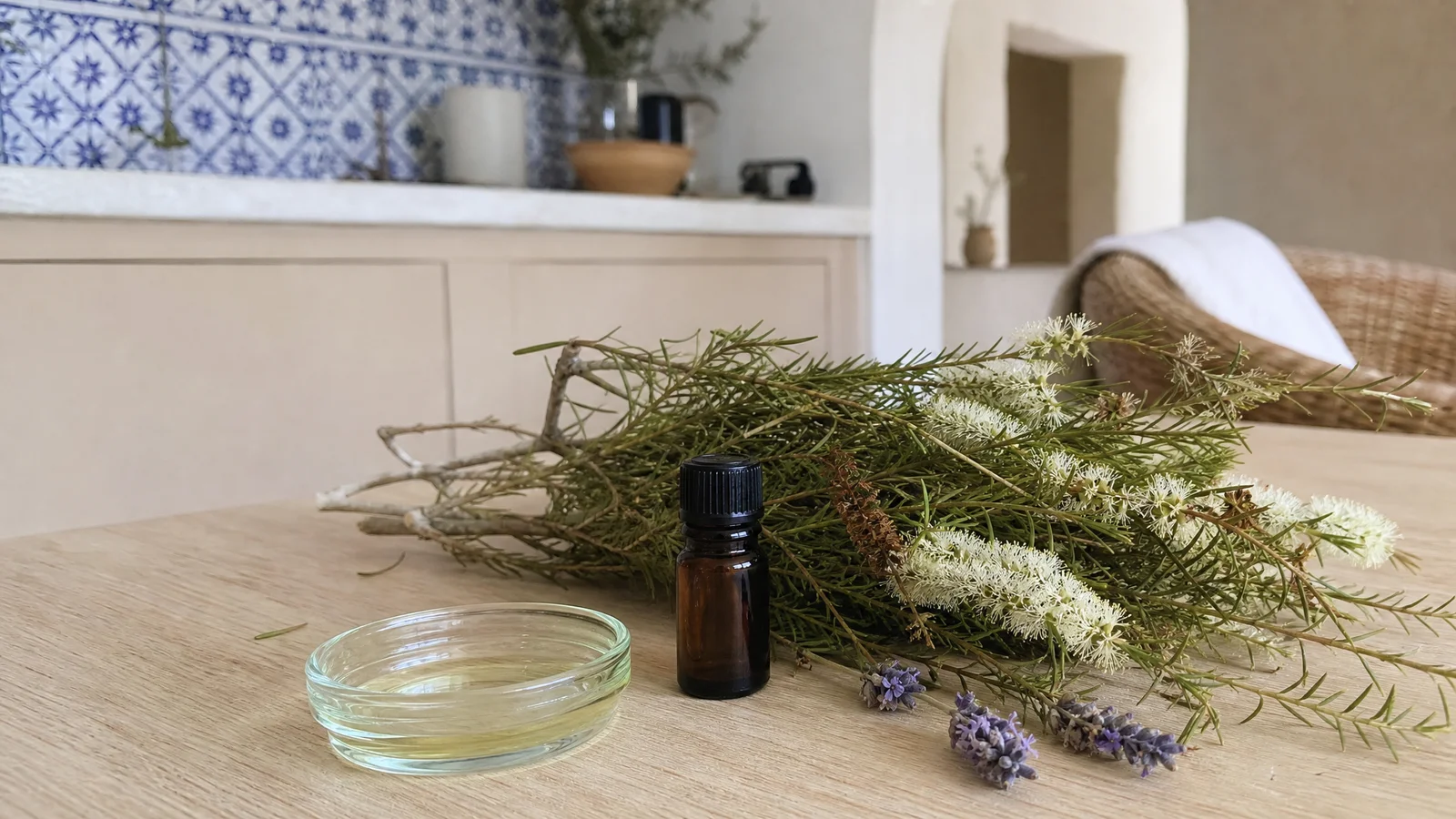
You can meet these two molecules without a laboratory. Smell a sprig of fresh lavender, then crush a eucalyptus leaf and smell that. One is soft and floral, the other clean and almost medicinal in its sharpness. Between smells, rest your nose on a clean sleeve or an empty cup so the first scent does not linger.
Then put a drop of rosalina on a paper strip and ask which side it leans toward. There is no wrong answer, and your reaction is useful information about what you like.
What linalool does when it meets air
Linalool has one quirk worth knowing as a home user. On its own it is a weak allergen, but it reacts with oxygen over time, and it is the oxidised form that dermatologists have studied. In a study of 3,418 people attending a dermatitis clinic, the share reacting to oxidised linalool climbed as the test concentration rose, from 0.83% at 2% to 7.2% at 11% in petrolatum, and the authors conclude that linalool itself is not allergenic or only very weakly so, while its oxidation products can cause contact allergy (Christensson et al., 2010).
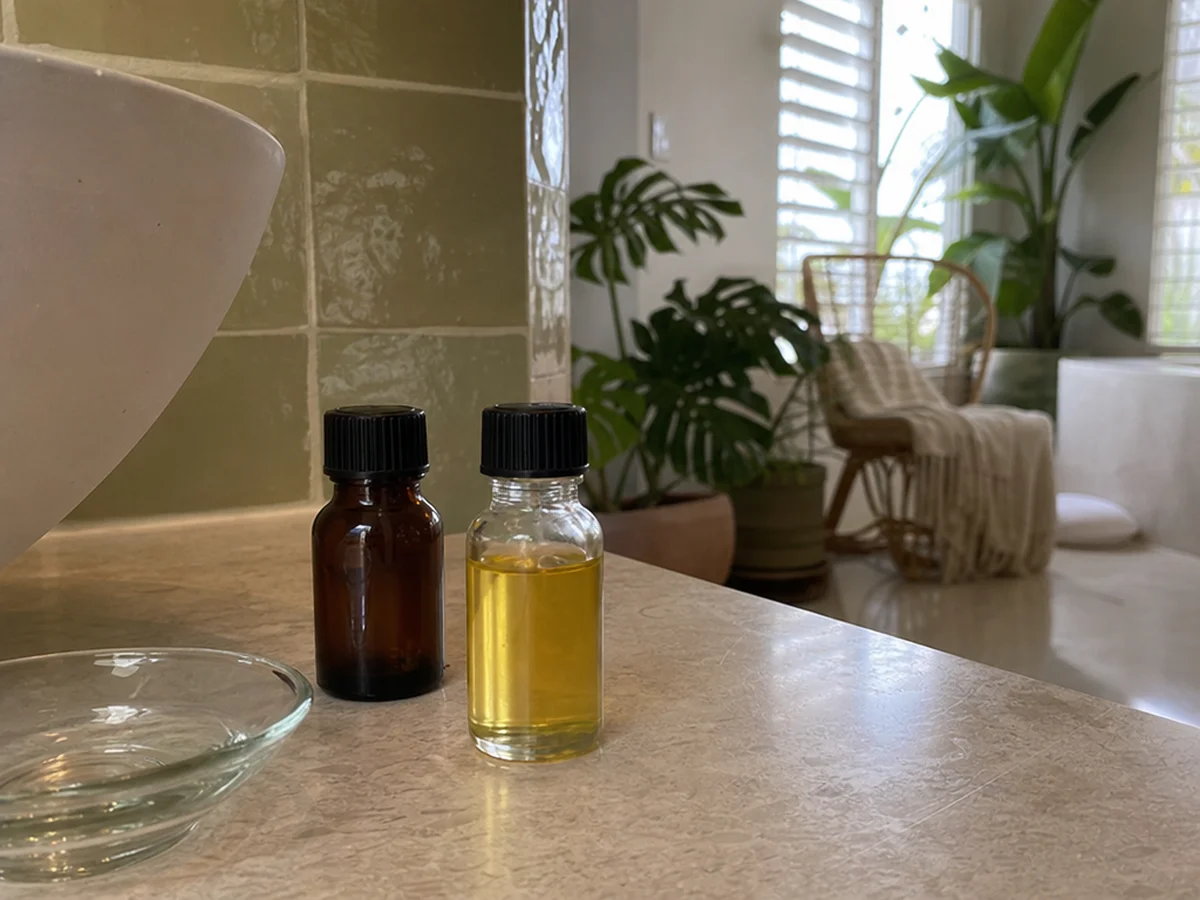
That was a clinic population testing isolated linalool, not rosalina, so we treat it as a sensible habit rather than a warning label: keep the bottle tightly capped, cool and dark, reseal it after each use, and do not hold on to a half-empty bottle for years. Amber glass helps, and our storage guide has the details. For skin, our own guidance is to dilute to 0.5% to 2% in a carrier oil and patch test first; we suggest starting at the low end, and the dilution article shows the arithmetic.
Learn the two molecules and you can read almost any Melaleuca oil: floral and slow, or fresh and quick, and usually a bit of both.
Keep a few notes as you go: the time, what you smelled, and the word that came to mind first. First words are often the most honest.
Rosalina Essential Oil
Rosalina Essential Oil from our own shop, in sizes from 0.5 oz to bulk.
From $16.99
Shop Now →Sources & Further Reading
- Valarezo E. et al., 2026. Essential Oil of Melaleuca ericifolia Sm.: Chemical Composition, Enantiomeric Distribution, and Antimicrobial, Antioxidant, and Anticholinesterase Activities. Molecules. Europe PMC PMC13666404
- PubChem, Linalool (compound 6549)
- PubChem, 1,8-Cineole (compound 2758)
- Christensson J.B. et al., 2010. Linalool - a significant contact sensitizer after air exposure. Contact Dermatitis. Europe PMC 20136877