Essential Oils for Headaches: What the Trials Really Show
"Essential oils for headaches" sounds like one question, but the trials people point to were three very different experiments. One used a 10% peppermint oil solution in ethanol on the forehead, one had migraine sufferers sniff lavender for 15 minutes, and one was a laboratory pain test in healthy volunteers. None of them tested a bottle of neat oil, and none involved rosalina. Reading them as recipe cards, rather than as endorsements, shows what each one can really tell you.
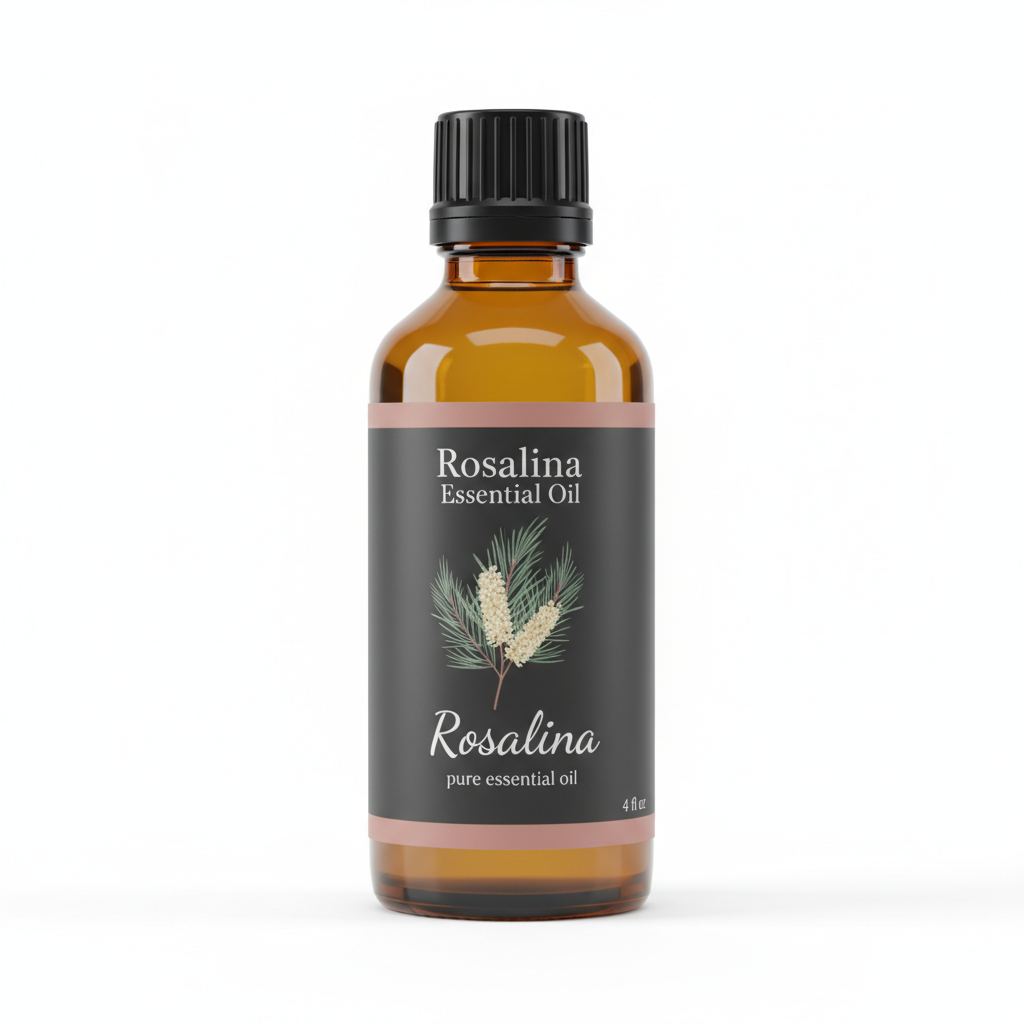
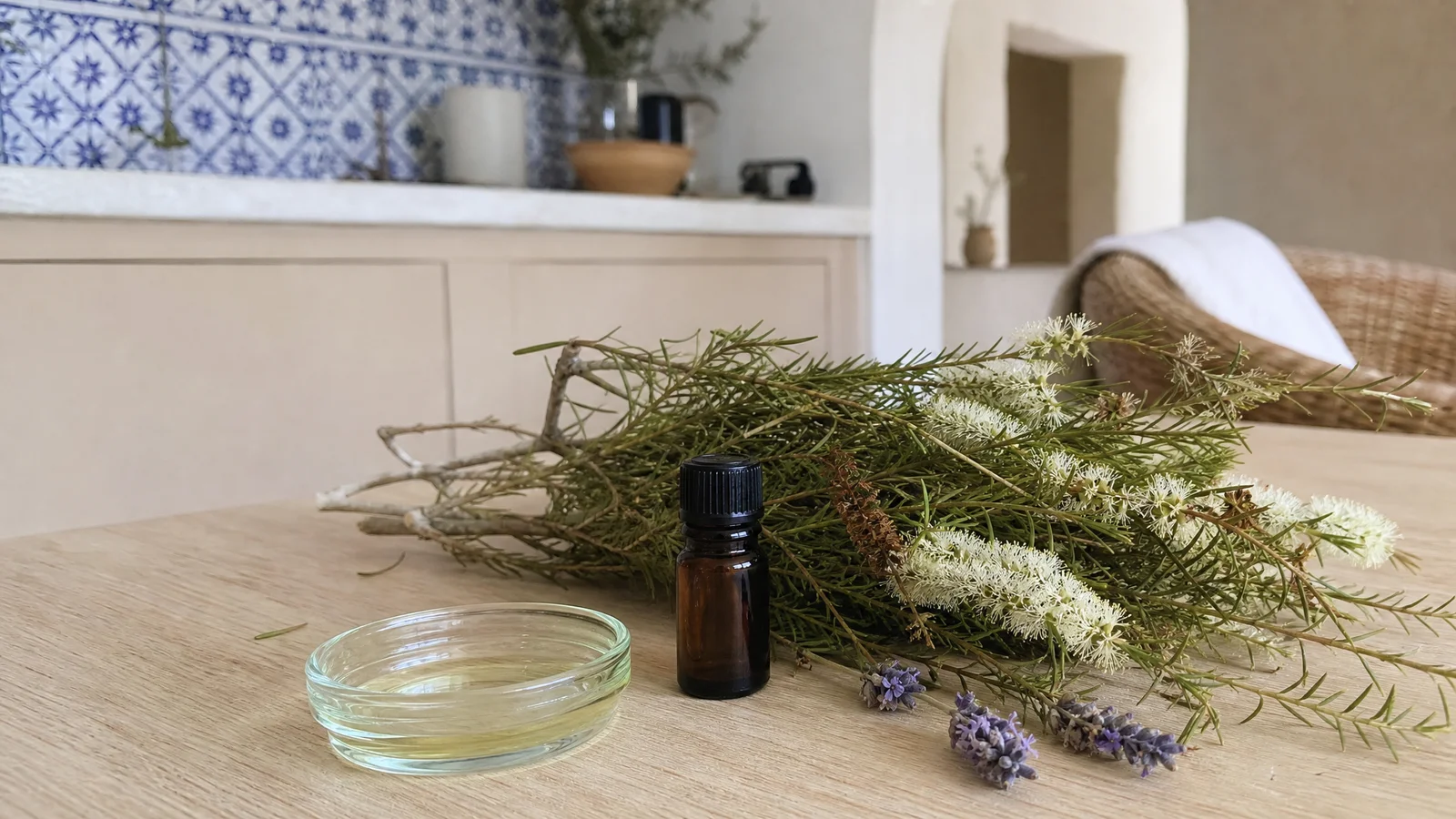
Rosalina Essential Oil
Our own Rosalina Essential Oil, in sizes from 0.5 oz to bulk.
From $16.99
Shop Now →The warning signs come first
Before any scent talk, the NHS headaches page lists when a headache needs urgent help. Call 999 or go to A&E if a headache comes with a seizure, numbness or weakness in the body or face, a sudden and extremely painful start, a head injury in the last three months, or trouble speaking, balancing or remembering. It also advises seeing a GP if you get headaches regularly or if treating one yourself is not working, and its self-care list is plain and familiar: water, rest and ordinary over-the-counter pain relief. Most headaches ease on their own.
There is a quiet habit worth borrowing from anyone who lives with headaches: keep a plain note. The date, how long you slept, what you ate, how much water you had and what the weather was doing take half a minute to jot down, and they give a doctor far more to work with than a memory of which candle was burning. We love scent, but a notebook is the more useful tool here.
Three trials, three recipes
The earliest, from 1994, tested peppermint and eucalyptus preparations in 32 healthy volunteers using a sponge on the forehead and temples. It measured experimental pain sensitivity and thinking tasks rather than headaches in patients, so it is a lab study about sensation. Peppermint oil with ethanol reduced sensitivity to experimental headache pain; the peppermint, eucalyptus and ethanol mixture raised cognitive performance with little effect on pain sensitivity.
The 1996 trial was the real headache study. Forty-one people with tension-type headache treated 164 attacks in a double-blind crossover. They applied either 10 g of peppermint oil made up to 100 in 90% ethanol, or a placebo ethanol solution with a trace of peppermint, across the forehead and temples, and they also took either 1,000 mg of paracetamol or a placebo tablet. Peppermint oil lowered headache intensity within 15 minutes and the effect held over the hour of observation. Paracetamol worked too, and the two did not differ significantly. It is a short trial, and the full paper is in German.
The lavender trial, from 2012, had 47 migraine patients inhale lavender for 15 minutes while controls inhaled liquid paraffin. Pain scores fell by an average of 3.6 points with lavender and 1.6 with paraffin, and 92 of 129 lavender-treated attacks responded fully or partly, against 32 of 68 control attacks. By our arithmetic that is about 71% against 47%, which is worth noticing: nearly half the control attacks counted as a response too. Small trials with a scent that participants can recognise are hard to read with confidence.
What the numbers mean for a bottle of oil
A 10% solution is a formulated preparation, five times the top of our 0.5% to 2% skin guidance for rosalina in a carrier oil. That trial result is about a peppermint product made for the study, in ethanol, and says nothing about how any other oil behaves on skin. For rosalina we recommend diluting to 0.5% to 2% in a carrier oil, patch testing first, keeping it away from eyes, and starting at the lower end.
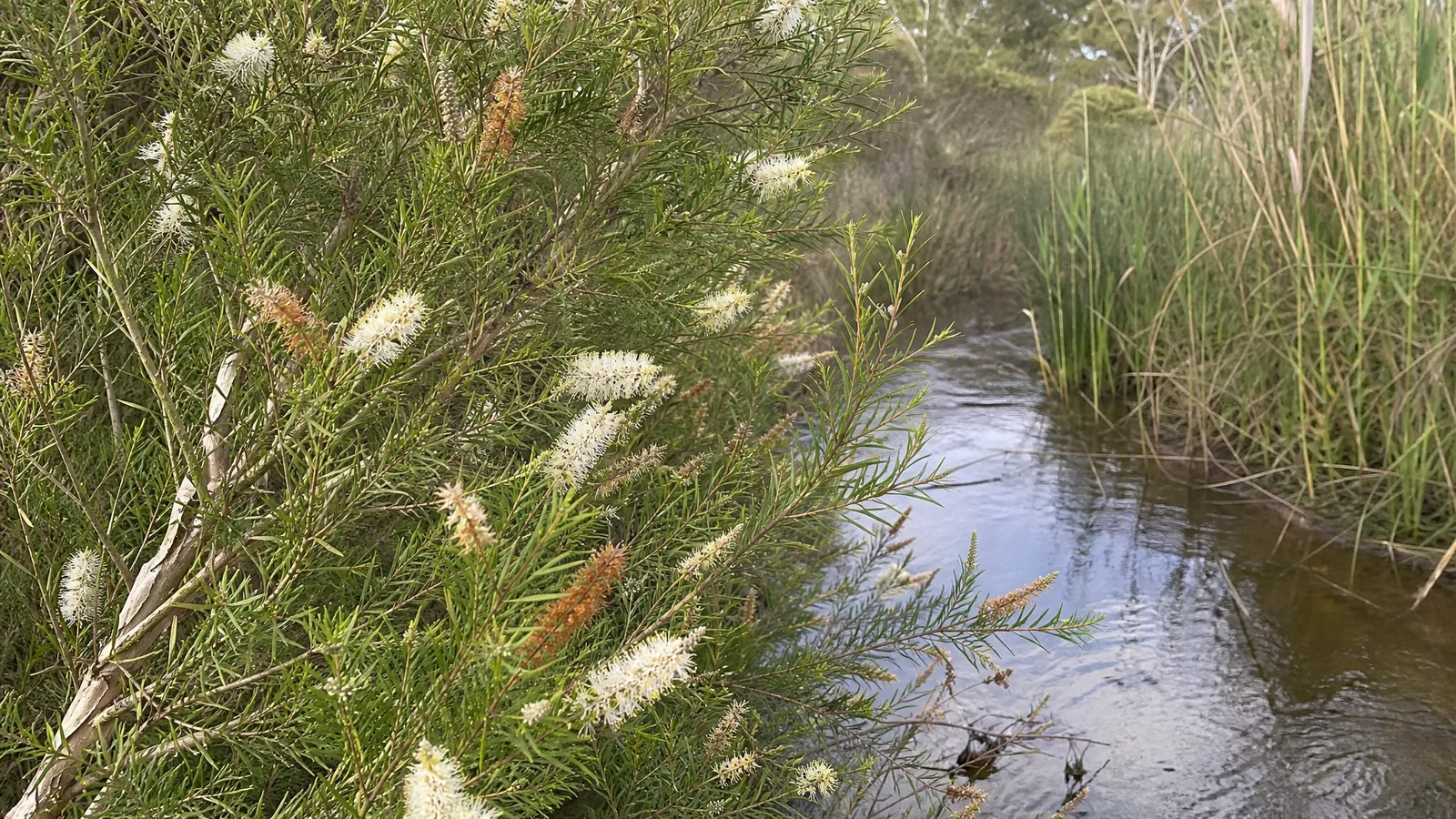
None of these trials used oil from Melaleuca ericifolia, and lavender findings cannot be borrowed for a different plant; our lavender comparison is about how the two smell, not what they do. Valarezo and colleagues report in 2026 that oils from rosalina's species fall into at least three chemical profiles. The Certificate of Analysis we publish for one batch gives density and refractive index; if you want constituent figures, ask us in writing through the contact page. Linalool, a compound found in lavender and in some rosalina oils, can sensitise skin once it has oxidised in air: a 2010 patch-test study of 3,418 dermatitis patients found positive reactions to oxidised linalool in 0.83% of them at a 2% test strength. That is a good reason to keep bottles tightly capped and to read our dilution guide.
If you simply enjoy a scented room
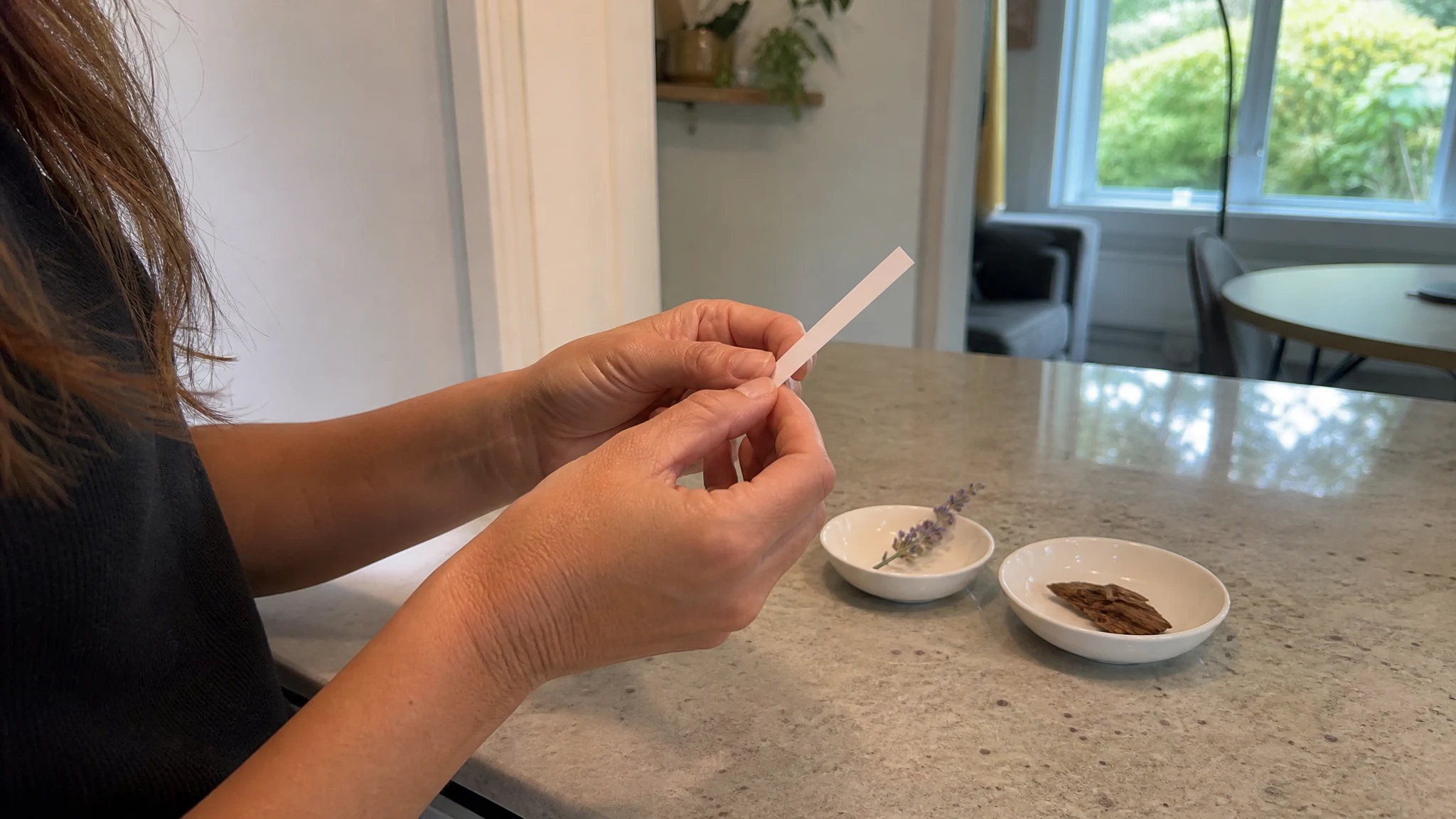
Plenty of people like a pleasant smell around the house, and that is a perfectly good reason to open a bottle. If you do, smell it at arm's length first. A paper strip held a hand's width from your nose tells you far more than a deep sniff from the neck of the bottle, and you will notice whether the aroma reads soft and green or sharper than you expected.
If a smell ever seems too strong, or simply sits badly with you, put the cap on and open a window. A scent you have to push through is not doing you any favours, and a scented room should be something you enjoy, never something you endure.
Where to go from here
We sell one external cosmetic oil: no peppermint, no lavender, no premixed rubs, and nothing for headaches. If the peppermint trials caught your eye, a pharmacist can talk through licensed products and check them against any medicine you already take. Never swallow essential oil. America's Poison Centers say some oils can be poisonous when absorbed or swallowed, and the Poison Help line is 1-800-222-1222; our ingestion article covers the details.
Headaches that are frequent, severe or strange belong with a doctor, and a nicely scented room is a lovely extra, not a plan.
Rosalina Essential Oil
Rosalina Essential Oil from our own shop, in sizes from 0.5 oz to bulk.
From $16.99
Shop Now →Sources & Further Reading
- Headaches - NHS
- Effect of peppermint and eucalyptus oil preparations on neurophysiological and experimental algesimetric headache parameters, Göbel, Schmidt and Soyka, Cephalalgia, 1994
- Effectiveness of Oleum menthae piperitae and paracetamol in therapy of headache of the tension type, Göbel et al., Der Nervenarzt, 1996
- Lavender essential oil in the treatment of migraine headache: a placebo-controlled clinical trial, Sasannejad et al., European Neurology, 2012
- Linalool - a significant contact sensitizer after air exposure, Christensson et al., Contact Dermatitis, 2010
- Essential Oil of Melaleuca ericifolia Sm.: Chemical Composition, Enantiomeric Distribution, and Antimicrobial, Antioxidant, and Anticholinesterase Activities, Valarezo et al., Molecules, 2026
- Essential oils: Poisonous when misused | Poison Control