Rosalina Oil History: From a 1797 Name to Today
Ask around about rosalina's past and you will hear a lot of atmosphere: ancient swamps, old traditions, a long heritage. The documented story is smaller, and in its own way more interesting. The plant has carried its scientific name since 1797, a close cousin built an entire industry in the 1920s, and a few careful surveys since then have shown just how much one species can vary from place to place.
Rosalina Essential Oil
Our own Rosalina Essential Oil, in sizes from 0.5 oz to bulk.
From $16.99
Shop Now →A name from 1797
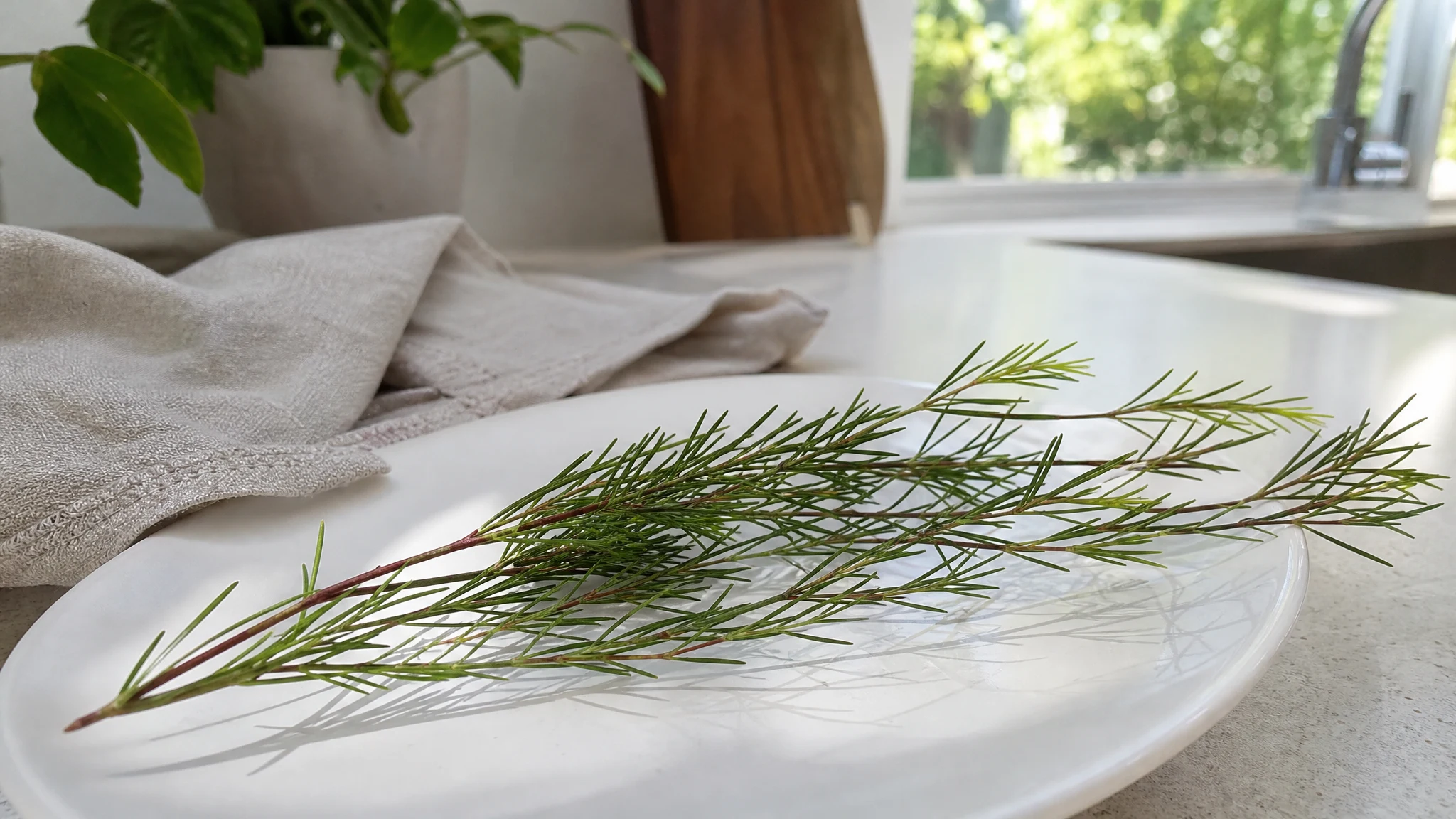
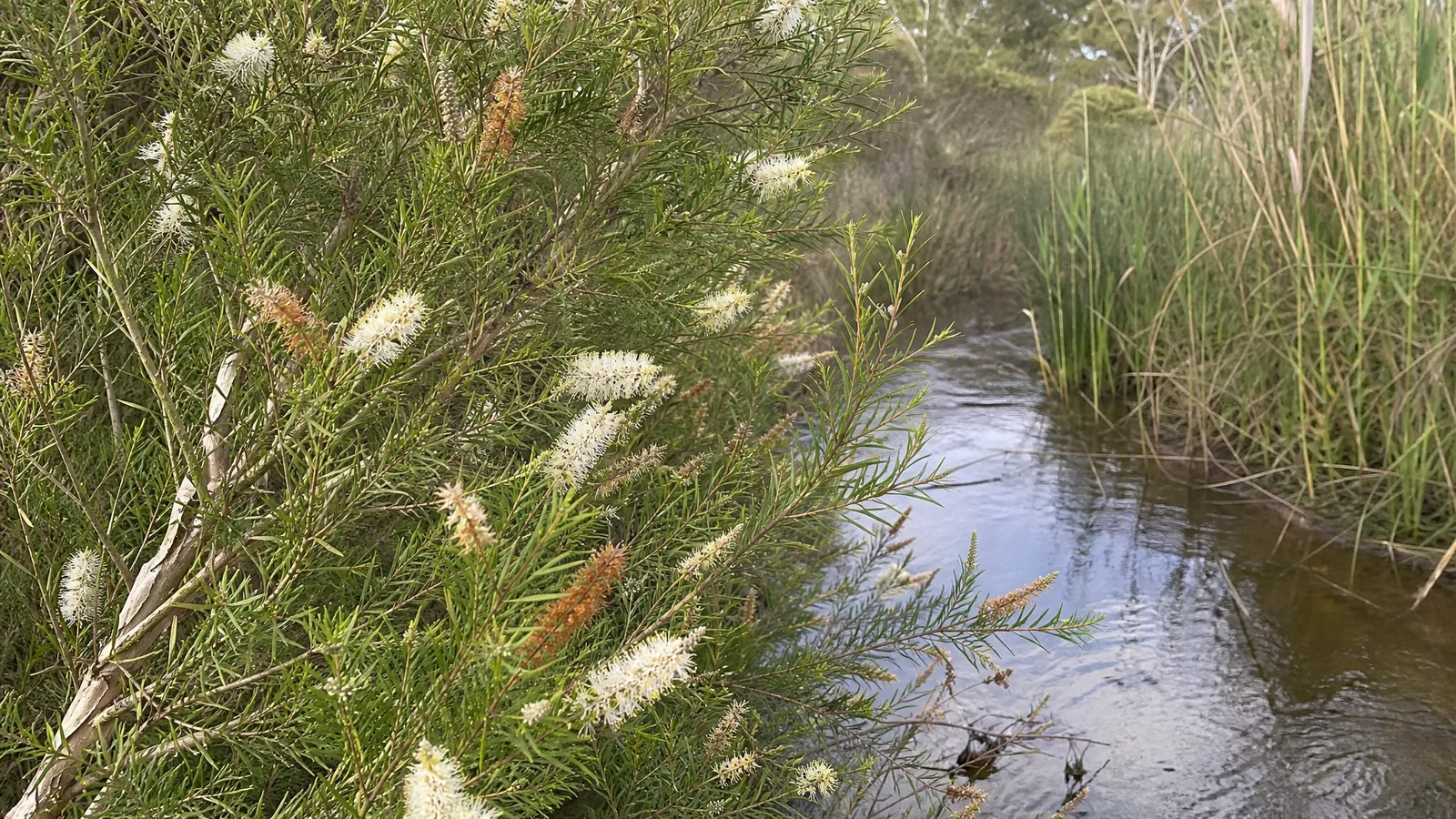
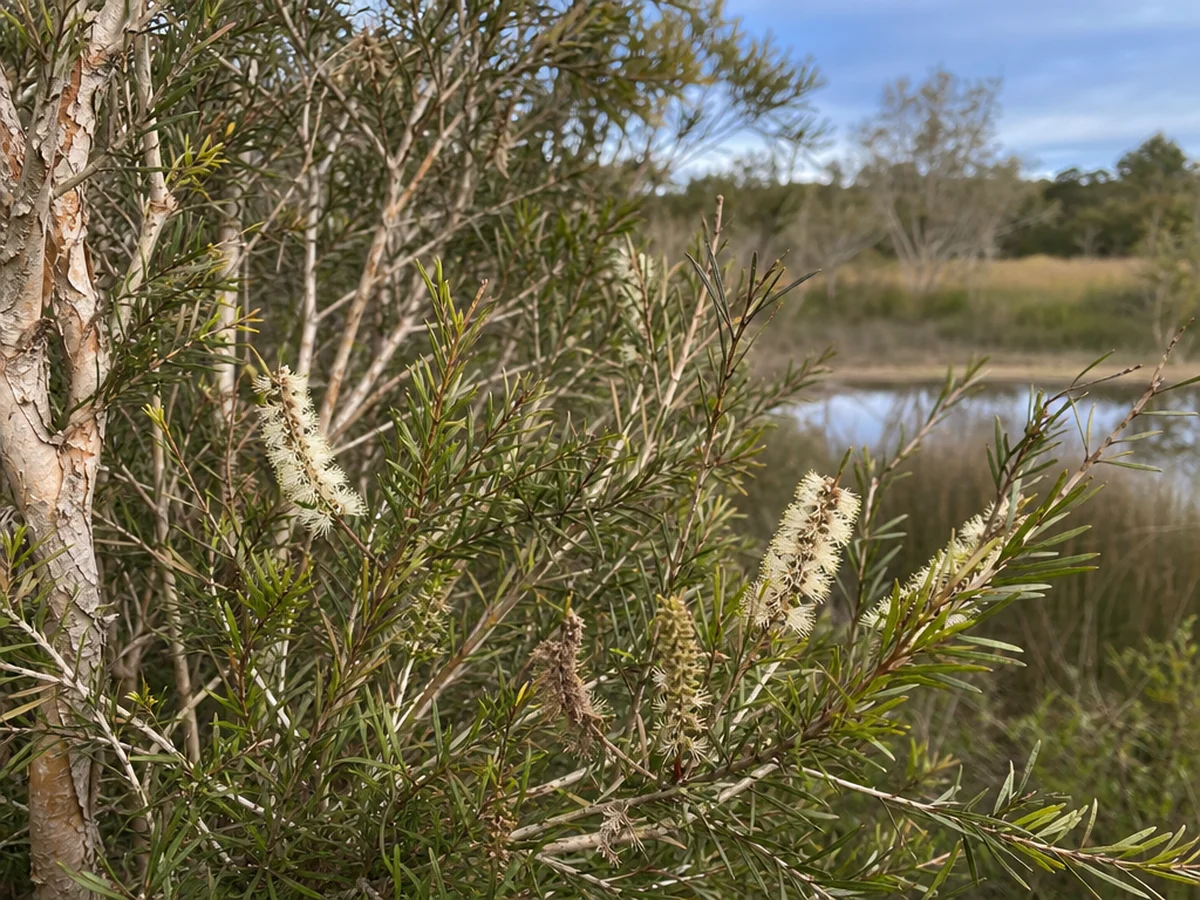
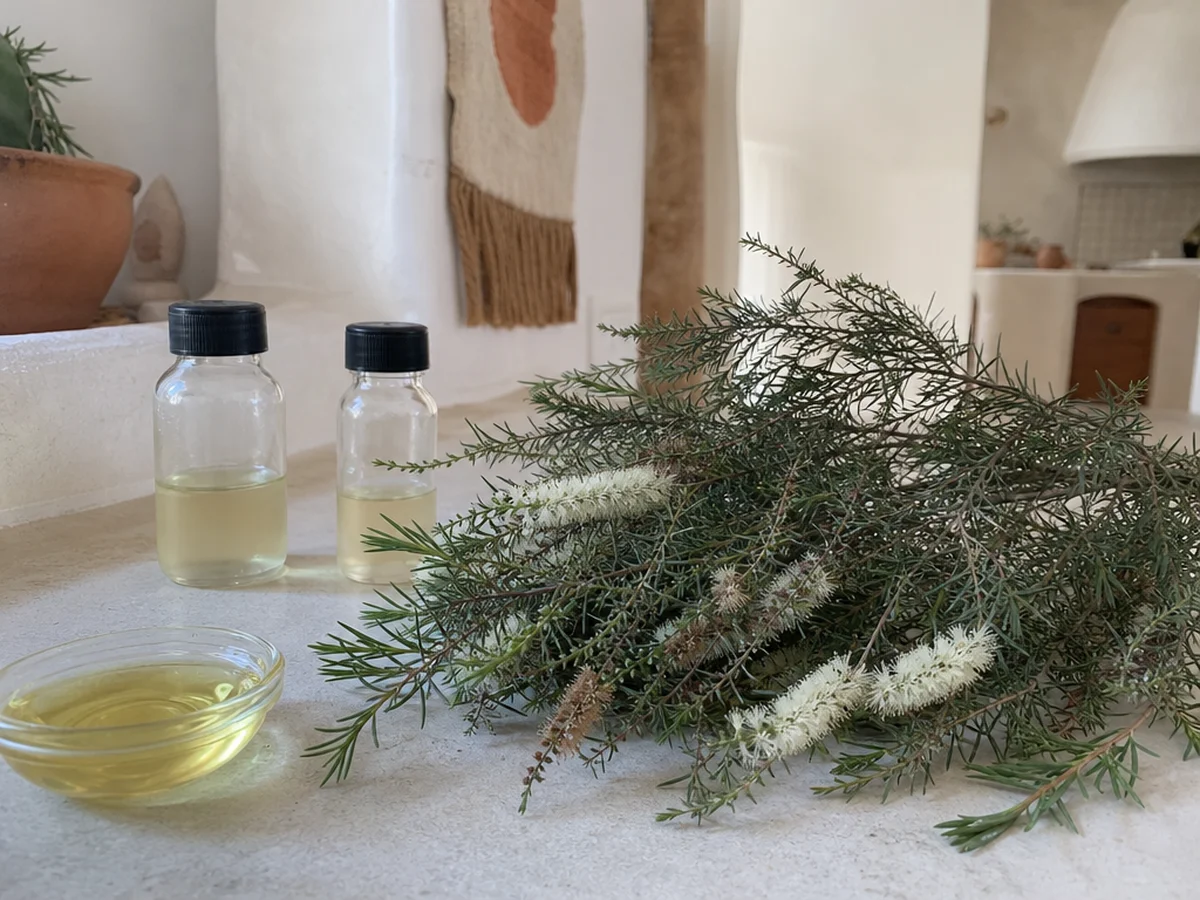
Rosalina is the trade name for oil from Melaleuca ericifolia, a species the botanist J. E. Smith published in the Transactions of the Linnean Society of London in May 1797 (the International Plant Names Index records the exact page). Botanists call it Swamp Paperbark. It is a shrub or small tree that can reach 8 metres, with needle-thin leaves under 15 mm long, and it grows in heath, along stream banks and in low coastal swamps from the Hastings River in New South Wales south into Victoria and Tasmania, according to the NSW flora database. If you ever want to read the science, search for the botanical name, because "rosalina" rarely appears in papers.
The cousin that stole the spotlight
Most stories you will find about "melaleuca heritage" belong to tea tree, Melaleuca alternifolia. The commercial tea tree oil industry took off after Penfold reported on the oil in the 1920s, as part of a survey of Australian essential oils with economic potential, and that is the chapter that gets retold. We enjoy the family resemblance, and our rosalina and tea tree comparison walks through how different the two oils turn out to be. But a date or a custom with no species attached should not be handed to rosalina. Its own paper trail starts later and is thinner, and we would rather tell you that than dress it up.
The survey that mapped the oil
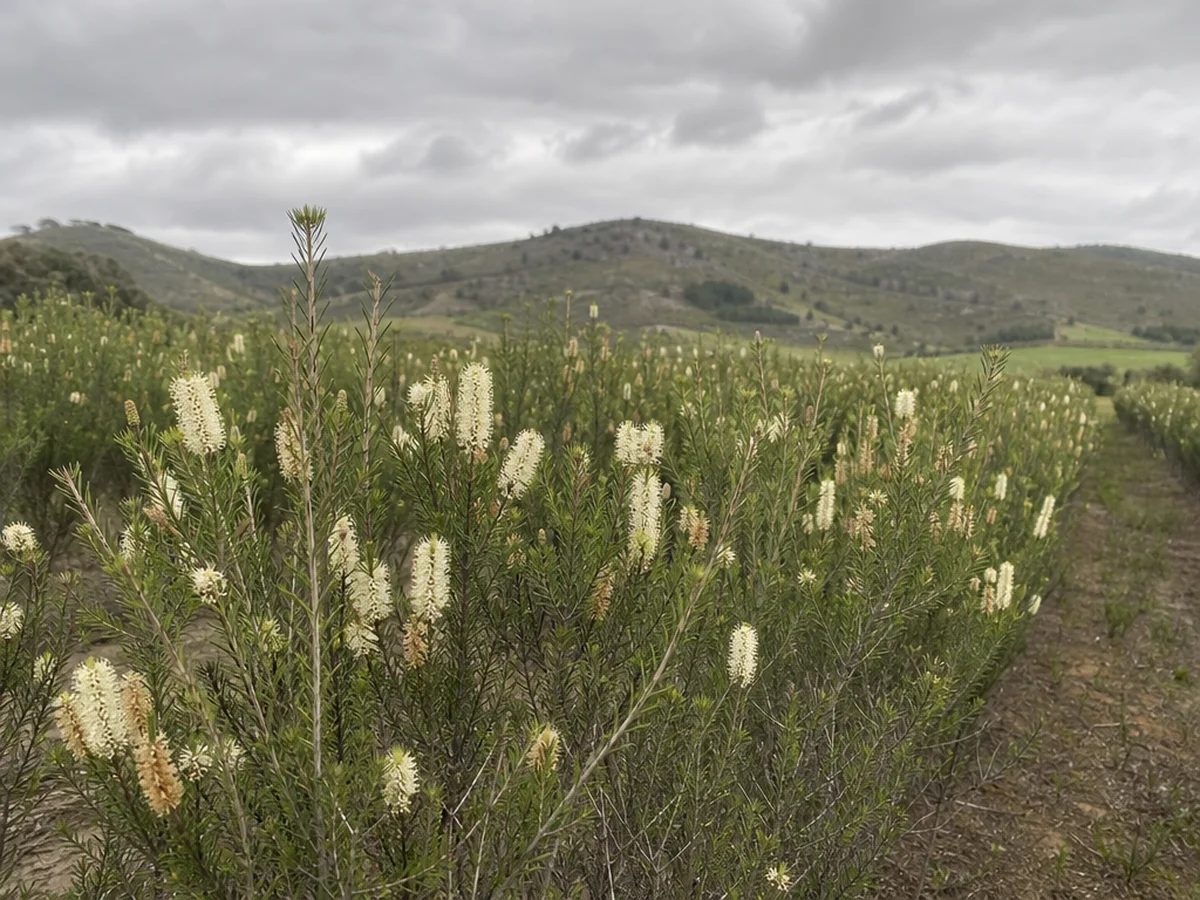
The most useful chapter came in 2004, when Brophy and Doran sampled M. ericifolia across its natural range in southeastern Australia. Their goal was practical: find seed sources with plenty of oil, lots of linalool and not much 1,8-cineole, to plant pilot plantations. What they found is a map of a species with real range.
Oil yield was highest in New South Wales populations, around 3.2% of dry leaf weight, and lowest in western Victoria and north-western Tasmania, around 0.6%. Composition shifted gradually with latitude. Oils from the north were rich in linalool, the sweet, floral compound behind the lavender-like impression people associate with rosalina. Heading south, linalool faded and 1,8-cineole, the fresh, camphor-like compound, took over; the most southerly oils averaged about 34.5% cineole and only about 3% linalool. The best single tree they found, at Hawks Nest, delivered 4.5% yield, 60% linalool and 16% cineole.
Our reading of that: the soft, floral rosalina people describe is one end of a spectrum, and where a leaf grew matters a great deal to what the oil smells like. That is also a neat explanation for why the species is a comparatively small commercial story. A leaf that gives up a fraction of a percent of oil in one region and several times that in another is not an easy crop to scale.
The newest chapter
In 2026 Valarezo and colleagues published what they describe as a comprehensive analysis of oil from M. ericifolia grown in Ecuador, a reminder that the plant now grows well beyond Australia. They also summarise earlier reports and conclude that at least three distinct chemical profiles are known for this species, led by methyl eugenol, 1,8-cineole or linalool. Their own cultivated sample was a cineole-led oil, with about 62% 1,8-cineole. Same species name, very different oil.
A good habit with any oil's backstory is to ask three questions: which species, what year, and what source? If the answer to any of them is a shrug, treat the story as decoration.
If you want to dig deeper
If the plant has caught your imagination, search for the botanical name, Melaleuca ericifolia, and for its common name, Swamp Paperbark. Herbarium and flora databases are free, and a local library can often find the papers mentioned above. It is a pleasure to follow a plant from a 1797 description to a modern study.
Why we like the quiet stories
We would rather tell a short, true story than a long, grand one. A species with a thin paper trail is not a lesser one; it simply means the next chapters are still being written, and there is something rather lovely about holding a bottle of an oil whose story is still open.
What this means when you pick a bottle
For a plant this variable, the bottle's story matters less than its paperwork. We sell one steam-distilled rosalina oil, and the Certificate of Analysis we publish for one batch lists its relative density and refractive index. If you need constituent figures from a gas chromatography report before you order, ask us in writing through our contact page, and have a look at our guides on linalool and cineole and buying rosalina oil for the questions worth asking any seller. If you are new to the oil itself, our overview of rosalina is the place to begin.
A species named in 1797, an oil trade that arrived late, and a chemistry that shifts with latitude: it is a short history, but it is a true one, and it is the best foundation for appreciating what is in the bottle.
Rosalina Essential Oil
Rosalina Essential Oil from our own shop, in sizes from 0.5 oz to bulk.
From $16.99
Shop Now →Sources & Further Reading
- International Plant Names Index, Melaleuca ericifolia Sm.
- PlantNET - FloraOnline, Melaleuca ericifolia, Royal Botanic Gardens Sydney
- Geographic variation in oil characteristics in Melaleuca ericifolia, Brophy and Doran, Journal of Essential Oil Research, 2004
- Essential Oil of Melaleuca ericifolia Sm.: Chemical Composition, Enantiomeric Distribution, and Antimicrobial, Antioxidant, and Anticholinesterase Activities, Valarezo et al., Molecules, 2026
- Melaleuca alternifolia (Tea Tree) Oil: a Review of Antimicrobial and Other Medicinal Properties, Carson, Hammer and Riley, Clinical Microbiology Reviews, 2006