Essential Oils for Focus: What Two Aroma Studies Found
The research behind "oils for focus" turns out to be smaller and stranger than the headlines. Two well-known studies sit at the center of it: one with 20 volunteers breathing rosemary, one with 144 volunteers breathing peppermint, ylang-ylang or nothing at all. Neither involved rosalina oil. Both are worth knowing, because together they show what a scent can plausibly do to a mind at work and why "an oil for concentration" is a bigger claim than either study makes.
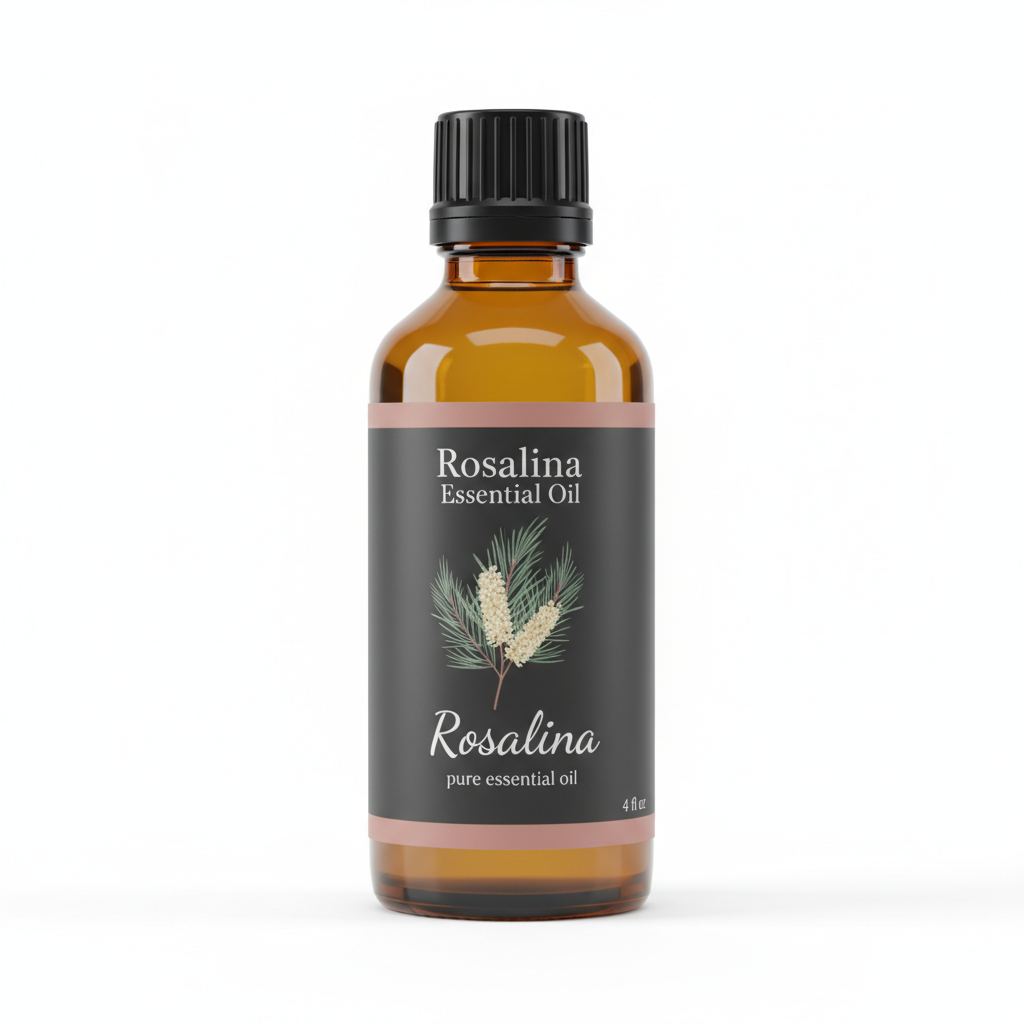
Rosalina Essential Oil
Our own Rosalina Essential Oil, in sizes from 0.5 oz to bulk.
From $16.99
Shop Now →Twenty people, rosemary and a blood sample
Moss and Oliver, in 2012, sat 20 healthy volunteers in a cubicle diffused with rosemary aroma. They did serial subtraction and visual processing tasks, rated their mood before and after, and gave a blood sample at the end. The finding was a correlation: people with more 1,8-cineole in their blood tended to do better on both speed and accuracy, so the improvement was not a trade of one for the other. Mood was a different picture, with the change in contentment moving the opposite way to cineole.
The part we find most striking is simpler than the headline. Simply sitting in a rosemary-scented room put measurable cineole into the bloodstream. Whether that caused the better scores is a separate question that a 20-person correlation cannot answer, since people who were already good at the tasks could produce the same pattern.
A hundred and forty-four people, three rooms
In 2008 Moss and colleagues randomly assigned 144 healthy volunteers to ylang-ylang aroma, peppermint aroma or no aroma, then tested them on a computerised cognitive battery with mood scales. Peppermint improved memory and raised alertness. Ylang-ylang did the opposite on both: it impaired memory, slowed processing speed and lowered alertness, though people reported feeling calmer. The authors called these effects idiosyncratic, meaning each aroma pushed in its own direction.
That is the line we would keep. A scent that makes you feel relaxed and a scent that sharpens recall are not interchangeable, so "a lovely smell for the desk" and "an oil for concentration" are two different requests. One oil in the experiment helped a measure while another made it worse.
Why the answer stays modest
Here is our own reasoning, not a finding from either paper. In both studies the volunteers could smell what was in the room. Someone who has heard that rosemary sharpens the mind may try a little harder, and a no-aroma room cannot be matched for that belief. Studies like these can show that an aroma goes along with a difference on a lab task over a short session. They cannot easily show that the aroma did the work, and neither followed anyone for longer than one sitting or compared an aroma with daylight, a short walk or a glass of water, which are the things most of us actually reach for when our attention wanders.
Where rosalina comes in
The link to our oil is 1,8-cineole, the compound measured in the rosemary study. It is also a compound found in oils from rosalina's species, but the amounts vary a great deal. Valarezo and colleagues, in a 2026 paper, report that published oils from Melaleuca ericifolia fall into at least three chemical profiles, and their own cultivated sample was about 62% 1,8-cineole. Other oils from the same species are led by linalool or methyl eugenol instead. That is why we cannot read across from the rosemary study to our oil, and why we make no focus claim for it.
What we can offer is a fresh Melaleuca aroma that some people enjoy having in the room while they work. The Certificate of Analysis we publish for one batch lists density and refractive index and no constituents; if a gas chromatography report matters to you, ask us in writing through our contact page, and our guide to reading a GC/MS report explains what to look for. The linalool and cineole article covers the two compounds, and our diffuser guide explains how to follow your own diffuser's manual.
A desk that is pleasant to work at
If you like a scent while you work, treat it as part of the setting, like a lamp or a plant. Keep it faint so it stays in the background, and switch it off when you take a break. A tidy desk, daylight and a glass of water are the usual first moves, and they cost nothing. A fresh Melaleuca note in the air simply makes a nicer room to sit in. Notice, too, whether you still like the smell an hour in. If it has started to bother you, that is your cue to open a window and stop.
If concentration is the real worry
Attention that has slipped for weeks, or trouble that affects work, school or driving, is a question for a physician, who can look at sleep, mood, medicines and attention. The NHS calls insomnia that lasts three months or longer long-term insomnia, and a GP can look into it. We sell an external cosmetic oil, and it is not for internal use; keep the bottle out of the reach of children and pets, and call Poison Help at 1-800-222-1222 if one is ever swallowed.
So enjoy a scent for the pleasure of a room that smells good, and leave the harder questions about attention to someone who can examine them. For the wider picture on aroma research, our guide to how people use rosalina at home is a good next stop.
Rosalina Essential Oil
Rosalina Essential Oil from our own shop, in sizes from 0.5 oz to bulk.
From $16.99
Shop Now →Sources & Further Reading
- Plasma 1,8-cineole correlates with cognitive performance following exposure to rosemary essential oil aroma, Moss and Oliver, Therapeutic Advances in Psychopharmacology, 2012
- Modulation of cognitive performance and mood by aromas of peppermint and ylang-ylang, Moss, Hewitt, Moss and Wesnes, International Journal of Neuroscience, 2008
- Essential Oil of Melaleuca ericifolia Sm.: Chemical Composition, Enantiomeric Distribution, and Antimicrobial, Antioxidant, and Anticholinesterase Activities, Valarezo et al., Molecules, 2026
- Insomnia - NHS
- Essential oils: Poisonous when misused | Poison Control