Essential Oil Purity Tests: Why Home Tricks Fall Short
Drop an oil on paper and watch for a ring. Float it on water. Chill it in the freezer. These kitchen tests are shared everywhere, and they feel satisfyingly scientific. The trouble is that each one measures a simple physical behaviour, and a well-chosen adulterant is picked precisely because it behaves the same way.
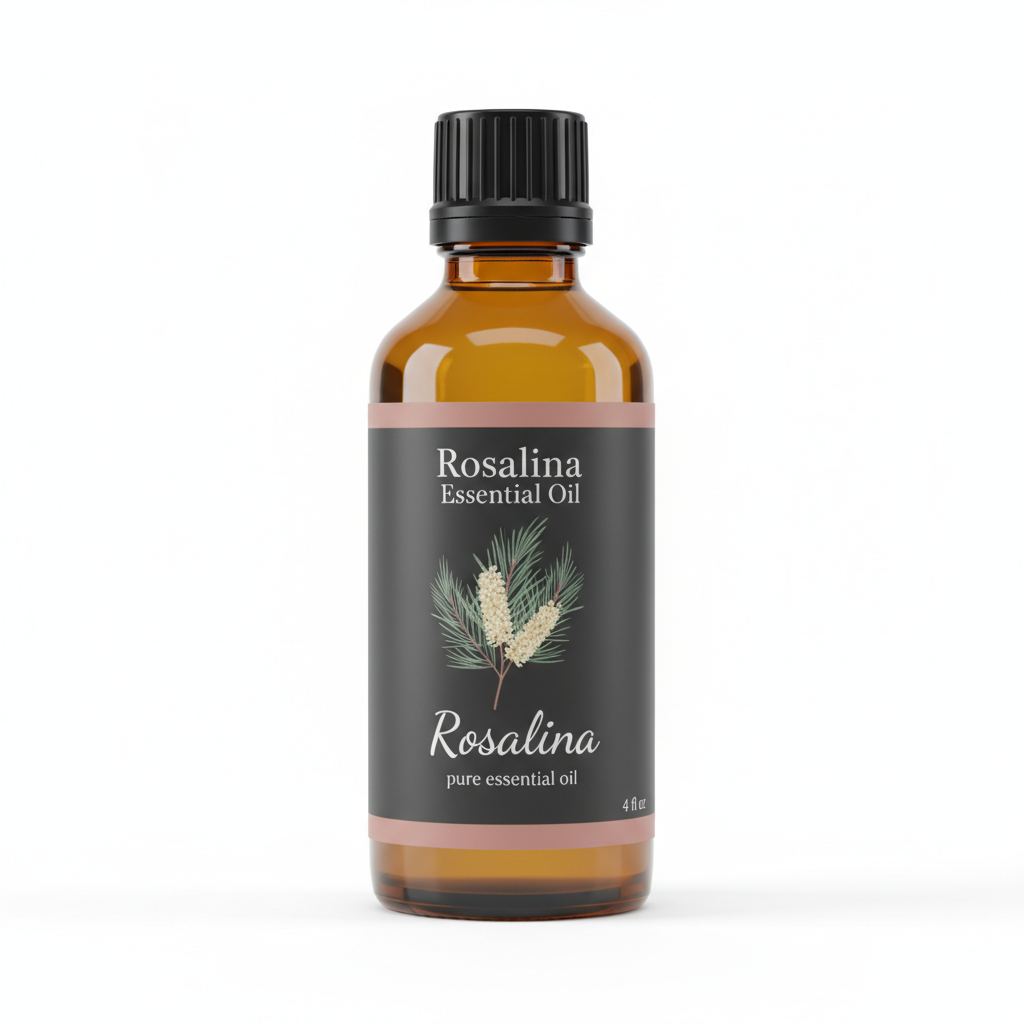
Rosalina Essential Oil
Our own Rosalina Essential Oil, in sizes from 0.5 oz to bulk.
From $16.99
Shop Now →The density trap, in one example
The Certificate of Analysis we publish for one batch of rosalina oil reports a relative density of 0.890 at 20 C, against a printed standard of 0.880 to 0.910. That window is 0.030 wide. Anything with a density in that neighbourhood can be added to the oil without moving the reading out of it. Density is handy if a second batch value is on the table for comparison, but a single reading cannot expose a blend. The refractive index, 1.465 against a standard of 1.460 to 1.480, has a similarly wide window. Two physical constants together say more than one, yet they are still a fingerprint of a bulk liquid, not of its molecules.
Taking the popular tests one at a time
The paper blot
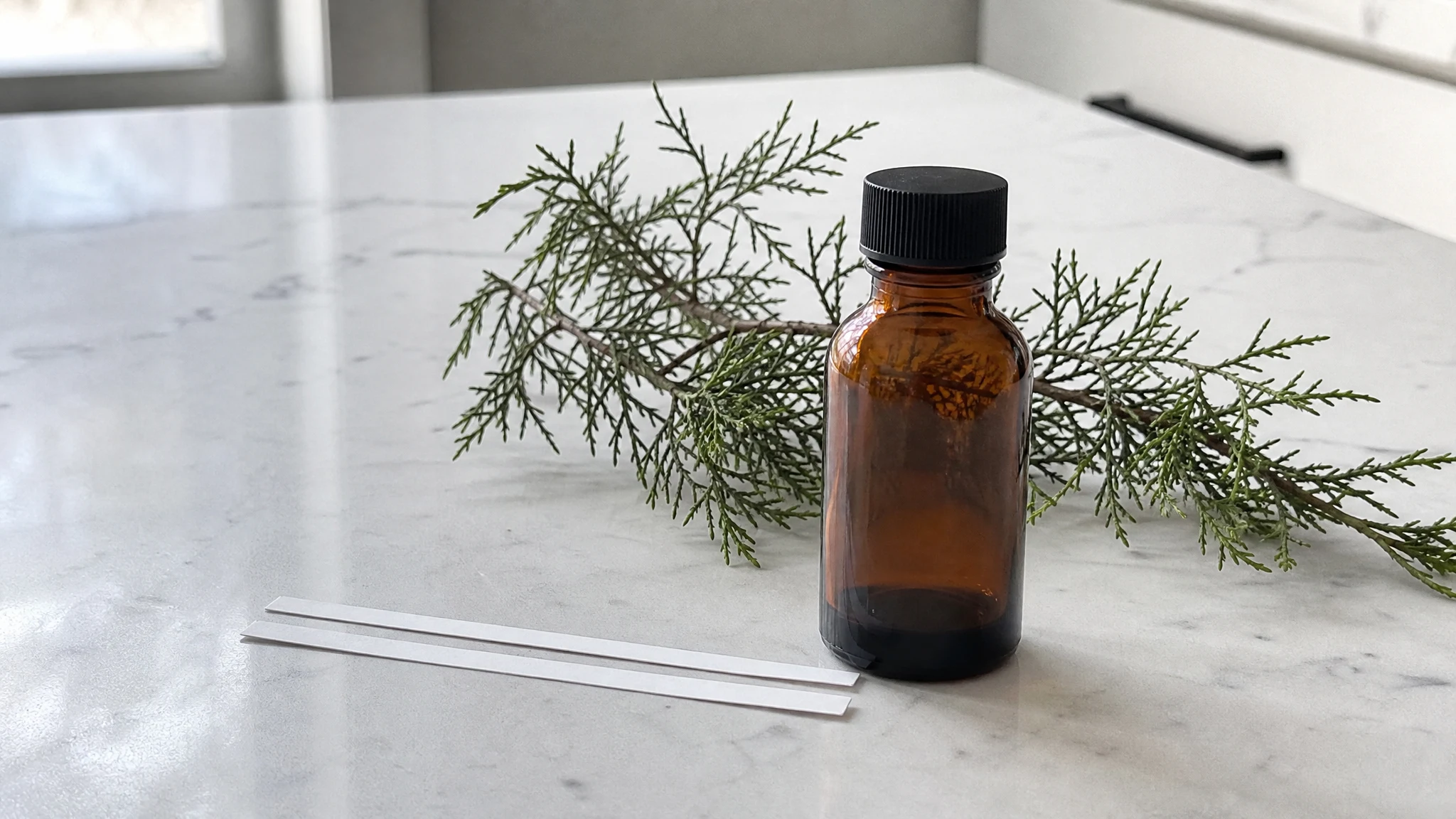
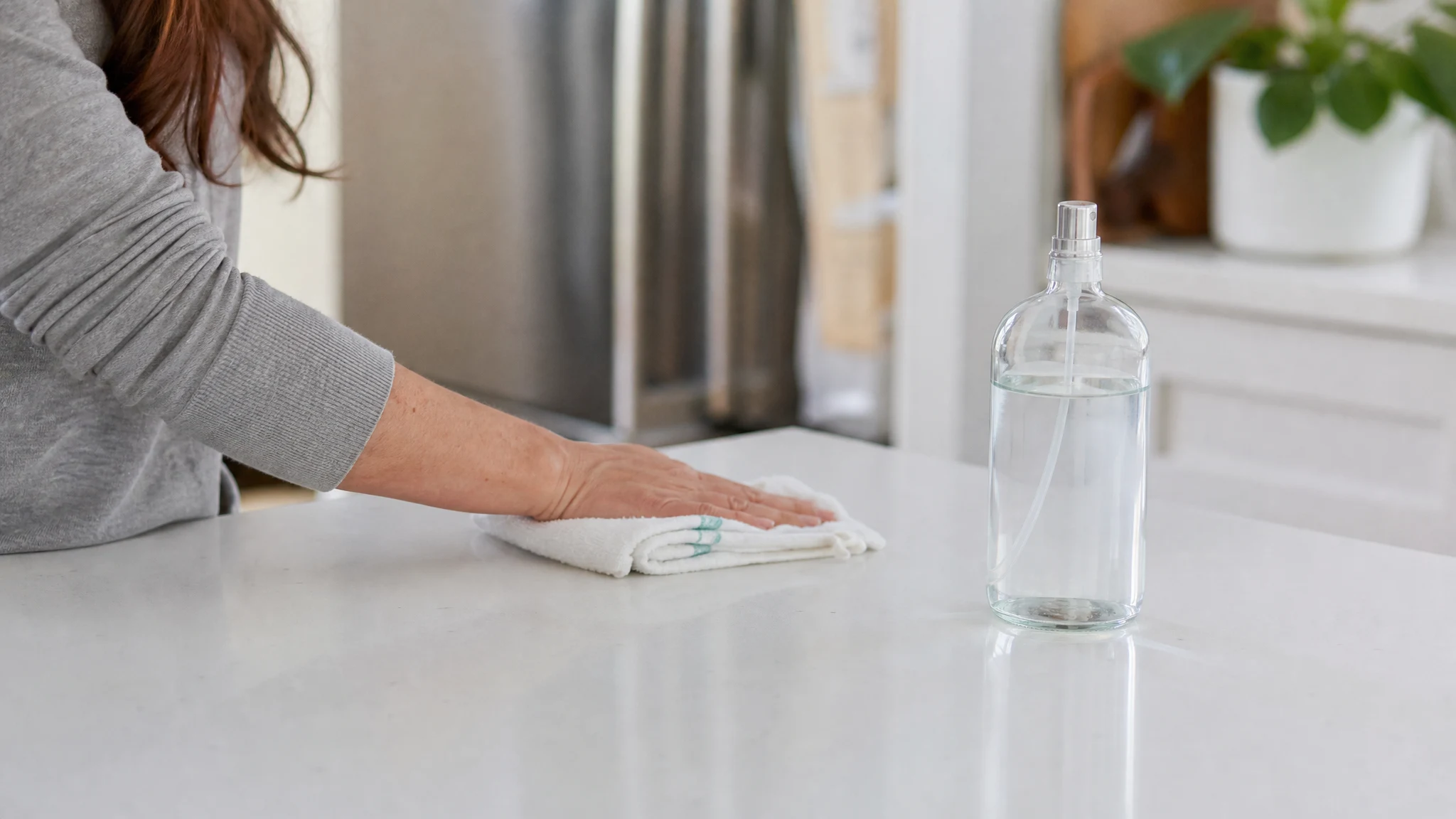
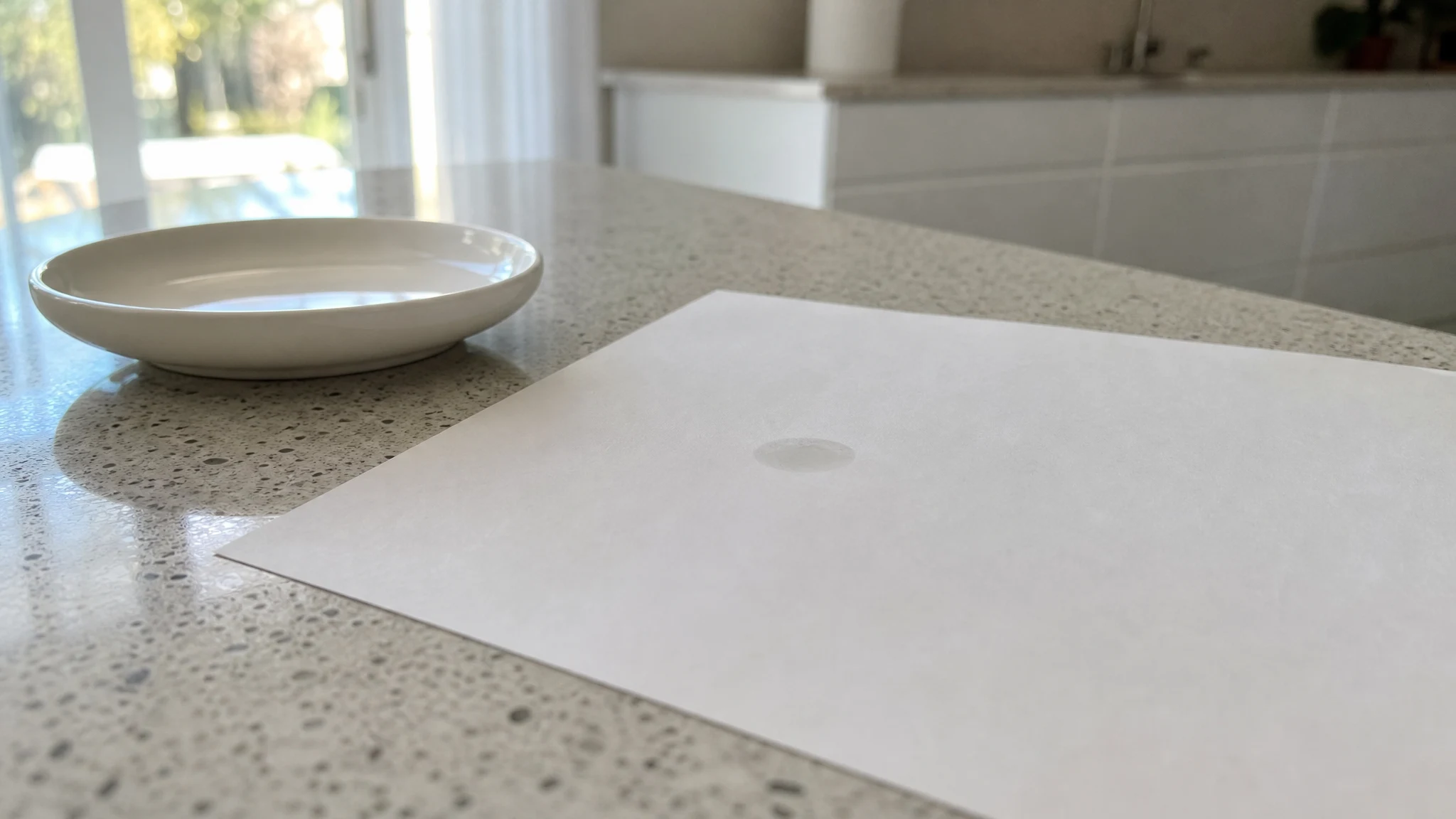
The idea is that a good oil evaporates and a diluted one leaves a greasy ring. There is a kernel of truth: the European Pharmacopoeia describes a similar fatty-oil check in which a drop on filter paper should leave no more than a slight translucent spot after 24 hours (as described in Adulteration of Essential Oils: A Multitask Issue for Quality Control. Three Case Studies: Lavandula angustifolia Mill., Citrus limon (L.) Osbeck and Melaleuca alternifolia (Maiden & Betche) Cheel). That can hint at a fixed carrier oil. It does nothing against a cheaper volatile oil or a synthetic compound, which evaporate right along with the real thing. Our own reasoning is that a naturally viscous or coloured oil could leave a mark of its own too.
The water float
Real oil floats and does not dissolve, the claim goes. Our batch, at 0.890, is lighter than water, and so are the usual carrier oils (our reasoning from their densities being below 1), so a carrier floats just as the essential oil does. The test cannot separate them.
The freezer
Freezing behaviour follows composition. A diluted oil will behave differently, but so will a perfectly genuine oil from a different chemotype of the same species. Nobody publishes a reference result to compare against, so the outcome has no agreed meaning. That is our reasoning from basic chemistry rather than a sourced finding.
The skin rub
Rubbing a neat oil on your skin to judge it carries real risk and tells you nothing about authenticity. We sell rosalina neat, so the careful route is to dilute it to 0.5% to 2% in a carrier and try a small area first.
The sniff test
Noses are wonderful, and also easy to fool. In the lavender study, researchers added synthetic linalool to a genuine oil and the share of one mirror-image form of linalool rose sharply, from 6.2% to 33.6% (Capetti et al., 2021). That shift is obvious to the right instrument and invisible to a nose.
What does work
The tests that answer the question need instruments and reference ranges.
- GC-MS or GC-FID against a reference range. The Capetti team built reference profiles from 20 genuine batches per oil and compared marker compounds. This flags cheaper oils and many added compounds. It cannot reveal dilution with a vegetable oil, because the percentage readings stay the same; for that they used absolute quantitation, which estimated one lavender sample at roughly 40% to 50% vegetable oil.
- Chiral GC. This looks at mirror-image forms of molecules like linalool, where synthetic additions leave a signature.
- Combined methods. No single analysis covers every adulterant, so a good report names the method it used.
One more point about lab reports: a result belongs to the batch that was measured. A trustworthy report carries the lot number, date, method and laboratory name, and without those it could describe any bottle.
What your nose is good for
None of this means you should stop smelling your oils. Your nose is a fine tool for noticing change, even if it cannot certify what is in a bottle. Open a new bottle, take a slow breath, and notice the opening, the middle and what lingers. Do the same with the next bottle of the same oil a few months later. If something smells distinctly different, that is a good reason to ask the seller a question, and to keep the first bottle for comparison.
Keep the cap tight and the bottle away from heat and sunlight, so that when you compare a new bottle with an old one you are comparing the oils and not the shelves they sat on.
What we suggest when you buy
The certificate we publish covers one batch and gives density, refractive index, and compliance for appearance and smell. If authenticity matters for what you are making, ask us in writing through the contact page for gas chromatography data before you order, and ask which method and laboratory produced it. Melaleuca ericifolia shows wide variation in the literature, so compare any numbers against published ranges for the species. Our articles on reading a GC/MS report, reading an oil label and who grades essential oils walk through the rest.
Keep the kitchen tests for what they are good at: noticing that this bottle smells different from your last one.
Rosalina Essential Oil
Rosalina Essential Oil from our own shop, in sizes from 0.5 oz to bulk.
From $16.99
Shop Now →