Who Grades Essential Oils? What the Labels Really Mean
Nobody awards a "therapeutic" "grade" to an essential oil. No government body does, no standards organisation does, and no independent laboratory is the referee behind the phrase. It is a seller's word, and once you know that, the interesting part of the story is what does exist: specifications that define what a named oil should look like, and rules about what a label may say it does.
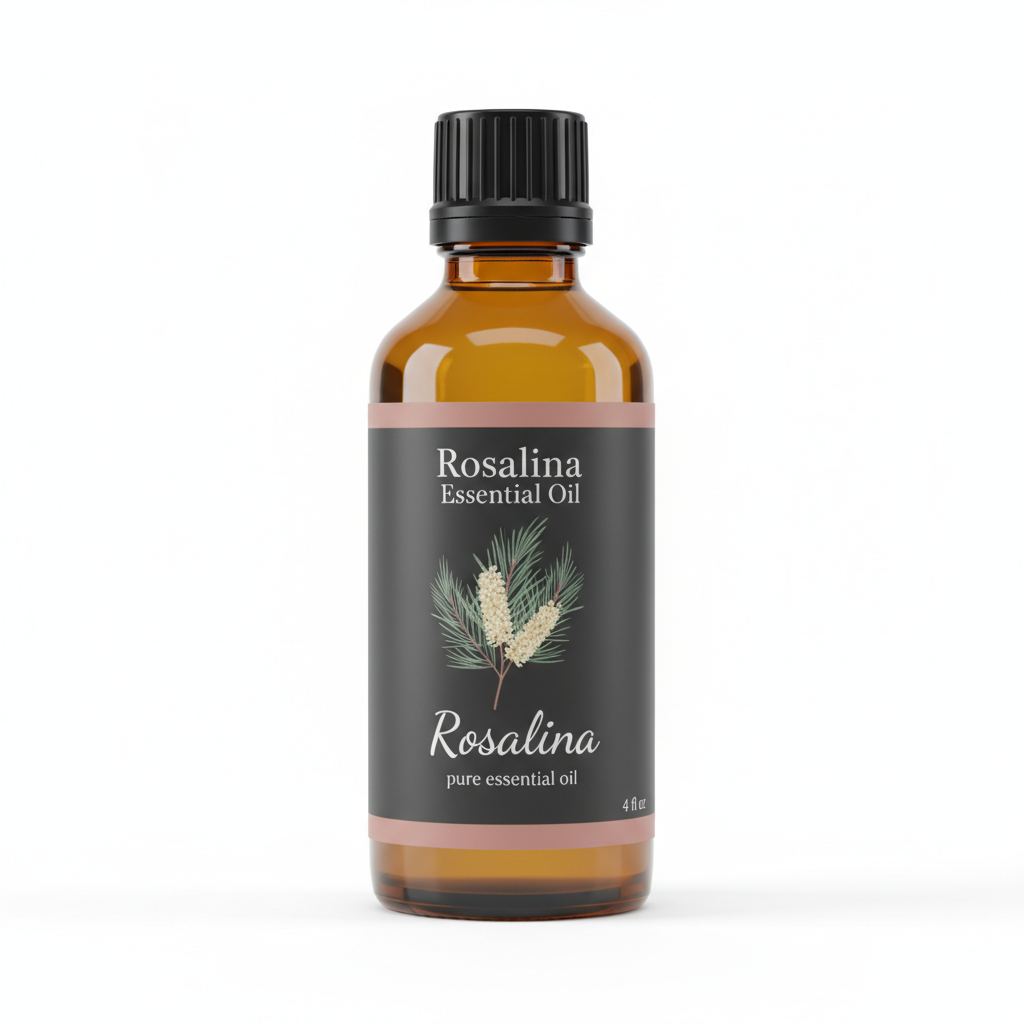
Rosalina Essential Oil
Our own Rosalina Essential Oil, in sizes from 0.5 oz to bulk.
From $16.99
Shop Now →What a grade would have to promise
A grade word could be promising three quite different things, each with its own referee.
- Identity and composition. Is it the species named, with a chemical profile inside a published range? Standards bodies and pharmacopoeias handle this, one oil at a time.
- Freedom from adulteration. Has anything been added or swapped? Only laboratory analysis answers this, and it answers for one batch.
- A health outcome. Does it do something to the body? That is not a grade at all, as we will see in a moment.
A "therapeutic" grade folds the third promise into the first two, and nobody certifies the result.
The real standards are oil by oil
Take tea tree oil, a close relative of rosalina in the same genus, which we do not sell. Its current ISO standard, published in 2025, sets a terpinen-4-ol range of 35.0% to 48.0% and limits 1,8-cineole to a trace up to 10% (ISO 4730:2025 - Tea Tree Oil Quality and Testing Standard, catalogue listing). For lavender, a peer-reviewed study cites European Pharmacopoeia limits for linalool of 20.0% to 45.0% (Adulteration of Essential Oils: A Multitask Issue for Quality Control. Three Case Studies: Lavandula angustifolia Mill., Citrus limon (L.) Osbeck and Melaleuca alternifolia (Maiden & Betche) Cheel).
Notice how these documents work. Each defines one named oil with measurable numbers. None of them ranks one compliant oil as more "therapeutic" than another. A lavender oil that passes is a lavender oil; the pharmacopoeia adds no tier above it. That makes a standard genuinely useful to a buyer, because it gives you a number to hold a supplier to.
It also shows how little a single number proves. The Certificate of Analysis for the batch we publish records a relative density of 0.890 and a refractive index of 1.465 at 20 C, both inside the ranges printed beside them. Those are good, honest measurements of that batch. A fuller picture of what is in the oil needs a chromatographic profile, and we are happy for you to ask for that in writing through our contact page if your project depends on it. Our guide to reading a GC/MS report shows what to look for once you have one.
Why the word itself is a risky one
The FDA decides whether a product is a cosmetic or a drug by its intended use, and says that intent can be shown through label claims, advertising, websites and other promotional material (Is It a Cosmetic, a Drug, or Both? (Or Is It Soap?)). The Federal Trade Commission adds that health-related benefit claims need "competent and reliable scientific evidence" behind them (Health Products Compliance Guidance).
Reasoning from those two documents, a word like "therapeutic" on a bottle invites the reader to hear a health claim. That is an inference, not a ruling about any brand, but it is why our pages describe our oil in terms of aroma and craft rather than treatment. It is also why you will not find that phrase from us.
How we describe our own oil
We sell a single rosalina oil, Melaleuca ericifolia, steam-distilled from the leaves and sold neat as "botanical grade". We use that as a plain descriptor, the way you would read any grade word on any bottle: as a label rather than a measurement. What backs it up is practical and checkable. Every size is held to the same standard, and the Certificate of Analysis we publish for one batch lists the botanical name, the leaf as the part used, the steam-distilled method, the density and refractive index above, and a best-by date.
We are plain about this because we think you deserve plain answers. A seller who can tell you the botanical name, the method, the batch and what the paperwork shows is giving you something to check. A seller who can only give you a shiny adjective is giving you a mood. Both are allowed to sell oil, but only one has told you anything.
Better questions than "what grade is it?"
| You see | It can honestly mean | Ask for |
|---|---|---|
| "Therapeutic" grade or "medical grade" | A house term with no public referee | The definition in writing, and who audits it |
| "Meets ISO" or "pharmacopoeia" | A named specification for a named oil | The standard's number, its edition and the batch result against it |
| "Botanical", "premium", "top grade" | The seller's descriptor | The batch analysis |
| "Tested" | Something was measured, perhaps only density | Which tests, by whom, on which batch |
If you are buying to make products, the specification question matters far more than the grade question. Our pieces on reading an essential oil label and why home purity tests fall short pair well with this one, and our buying guide lists the questions to put to any seller.
A good habit when you shop is to keep a note of the questions you asked and the answers you got. It makes your next comparison much quicker, and a seller who answers promptly in writing is usually a good sign.
If what you are really after is a health outcome, no grade word can supply it; that conversation belongs with a physician or pharmacist, and ours is an oil sold for its aroma.
Rosalina Essential Oil
Rosalina Essential Oil from our own shop, in sizes from 0.5 oz to bulk.
From $16.99
Shop Now →Sources & Further Reading
- ISO. ISO 4730:2025 - Tea Tree Oil Quality and Testing Standard (catalogue listing)
- Capetti et al., 2021, Molecules. Adulteration of Essential Oils: A Multitask Issue for Quality Control. Three Case Studies: Lavandula angustifolia Mill., Citrus limon (L.) Osbeck and Melaleuca alternifolia (Maiden & Betche) Cheel
- U.S. Food and Drug Administration. Is It a Cosmetic, a Drug, or Both? (Or Is It Soap?)
- Federal Trade Commission. Health Products Compliance Guidance