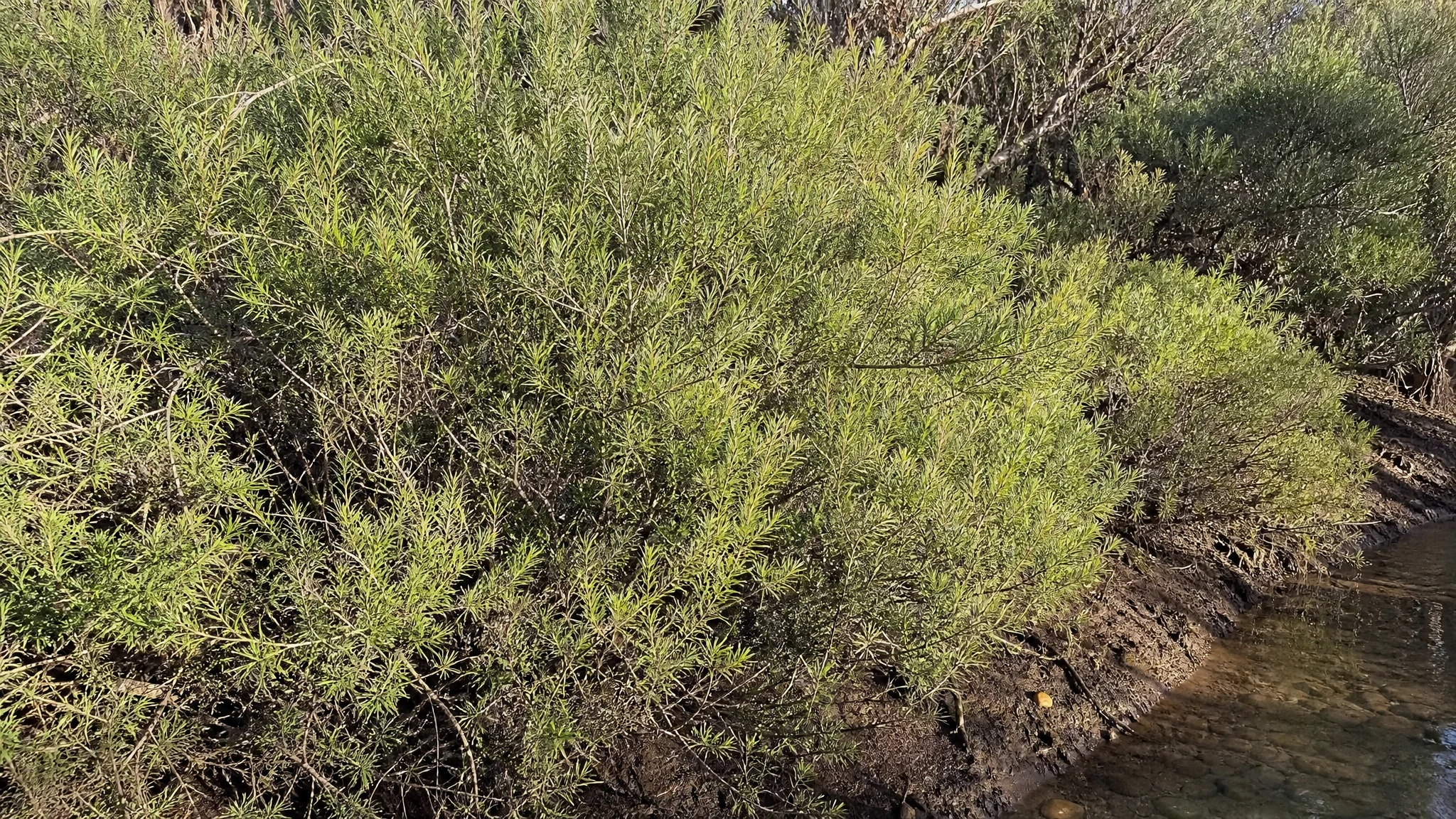
Rosalina, Cedar and Lavender: A 2:1:1 Blend to Try
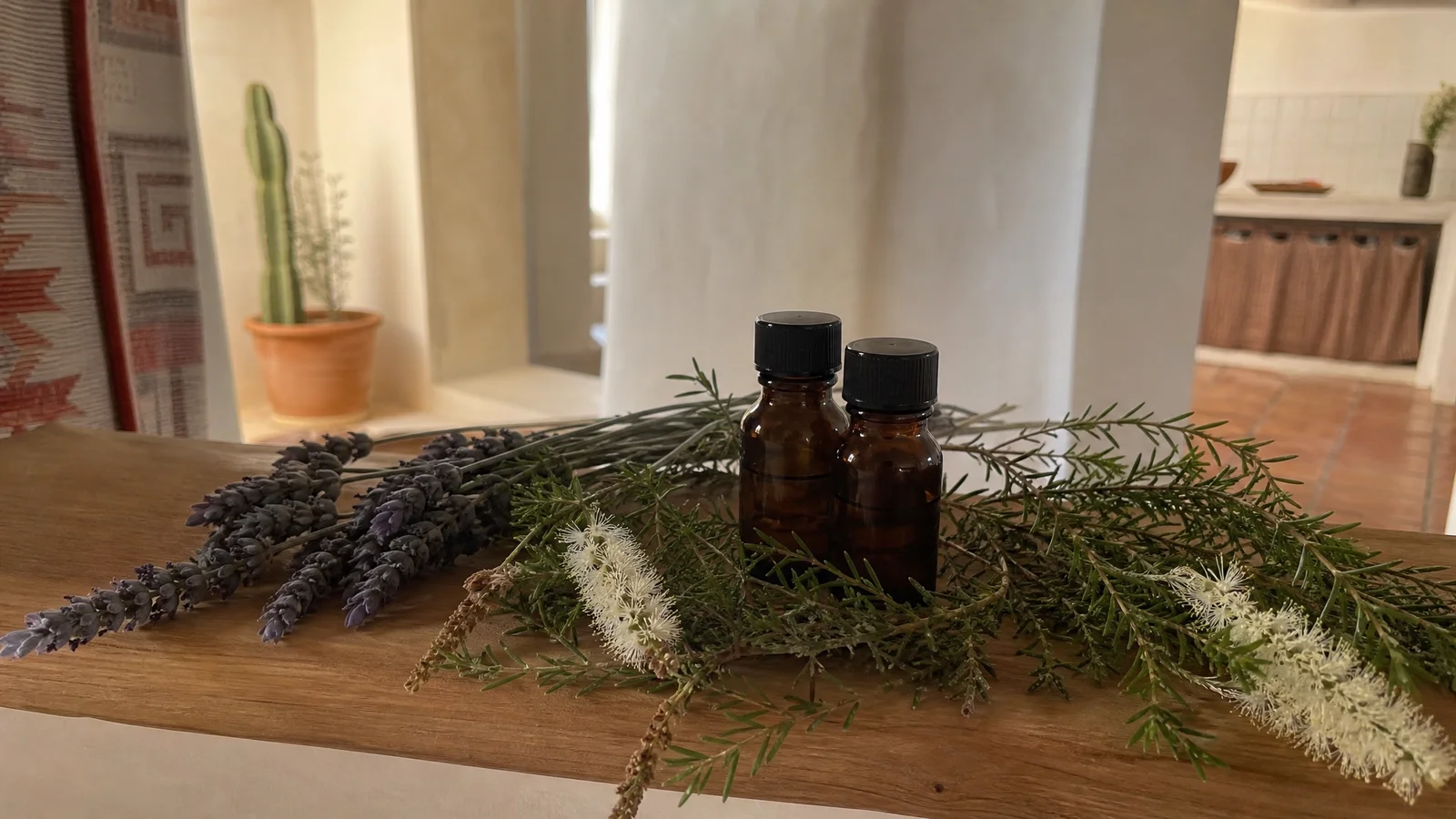
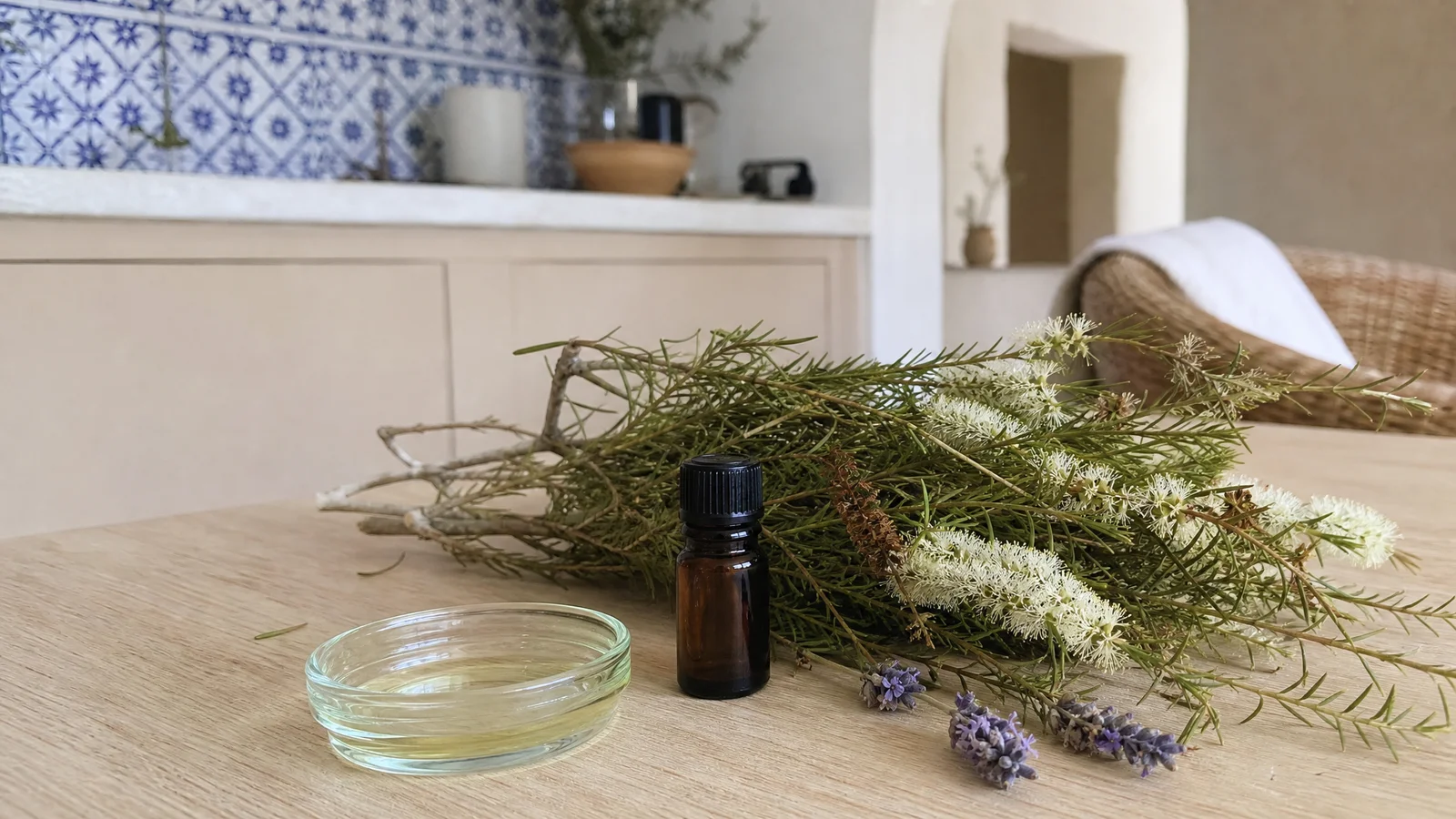
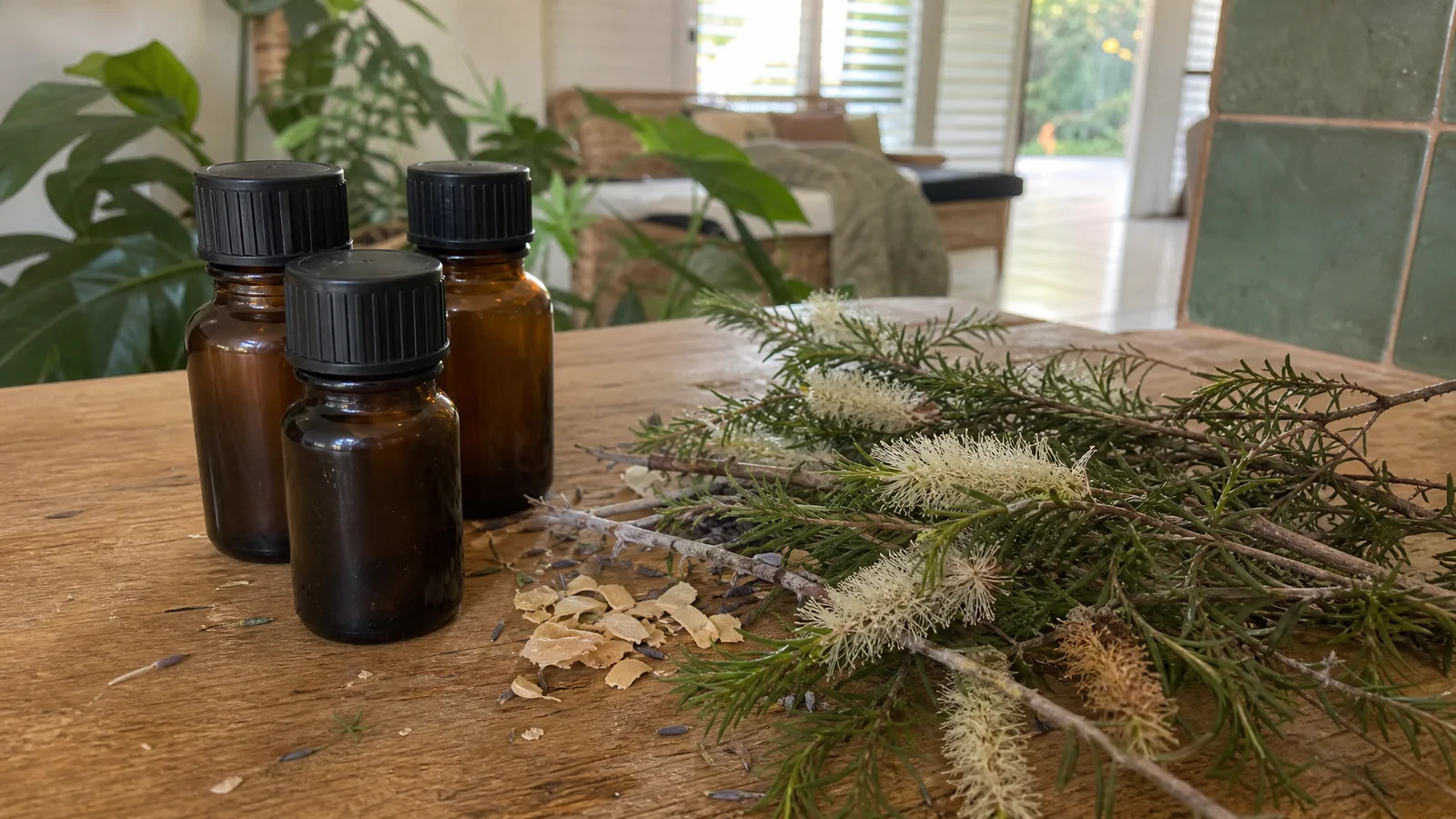
Some blends feel obvious the moment you say them aloud. Rosalina for a green, floral middle, lavender to extend the floral, and cedarwood underneath for a woody floor: a small grove in a bottle. Here is that idea worked out on paper, with the drops and percentages done for you.
Rosalina Essential Oil
Our own Rosalina Essential Oil, in sizes from 0.5 oz to bulk.
From $16.99
Shop Now →We sell one oil, rosalina, so the lavender and cedarwood come from a craft shop, pharmacy or aromatherapy supplier. The ratio below is a formulation built from published guidance and arithmetic.
The 2:1:1 idea
| Oil | Parts | Job in the blend |
|---|---|---|
| Rosalina | 2 | Soft, green, lavender-like middle |
| Lavender | 1 | Floral bridge |
| Cedarwood | 1 | Woody base |
Parts can be drops or weight, as long as you stay consistent. Smell strips of each oil first. The reference records describe 1,8-cineole as camphor-like (PubChem, 1,8-Cineole (compound 2758)), and a rosalina that leans in that direction will read fresher and sharper than one that leans floral. If so, give it a smaller share and let lavender lead. Change one oil at a time and write down what you did. Our blending guide covers notes and ratios, and what rosalina smells like shows how to read your bottle.
Check your cedarwood supplier's safety information too, as cedar species differ.
Smell before you commit
Put a drop of each oil on its own paper strip and hold them together like a small fan. Smell them at the start, again after ten minutes, and again after an hour. You may notice the cedarwood hanging around long after the others have faded, which is exactly the job of a base note.
Choose a day when your nose is not tired. A cold, a coffee or a scented candle in the next room will all change what you smell.
In the diffuser
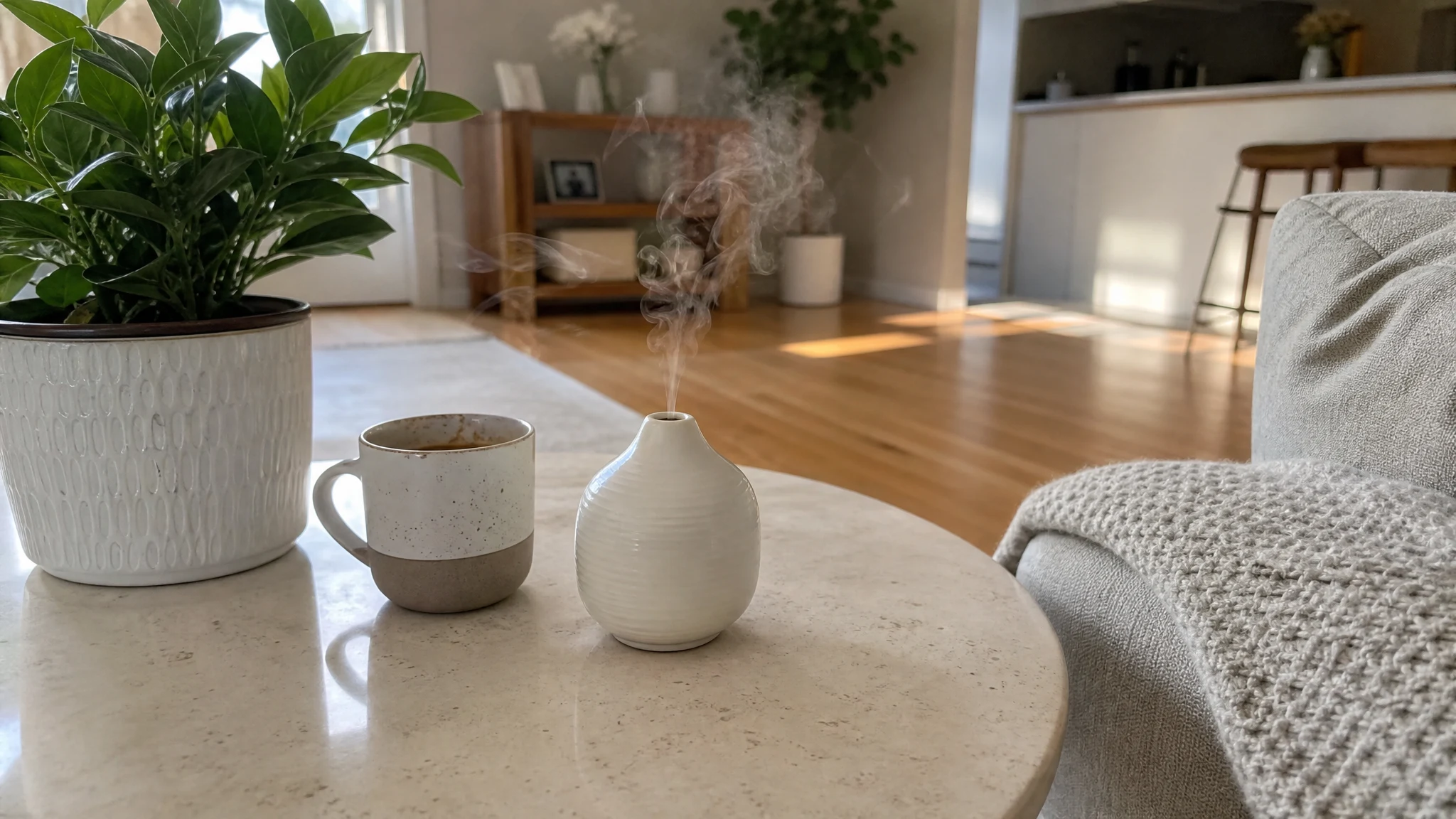
The Tisserand Institute's support team gives a rule of thumb of 3 to 5 drops of oil per 100 ml of water, as a guideline to adjust by diffuser and room (Tisserand Institute, Essential Oil Applications | Inhalation, Diffusion and Topical Applications). At 4 drops in a 100 ml tank, the 2:1:1 blend is 2 drops rosalina, 1 lavender, 1 cedarwood. Twenty drops to the millilitre is a rough convention, so use fewer rather than more. The safety guidance suggests 30 to 60 minutes on and 30 to 60 minutes off, with some fresh air in the room (Tisserand Institute, How to Use Essential Oils Safely). Our diffuser setup article has the rest.
Make a tiny test batch
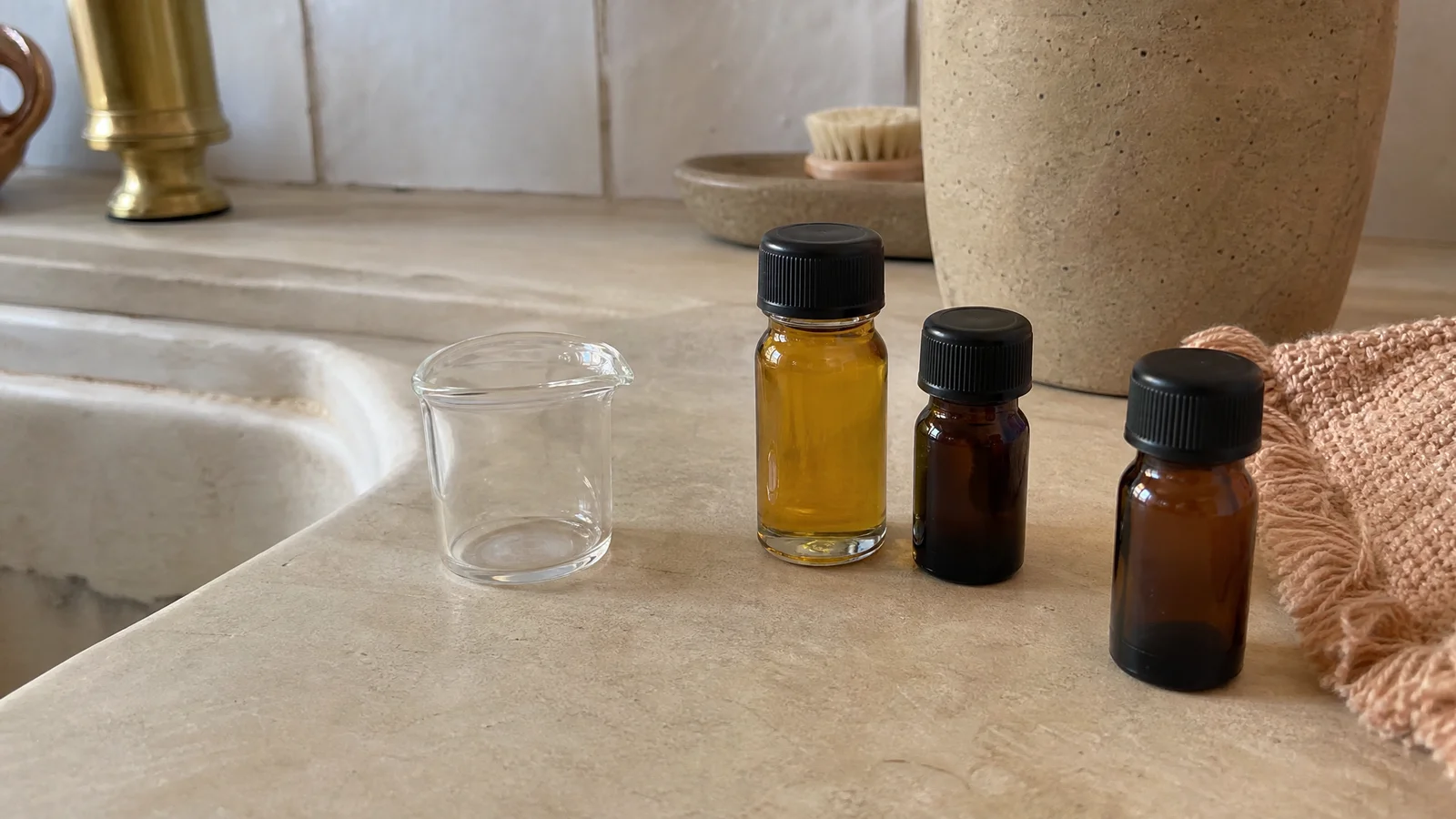
Start with a very small amount and label the jar with the date and the parts. Blends often smell different a day later, as the edges settle, so give it time before you judge. If you like it, scale up; larger sizes of rosalina are on our bulk page. If you do not, you have wasted very little.
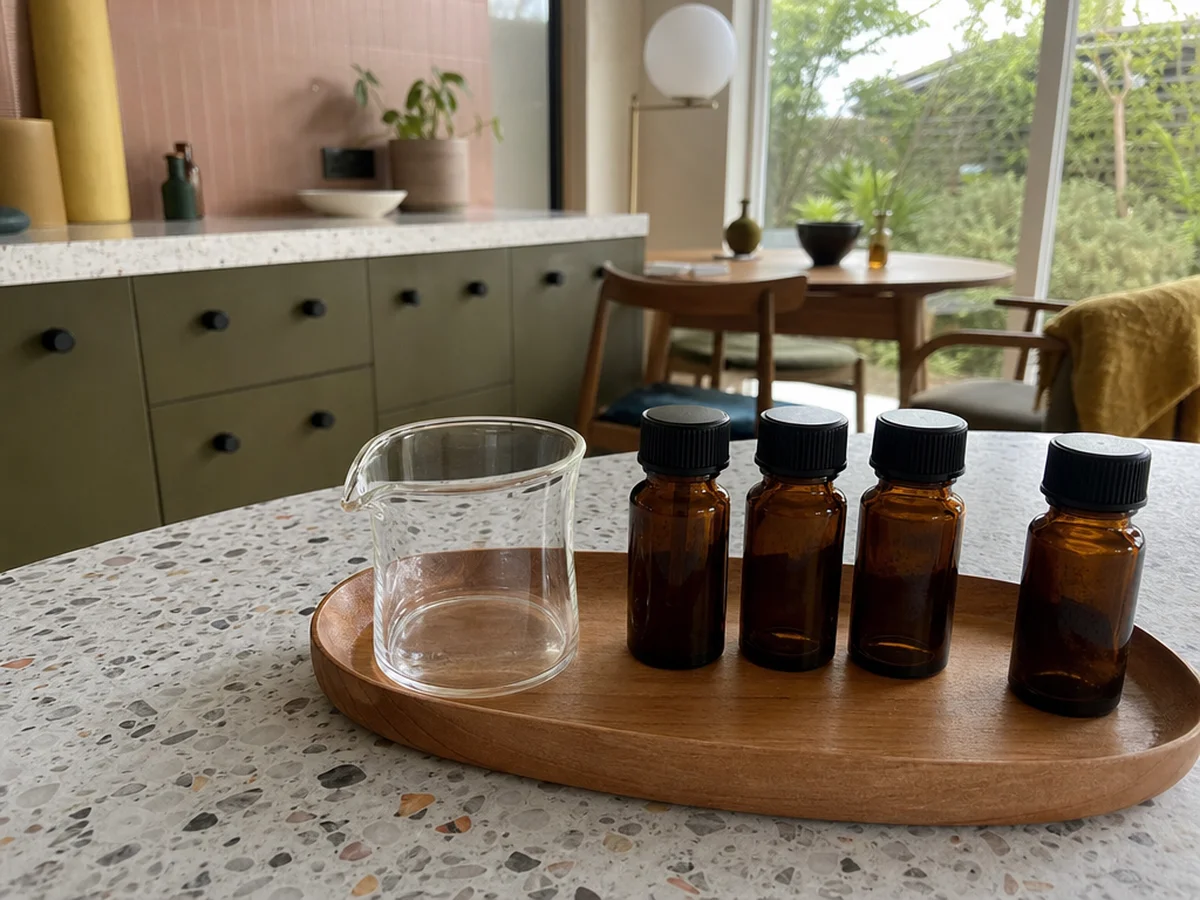
Adjusting is part of the fun. If the blend smells too sharp, give lavender a little more room; if it feels heavy, ease back on the cedarwood. Change one oil at a time and write down what you did.
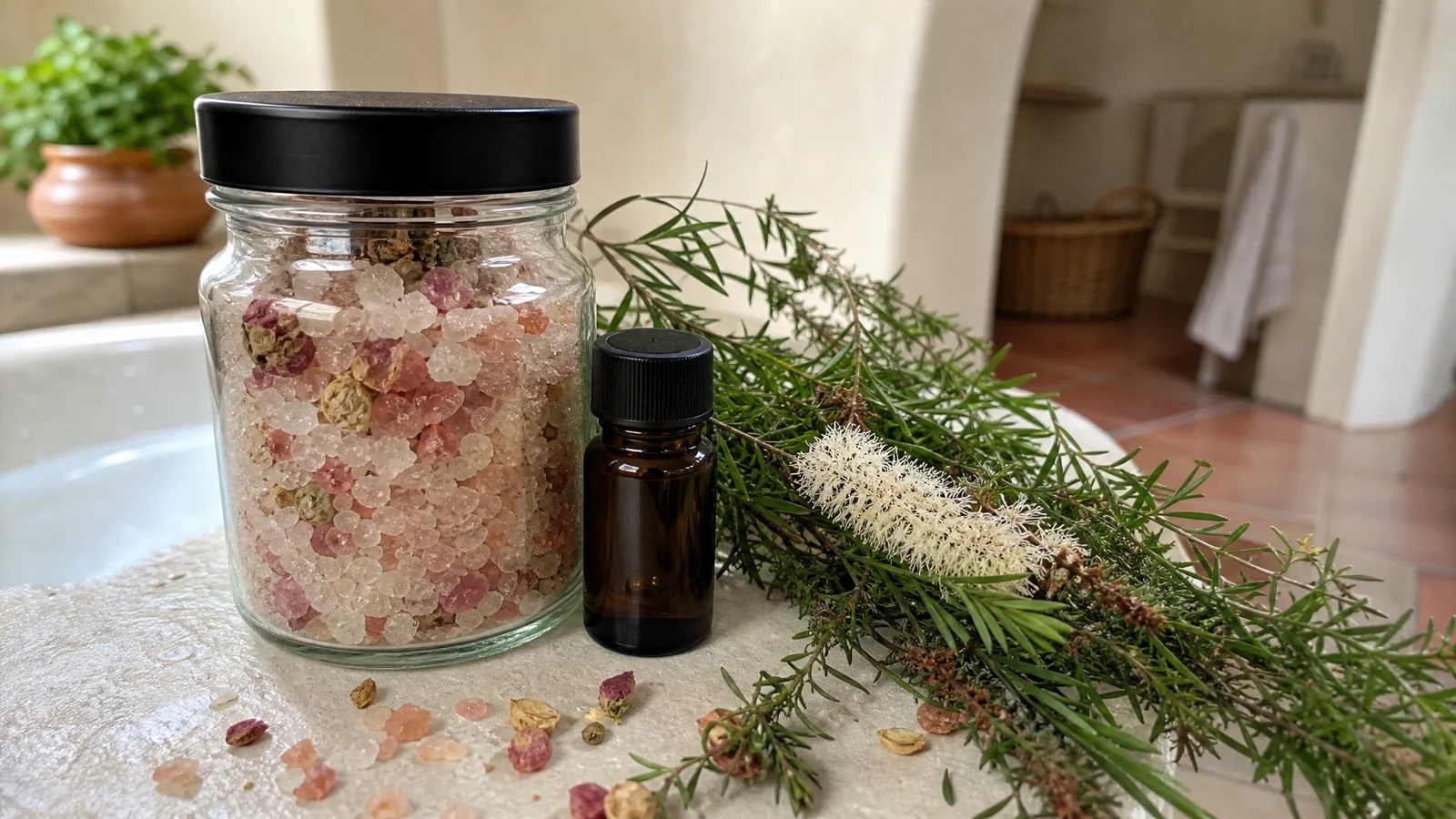
On skin, at 1%
Our guidance for rosalina on skin is to dilute to 0.5% to 2% in a carrier oil and patch test first. The Tisserand Institute lists 0.2 to 1% for sensitive skin, 0.5 to 1.2% for the face and 1 to 3% for the body (Tisserand Institute, Dilution for essential oils). We prefer the low end, and because this blend includes a linalool-rich lavender, 1% total is a sensible working figure.
The sum for 30 g of carrier oil: 1% is 0.30 g of blend, which in a 2:1:1 split means 0.15 g rosalina, 0.075 g lavender and 0.075 g cedarwood. Our Certificate of Analysis batch has a relative density of 0.890, so 0.15 g is about 0.17 ml, or roughly 3 to 4 drops. A 0.01 g scale makes this far easier than counting.
A note on linalool
Linalool is on the EU's list of fragrance allergens declared above 0.001% in leave-on products (European Commission, Fragrance allergens labelling). Home blenders are not bound by that rule, but it is a handy yardstick. Lavender oils measured at 23.8 to 33.0% linalool in one study of twenty genuine batches (Capetti F. et al., 2021. Adulteration of Essential Oils: A Multitask Issue for Quality Control. Three Case Studies: Lavandula angustifolia Mill., Citrus limon (L.) Osbeck and Melaleuca alternifolia (Maiden & Betche) Cheel. Molecules), so in this 1% blend the lavender alone brings roughly 0.06 to 0.08% linalool, dozens of times that threshold, before counting the rosalina. That is simply what a floral blend contains.
The practical lesson is in the handling. Linalool oxidises on air exposure, and the oxidation products are the documented allergen (Christensson J.B. et al., 2010. Linalool - a significant contact sensitizer after air exposure. Contact Dermatitis). Use fresh bottles, keep them capped, cool and dark, and retire old ones. Our storage guide has the details.
Who should sit this one out
Keep this blend off children's skin, and ask a clinician first if you are pregnant or nursing. If pets share the room, read our pet article and ask your veterinarian. Poison Control advises keeping oils well out of reach of children and pets (Poison Control, Essential oils: Poisonous when misused).
Treat the ratio as a draft: smell first, mix a small amount, adjust slowly. The number that matters most is the total percentage, and keeping it low is what makes a blend like this a pleasure to use.
Rosalina Essential Oil
Rosalina Essential Oil from our own shop, in sizes from 0.5 oz to bulk.
From $16.99
Shop Now →Sources & Further Reading
- PubChem, 1,8-Cineole (compound 2758)
- Tisserand Institute, Essential Oil Applications | Inhalation, Diffusion and Topical Applications
- Tisserand Institute, How to Use Essential Oils Safely
- Tisserand Institute, Dilution for essential oils
- European Commission, Fragrance allergens labelling
- Capetti F. et al., 2021. Adulteration of Essential Oils: A Multitask Issue for Quality Control. Three Case Studies: Lavandula angustifolia Mill., Citrus limon (L.) Osbeck and Melaleuca alternifolia (Maiden & Betche) Cheel. Molecules. Europe PMC PMC8471154
- Christensson J.B. et al., 2010. Linalool - a significant contact sensitizer after air exposure. Contact Dermatitis. Europe PMC 20136877
- Poison Control, Essential oils: Poisonous when misused