Rosalina vs Eucalyptus Oil: How the Cineole Differs
People ask whether rosalina is a gentler eucalyptus, usually because someone described it as lavender-like and eucalyptus as sharp. It is a fair question with a less tidy answer. Both oils can be built around the same molecule, 1,8-cineole, and the share of that molecule is what decides how an oil smells, not the name on the bottle.
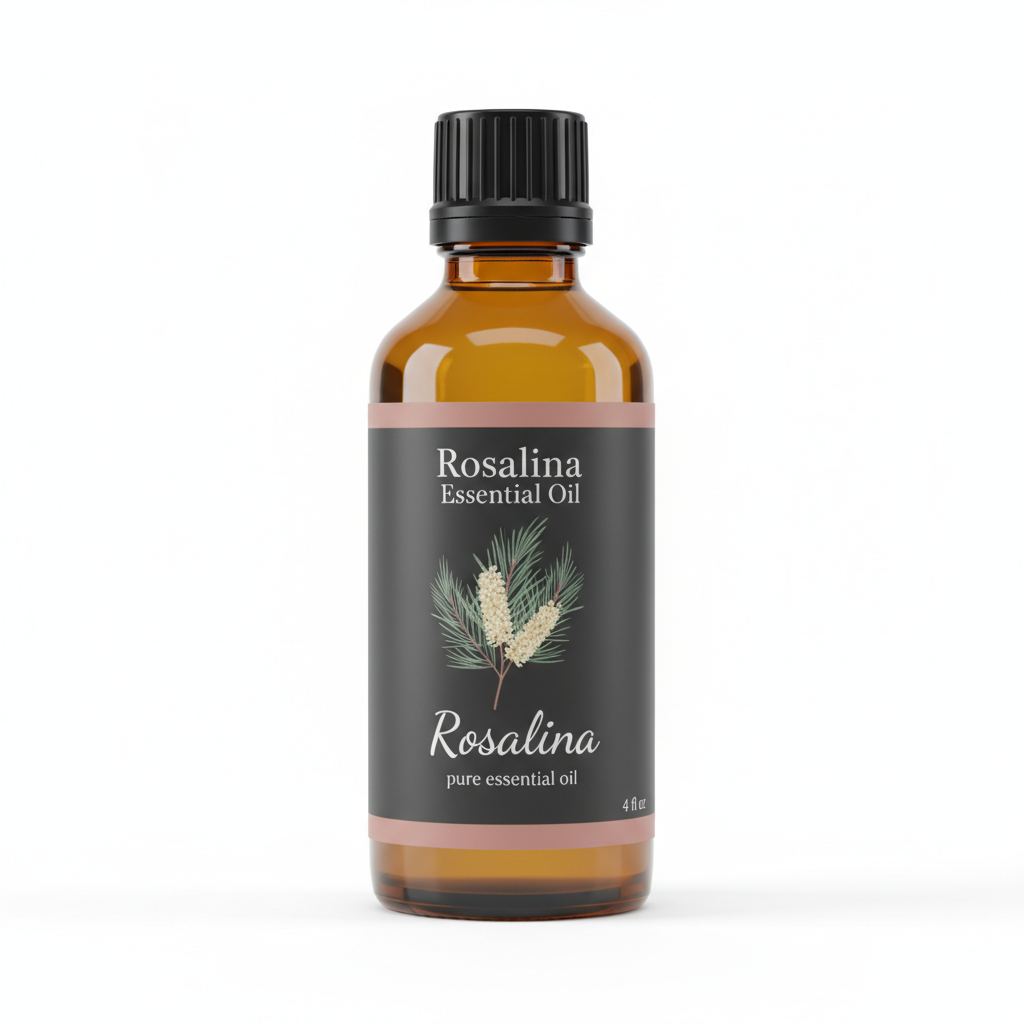
Rosalina Essential Oil
Our own Rosalina Essential Oil, in sizes from 0.5 oz to bulk.
From $16.99
Shop Now →Eucalyptus is the cineole benchmark
The oil most people mean by eucalyptus comes from species such as Eucalyptus globulus, and its identity is a high 1,8-cineole content. A 2021 review in Pharmaceuticals says that for the species used medicinally, 1,8-cineole (also called eucalyptol) is greater than 70%, and lists one E. globulus oil at 83.89% with limonene (8.16%), alpha-pinene (4.15%) and o-cymene (2.93%) behind it. PubChem describes the odour of 1,8-cineole as camphor-like. That is the clean, sharp, almost minty burst most of us call eucalyptus.
Rosalina is a spectrum
Rosalina, from Melaleuca ericifolia, does not have one fixed profile. A 2004 study that sampled the species across its natural range found oil composition changes gradually with latitude: in southern Victoria and Tasmania the mean 1,8-cineole was about 34.5% and linalool about 3%, while one northern tree reached 60% linalool and 16% 1,8-cineole. A 2023 paper that compared several Melaleuca oils reported an M. ericifolia oil with linalool at 38.19% and 1,8-cineole at 27.57%, and a 2026 study of an Ecuadorian oil reported 1,8-cineole at 61.85% with linalool at only 0.49%. Same species, three quite different profiles.
So the answer to "gentler cineole option" is that a rosalina bottle can sit anywhere from lavender-leaning to eucalyptus-leaning, and nothing in the name tells you where. Our description of our oil is a soft, fresh aroma with a green opening and a floral, lavender-like sweetness. If composition matters to you, ask in writing through our contact page for the figures behind the oil you are buying, and our GC-MS guide shows how to read what comes back.
Scent, side by side
Linalool smells floral, and PubChem quotes it as similar to bergamot oil and French lavender, free of camphoraceous notes. Cineole is the camphor note. A cineole-heavy oil of either species will read sharper and more medicinal; a linalool-forward one softer and sweeter. If you want to learn the difference by nose, put each oil on its own paper strip and compare after a few minutes and again after an hour. Our scent walkthrough describes how rosalina moves from opening to dry-down.
Handling matters more than gentleness
We would not choose between these oils on the idea that one is mild. The National Capital Poison Center advises locking essential oils out of sight and reach of children and pets, and notes that children have thin skin and immature livers. That applies to every bottle on your shelf, ours included. In practice that means:
- Dilute for skin: our guidance for rosalina is 0.5% to 2% in a carrier oil, staying near the low end for the face, with a patch test first. Our dilution guide turns that into drops and grams.
- Diffuse in moderation: the Tisserand Institute's rule of thumb is 3 to 5 drops per 100 ml of water, with breaks.
- Keep both away from eyes, children and pets, and do not swallow either.
We sell an external aroma and cosmetic oil, not a remedy, so we do not make congestion claims for either. If you are looking for what the research on cineole and colds says, our congestion post reports it without a recommendation. Eucalyptus oil is not something we sell; a craft supply shop or pharmacy will have it.
The best choice is the oil whose smell you want in the room. If you love camphor-clear freshness, buy eucalyptus. If you like a green, soft floral edge, rosalina is the one to try.
Rosalina Essential Oil
Rosalina Essential Oil from our own shop, in sizes from 0.5 oz to bulk.
From $16.99
Shop Now →Sources & Further Reading
- Antiviral Activities of Eucalyptus Essential Oils: Their Effectiveness as Therapeutic Targets against Human Viruses
- Geographic variation in oil characteristics in Melaleuca ericifolia
- HPTLC Analysis and Chemical Composition of Selected Melaleuca Essential Oils
- Essential Oil of Melaleuca ericifolia Sm.: Chemical Composition, Enantiomeric Distribution, and Antimicrobial, Antioxidant, and Anticholinesterase Activities
- Essential oils: Poisonous when misused
- Tisserand Institute: essential oil applications