Rosalina in Perfumery: A Soft Floral Bridge Note for Blenders
Among the essential oils that deserve far more attention in the perfumer's cabinet, rosalina sits quietly near the top of the list. Distilled from Melaleuca ericifolia, a paperbark shrub native to coastal southeastern Australia, it carries a scent profile that is genuinely unusual: linalool-forward, soft, and faintly medicinal in the best possible way. It smells like lavender and tea tree decided to meet somewhere calmer. For a deeper introduction to the botanical itself, the complete guide to rosalina essential oil covers its background and traditional uses in depth.
This piece focuses on what rosalina does inside a formula. That means chemistry first, then blending behavior, then sourcing considerations and safety. Perfumers working with natural materials will find the most to work with here, but anyone building home fragrance blends will come away with a clearer sense of where this oil sits in the aromatic landscape.

Chemical Composition: What Is Actually in the Bottle
Rosalina's scent character is largely explained by one dominant compound: linalool. Gas chromatography data from Australian-distilled Melaleuca ericifolia oils consistently shows linalool concentrations ranging from roughly 35% to 60%, with some high-quality wild-harvested lots pushing even higher. That single figure explains almost everything about how rosalina behaves in a blend.
Linalool is a monoterpenol. It is the same compound that gives lavender (Lavandula angustifolia) its characteristic softness and that appears, in smaller quantities, in coriander, bergamot, and over 200 other flowering plants. When linalool is the dominant compound rather than a supporting character, the result is a rounder, less camphoraceous scent than most Melaleuca species deliver. Rosalina is the rare member of that genus where the linalool chemotype dominates, rather than the more common terpinen-4-ol or cineole chemotypes seen in tea tree and niaouli.
Beyond linalool, a typical rosalina GC/MS report shows a supporting cast of compounds that shape its nuance:
- 1,8-Cineole (eucalyptol): Usually present between 5% and 20%. This is the compound responsible for the faint brightness, the slight openness in the top, and the connection to the broader Melaleuca family. High-cineole lots read as slightly fresher; lower-cineole lots feel richer and more purely floral.
- Alpha-pinene and beta-pinene: Minor monoterpene contributors, typically under 5% combined. These add a subtle resinous lift without pushing the oil toward a distinctly piney direction.
- Linalyl acetate: Present in smaller quantities than in true lavender, but its presence reinforces the floral-sweet impression and contributes to that lavender family resemblance.
- Terpinen-4-ol: Usually a minor constituent in linalool-chemotype rosalina, often below 5%. Its presence is enough to anchor the oil's Melaleuca identity without dominating.
- Gamma-terpinene and para-cymene: Trace contributors that add minor spice and warmth to the base of the scent.
Chemotype variation matters here. Rosalina has at least three documented chemotypes: linalool-dominant, 1,8-cineole-dominant, and a mixed type. Only the linalool chemotype is considered ideal for perfumery and cosmetic use. If a supplier cannot provide a GC/MS certificate specifying dominant constituents, the oil may belong to a different chemotype entirely, and the scent will reflect that.
Rosalina as a Perfumery Blending Note: Where It Sits in a Accord
Classification systems in natural perfumery are always a little approximate, but rosalina behaves most consistently as a bridge note, sometimes called a heart-to-top transitional material. Its evaporation rate falls in the medium-volatile range. It does not anchor a blend the way a true base note does, but it also does not disappear in the first hour the way a pure top note would. Instead, it mediates.
This is the quality that makes rosalina's scent profile so useful to working blenders. When placed between a sharp citrus top (bergamot, lemon myrtle, yuzu) and a deep resinous base (labdanum, benzoin, vetiver), rosalina absorbs some of the citrus brightness while softening the base note's heaviness. The blend reads as more seamlessly constructed. The transition feels earned rather than abrupt.
Pairing Profiles for Rosalina Oil Perfumery
Some natural materials bring out the best in rosalina. Others compete with it in ways that flatten the linalool character. The table below summarizes common pairing observations based on blending practice and composition logic.
| Pairing Material | Expected Interaction | Suggested Ratio Context |
|---|---|---|
| True lavender (L. angustifolia) | Shared linalool creates a layered, fuller floral effect without redundancy; rosalina adds brightness, lavender adds depth | Equal or rosalina-dominant at 60:40 |
| Bergamot FCF | Citrus top note bridges naturally into rosalina's floral heart; avoids the harsh drop-off that bergamot alone can produce | Bergamot at 15-25% of total blend |
| Geranium (P. graveolens) | Both are linalool-related but geranium's rose-alcohol character (geraniol, citronellol) adds complexity; watch for geranium overpowering | Rosalina at 2x the geranium proportion |
| Cedarwood (Virginian or Atlas) | Woody base that rosalina's cineole trace brightens; produces a clean, softly woody floral | Cedarwood at 20-30% of total |
| Clary sage | Linalyl acetate present in both; synergy creates a richer, slightly herbaceous floral character | Clary sage at 10-15% maximum |
| Tea tree (M. alternifolia) | Both are Melaleuca but very different chemotypes; blend reads as cleaner and more complex than either alone; use carefully | Tea tree below 10% to avoid dominance |
Fixation and Longevity Considerations
Linalool, being a monoterpenol, evaporates faster than sesquiterpenes or resins. In a fine fragrance context, rosalina will not carry the dry-down on its own. Blenders seeking to extend its presence in a formula have a few options. Small amounts of benzyl benzoate or a natural fixative like labdanum absolute can slow the evaporation rate of the surrounding accord. Alternatively, fractionated coconut oil or jojoba as the carrier in a skin perfume will extend perceived longevity compared to alcohol-only bases.
In candle or diffuser applications, the volatility is less of a concern. Rosalina performs well in cold diffusion and holds reasonably in a soy wax candle, though the 1,8-cineole fraction can sharpen slightly at higher burn temperatures.
Research Observations on Key Compounds

Because rosalina's primary constituent is linalool, much of the relevant published research focuses on linalool specifically rather than on the whole oil. It is worth understanding what that research observes, and how to read it accurately.
Some research suggests that linalool interacts with olfactory receptors in ways that may support a sense of calm during inhalation. These observations come from studies on scent perception and its relationship to the nervous system, and they frame linalool as a compound of interest in aromatherapy research. The findings are preliminary. They do not establish that inhaling rosalina (or any linalool-containing oil) produces a measurable clinical outcome. What they do suggest is that linalool's olfactory profile may contribute to why people find lavender-family scents appealing for winding-down routines.
Research on 1,8-cineole, the secondary compound in rosalina, has observed effects related to how this compound interacts with skin absorption and sensory receptors. Some studies note that cineole may act as a penetration enhancer in topical formulations, potentially affecting how other ingredients move through the skin barrier. For cosmetic formulators, this is a relevant observation when combining rosalina with other actives in a serum or body oil context.
It is important to note that these are observations from individual compound studies, not clinical trials on rosalina essential oil itself. Rosalina as a whole-plant extract has a more limited research profile than lavender or eucalyptus. Blenders should not extrapolate compound-level findings into product claims.
Safety Profile and Contraindications
Rosalina is generally considered well-tolerated in cosmetic applications when used at appropriate dilution rates. The following safety notes are based on established guidelines from organizations including the International Fragrance Association (IFRA) and the Research Institute for Fragrance Materials (RIFM).
Linalool Oxidation and Sensitization Risk
The most significant safety consideration with high-linalool oils is oxidation. When linalool is exposed to air, light, or heat over time, it oxidizes to form compounds including linalool hydroperoxides. These oxidation products are known contact sensitizers. A fresh, properly stored bottle of rosalina carries low sensitization risk. An old, improperly stored bottle may carry meaningfully higher risk, even if the scent seems unchanged.
Practical steps to manage this risk:
- Store rosalina in a dark glass bottle, tightly sealed, away from heat and light.
- Keep track of the date opened. High-linalool oils should generally be used within 12 to 18 months of opening.
- If the scent has shifted toward something soapy or sharp in an unusual way, consider that oxidation may have occurred.
- Adding a small amount of vitamin E (tocopherol) as an antioxidant to blends intended for skin contact may help slow oxidation in finished products.
Dilution Rates
For leave-on skin applications such as body lotions, serums, or perfume balms, a dilution rate of 1% to 2% is a reasonable starting point for most adults. Rinse-off products like shampoo or body wash can tolerate slightly higher concentrations. Diffuser or room fragrance use does not carry the same sensitization concern as skin contact, but good ventilation practice is still recommended.
Rosalina should not be applied undiluted to skin. Always perform a patch test before introducing any new essential oil to a personal care routine, particularly for individuals with known sensitivities to Melaleuca family plants or to linalool-containing materials.
Populations Requiring Extra Caution
- Pregnant individuals: Consult a qualified healthcare provider before using any essential oil during pregnancy.
- Young children: The 1,8-cineole content in rosalina means it should be used with caution around young children. Follow current pediatric aromatherapy guidelines and consult a healthcare provider.
- Individuals with known plant sensitivities: Cross-reactivity within the Myrtaceae family is possible. Patch testing is especially important.
Sourcing and Quality Indicators
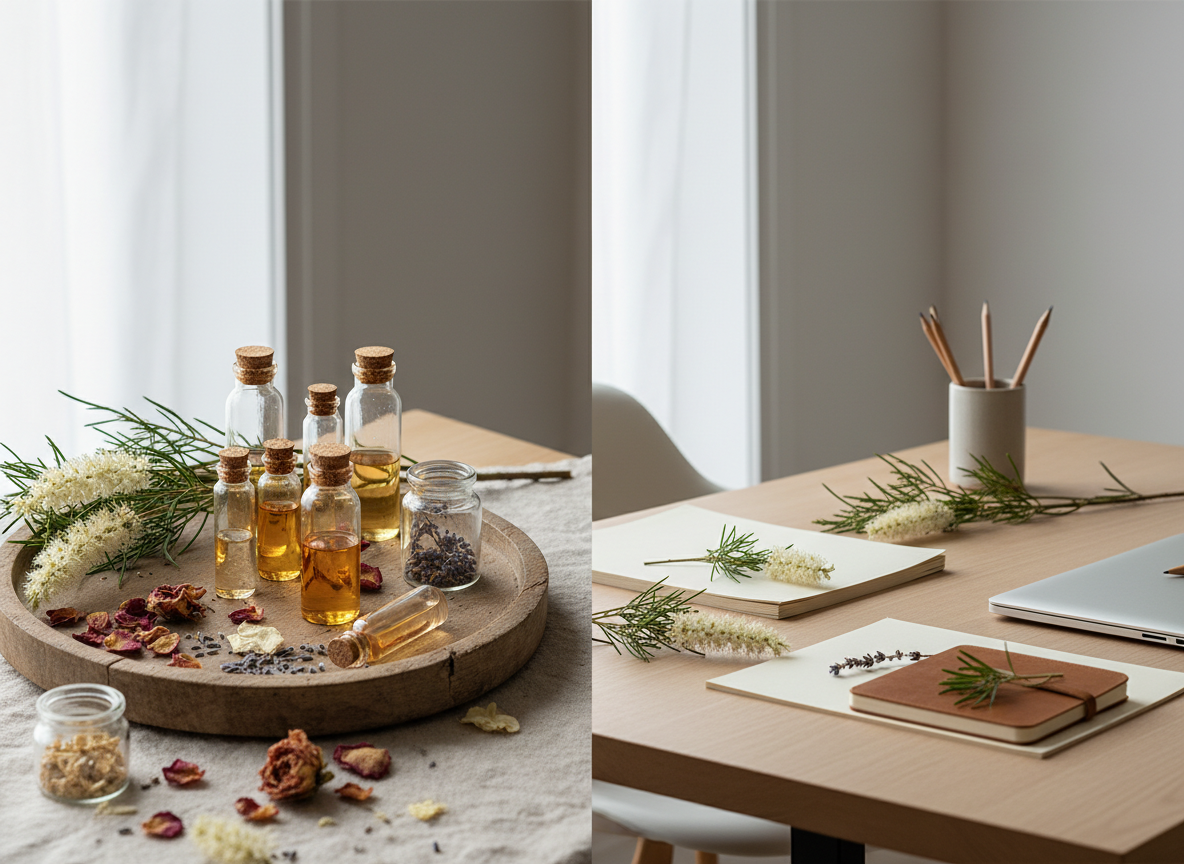
Not all rosalina oil on the market comes from the linalool chemotype of Melaleuca ericifolia. Some suppliers mislabel or mischaracterize related species. Quality sourcing for rosalina oil perfumery work depends on a few verifiable factors.
Understanding how rosalina is distilled from its Australian source plant helps explain why provenance matters so much. The chemotype, the distillation method, and even the time of harvest all influence the final linalool percentage and the scent character of the finished oil.
What to Ask a Supplier
- GC/MS certificate: A legitimate supplier of rosalina essential oil will provide a gas chromatography/mass spectrometry report for each batch. Linalool should appear as the dominant constituent, ideally above 35%.
- Botanical name and chemotype: Confirm the oil is from Melaleuca ericifolia and that the supplier can confirm the linalool chemotype.
- Country and region of origin: Genuine rosalina comes from southeastern Australia, primarily Victoria and New South Wales. Some suppliers in other regions attempt to distill related Melaleuca species and market the result as rosalina.
- Harvest date and distillation date: Fresher is better for linalool stability. Avoid oils with no traceable production date.
- Specific gravity and refractive index: These physical constants, when provided alongside GC/MS data, help confirm that a batch has not been adulterated with synthetic linalool or blended with lower-grade Melaleuca oils.
Adulteration in rosalina is less common than in high-demand oils like lavender or frankincense, but it does occur. The addition of synthetic linalool is the most frequent concern. Synthetic linalool is not inherently harmful, but it means the product is no longer a true natural botanical extract, which matters for natural perfumery standards and for consumers seeking authentic plant-derived materials.
A Note on Floral Melaleuca Perfume as a Category
The phrase "floral Melaleuca perfume" may seem like a contradiction if your only reference point for the genus is conventional tea tree oil. Rosalina invites a re-evaluation of that assumption. The Melaleuca genus contains somewhere between 200 and 300 species, and the diversity of scent profiles across those species is substantial. Rosalina represents the genus at its most approachable and most wearable.
Natural perfumers working with a "clean floral" brief, a botanical wellness aesthetic, or an Australian native materials theme have a genuinely underused material available to them. Its linalool dominance means it speaks the same aromatic language as lavender, while the Melaleuca lineage gives it a freshness and slight structural complexity that lavender does not offer. For blenders tired of reaching for the same supporting florals, rosalina offers a different starting point.
The best way to understand what it brings to a formula is to work with a well-sourced, GC/MS-verified batch. Let it dry down on a blotter for an hour. Note where the cineole brightness fades and where the linalool warmth settles. That middle hour is where rosalina lives, and it is a surprisingly comfortable place to build around.