Best Rosalina Oil Sizes: Which Bottle Should You Order First?
Rosalina is one of those oils that earns loyalty fast. Soft, grounding, and genuinely useful across skincare, hair care, and home fragrance, it tends to move through a collection quickly. So before you click "add to cart," it's worth pausing on a practical question: which bottle size actually makes sense for where you are right now?
Ordering too small means reordering constantly. Ordering too large before you know an oil well means it may oxidize before you finish it. This guide walks you through the rosalina oil sizes available on the market, what to look for in each, and which picks offer the best value at different price points.

What Makes a Rosalina Oil Worth Buying in the First Place?
Before comparing sizes, it helps to understand what separates quality rosalina from filler-grade product. Rosalina (Melaleuca ericifolia) is sourced primarily from Australia, and its production volume is modest compared to oils like lavender or eucalyptus. That limited supply creates real variation in what reaches consumers.
For a deeper look at vetting suppliers before you buy, see our full guide on how to buy rosalina oil. But for the purposes of this size comparison, here are the quality markers that apply no matter which bottle you choose.
GC/MS Testing
Gas chromatography/mass spectrometry analysis breaks down an oil's chemical composition. A reputable seller will either publish these reports or provide them on request. For rosalina, look for linalool as the dominant constituent, typically ranging from 35 to 55 percent depending on harvest conditions. This is the compound responsible for the oil's characteristic soft, floral character.
Latin Binomial on the Label
The label should read Melaleuca ericifolia, not just "rosalina" or "Australian lavender." Some sellers blend or substitute without disclosure. The botanical name is your first line of verification.
Country of Origin and Distillation Method
Authentic rosalina comes from Australian coastal regions. Steam distillation is the standard and preferred method. Avoid any product that doesn't specify origin or distillation method; that ambiguity is rarely accidental.
Packaging
Essential oils degrade when exposed to light and heat. All rosalina oil should be sold in amber or cobalt glass bottles, never clear glass or plastic. Proper packaging isn't a luxury; it's a minimum standard for a product with any shelf life worth relying on.
A Quick Note on Shelf Life and Bottle Size
Rosalina has a shelf life of roughly two to three years when stored correctly, meaning in a cool, dark location with the cap tightly closed. Oxidation shortens that window and changes the scent profile noticeably, pulling it toward something flatter and sharper than the fresh oil.
This matters for sizing decisions. If you're a casual user who blends occasionally, a large bottle may oxidize before you finish it. High-volume users, formulators, and those building a product line have the opposite problem: small bottles are costly per milliliter and create unnecessary reordering friction. Match the bottle size to your realistic usage rate, not to what you hope your usage rate might be.
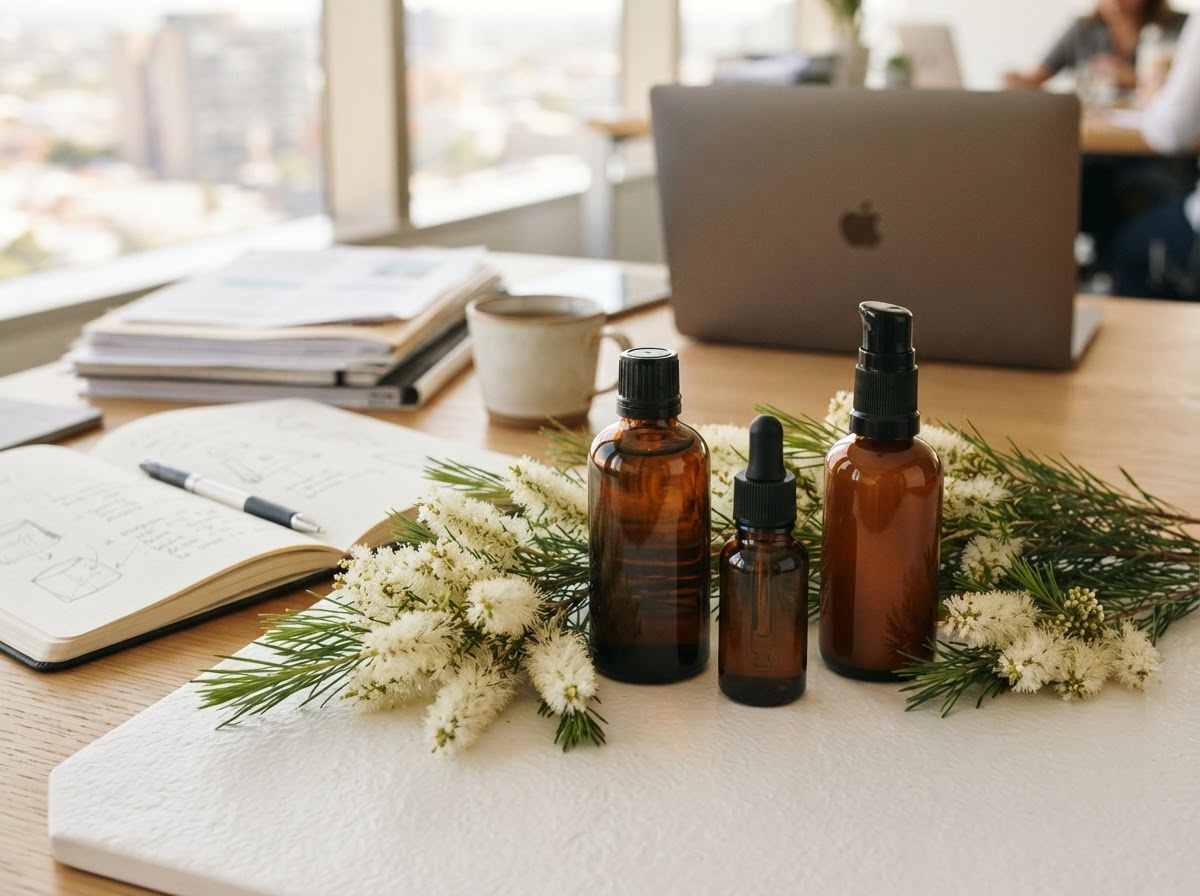
Rosalina Oil Sizes: What's Actually Available
The market for rosalina oil offers several standard sizes. Here's how each one fits different buyer profiles.
5 ml (Sample or Trial Size)
At roughly 100 drops per 5 ml bottle, a sample size gives you enough rosalina to evaluate its scent, test it in a few blends, and run a proper patch test before committing to more. This is the right starting point if you've never worked with the oil before or if you're comparing batches from different suppliers.
The price per milliliter at this size is the highest of any format, which is expected for trial quantities. Don't use a 5 ml bottle as your ongoing supply; the cost-per-use adds up quickly, and you'll be reordering before you've had time to really know the oil.
Best for: First-time buyers, gift sets, blend testing.
10 ml to 15 ml (Standard Retail Size)
This is the workhorse size for most personal users. A 15 ml bottle holds approximately 300 drops, which translates to several months of regular use for someone making personal care products at home. The price-per-milliliter is reasonable, and the bottle is small enough to finish well before oxidation becomes a concern.
Most established essential oil brands anchor their line here. It's also the size that tends to include the most detailed labeling, including batch numbers and GC/MS report links, because it's the format that reaches individual consumers most often.
Best for: Regular personal use, home blending, aromatherapy diffuser work.
30 ml to 50 ml (Enthusiast Size)
Once you've confirmed that you love a specific supplier's rosalina and you're using it consistently, moving to a 30 ml or 50 ml bottle makes financial sense. The cost per milliliter drops noticeably, and you reduce the hassle of frequent reordering.
At this size, storage becomes more important. Keep the bottle in a cool, dark cabinet, and consider transferring smaller portions to a secondary bottle if you tend to open and close the main bottle frequently. Each opening introduces a small amount of oxygen, which contributes to gradual oxidation over time.
Best for: Committed home formulators, frequent users, candle and soap makers working in small batches.
100 ml and Above (Bulk and Professional Sizes)
At 100 ml and larger, you're entering wholesale territory. These sizes are appropriate for small businesses, cosmetic formulators, and professional blenders who use rosalina as a consistent ingredient across multiple products. The cost savings are real, but so is the commitment: you need to be moving through the oil reliably to justify this volume.
If you're considering bulk purchasing, our guide on wholesale rosalina oil and bulk sizing covers supplier vetting, certificate of analysis requirements, and minimum order quantities in detail.
Best for: Product formulators, small cosmetic businesses, professional aromatherapists with high-volume practices.
Comparing Key Features Across Sizes

| Size | Approximate Drops | Cost Efficiency | Best Use Case | Oxidation Risk |
|---|---|---|---|---|
| 5 ml | ~100 | Low | Trial, gifting | Very low (finishes quickly) |
| 10–15 ml | ~200–300 | Moderate | Personal use | Low |
| 30–50 ml | ~600–1000 | Good | Frequent home use | Moderate if used slowly |
| 100 ml+ | 2000+ | Best per ml | Professional/bulk | Higher without proper storage |
Red Flags to Avoid When Shopping for Rosalina Oil
Rosalina is a genuinely rare oil with limited global production, which unfortunately creates space for misleading products. Watch for these warning signs regardless of bottle size.
- No botanical name listed. If the label says only "rosalina" or "Australian lavender tea tree" without Melaleuca ericifolia, ask for documentation before purchasing.
- Unusually low pricing. Rosalina commands a higher price than commodity oils like eucalyptus or lemon. If a 15 ml bottle is priced similarly to a 15 ml lavender bottle from the same seller, that's worth questioning. Adulteration with similar-smelling oils is a known issue in the market.
- No GC/MS reports available. Any seller unwilling or unable to share batch-specific testing data is asking for a significant amount of trust without offering verification.
- Clear glass or plastic packaging. This is a basic quality failure that suggests the seller isn't prioritizing the oil's integrity.
- Vague origin claims. "Natural" and "pure" are unregulated terms. Look for specific country of origin, ideally a specific region within Australia.
- Missing batch or lot numbers. Traceability matters. A reputable supplier can tell you exactly when and where a batch was distilled.
Where to Buy Rosalina Oil by Size
For trial sizes and standard retail bottles, a few reliable channels are worth knowing.
Specialist essential oil retailers: Companies that focus exclusively on essential oils tend to offer better sourcing documentation than general wellness stores. Look for brands that publish their GC/MS results publicly rather than only on request.
Direct from Australian distillers: Some Australian producers sell direct to international buyers, which removes middlemen and can improve both freshness and price. Shipping times are longer, and minimum orders may apply, but the traceability is typically excellent.
Reputable online marketplaces with vetting: Platforms that curate their suppliers, rather than allowing any seller to list, can be a reasonable option for standard sizes. Verify the individual seller's documentation regardless of the platform's overall reputation.
For bulk and wholesale: Supplier relationships matter more at larger volumes. A supplier willing to send a sample before a bulk order, provide certificate of analysis documentation, and discuss their distillation process directly is worth paying a slight premium for.
Which Size Should You Order First?
For most people reading this guide, the answer is a 10 ml to 15 ml bottle from a supplier who publishes GC/MS data. It's enough oil to genuinely evaluate the quality and scent character, use it across several different applications, and decide whether this supplier's rosalina is worth committing to at a larger volume.
If you've already worked with rosalina and you're returning to a trusted brand, moving to 30 ml or 50 ml is a sensible cost decision. If you're building a product line or working professionally, the bulk guide linked above will walk you through everything relevant to that scale.
The best rosalina oil to buy is not necessarily the largest or the cheapest. It's the one that comes from a traceable source, arrives in proper packaging, and suits the volume you'll realistically use before the next growing season's harvest makes its way to market.
Quick reference: New to rosalina? Start with 10–15 ml. Love it and use it often? Move to 30–50 ml. Formulating products professionally? Request samples and then buy bulk from a verified Australian supplier.